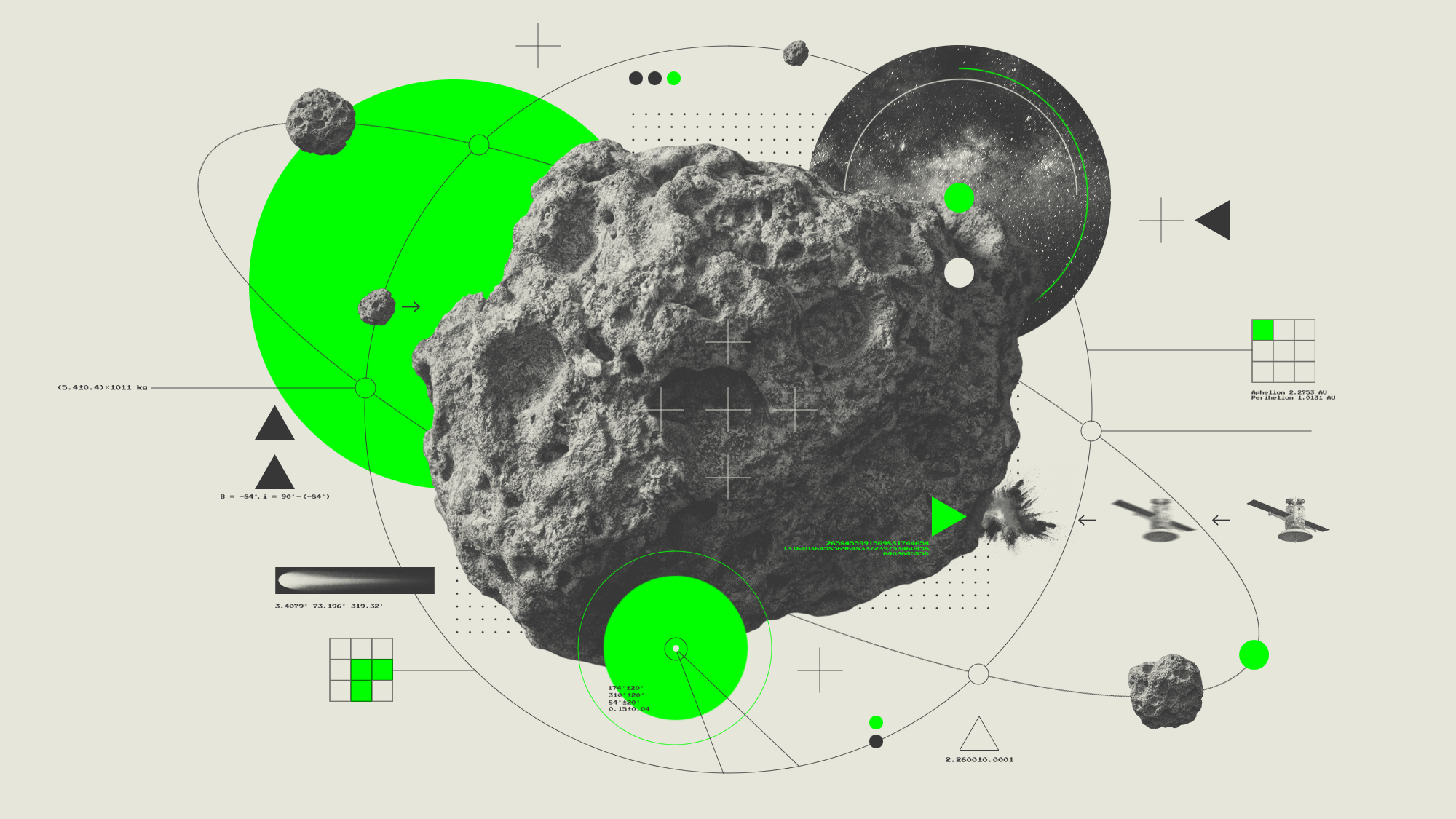
Nasa crashed a spacecraft into an asteroid in an attempt to change the space rock’s trajectory in 2022. Now, scientific observations have shown that the mission had more far-reaching effects than previously thought, affecting both the struck asteroid and the larger one that it orbits. This could be a promising answer to the question of how to protect the planet from future cosmic threats.
Nasa’s Double Asteroid Redirection Test (Dart) spacecraft was intentionally crashed into a small asteroid called Dimorphos in September 2022. The goal of the mission was to “prove that if a killer space rock ever threatened Earth in the future, humans could deflect it”, said The New York Times. The hit was quite the success, altering not only the orbit of Dimorphos around a larger asteroid, Didymos, but also the orbit of the pair around the Sun, according to a study published in the journal Science Advances.
While shifting the orbit by just 150 milliseconds per circle around the Sun may seem insignificant, “given enough time, even a tiny change can grow to a significant deflection”, said Thomas Statler, the lead scientist for solar system small bodies at Nasa, in a release.
Nasa, in a similar guardian vein, is also developing its Near-Earth Object Surveyor mission, which “could spot dark, risky asteroids that have remained nearly invisible from Earth-based observatories”, said CNN. Being able to identify potential threats in space along with knowing how to change their orbit goes “hand in hand with how space agencies envision protecting the Earth”. |