The Week The Week
flag of US
US
flag of UK
UK
https://cdn.mos.cms.futurecdn.net/flexiimages/jzblygzdxr1769609154.gif

SUBSCRIBE

Try 6 weeks free

Sign in
  • View Profile
  • Sign out
  • The Explainer
  • Talking Points
  • The Week Recommends
  • Podcasts
  • Newsletters
  • From the Magazine
  • The Week Junior
  • More
    • Politics
    • World News
    • Business
    • Health
    • Science
    • Food & Drink
    • Travel
    • Culture
    • History
    • Personal Finance
    • Puzzles
    • Photos
    • The Blend
    • All Categories
  • Newsletter sign up Newsletter
  • The Week Evening Review
    Hungary’s changing tone, the DOJ vs. beef, and wild corporate pivots

     
    TODAY’S BIG QUESTION

    How will a Hungary without Orbán impact Ukraine?

    Hungary’s ousting of longtime Prime Minister Viktor Orbán this month sent shockwaves across Europe and beyond. In Moscow, Hungary under Orbán’s leadership had been a rare ally amid an adversarial EU. In Kyiv, Orbán’s intransigence had scuttled various European initiatives to aid Ukrainian President Volodymyr Zelenskyy’s government in its war. But with Orbán out, Hungary will seemingly focus on repairing and normalizing EU ties. 

    What did the commentators say?
    Over the past four years of war with Russia, Hungary has been a “persistent source of irritation” for Ukraine, said The New York Times. Orbán’s government “maintained friendly relations” with Russian President Vladimir Putin’s Kremlin while “blocking critical European Union funding” for Kyiv’s war effort and “stalling Ukraine’s path toward integration into the bloc.” 

    Orbán’s “recalcitrance” toward Ukraine allowed him to cast himself as the “only opponent of aid to Ukraine in the entire EU,” said the Carnegie Russia Eurasia Center. But Orbán was “simply willing to wield his veto and absorb all the backlash,” allowing other antagonists to “remain in the shadows.”

    The victory of Hungary’s incoming Prime Minister Peter Magyar “clears the way for greater European support for Ukraine,” said the Council on Foreign Relations. Already, that shift has seen Hungary lift a hold it placed on a 90 billion euro loan to Kyiv, which Orbán coupled with what he claimed was Ukraine’s destruction of the Druzhba oil pipeline. (Ukraine contends the pipeline was damaged in a Russian strike.) With Orbán’s hold lifted, Ukraine is expected to make short work of the initial EU loan payments. 

    What next?
    Although the “dramatic change in tone” is “encouraging,” Ukrainians are “well aware that Hungary is not likely to become a major supporter,” said the Atlantic Council. Incoming Hungarian leadership has already “ruled out” arming Ukraine and “underlined” opposition to “fast-tracking the country’s EU accession process.”

    While Magyar is “expected to take conciliatory steps toward Ukraine,” said the Russia Eurasia Center, “expectations may be overstated.” Ukraine’s inclusion in the EU is “increasingly unpopular in the bloc’s eastern part,” where countries like Poland and Bulgaria see Kyiv as a “direct competitor for European subsidies, jobs and agricultural markets.” Ukraine is also considered an “obstacle to accessing Russian energy supplies” by some of its neighbors. 


    Statistic of the day

    5,582: The number of deaths attributed to global acts of terrorism in 2025, a 28% decrease from 2024, according to the Institute of Economics and Peace’s Global Terrorism Index of 100 countries. And the number of attacks declined by nearly 22% to 2,944. The downward trend in terrorism was widespread, with 81 countries recording improvements. 


    the explainer

    Why the DOJ has beef with the meatpacking industry

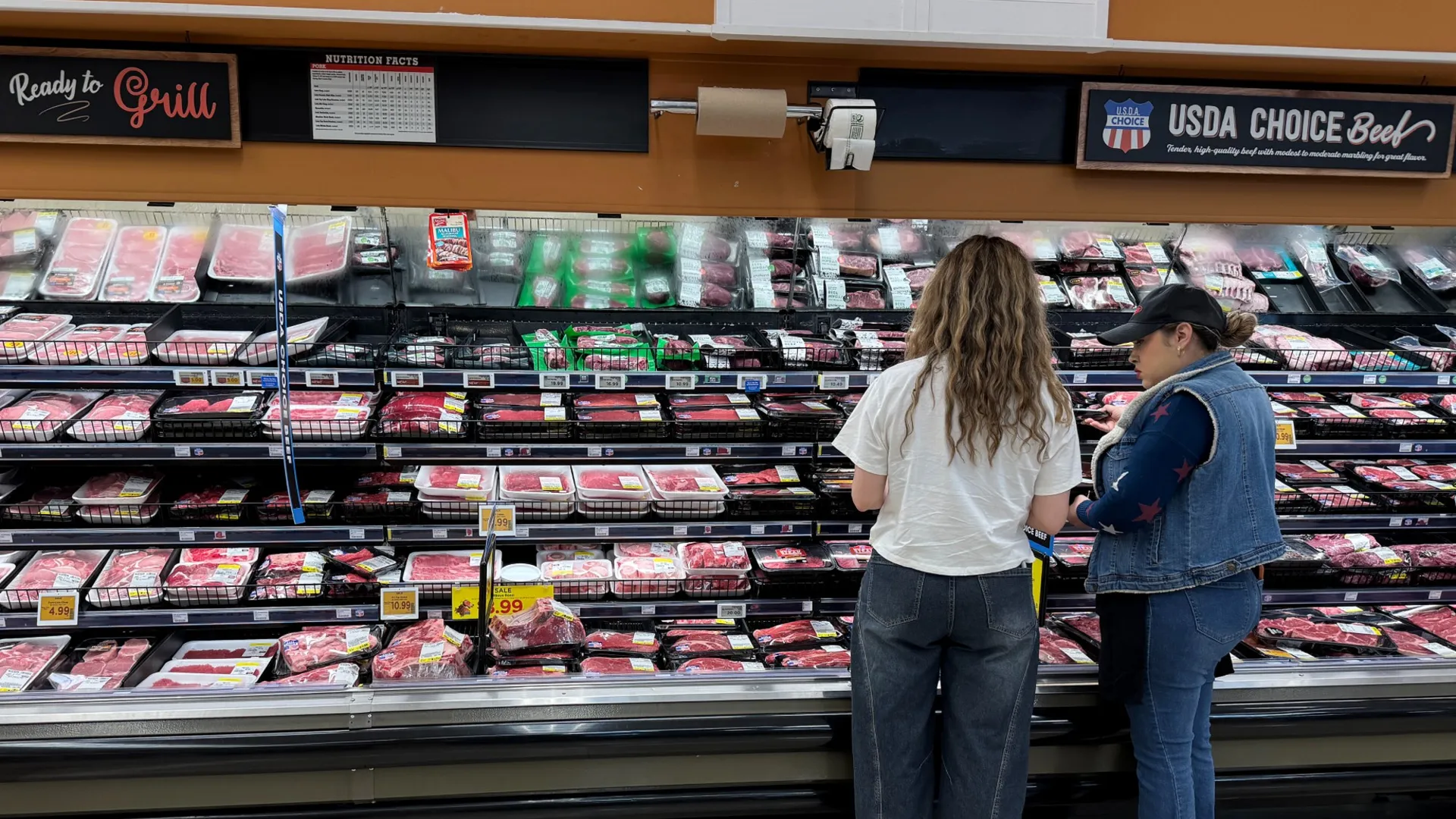
    The Department of Justice is throwing hot charcoal on the meatpacking industry’s grill, as the agency has reportedly opened an antitrust investigation that could have wide-ranging implications for the beef market. The probe, which comes following repeated pressure from President Donald Trump, is happening as beef prices continue to rise, causing consumers to have a negative view of the economy.

    What’s the investigation about?
    The DOJ is looking into whether “large meatpackers that supply American consumers engaged in criminal anticompetitive conduct,” said The Wall Street Journal, which first reported the investigation. The probe is “looking at all of the major companies that sell beef” in the U.S. Four companies currently control 85% of the country’s beef market share: Cargill and Tyson Foods in the U.S. and the Brazilian-owned JBS and National Beef.

    The crux of the investigation is whether these companies “reached illegal agreements over how they purchase cattle from ranchers,” said Bloomberg. The Justice Department reportedly believes beef companies could be doing this to cut costs, as beef processors have been “losing money for the last 20 months as they pay producers higher prices for cattle.”

    The investigation appears to come at Trump’s behest. As of now, the probe remains a noncriminal investigation. None of the companies or their employees have been “accused of any wrongdoing, and probes don’t always lead to charges or lawsuits being filed,” said Bloomberg. 

    What’s the bigger picture?
    Questions about the beef industry aren’t new, as ranchers have “long complained about anticompetitive conduct by the four companies,” said Bloomberg. But a criminal investigation “raises the stakes considerably for the companies and their executives.”

    The prospect of Trump becoming directly involved due to rising prices remains on the table, as the president’s approval rating on the cost of living has been consistently falling throughout 2026. When Trump called for the DOJ to investigate meatpackers in November 2025, the average price of ground beef was $6.54 per pound, up 91 cents year-to-year, according to the Federal Reserve Bank of St. Louis. It has continued rising since then and is currently $6.70 per pound.


    QUOTE OF THE DAY

    ‘Patel’s job is to fight actual crime, not to chug beers in locker rooms, file SLAPP suits against the press or baselessly investigate journalists.’

    Freedom of the Press Foundation Chief of Advocacy Seth Stern to The New York Times about FBI Director Kash Patel, after the agency investigated the Times reporter Elizabeth Williamson for writing about him. She reported that Patel used government resources for transportation and security expenses for his girlfriend.


    IN THE SPOTLIGHT

    The most surprising company pivots 

    After shoe brand Allbirds announced its pivot to AI last week, many are skeptical it will succeed in making such a big switch. But it’s just the latest in a long list of companies that started out in one industry, then changed to something quite different.

    Nokia
    While known today for its industrial-strength cellphones, Nokia began in the 1860s as a wood pulp mill in Finland. This mill was the first step in the mass production of paper. 

    The modern company was eventually formed as a “merger between the Nokia Company (paper), Finnish Rubber Works and Finnish Cable Works in 1867,” said the Crypto Museum. Prior to its eventual focus on cellphones, Nokia was “involved in the production of rubber, electricity, car and bicycle tires, footwear, communication cables, television sets, robotics, capacitors, plastics, chemicals,” and even “military communications equipment.”

    Volkswagen
    Volkswagen has always sold cars. But in this case, it’s the company’s history that represents a major redirection, as the brand is well-known for its associations with the Nazis during World War II. 

    In 1937, Adolf Hitler’s party “founded a state-owned company that was later named Volkswagen, or The People's Car Company,” said NPR. Volkswagen leadership later disavowed its Nazi ties.

    Since then, the carmaker has shifted from supporting antisemitic Nazi Germany to negotiating weapons deals with the state of Israel. In a tinge of irony, Volkswagen, which “produced parts using forced labor for V-1 cruise missiles used by the Wehrmacht during World War II, may soon be manufacturing parts for an Israeli-designed missile defense system,” said Haaretz.

    YouTube
    The company was originally started in 2004 by three PayPal employees who had an “idea for a website for users to upload video dating profiles,” said Business Insider. As a dating site, YouTube “attracted little interest, forcing the co-founder to take out ads paying women $20 to upload dating videos.” 

    Down the line, people began “uploading videos of all kinds to YouTube,” and the website took off as a general platform, said Business Insider. Today, over “20 million videos are uploaded daily,” with an estimated 20 billion total videos on the site, said the company.


    Good day 💌

    … for Romantic poetry. Stolen love letters from John Keats to his muse, Fanny Brawne, have been returned to their rightful owners. A leatherbound volume containing the handwritten missives disappeared from the Long Island estate of the Whitney family in the 1980s but resurfaced last year when a man tried to sell them to rare book dealers in Manhattan.


    Bad day 👄

    … for safe sex. The world’s leading condom maker has warned of a potential 30% price hike due to the Iran war. Malaysian firm Karex, which supplies Durex and Trojan, relies on oil-based materials, which are increasingly in short supply as the Strait of Hormuz remains effectively closed.


    Picture of the day

    Bird’s-eye view

    A woman sits on a bench in Pardisan Park overlooking Tehran. Trump has extended the ceasefire with Iran to allow more time for talks, claiming the Islamic Republic is “collapsing financially” because of the blockade of the Strait of Hormuz.
    AFP / Getty Images


    Puzzles

    Daily sudoku

    Challenge yourself with The Week’s daily sudoku, part of our puzzles section, which also includes guess the number

    Play here


    The Week recommends

    Destinations that make up for winter’s ‘nature deficit’

    Those who live in climates with cold and rainy winters know that being stuck indoors can have a negative effect on moods. Journalist Richard Louv coined the nonmedical term “nature-deficit disorder” to describe the “human costs of alienation from nature.” With spring now in full swing, it’s time to get back outside in the warming sun and touch grass. 

    Cuyahoga Valley National Park, Ohio
    It’s not only wildlife like herons, beavers and bald eagles that return to this park — humans flock here too. Its “patchwork of plunging waterfalls, weather-pocked gorges and forested trails” draws visitors, as does the “scenic” Ledges Trail that passes through “some of the region’s most dramatic scenery,” said Travel and Leisure.

    Forest Bathing Trail at Silverwood Park, St. Anthony, Minnesota
    This trail near Minneapolis is certified by the Association of Nature & Forest Therapy, and guideposts along the quarter-mile path encourage walkers to take their time and experience sensations like feeling the sun on their skin. All the senses will awaken as they “engage with nature” in ways that boost health and “foster deeper exploration,” said National Geographic.

    Watch Hill, Rhode Island
    You can find “truly excellent” beach towns along Rhode Island’s 400 miles of coastline, and one of the “quietest” and “most idyllic” is Watch Hill, said Forbes. This tiny village is less than one square mile, so it’s “easy to explore” and hit all the highlights, like the Watch Hill Lighthouse Museum and Watch Hill Carousel. 

    Read more


    Poll watch

    Nearly 1 in 5 Americans (19%) identify as both MAGA and America First, according to a YouGov survey of 4,428 U.S. adults. Only 4% are strictly MAGA, while 13% are America First only, and 49% claim neither. About 15% are unsure of how they identify. 


    INSTANT OPINION

    Today’s best commentary

    ‘The most deadly place for women and children: a family home’
    Renée Graham at The Boston Globe
    There’s “no more deadly place for women and children than in a family home,” says Renée Graham. When “acts of fatal domestic violence occur, especially mass shootings, law enforcement officials often call that crime an ‘isolated incident’ to reassure the public that there’s no ongoing threat.” But laws are “not enough to stop this gun-fueled misogyny so long as we cling to the false belief that what angry men do to women and children is isolated.”

    ‘History tells us that school vouchers segregate and alienate’
    Erykah Nava at the Chicago Tribune
    Since the “beginning of America’s education system, Black and Latino students and their families have been excluded from building a vision for their schools,” says Erykah Nava. Americans “need superintendents, school leaders and all lawmakers to unequivocally denounce school vouchers because they harm public schools by diverting critical public funds away from neighborhood public schools that Black and Latino students rely on.” If “we don’t listen to those families, history tells us that we will regret that decision.”

    ‘“Petro-masculinity” is destroying the planet. Can “eco-masculinity” help save it?’
    Andrew Boyd at The Guardian
    It “won’t come as news to most that, compared with women, men litter more, recycle less and leave a bigger carbon footprint,” says Andrew Boyd. What “connects the dots here is something more unhinged and tangled: a hyper-aggressive, oil-soaked version of toxic masculinity known as petro-masculinity.” This suggests that “fighting climate change is not just a technological or economic or political challenge but also a cultural and psychic struggle against an entrenched and very gendered ‘petroculture.’”


    WORD OF THE DAY

    nonnamaxxing

    Living like a nonna, an “archetypal Italian grandmother,” to increase the length and quality of life, said The Guardian. Italy’s Sardinia is considered a blue zone, a region where people have exceptional health and longevity, with many reaching “well past” the age of 100. Nonnas there live an “exemplary blue-zone lifestyle” by staying active and eating a Mediterranean diet.


    Evening Review was written and edited by Theara Coleman, Nadia Croes, Scott Hocker, Anya Jaremko-Greenwold, Justin Klawans, Joel Mathis and Rafi Schwartz, with illustrations by Julia Wytrazek.

    Image credits, from top: : Illustration by Julia Wytrazek / Getty Images; Justin Sullivan / Getty Images; Michael Nguyen / NurPhoto / Getty Images; Jackenjoyphotography / Getty Images
     

    Recent editions

    • Morning Report

      UK and France in £662m small boats deal

    • Evening Review

      The ultimate weapon for hackers

    • Morning Report

      Trump extends ceasefire in dramatic climbdown

    VIEW ALL
    TheWeek
    • About Us
    • Contact Future's experts
    • Terms and Conditions
    • Privacy Policy
    • Cookie Policy
    • Advertise With Us
    • FAQ
    Add as a preferred source on Google Add as a preferred source on Google

    The Week UK is part of Future plc, an international media group and leading digital publisher. Visit our corporate site.

    © Future Publishing Limited Quay House, The Ambury, Bath BA1 1UA. All rights reserved. England and Wales company registration number 2008885.