As rabid fans pack stadiums for the World Cup, some of the tournament’s most contentious issues are not about what the players say or do but what they wear. Several competing countries are in the crosshairs of political debates regarding their team jerseys, and in some cases, FIFA has been forced to intervene.
Colombia
Abelardo de la Espriella, the right-wing presidential candidate endorsed by President Donald Trump, turned the Colombian jersey into his campaign’s “official attire,” said The New York Times. Sen. Iván Cepeda, de la Espriella’s leftist opponent, “slammed his rival’s choice of apparel, accusing him of stealing a national symbol,” said The Associated Press. Despite Cepeda’s anger, the sea of yellow jerseys seemingly propelled de la Espriella over the finish line, as he appeared to narrowly defeat Cepeda in Sunday’s election, becoming Colombia’s president-elect.
Haiti
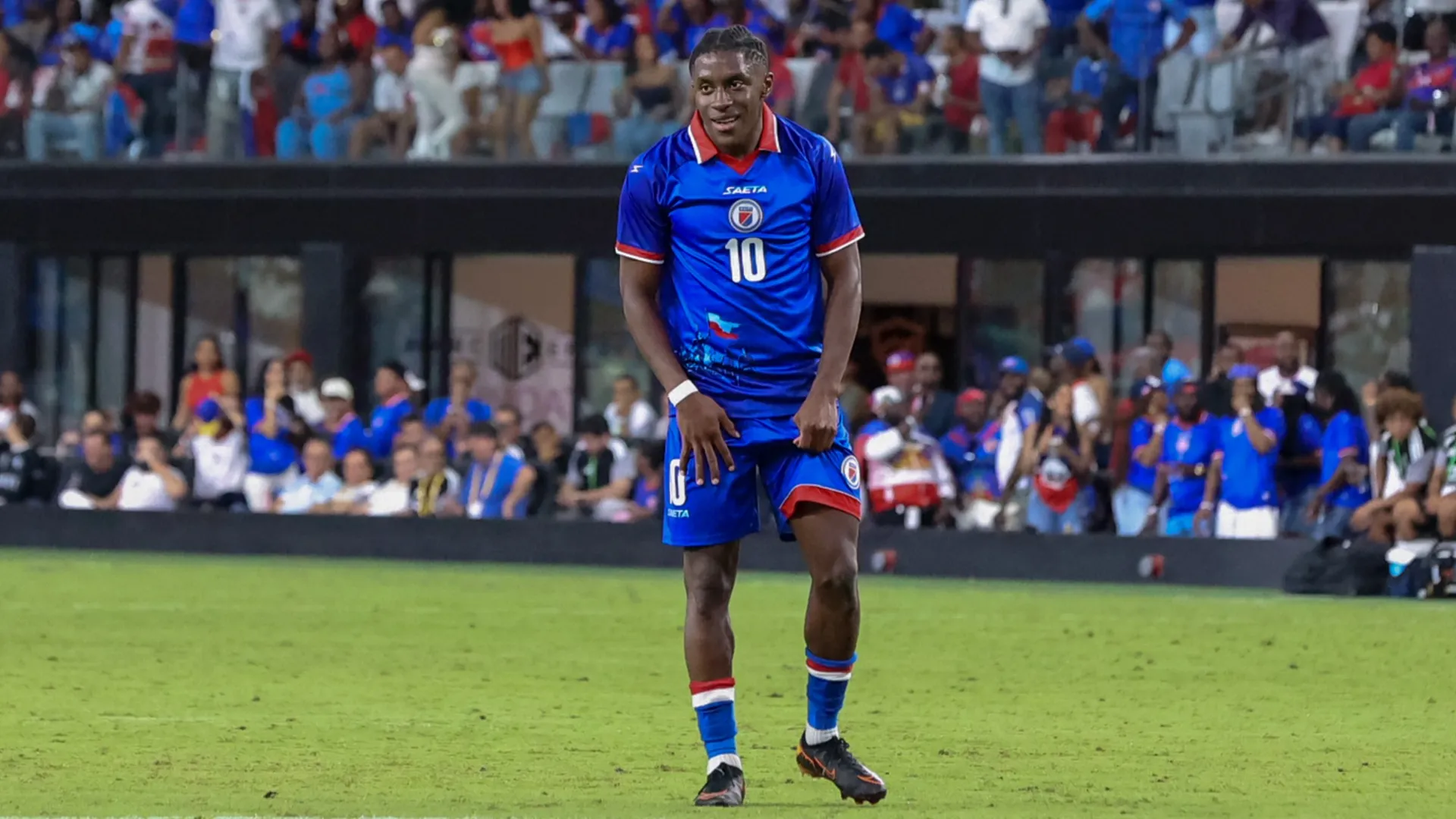
The team (pictured above) was forced to alter its jersey design after FIFA “deemed certain elements to be too political in nature,” said The Guardian. FIFA’s issue was with the shirt’s “right hip” depicting “silhouettes inspired by the Battle of Vertières and the Haitian Revolution.” One of these silhouettes represent Haitian revolutionary leader Jean-Jacques Dessalines.
Many supporters were angry that FIFA forced Haiti to adopt the change. The association’s decision is part of an “effort to discredit the Haitian Revolution,” and the “mere implication of Dessalines, standing alongside his fellow revolutionaries, was enough to elicit a backlash,” said Julia Gaffield, a history professor at William & Mary College, at The Conversation. Despite FIFA’s ruling, the jersey has become a “fan favorite” and is still sold on the manufacturer’s website.
Mexico
The team’s jerseys were “embroidered by hand by 150 Nahua women high in the mountains of central Mexico, in a tiny town called Naupan,” said The New York Times. But activists have accused the manufacturers of “exploiting the Nahua women while profiting off their image.”
There are “murky details behind the Adidas collaboration with the artisans of Naupan,” said Luz Valdez, a Mexican activist and influencer, in a TikTok video. The artists were reportedly “not even allowed to use their traditional sewing method.” |