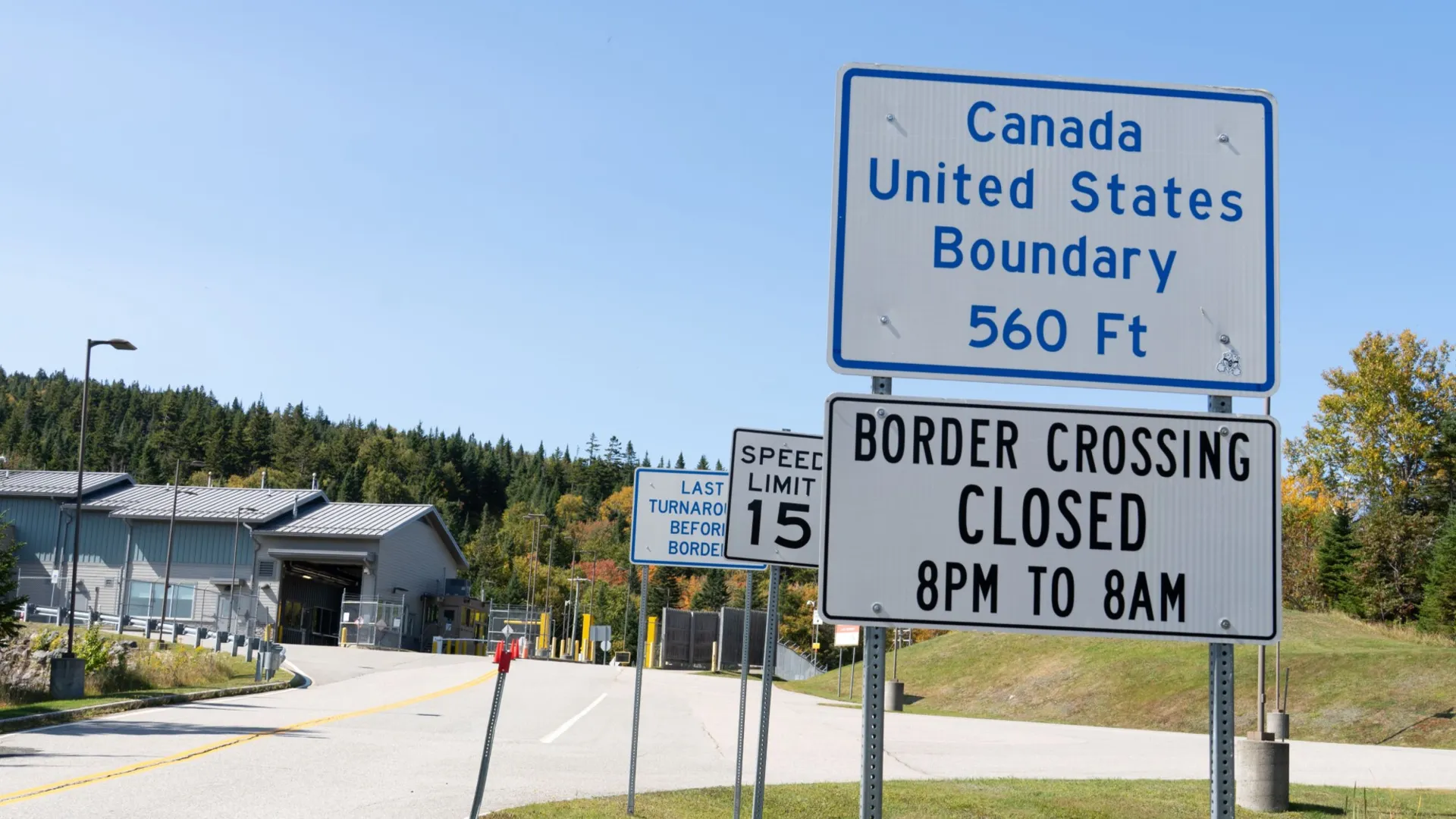
As a result of nearly 300,000 U.S.-based Haitians having their Temporary Protected Status (TPS) revoked by the Trump administration last month, many are heading north of the border. But while they look to join a country that has a vibrant Haitian diaspora, fleeing to Canada presents its own challenges.
‘Difficult to predict’
Canada’s asylum rules “allow migrants with close family members to enter the country and seek protection,” and many have roots in the nation, said The Atlantic. There are about 100,000 people of Haitian descent living in Canada, according to the country’s 2021 census — a number that likely increased during the last five years.
But Haitians “without close family members in Canada who arrive at the land border are generally ineligible to seek asylum,” so it’s “difficult to predict how many Haitians may try” crossing into Canada, said The Atlantic. Canadian immigration rules have “changed significantly” since the first Trump administration, and it’s “much harder to make asylum claims at Canada’s border,” said CNN.
This hasn’t stopped numerous people from trying. Haitians who “do apply for asylum are more likely to be rejected than approved,” but officials say that “U.S. work experience, along with English and French proficiency, could provide qualified applicants with a major advantage in the Canadian job market,” said WLRN.
‘Part of the answer’
Canada has an “extensive immigration system separate from its refugee protection system,” so for some Haitians, the better question may be not “‘Can I claim asylum in Canada?’ but ‘Could I qualify to immigrate to Canada?’” said The Haitian Times. Canada may be “part of the answer,” but that “doesn’t necessarily mean claiming asylum.”
For many Haitians fleeing ICE, the “only route into Canada is a path through the woods,” said The Atlantic. It can be a risky venture, as Haitians who are denied entry by Canadian border officials are usually “turned over to U.S. Customs and Border Protection and typically transferred to ICE.” But many Haitians are still “willing to risk a dangerous and illegal journey” into Canada, said USA Today, to “avoid returning to their home country.” |