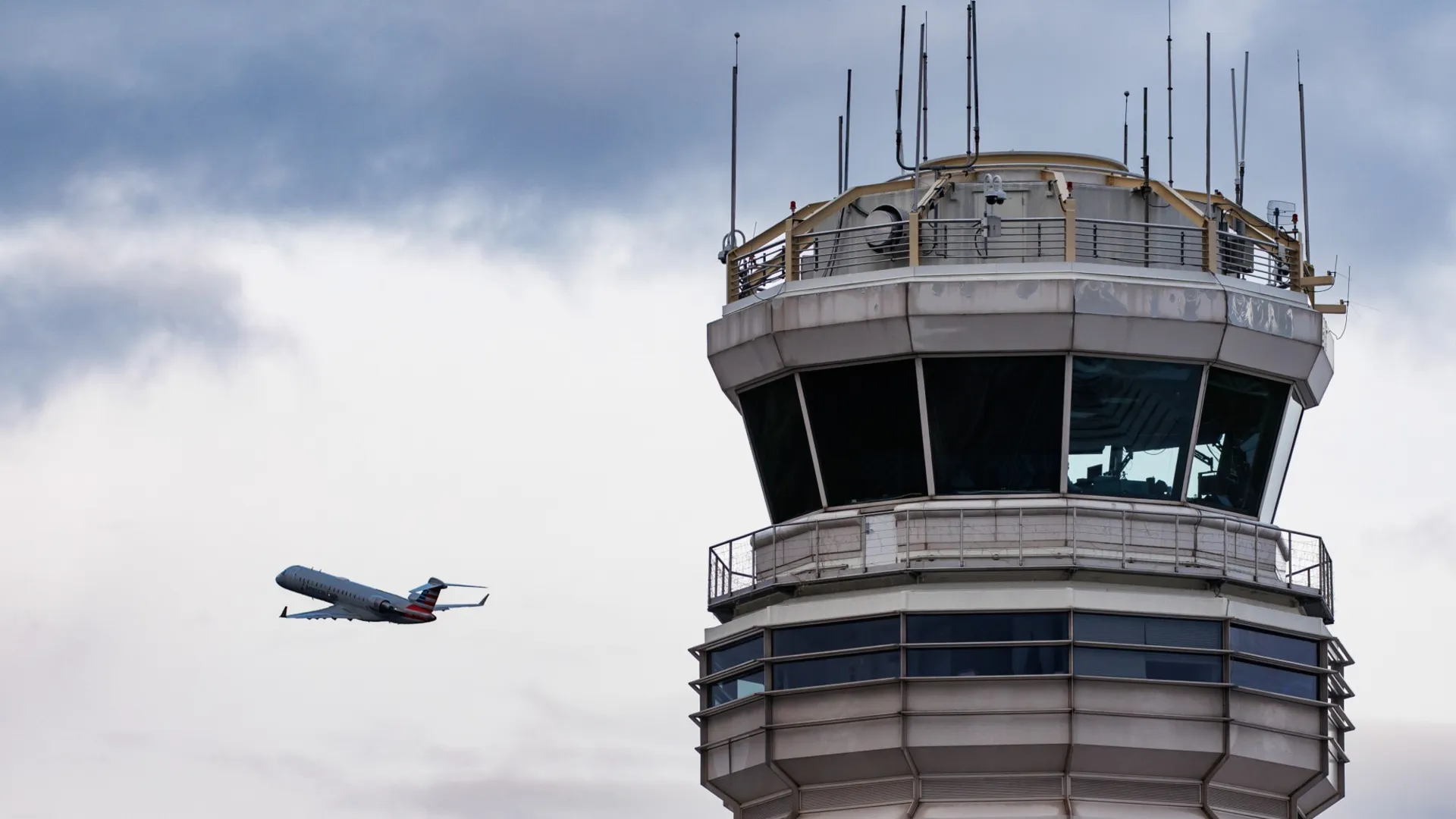
After years of reports about artificial intelligence potentially being incorporated into air traffic control systems, the prospect is finally becoming a reality. The FAA is rolling out an AI tool that’s already being used in control towers at major airports. But while the federal government is lauding the new AI program, many aviation experts are wary of letting the technology take off.
What is the FAA’s new technology?
This AI tool is a software called the Strategic Management of Airspace, Routes and Trajectories (SMART). It “centralizes 200 data streams — including weather patterns, flight paths, traffic flow and controller staffing metrics — into one platform,” the FAA said in a press release. An AI engine analyzes the data to “provide a comprehensive visualization of where planes are going, how much traffic the system can handle and where congestion or weather could cause challenges.”
While the thought of AI-powered air traffic control may conjure images of computers telling airplanes when to take off and land, this is not the case — at least for now. The SMART system “will not replace human operators or direct any changes to flight routes but merely offer recommendations that controllers can choose to heed or ignore,” said The New York Times. SMART is headquartered at the FAA’s Air Traffic Control System Command Center in Virginia, where officials will “disseminate the AI recommendations to controllers at the regional towers and other air traffic facilities.”
The Week
Escape your echo chamber. Get the facts behind the news, plus analysis from multiple perspectives.
SUBSCRIBE & SAVE
Sign up for The Week's Free Newsletters
Join more than 350,000 subscribers and keep yourself informed with a selection of The Week’s most interesting, enlightening and entertaining stories - plus daily puzzles.
Join more than 350,000 subscribers and keep yourself informed with a selection of The Week’s most interesting, enlightening and entertaining stories - plus daily puzzles.
Latest Videos FromThe Week US
SMART is the brainchild of the AI firm Air Space Intelligence, which earned an $875 million contract from the government to develop the system. For now, the rollout is “limited to the Washington region, affecting three airports: Ronald Reagan Washington National Airport, Dulles International Airport and Baltimore/Washington International Thurgood Marshall Airport,” said the Times, though officials expect its implementation at other airports in the future. When fully integrated nationwide, officials believe SMART will “act as something like the brains of the nation’s air traffic control system,” said The Wall Street Journal.
Why are some experts worried?
Even though SMART won’t be directly controlling airplanes, many in the aviation industry are still skeptical about its widespread use. There are remaining questions about “where the system would get its data,” and “controllers must be able to veto its recommendations,” S. Todd Yeary, a former air traffic controller, told NewsNation. One of his biggest worries is that AI has a tendency to hallucinate false information, and since air traffic control information is always changing, any “data fed into a system cannot be assumed to remain reliable.” For example, a pilot “requesting VFR flight following service” — meaning he or she is flying using visual references around them, as opposed to navigational instruments — would “not appear in airline schedules, so the on-duty controller must be able to step in.”
The airlines themselves have expressed similar safety concerns. There were originally “weeks of industry confusion over the FAA’s vague description of its much-hyped plans” for SMART, said Politico, which only eased when the agency said it “would use the tool in just a limited way at first.”
A major concern for the airlines was “how extensively the AI would be integrated into day-to-day air traffic management,” said Politico. Even after some meetings with the FAA, airlines are reportedly still nervous that SMART could “inject chaos by prompting increases in flight cancellations and reschedulings in the name of preventing aviation bottlenecks and avoiding weather-related delays.” While this “could become a costly headache for both airlines and passengers,” no airline officials have “alleged that the system would compromise safety.”