Sign up to get Today’s Best Articles in your inbox
Join 350,000+ subscribers and keep yourself informed with a selection of
The Week’s most interesting, enlightening and entertaining stories - plus daily puzzles.
You are now subscribed
Your newsletter sign-up was successful
Want to add more newsletters?
An account already exists for this email address, please log in.
Iranian proxies put Saudi Arabia on its heels in Yemen
A stunning Houthi offensive has rattled one of the region’s biggest powers
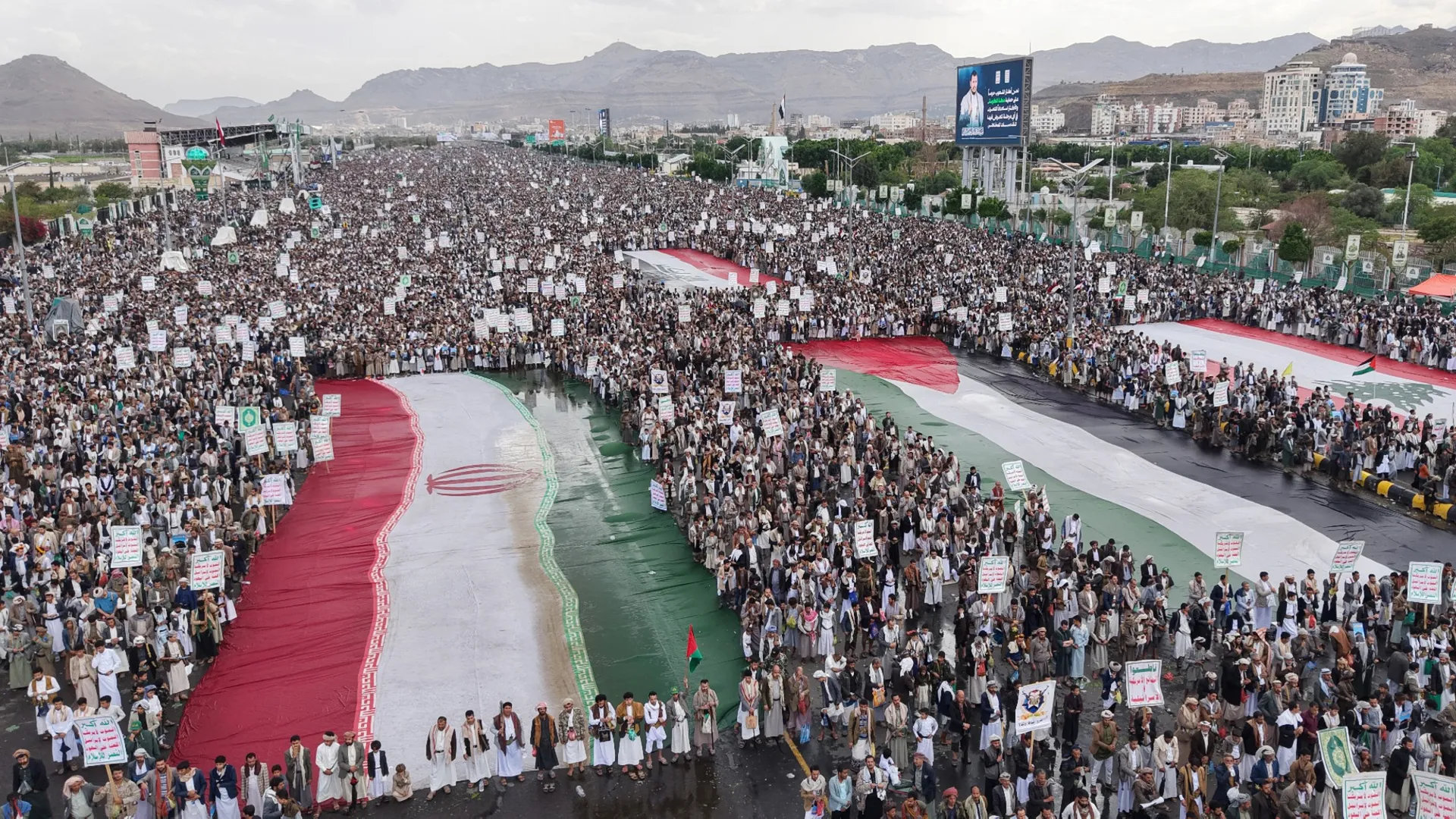
As the United States struggles to extricate itself from the Iran war, longtime regional ally Saudi Arabia is facing a growing Iranian threat of its own. Yemen’s Houthi rebels, long considered proxies of the Iranian regime, have successfully launched a series of military offensives, including the recent capture of the port city of Mokha and the destruction of an overland pipeline. These are key fuel nodes for the Red Sea, made all the more vital as Iran throttles traffic through the Strait of Hormuz.
The result is a “nightmare scenario for Saudi Arabia” that has “sent jitters through global markets,” said The Associated Press. With fighting between the Saudi-backed government and Iranian-backed rebel forces spreading, Yemen has become a stand-in for larger forces scrambling to capitalize on a new paradigm in the Middle East.
Why are Saudi officials worried?
Saudi Arabia is “becoming a focal point for the Middle East crisis,” as it “contends with a multifront campaign being waged by Iran and its Axis of Resistance allies,” said Newsweek. Houthi forces have “stepped up cross-border attacks” against Iran while “simultaneously gaining ground” against Saudi-backed government forces “in some of the most intensive clashes since an April 2022 ceasefire halted Yemen’s civil war.”
The Week
Escape your echo chamber. Get the facts behind the news, plus analysis from multiple perspectives.
Join more than 350,000 subscribers and keep yourself informed with a selection of The Week’s most interesting, enlightening and entertaining stories - plus daily puzzles.
Join more than 350,000 subscribers and keep yourself informed with a selection of The Week’s most interesting, enlightening and entertaining stories - plus daily puzzles.
At the same time, the Saudi’s “most essential ally, the United States,” has been “unpredictable and sometimes unreliable” under this administration, said the AP. The White House “seems reluctant to widen an already unpopular and stalemated Mideast war ahead of congressional elections.”
“For a decade,” the Saudi attitude toward Yemen has “rested on the assumption” that “patiently and strategically” applying time, money and force would “eventually produce enough leverage to subdue the Houthis,” said Responsible Statecraft. “Or at least force them into a settlement on Riyadh’s terms.” For the past several weeks, that “assumption has been tested more severely than at any point since 2015,” as Houthi forces press toward the city of Marib, which is the “last major stronghold of forces loyal to the internationally recognized government of Yemen.” And as “Iran-aligned groups” such as the Houthis “increase pressure” on Saudi Arabia, “diplomacy” between the Gulf States and Iran has “hit its own wall.”
What’s at risk for the kingdom?
Attacks by Houthi forces have “already caused a plunge in Saudi oil exports to Asia” from “around 3.4 million barrels a day in June to 128,000 in August,” said the AP. As the group tightens its grip on the Red Sea’s Bab al-Mandab Strait, Houthi figures have “assured U.S. officials” that the group has “no intention of attacking U.S. shipping in the Red Sea,” said Al Jazeera. Instead, any restrictions would “apply only to vessels linked to Saudi Arabia.”
Israel has “reportedly offered to intervene in Yemen on Saudi Arabia’s behalf,” said Al Jazeera. But kingdom officials may be “wary of being seen to rely on Israeli military support” for fear it could “damage Riyadh’s standing and legitimacy throughout the Arab and Muslim worlds.”
Sign up to get Today’s Best Articles in your inbox
A free daily email with the day’s biggest news and analysis – and the best features from TheWeek.com
Where is Iran in all this?
The Houthis are “agents and proxies of the Iranians,” said Secretary of State Marco Rubio to reporters earlier this month, per Off the Press. Iran “arms, trains and coordinates with the Houthis” in a relationship that “indeed deserves scrutiny,” said The National Interest. But the group has “independent origins, an autonomous decision-making structure, its own revenue base and a track record of acting against Tehran’s preferences when its own interests demand it.”
Ansar Allah is an “independent Yemeni actor” that “makes its own decisions,” said Iranian Foreign Ministry Spokesperson Esmaeil Baqaei on X, using the Houthis’ official group name. It “takes orders from no one and acts as nobody’s proxy.”
The group is “first and foremost” a Yemeni movement “whose fight has always been about power inside Yemen,” said The Conversation. But “Yemeni security sources” have claimed senior Iranian commander Abdul Reza Shahla’i was “on the ground overseeing part of the latest operation in September.” Moreover, there is also a risk that seizing another fuel “choke point” to target Saudi shipping “makes the Houthis look, to much of the world and no small part of Yemen, like Tehran’s instrument,” no matter what their “own objectives actually are.”
Where is China in all this?
Neither the United States nor Saudi Arabia seems “eager to send their forces to die en masse,” said Annelle Sheline, a research fellow at the Quincy Institute for Responsible Statecraft's Middle East program, to Newsweek. Both countries “prefer to rely on superior air power,” which has “proven repeatedly inadequate as a means of holding territory in Yemen and elsewhere.”
Riyadh has instead “turned to China for help” following recent Houthi victories, said Reuters. Accordingly, Beijing has “privately asked Tehran to help rein in Yemen’s Houthis,” going “further” in its private call for restraint and diplomacy than in China’s “public statements.”
Saudi Arabia could also “seek a diplomatic solution with either the Houthis or their patrons in Tehran,” said the AP. But the Houthis have “demanded the lifting of a Saudi-led blockade,” which would allow them to “grow much stronger over the long term.” Iran similarly has “little interest in stabilizing the region without securing major U.S. concessions.”
Rafi Schwartz has worked as a politics writer at The Week since 2022, where he covers elections, Congress and the White House. He was previously a contributing writer with Mic focusing largely on politics, a senior writer with Splinter News, a staff writer for Fusion's news lab, and the managing editor of Heeb Magazine, a Jewish life and culture publication. Rafi's work has appeared in Rolling Stone, GOOD and The Forward, among others.