Sign up to get Today’s Best Articles in your inbox
Join 350,000+ subscribers and keep yourself informed with a selection of
The Week’s most interesting, enlightening and entertaining stories - plus daily puzzles.
You are now subscribed
Your newsletter sign-up was successful
Want to add more newsletters?
An account already exists for this email address, please log in.
What we learned from the Brics summit
‘Historically unruly bloc’ takes stand over Iran war and Gaza but divisions limit influence
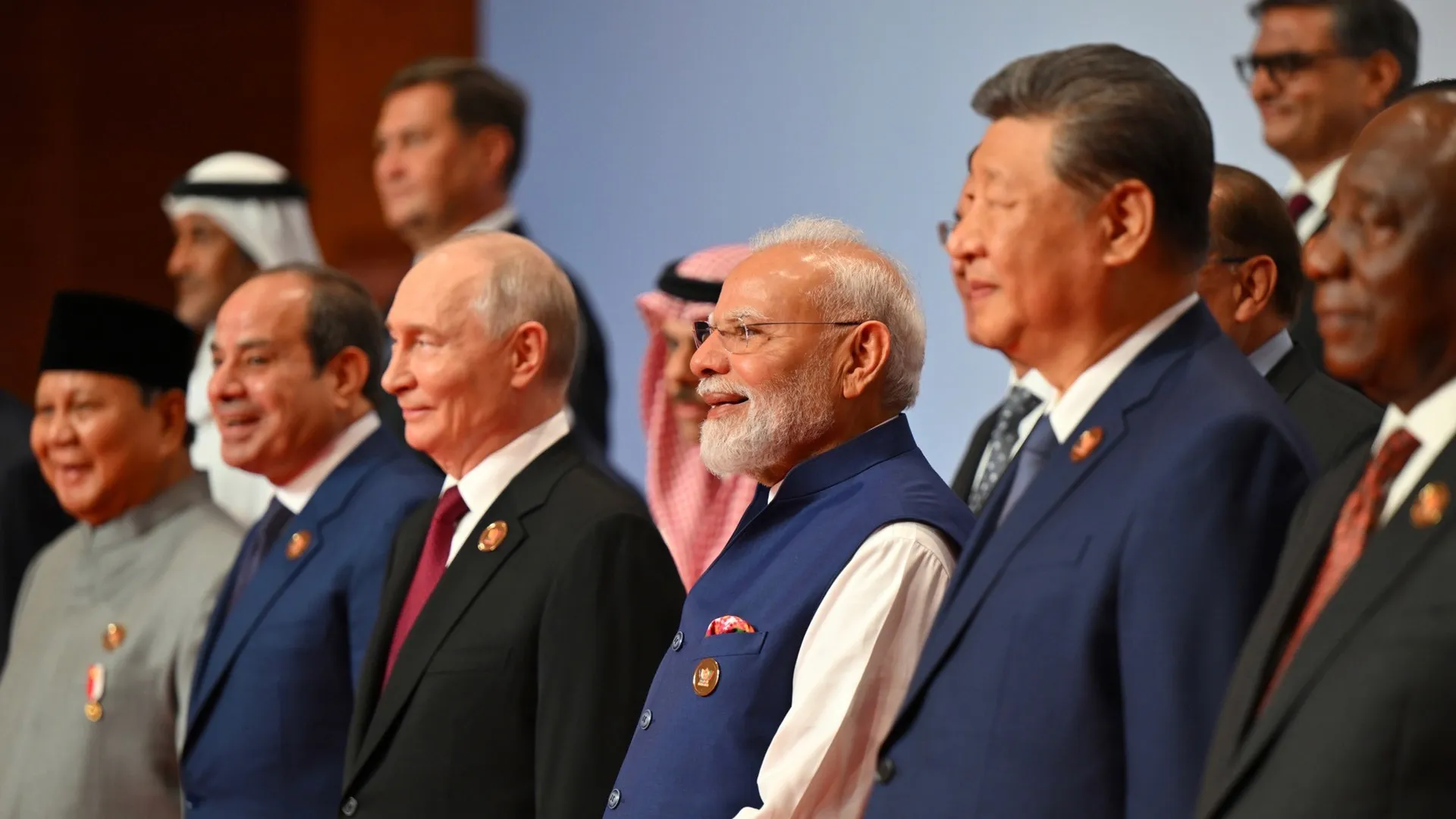
Brics has been described as a “motley collection of emerging markets that agree on little and achieve even less”, said the Financial Times, but its leaders signed off on a 45-page statement at the recent summit in India.
The group represents 49.5% of the global population, 40% of global GDP and 26% of global trade, but many of its members are at odds with their supposed allies, which limits the group’s influence.
What did it agree?
The acronym Bric – which stood for Brazil, Russia, India and China – was first coined in 2001 by Jim O’Neill, then chief economist at investment bank Goldman Sachs, to describe a group of emerging economies expected to sustain a prolonged period of growth. It has expanded and now includes Brazil, China, Egypt, Ethiopia, India, Indonesia, Iran, Russia, Saudi Arabia, South Africa and the United Arab Emirates.
The Week
Escape your echo chamber. Get the facts behind the news, plus analysis from multiple perspectives.
Join more than 350,000 subscribers and keep yourself informed with a selection of The Week’s most interesting, enlightening and entertaining stories - plus daily puzzles.
Join more than 350,000 subscribers and keep yourself informed with a selection of The Week’s most interesting, enlightening and entertaining stories - plus daily puzzles.
At last weekend’s India summit, the “historically unruly bloc” agreed a statement “blasting protectionism and economic sanctions and calling for peace in the Gulf”. Brics expressed “deep concern over the continued escalation of tensions” in the Middle East around the war in Iran and called for “maximum restraint”. It also encouraged nations to avoid actions that could further aggravate the situation.
The bloc also expressed “firm opposition” to the forced displacement of Palestinians and called for an end to Israel’s war in Gaza. It restated its support for a two-state solution, with the establishment of a sovereign Palestinian state.
The Ukraine war is a “source of tension” within the group because Russia is a founding member of Brics, said Al Jazeera. The declaration called for international disputes to be resolved through “dialogue, consultation, and diplomacy”. It was a “generic” statement that didn’t mention Ukraine.
Brics leaders called for “the elimination” of “unlawful” unilateral sanctions that were not authorised by the UN Security Council, saying they “undermine international law and the principles and purposes of the UN Charter”. This “position is significant for Russia, which has faced extensive Western sanctions”.
Sign up to get Today’s Best Articles in your inbox
A free daily email with the day’s biggest news and analysis – and the best features from TheWeek.com
On US tariffs, the declaration spoke of the organisation’s worry about the “unilateral tariff and non-tariff measures” that distort trade. It called for cooperation to protect global trade, supply chains, energy flows and maritime security as wars disrupt international commerce.
Brics says it wants a “multipolar” world: a global system where power is spread across several major countries or power blocs instead of being controlled by just one or two. It reiterated its “commitment to strengthening multilateralism and multipolarity”, stating that this could expand opportunities for emerging markets and developing countries to develop “constructive potential and enjoy universally beneficial, inclusive, sustainable and equitable economic globalisation and cooperation”.
What does this mean?
For Iran, the summit was “a chance to show that it does not stand alone amid the US and Israel’s military attacks and economic pressure”, said the BBC. In the face of Washington’s sanctions, Iran “pressed for deeper economic ties” with Brics members, including Malaysia, India and Ethiopia.
This was Chinese President Xi Jinping’s first visit to India in seven years and, despite “deep mistrust” between the two countries, the weekend was “still a big moment” for China and India. Xi and India’s Prime Minister Narendra Modi “agreed to strengthen business ties and transport links and address barriers to trade”. So the summit, held in Delhi, showed that Brics can “create space for rivals to talk and manoeuvre outside Western-dominated institutions”.
But “key members and partners of the bloc are at serious loggerheads”, said Stefan Wolff, a University of Birmingham academic, on The Conversation. Iran is “effectively in a state of war” with the UAE and Saudi Arabia, while the Saudis and the UAE “have been at odds for years” over Yemen, Sudan and Somalia. So a group “whose sole remaining source of unanimity is opposition to the US and its allies” is “hardly likely to become a pole of a multipolar order”.
Chas Newkey-Burden has been part of The Week Digital team for more than a decade and a journalist for 25 years, starting out on the irreverent football weekly 90 Minutes, before moving to lifestyle magazines Loaded and Attitude. He was a columnist for The Big Issue and landed a world exclusive with David Beckham that became the weekly magazine’s bestselling issue. He now writes regularly for The Guardian, The Telegraph, The Independent, Metro, FourFourTwo and the i news site. He is also the author of a number of non-fiction books.