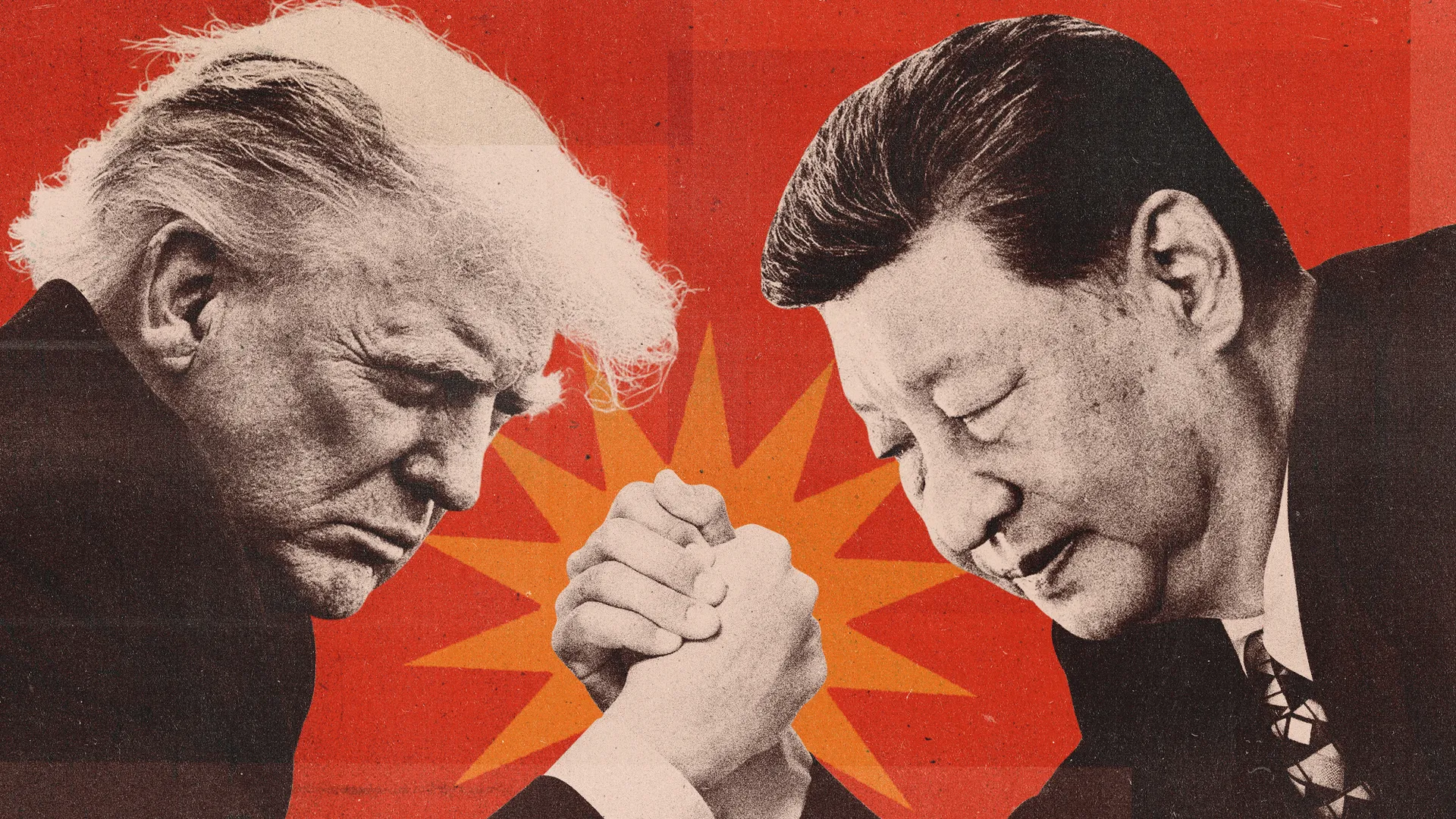
Two top-level summits held simultaneously this week offered contrasting visions for the world and who will lead it in the coming years.
Chinese President Xi Jinping welcomed world leaders including Russia’s Vladimir Putin, Indian PM Narendra Modi, and Iran’s President Masoud Pezeshkian to the Shanghai Cooperation Organisation in Kyrgyzstan’s capital, Bishkek, presenting Beijing as a driver of stability and champion of an “orderly multipolar world”.
Meanwhile, 6,826 miles away at a meeting of G20 finance ministers in Asheville, North Carolina, the mood could not have been more different. Western finance ministers expressed outrage at the Trump administration’s decision to invite Russia. There was anger at the US’s ongoing trade spat with Canada, Trump’s decision to punish South Korea and, of course, the continuing economic fallout from his war against Iran.
The Week
Escape your echo chamber. Get the facts behind the news, plus analysis from multiple perspectives.
SUBSCRIBE & SAVE
Sign up for The Week's Free Newsletters
Join more than 350,000 subscribers and keep yourself informed with a selection of The Week’s most interesting, enlightening and entertaining stories - plus daily puzzles.
Join more than 350,000 subscribers and keep yourself informed with a selection of The Week’s most interesting, enlightening and entertaining stories - plus daily puzzles.
Latest Videos FromThe Week US
If the Bishkek summit was “designed to project solidarity”, then the G20 gathering “offered an image of fracture”, said David Pierson for The New York Times.
China is using ever-closer ties with Russia and Iran, which are both at war with the West, to “project its influence”, at the same time as the US is “straining the alliances and economic relationships that have underpinned decades of global leadership”.
“China’s theory of the case for bending the international political order in its preferred direction is to amass support from the ‘global majority,’” said Ryan Hass, a former White House national security official now at the Brookings Institution think tank. Xi’s role as lead convener “builds a narrative around China gaining momentum in building support for playing a more central role on the world stage”.
This shows that the “emerging global order is not simply dividing into two fixed camps”, with countries such as India “maintaining relationships with competing powers while pursuing their own strategic interests”, said Business Insider Africa. That is why Xi has also sought to build bridges with the West, hosting the leaders of Germany, Britain and Canada this year, as long-standing allies turn away from the US under Trump.
The world’s two leading economies are “uneasily preoccupied with their trajectory these days”, said Evan Osnos in a recent New Yorker article entitled “The future, made in China”. China is “eager to restore its historical eminence”, but, in a sign the centre of global politics may be shifting, having long “looked West for visions of the future”, nowadays “it favours its own”.
What next?
China’s show of strength, on display not only in Bishkek but also in Asheville where it blocked a G20 joint statement, comes ahead of a crunch meeting between Xi and Trump in Washington DC later this month.
With China now viewed more positively than the US in the majority of 36 countries surveyed by the Pew Research Center, Xi could do worse than acknowledge the assessment by Beijing’s Renmin University when meeting the famously vain US president.
Entitled “Thank Trump”, it hailed his efforts to hasten the “twilight of an empire” by undermining America’s international alliances, its institutions at home and credibility abroad, said The Economist.