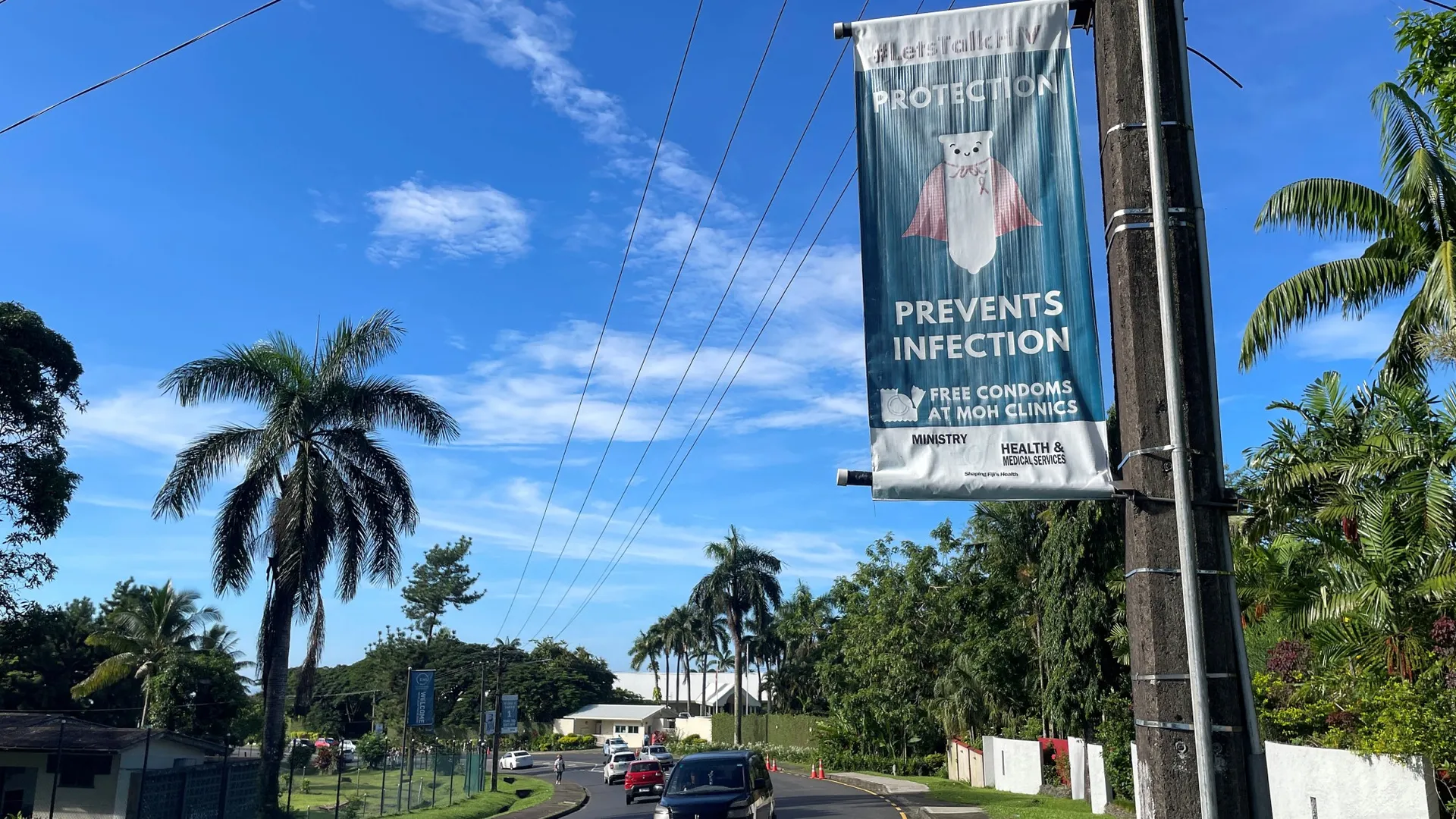
New cases of HIV are surging at an unprecedented rate in Fiji, and the South Pacific island nation has declared a national emergency as a result. The government is doubling down on preventative measures with the help of the Joint United Nations Programme on HIV/AIDS (UNAIDS), as drug use and taboos around the disease contribute to the outbreak.
Why is there a crisis?
Over the last 15 years, new HIV infections have “increased 12-fold” in Fiji, according to recent UNAIDS data, said The Associated Press. As of 2025, about 9,000 people live with HIV in a country that has “less than a million people.” This means that about one in every 60 adults there has the virus, “compared with one in 167 five years ago.”
HIV is now a “national crisis,” and the government is “treating it like one,” said Fiji Health Minister Atonio Lalabalavu in a video statement on Facebook. “No more business as usual.” More people in Fiji are living with HIV than “ever before.”
The Week
Escape your echo chamber. Get the facts behind the news, plus analysis from multiple perspectives.
SUBSCRIBE & SAVE
Sign up for The Week's Free Newsletters
Join more than 350,000 subscribers and keep yourself informed with a selection of The Week’s most interesting, enlightening and entertaining stories - plus daily puzzles.
Join more than 350,000 subscribers and keep yourself informed with a selection of The Week’s most interesting, enlightening and entertaining stories - plus daily puzzles.
Latest Videos FromThe Week US
Officials warn that the outbreak is not “limited to particular areas or populations,” said The New York Times. And because Fiji “serves as a regional hub for business, tourism and transport,” the surge could also affect nearby countries in the South Pacific if “left unchecked.”
Such interconnectedness may have contributed to a spike in infections, said Eamonn Murphy, the director of regional support teams in the Asia Pacific region, Central Asia and Eastern Europe for UNAIDS, to the Times. An influx of drugs like methamphetamine and cocaine during the Covid-19 pandemic added “fuel on the flame” of a longstanding HIV presence. Fiji is also one of “several global hot spots” in which a dangerous trend called bluetoothing, in which people “inject themselves with the blood of other drug users to get a cheap high,” is contributing to spikes in disease rates, said the Times.
What’s the plan to solve the crisis?
These alarming statistics don’t capture the full scale of the problem, said Renata Ram, the Fiji adviser for UNAIDS, to CNN. Most concerning is the “speed of the epidemic” and the “number of people who may be living with HIV without knowing it.” Only about 39% of Fijians living with HIV know their status, and less than a quarter (22%) are on treatment.
HIV is “not only a health issue,” said Joeli Colati, the executive director of Fiji Network Plus, an advocacy organization for HIV-positive people, to CNN. It’s also connected to “stigma, poverty, confidentiality and fear.”
Limited testing, low condom use, and shame are often cited as factors contributing to infection. And there are many reasons why people might be hesitant to seek treatment, including a “fear of being recognized at the HIV clinic,” said Colati. Fiji is a “deeply religious society” in which “premarital or casual sex is generally considered taboo,” said CNN.
Fiji’s government has “ramped up testing and treatment efforts” since January 2025, when the nation first “declared an HIV outbreak,” said the Times. However, an “outbreak-level response is no longer sufficient,” said Lalabalavu in his video statement. Moving forward, Fiji has pledged a “whole-of-government response,” including “expanded access to free testing, prevention services and treatment,” as well as harm-reduction measures such as programs that “allow people who inject drugs to exchange used needles for clean ones,” said the Times.
Fiji has “recognized the urgency of the moment and is stepping up its response,” said UNAIDS Executive Director Winnie Byanyima in a press release. It’s also a “stark reminder to the world that AIDS is not over.” HIV epidemics can “change quickly,” and countries need “health and community systems that are ready to respond urgently.”