Sign up to get Today’s Best Articles in your inbox
Join 350,000+ subscribers and keep yourself informed with a selection of
The Week’s most interesting, enlightening and entertaining stories - plus daily puzzles.
You are now subscribed
Your newsletter sign-up was successful
Want to add more newsletters?
An account already exists for this email address, please log in.
AI may have cracked the antiaging code
An AI-discovered drug could help slow the aging process
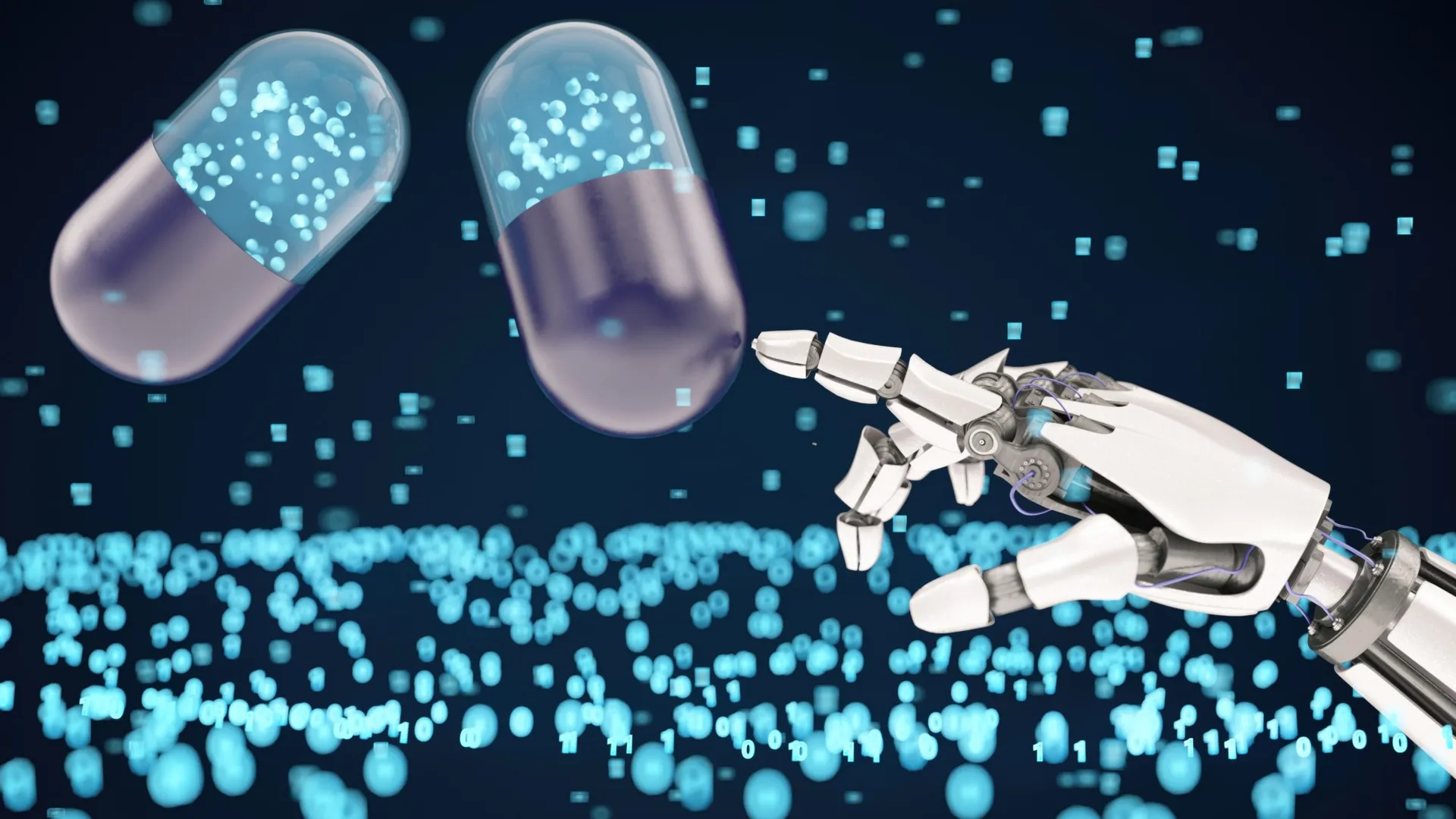
A pharmaceutical company claims to have used artificial intelligence to discover a drug that reverses the impacts of aging. Whether or not the medication is truly effective for antiaging purposes remains to be seen, but the finding highlights how the burgeoning technology could make the drug discovery process easier, or at least faster.
Beating the ‘aging clocks’
Last year, Insilico Medicine, a company that “aims to accelerate drug discovery” using artificial intelligence, announced that a clinical trial of one of its drug candidates suggested it could help treat a chronic lung disease, said The New York Times. The disease in question, idiopathic pulmonary fibrosis, or IPF, is sometimes referred to as “Alzheimer’s of the lungs.” Now, new data from the same clinical trial shows an even “more intriguing possibility”: The drug, called rentosertib, could “also slow the aging process.” The company used AI to assist in generating the drug’s molecular structure.
Rentosertib reduces the biological markers of age as measured by six separate “aging clocks,” or AI technology “designed to predict a person’s morbidity and mortality,” according to a new study published in the journal Nature Biotechnology. This “elaborate clinical trial” is a milestone in the “widespread effort to improve healthcare” using the same technology that underpins “popular chatbots like ChatGPT and image generators like Midjourney.” Insilico is just “one of many startups, tech giants and academic labs” working to “accelerate drug discovery” and “hone other medical tasks with help from these methods.”
The Week
Escape your echo chamber. Get the facts behind the news, plus analysis from multiple perspectives.
Join more than 350,000 subscribers and keep yourself informed with a selection of The Week’s most interesting, enlightening and entertaining stories - plus daily puzzles.
Join more than 350,000 subscribers and keep yourself informed with a selection of The Week’s most interesting, enlightening and entertaining stories - plus daily puzzles.
If your biological age is lower, “you are likely to die later,” the AI drug discovery startup’s CEO, Alex Zhavoronkov, said in an interview, per Bloomberg. But these are early results, and the drug’s potential long-term health effects in larger groups of people are unknown.
The clinical trial included just 42 patients who had a chronic lung disease. While longevity enthusiasts have “long embraced the repurposing of existing medications” to delay aging, efforts to develop “novel antiaging drugs” have often “ended in failure,” said Bloomberg. With the advent of GLP-1 treatments, however, whose benefits appear to extend well beyond weight loss and diabetes, “major pharmaceutical players are increasingly showing interest in the field.”
‘Not replacing scientific intuition’
The results of this study are the first to show “very clearly” that “predicted biological age can be reduced,” Vadim Gladyshev, a Harvard Medical School professor who helped build one of the aging clocks, said to the Times. Still, the study is far from conclusive, Gladyshev acknowledges, citing the small sample size and the unreliability of aging clocks. Most notably, Insilico’s drug has “not yet been tested in healthy patients,” said the Times. Because the company conducted its clinical trial solely with IPF patients, the results may be specific to this condition.
The idea of “reducing aging certainly sounds good” and has become the “obsession of some tech bro-types,” but the “actual utility of aging clocks is up for debate,” said Gizmodo. More recent models focus on proteomics, or “measuring blood proteins,” which a 2024 study found could be used to determine if a person had a higher risk of age-related diseases. While some researchers believe that these “catch-all measurements” could be useful, there’s still a “long way to go before they become truly meaningful markers.” There isn’t yet a measurement that “serves as a universally accepted ‘age’ indicator,” and some doctors have warned that “leaning on these metrics could lead to pursuing the wrong interventions.”
Sign up to get Today’s Best Articles in your inbox
A free daily email with the day’s biggest news and analysis – and the best features from TheWeek.com
AI is not “replacing scientific intuition,” and it is “unlikely to do so anytime soon,” said Forbes. What it can do is “make the costly, time-consuming R&D work” of preparing for clinical trials “more efficient.” For the drug discovery field, that means the “computer screen is becoming nearly as essential as the lab bench.” That shift is “familiar across industries” as “digital tools increasingly become part of the craft rather than merely an add-on.”
Theara Coleman has worked as a staff writer at The Week since September 2022. She frequently writes about technology, education, literature and general news. She was previously a contributing writer and assistant editor at Honeysuckle Magazine, where she covered racial politics and cannabis industry news.