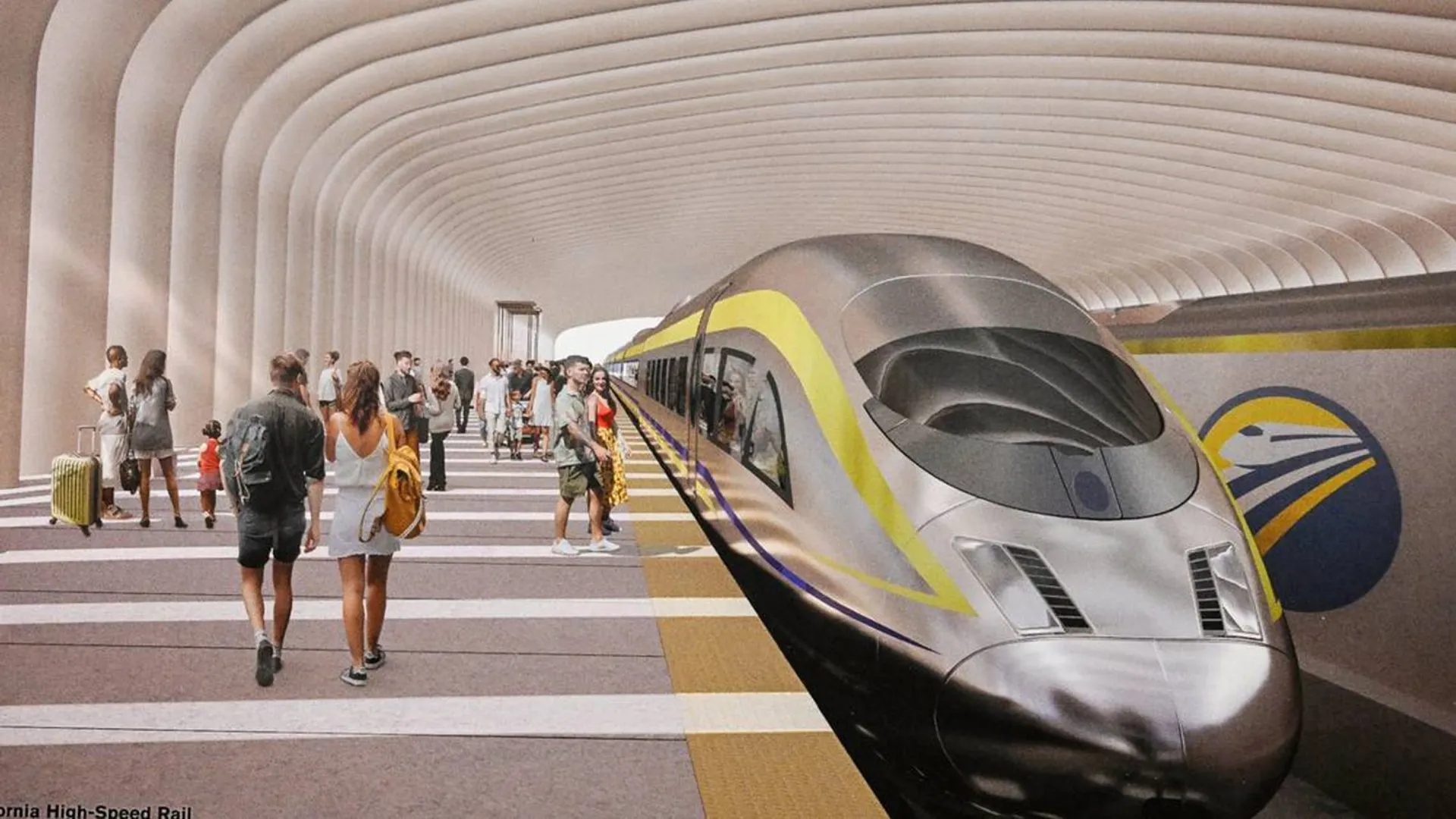
A California high-speed rail was supposed to connect San Francisco to Los Angeles by 2020. Billions of dollars later, no track has been laid, and completion of the project is still a distant dream. Now, officials are raising questions about the project’s future.
The rail project was approved by California voters in 2008. It has since cost “billions more than planned” and is “years behind schedule,” said The Wall Street Journal. The original price tag of $33 billion has risen to $126 billion and could grow further before the completion date, now projected for 2040. Whether that goal could be achieved is an open question. The rail system’s inspector general is warning it “could run out of money by December 2027,” said KCRA. “I honestly don’t think [it] will ever run," farmer and attorney Michael Dias said to the TV station.
Progress has been plagued by “rising costs, funding shortfalls and construction delays,” said the Daily Caller. Authorities point to the Golden State’s intensive regulatory environment as a factor. California was once “able to build infrastructure like this in a very short amount of time,” but “we kept regulating ourselves more and more and more,” rail system CEO Ian Choudri said this month in a speech, per The Fresno Bee.
The Week
Escape your echo chamber. Get the facts behind the news, plus analysis from multiple perspectives.
SUBSCRIBE & SAVE
Sign up for The Week's Free Newsletters
Join more than 350,000 subscribers and keep yourself informed with a selection of The Week’s most interesting, enlightening and entertaining stories - plus daily puzzles.
Join more than 350,000 subscribers and keep yourself informed with a selection of The Week’s most interesting, enlightening and entertaining stories - plus daily puzzles.
Latest Videos FromThe Week US
China has “laid enough high-speed rail to circle the globe” during the same period that California has struggled to get traction, said the Caller. Big projects are “much easier to do in countries with weak or nonexistent individual property rights,” energy analyst David Blackmon said to the outlet.
Another locale that has won the rail race: Morocco. The country and California are “remarkably similar in size,” but the Golden State is “more than 20 times richer,” columnist Joe Mathews said at the San Francisco Chronicle. Still, Morocco built a 201-mile line thanks to a “structural simplicity” and “raw political will” that California does not possess. It helps that Morocco is “highly centralized,” while California has a “labyrinth of zoning, lawsuits, and YIMBY-NIMBY politics” that let citizens more easily obstruct construction projects. Morocco has a completed railway; “California has excuses.”
Maybe there is an alternative. The rail system will not be complete until 2040, but “robotaxis could use the I-5 sooner,” AgentCloak CEO Peter Yared said at Inc. Robotaxis from Tesla and Waymo have already “started operating on highways,” which makes them a plausible alternative to the “large capital expense and long timelines of high-speed rail.” While the state waits around on rail, self-guided electric vehicles “could easily be deployed in less than a year.”
What next?
The first high-speed rail segment connecting Merced with Bakersfield will be complete “sometime in the next decade — if it gets built,” Dan Walters said at CalMatters. Meeting that goal depends on the state continuing to dedicate revenue from its greenhouse gas permits system, but that would “require cuts in other projects.” For now, progress on the rail project continues to be mired in “seemingly endless political melodrama.”