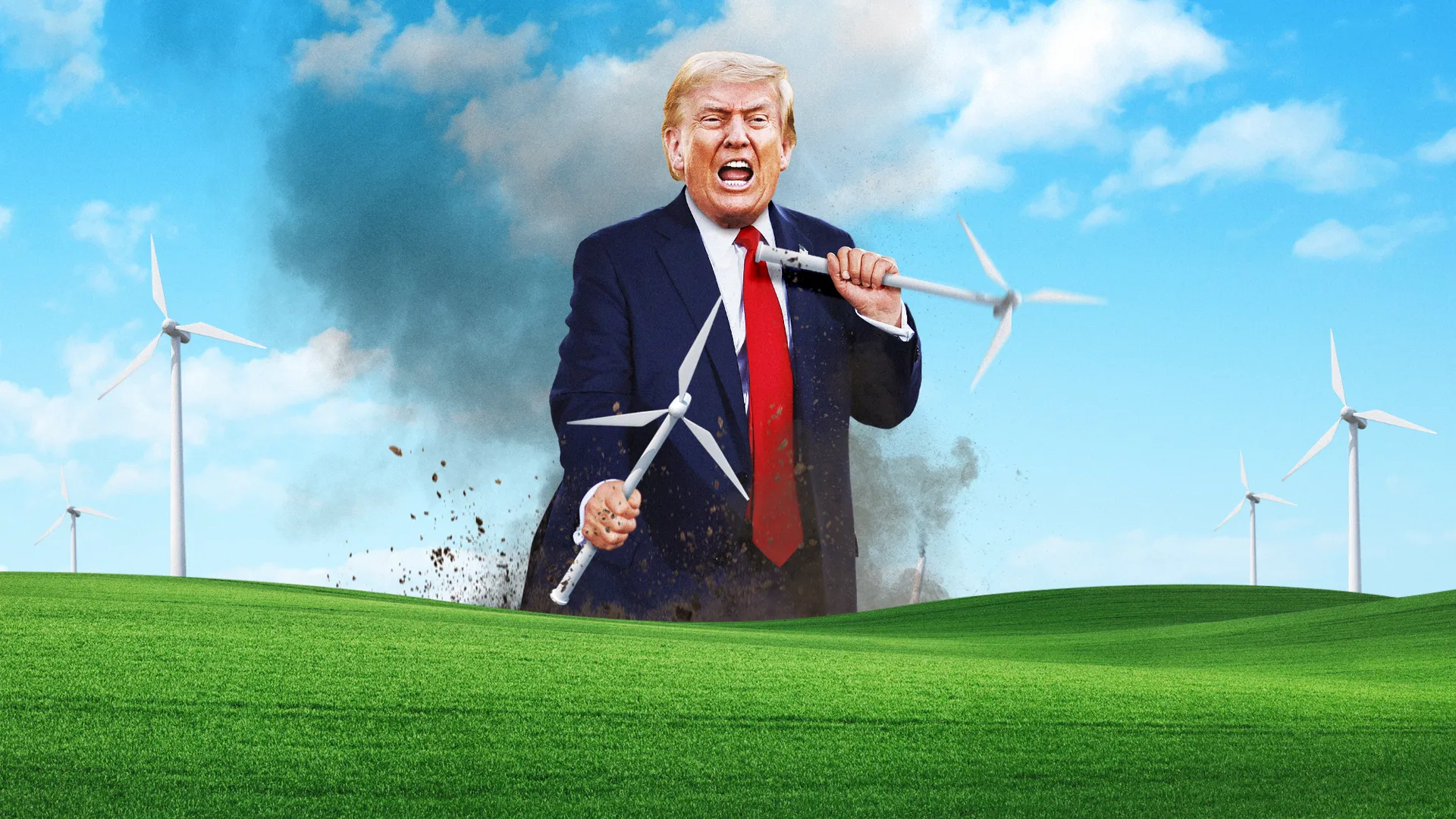
The Trump administration has been on a crusade against clean energy, and the costs are adding up. The White House has spent billions to steer energy companies away from wind power while simultaneously increasing coal subsidies. U.S. taxpayers, meanwhile, are dealing with ever-rising electricity bills and gas prices. Critics say something has to give.
Trump is “forcing higher bills” on American energy consumers, former Washington Gov. Jay Inslee said to The Guardian. The administration has “directly spent $2.7 billion of taxpayer money,” the outlet said, paying energy companies to “cancel a total of eight offshore wind projects” while at the same time “pouring $1.125 billion into boosting coal” by retrofitting and expanding capacity at older coal-powered power plants.
Those and other White House changes to energy policies “could lead to households paying an average of $460 extra per year for energy costs” by 2035, said Newsweek, citing a new report from think tank Energy Innovation. Administration officials dispute that estimate. Trump has “rolled back burdensome regulations and bolstered U.S. energy production to lower prices for American families,” a spokesperson said to Newsweek.
The Week
Escape your echo chamber. Get the facts behind the news, plus analysis from multiple perspectives.
SUBSCRIBE & SAVE
Sign up for The Week's Free Newsletters
Join more than 350,000 subscribers and keep yourself informed with a selection of The Week’s most interesting, enlightening and entertaining stories - plus daily puzzles.
Join more than 350,000 subscribers and keep yourself informed with a selection of The Week’s most interesting, enlightening and entertaining stories - plus daily puzzles.
Latest Videos FromThe Week US
The president in 2024 “promised to cut electric bills in half,” said CNN. The Energy Innovation report shows that he is “doing the opposite.” Electricity bills have “spiked nationwide by 7.4% since last fall,” and more than a dozen states are experiencing “double-digit increases year-over-year.” The attempt to back a resurgence of coal will also prove costly. Coal power is “more expensive than natural gas and renewables,” which will result in “higher power bills for consumers.”
“The strangest part of Trump’s wind buyouts is the way it ignores the law of supply and demand,” Paul Wesslund said at the Louisville Courier Journal. It is “bad economics” as well as “bad politics” to respond to the nation’s growing energy needs by cutting supply and raising prices during an affordability crisis. Wind and solar farms “don’t need constant refueling” but do have “shorter construction times” that make it easier to bring new projects online “as fast as possible.” Trump’s logic in killing off such projects is “just a lot of hot air.”
What next?
More than 200 clean energy projects have been canceled since the start of 2025, said Fast Company. The thwarted production has cost roughly “half a million jobs” and tens of billions in lost growth and tax revenues. But the clean energy economy has not “come to a stop.” More than 90% of new power plants in 2025 were solar, wind or battery plants, and the number is expected to grow this year. Because of Trump’s crackdown, however, the “pace is much slower than it otherwise would have been.”
Green power sources will “continue to grow,” E2’s Michael Timberlake said to Fast Company. But White House energy policies will cause the U.S. to “miss out on a lot of investments and a lot of manufacturing opportunities.”