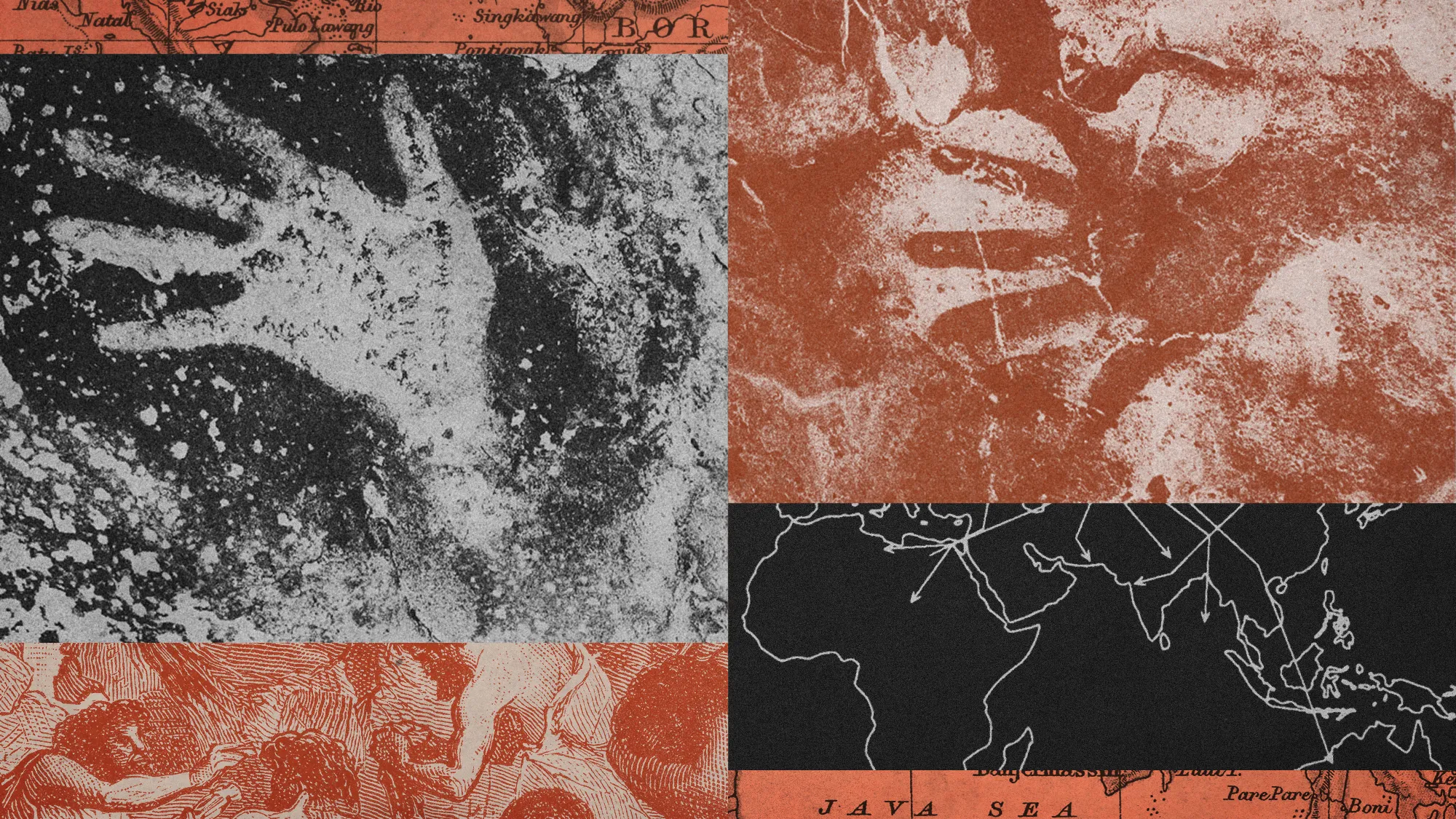
Scientists found “figurative cave art and stencils of human hands” on two Indonesian islands in the Wallacea region, Sulawesi and Borneo, according to a study published in the journal Nature. The art from Sulawesi dates back at least 67,800 years, said Phys.org, predating archaeologists’ “previous discovery in the same region by 15,000 years or more.”
Indonesia is “known to host some of the world’s earliest cave drawings,” said The Associated Press. The art was likely made by “blowing pigment over hands placed against the cave walls, leaving an outline.”
Most research suggests that humans left Africa 60,000 to 90,000 years ago, traveling through the Middle East to South Asia before sailing toward the Australian landmass. This art could “hold important clues to the story of this epic human migration,” said National Geographic. The finding supports research that early humans had “seafaring technology and were capable of open water crossings between Wallacea and Australia by 65,000 years ago,” Helen Farr, a maritime archaeologist at Britain’s University of Southampton, said to National Geographic.
The discovery also provides a glimpse into early human intelligence. Researchers studying cave art in Europe often “thought, Wow, this is really where true art began, true modern human artistic culture,” Adam Brumm, an archeology professor at Australia’s Griffith University and a study co-author, said to NBC News. But the finding proves humans were making “incredibly sophisticated” cave art “before our species ever even set foot in that part of the world.” |