The Week The Week
flag of US
US
flag of UK
UK
https://cdn.mos.cms.futurecdn.net/flexiimages/jzblygzdxr1769609154.gif

SUBSCRIBE

Try 6 weeks free

Sign in
  • View Profile
  • Sign out
  • The Explainer
  • Talking Points
  • The Week Recommends
  • Podcasts
  • Newsletters
  • From the Magazine
  • The Week Junior
  • More
    • Politics
    • World News
    • Business
    • Health
    • Science
    • Food & Drink
    • Travel
    • Culture
    • History
    • Personal Finance
    • Puzzles
    • Photos
    • The Blend
    • All Categories
  • Newsletter sign up Newsletter
  • Brand Logo
    Avalanche deaths, South Korean verdict and HHS shake-up

     
    TODAY’S NATURAL DISASTER story

    At least 8 dead in California’s deadliest avalanche

    What happened
    Eight people were killed in an avalanche near Lake Tahoe on Tuesday and one person is missing and presumed dead, California authorities said yesterday. The other six people on the three-day backcountry skiing trek in the Sierra Nevada mountains were rescued alive, including one of the four guides. The avalanche, near Castle Peak, was the deadliest in modern California history and the worst in the U.S. since 11 climbers were killed on Washington’s Mount Rainier in 1981. 

    Who said what
    The backcountry expedition set out Sunday morning, shortly after the Sierra Avalanche Center issued an avalanche watch for the area, indicating that large avalanches were likely in the following 24 to 48 hours. The skiers were heading back to the trailhead after two nights at the remote Frog Lake huts when “someone saw the avalanche, yelled ‘Avalanche!’ and it overtook them rather quickly,” Capt. Russell  Greene of the Nevada County Sheriff’s Office said at a news conference yesterday. 

    After the avalanche hit, the “six survivors were able to use a combination of emergency beacons and iPhone SOS functions to contact rescuers, who braved treacherous conditions to reach them,” said The New York Times. The “dangerous, hourslong rescue effort” was “hampered by whiteout conditions and strong winds from the winter storm roaring through” the Donner Summit area, said CNN. Rescuers reached the survivors just before sunset. They were unable to remove the bodies of the eight dead skiers due to the “really horrific conditions,” said Nevada County Sheriff Shannan Moon (pictured above). 

    An average of 27 people a year have died in U.S. avalanches in the past decade, according to the Colorado Avalanche Information Center. Tuesday’s tragedy was the second fatal avalanche near Castle Peak this year, after a snowmobiler was killed about a mile away in January.

    What next?
    “As families grieve and crews come up with a plan to remove the bodies from the mountain when it’s safe,” USA Today said, the company that led the expedition, Blackbird Mountain Guides, “is facing a tough question: Given the known dangers, why did they still go?” It is “unclear if the guides would have known” that the avalanche watch was elevated to a more imminent warning Tuesday morning, said The Associated Press, but Moon “said investigators would look into the decision to proceed with the trip on Sunday despite the forecast.” 


    TODAY’S INTERNATIONAL story

    Ex-South Korean leader gets life sentence for insurrection

    What happened
    Former South Korean President Yoon Suk Yeol was sentenced to life in prison today for his short-lived declaration of martial law in 2024. Judges at the Seoul Central District Court found Yoon, 65, guilty of leading an insurrection, the most serious of several criminal charges he has faced at multiple trials since April. He was sentenced in January to five years for lesser crimes related to his martial law attempt.

    Who said what
    Prosecutors had demanded the death penalty for Yoon, “saying his actions posed a threat to the country’s democracy and deserved the most serious punishment available,” The Associated Press said. But “most analysts” expected a life sentence “since the poorly planned power grab did not result in casualties.” The Seoul court also handed down a 30-year sentence to Yoon’s defense minister, Kim Yong-hyun, and lesser prison terms to other former military and police officials who helped implement the martial law decree. 

    The verdict “will offer closure to many South Koreans who are exhausted by the tumultuous period” set off by Yoon’s threat to end the “decades of democracy they had won through great sacrifice after years of military rule,” The New York Times said. But it is “unlikely to heal divisions in a deeply polarized country where the former president still has a sizable base of loyal supporters.”

    What next?
    Yoon has a week to appeal the ruling, but his lawyers said they would consult with their client before challenging what they viewed as a rigged verdict. A lawyer for Kim said the former defense minister would “of course appeal.”


    TODAY’S HEALTH POLICY Story

    NIH director Bhattacharya tapped as acting CDC head

    What happened
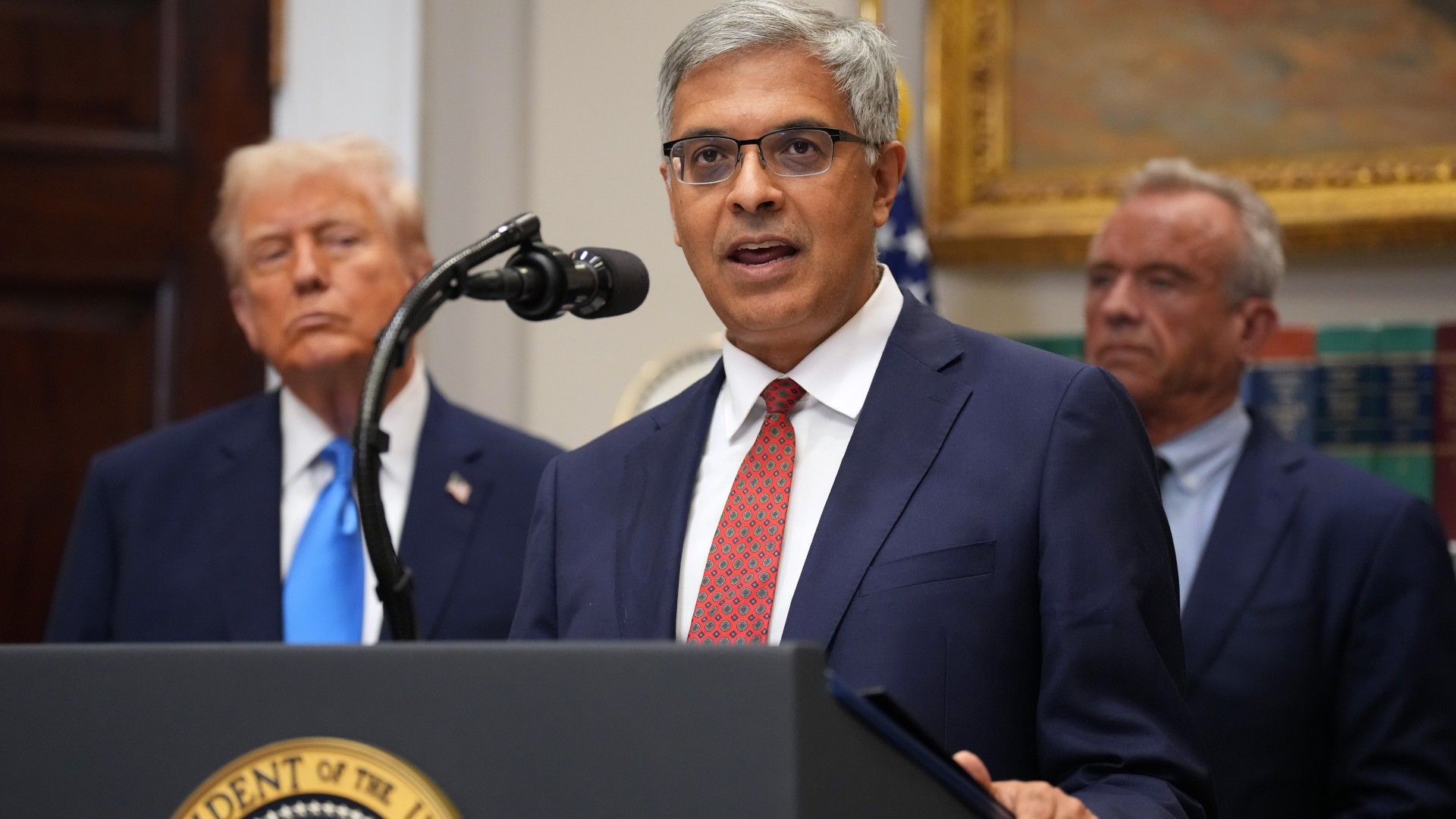
    Dr. Jay Bhattacharya, the director of the National Institutes of Health, will also lead the Centers for Disease Control and Prevention until President Donald Trump appoints a permanent director, The New York Times and other news organizations reported yesterday, citing administration officials. Bhattacharya, an outspoken critic of the CDC’s Covid-19 response, will replace acting CDC chief Jim O’Neill. Health and Human Services Secretary Robert F. Kennedy Jr. fired CDC Director Susan Monarez in August amid a dispute over his proposed changes to vaccine policy. 

    Who said what
    Kennedy has “managed to install leaders he trusts,” including Bhattacharya, in other HHS agencies, but “the CDC has been an outlier,” the Times said. Temporarily expanding Bhattacharya’s portfolio is part of a broader HHS “leadership shake-up” by Kennedy and the White House “partly in anticipation of health policy being front and center in this year’s midterm elections.” 

    The Trump administration “seeks to stabilize a department rattled by internal fights and controversial messages,” especially on vaccines, before voters head to the polls, said The Washington Post. As CDC boss, Bhattacharya will “oversee the agency’s vaccine recommendations, which have emerged as a political flash point” as Kennedy, a longtime vaccine opponent, works to “roll them back.” Bhattacharya has said he supports routine childhood immunizations.

    What next?
    Public health experts, “including former CDC officials, say it will be nearly impossible” for Bhattacharya to run “both the nation’s biomedical research agency and its public health agency,” one of which is headquartered in Maryland and the other in Atlanta, the Times said. Getting a new permanent CDC director confirmed by the Senate would be a “big political lift heading into the midterm elections,” Axios said.


    It’s not all bad

    A test that uses menstrual blood to screen for human papillomavirus could become a non-invasive alternative to traditional cervical cancer screening. Current HPV testing involves a clinician using a small brush to collect cells from the cervix. In a Chinese study of 3,068 women, researchers found that a blood testing strip placed on top of a sanitary pad could pick up cervical cell abnormalities. More testing is needed, but researchers say these initial results are promising.


    Under the radar

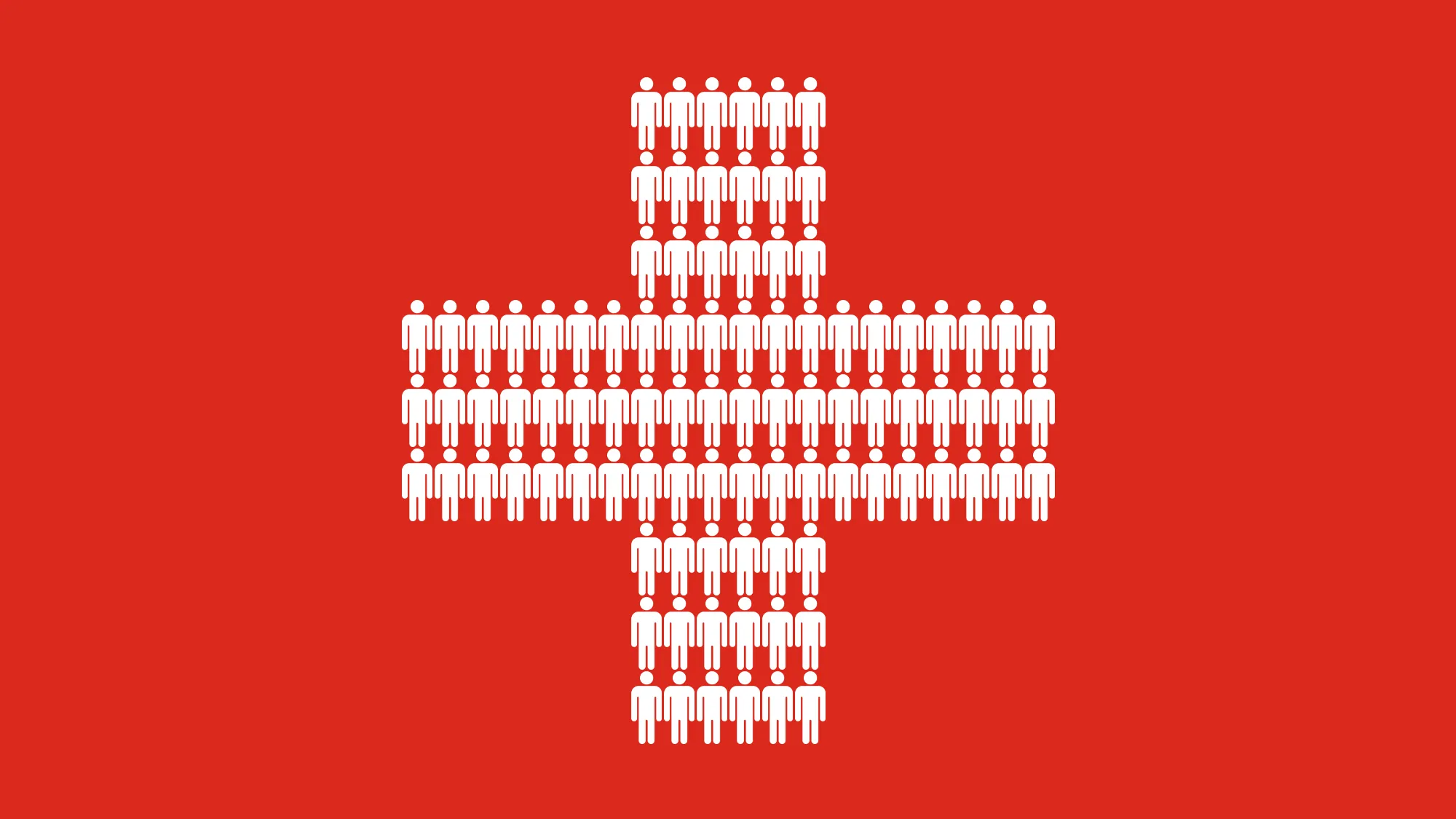
    Switzerland could vote to limit its population

    Switzerland is holding a referendum on capping its population at 10 million. In June, citizens will vote on the radical proposal put forward by the far-right Swiss People’s Party (SVP). If it passes, the measure could damage the Swiss economy and would endanger lucrative agreements with the EU.

    Switzerland’s population currently stands at 9.1 million, having risen in recent years as foreign-born workers are drawn in by its high wages and good quality of life. And the SVP, now the country’s largest political party, claims that the “population explosion” has pushed public services to breaking point. 

    Switzerland has one of the highest proportions of foreign-born residents in Europe at 27%, according to government figures. Since 2000, its population has grown by about 25%, faster than most neighboring countries. And housing supply has struggled to keep pace, causing spiralling rents that have sharpened unease about immigration. 

    For years, the SVP, which has finished first in every election since 1999, has repeatedly put forward hardline proposals, such as deporting any foreigner convicted of even a minor offense. But after an “influx of over 180,000 people in a single year, action must finally be taken,” said the party. 

    Critics point out that the SVP’s plan “imposes a hard cap” rather than setting out a “detailed quota or migration-management system,” said The Irish Times. It could also “derail” last year’s “carefully negotiated new deal between Bern and Brussels” to maintain Switzerland’s access to the EU’s single market and risk Switzerland’s place in Europe’s Schengen visa-free travel zone. It’s a “chaos initiative,” said business lobbying group Economiesuisse.


    On this day

    February 19, 1847

    The first rescuers reached members of the Donner Party, a group of settlers who became trapped by an early snow in California’s Sierra Nevada mountains. Almost half of the 87 members of the expedition died. The Donner story became infamous following reports of cannibalism among the survivors. The site of their tragedy is just miles from this week’s deadly avalanche near Donner Summit.


    TODAY’S newspaperS

    Trump’s ‘void on climate’

    Meta CEO Mark Zuckerberg “defends app’s age policies,” and “his likability may become a factor,” the Los Angeles Times says on Thursday’s front page. “Social-media bans for youth gain momentum worldwide,” says The Wall Street Journal. “Trump’s Board of Peace to meet as Gaza stability plan languishes” and “Israel deepening control in West Bank,” The Washington Post says. “States take lead as Trump leaves void on climate,” The New York Times says. “Fed: U.S. bore 90% of tariffs’ burden,” USA Today says. “Moderna wins battle but war goes on” against FDA and “politics,” says The Boston Globe. “Legacy or grab? Renaming of Palm Beach airport for Trump has lawmakers at odds,” says The Palm Beach Post.

    ► See the newspaper front pages


    Tall tale

    Llama enforcement

    A suspected thief was thwarted by a herd of llamas who didn’t appreciate him running through their field in Derbyshire, England. Heidi Price and Graham Oliver knew something was wrong on their farm when the animals started making a “warning cry, which sounds like an old man laughing,” Price told The Telegraph. The llamas had cornered a man who wandered onto the property after allegedly stealing tobacco. He remained frozen in place until police arrived and arrested him.


    Morning Report was written and edited by Nadia Croes, Catherine Garcia, Scott Hocker, Anya Jaremko-Greenwold, Justin Klawans, Harriet Marsden, Rafi Schwartz, Peter Weber and Kari Wilkin, with illustrations by Stephen Kelly and Julia Wytrazek.

    Image credits, from top: Tran Nguyen / AP Photo; Kim Hong-Ji / Pool / AFP via Getty Images; Andrew Harnik / Getty Images; Illustration by Stephen Kelly / Future
     

    Recent editions

    • Evening Review

      Will the young pay the price for wage increases?

    • Morning Report

      Reform vows to axe Equality Act

    • Evening Review

      How poison became Russia’s weapon of choice

    VIEW ALL
    TheWeek
    • About Us
    • Contact Future's experts
    • Terms and Conditions
    • Privacy Policy
    • Cookie Policy
    • Advertise With Us
    • FAQ
    Add as a preferred source on Google

    The Week UK is part of Future plc, an international media group and leading digital publisher. Visit our corporate site.

    © Future Publishing Limited Quay House, The Ambury, Bath BA1 1UA. All rights reserved. England and Wales company registration number 2008885.