The Week The Week
flag of US
US
flag of UK
UK
https://cdn.mos.cms.futurecdn.net/flexiimages/jzblygzdxr1769609154.gif

SUBSCRIBE

Try 6 weeks free

Sign in
  • View Profile
  • Sign out
  • The Explainer
  • Talking Points
  • The Week Recommends
  • Podcasts
  • Newsletters
  • From the Magazine
  • The Week Junior
  • More
    • Politics
    • World News
    • Business
    • Health
    • Science
    • Food & Drink
    • Travel
    • Culture
    • History
    • Personal Finance
    • Puzzles
    • Photos
    • The Blend
    • All Categories
  • Newsletter sign up Newsletter
  • Brand Logo
    Strait mining, Chaldean Catholic exits and halted execution

     
    TODAY’S IRAN WAR story

    Strait of Hormuz mine threat roils Iran war, oil prices

    What happened
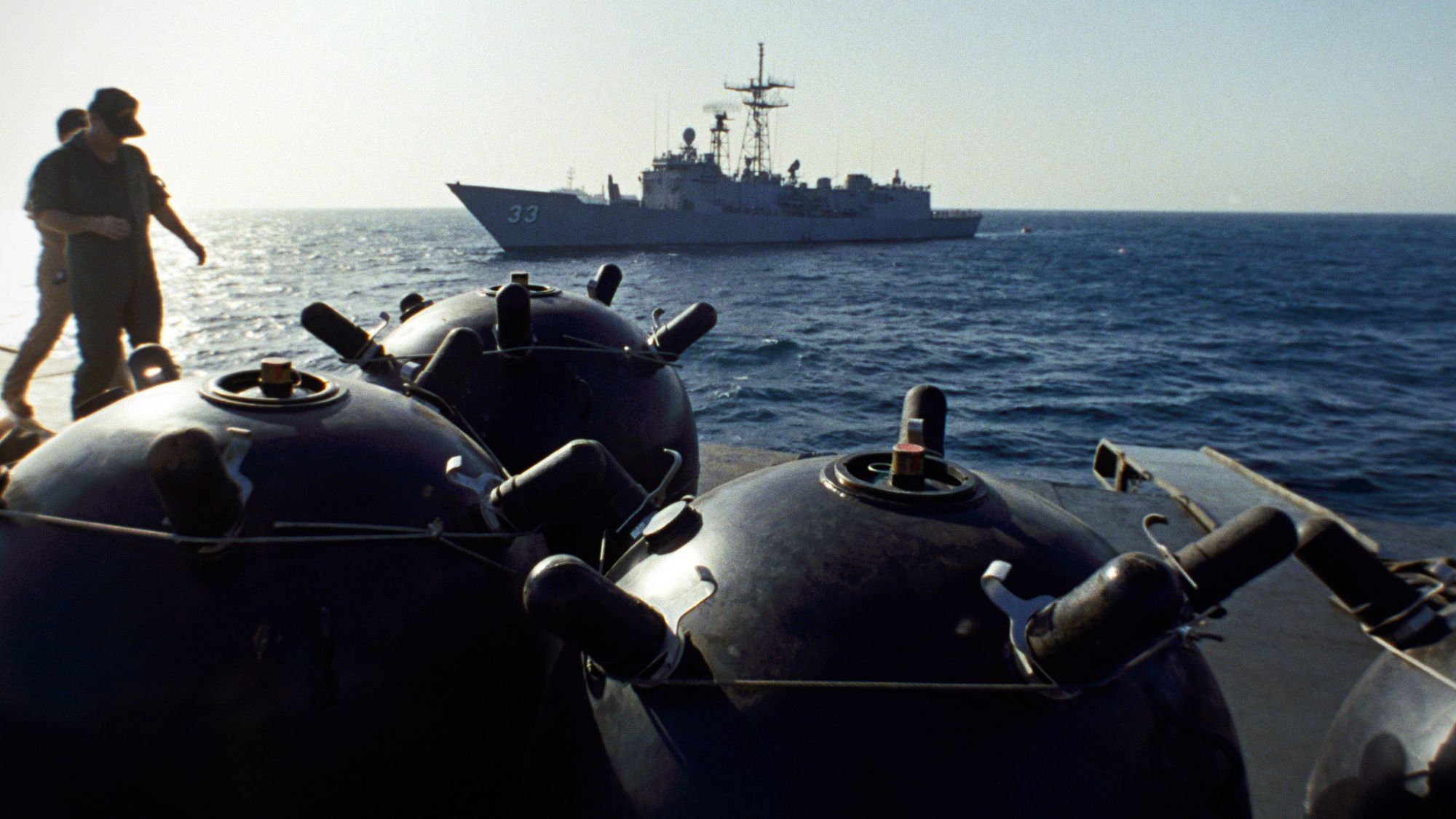
    The Pentagon last night said the U.S. had destroyed several Iranian naval vessels, “including 16 mine layers near the Strait of Hormuz,” during another day of market turbulence triggered by the U.S.-Israeli war against Iran. CNN, citing U.S. intelligence sources, said yesterday that Iran had already begun laying mines in the strait, the shipping chokepoint through which a fifth of the world’s oil usually passes. Iran has effectively shut the narrow route with threats to attack any ship attempting to pass through.

    Who said what
    “If Iran has put out any mines in the Hormuz Strait, and we have no reports of them doing so,” President Donald Trump said on social media yesterday afternoon, “the Military consequences” will be “at a level never seen before” unless the mines are “removed forthwith.” The mining “is not extensive yet, with a few dozen having been laid in recent days,” CNN said. CBS News said U.S. intelligence reports indicated Iran was “taking steps to deploy mines” in the strait, and likely had “roughly 2,000 to 6,000 naval mines” in stock. 

    The uncertainty about Iran’s mining efforts “came on a day when the Trump administration officials sent mixed messages about the war, including about oil transport,” The New York Times said. The “confusion was typified” by Energy Secretary Chris Wright saying on social media that Navy warships had “successfully escorted” an oil tanker through the strait, then quickly deleting the post after the Pentagon said it had not happened. Wright’s “post was enough to wipe out million-dollar trades,” The Wall Street Journal said, as oil prices dropped then rose above $90 a barrel again, leaving investors “struggling to see through the fog of war emanating from the Trump administration itself.” 

    The U.S. Navy “has refused near-daily requests from the shipping industry for military escorts through the Strait of Hormuz,” Reuters said. At least three merchant ships — two cargo ships and a tanker — were hit by projectiles near the strait this morning, according to the British military’s United Kingdom Maritime Trade Operations center.

    What next?
    Tehran’s threats and attacks may be keeping most ships out, but Iran’s own tankers are “exporting more oil through the Strait of Hormuz than before the war,” throwing it a “financial lifeline” amid the “blistering attack from the U.S. and Israel,” the Journal said.


    TODAY’S RELIGION story

    Pope approves exit of US bishop charged with theft

    What happened
    Pope Leo XIV accepted the resignation of Bishop Emanuel Shaleta, leader of the Chaldean Catholic community in San Diego, last month, the Vatican announced yesterday, a day after Shaleta pleaded not guilty to embezzling $270,000 from his parish. Shaleta was arrested at the San Diego airport last week and charged with 16 felony counts of money laundering and embezzlement. The pope yesterday also accepted the retirement of Iraqi Cardinal Louis Sako, patriarch of the roughly one million Chaldean Catholics worldwide. About half live in the U.S.

    Who said what
    The Chaldean Catholic Church, based in Iraq, is one of 23 Eastern Rite churches in full communion with Rome. Sako, 76, said he resigned “of my own will” to pursue “prayer, writing and simple service.” It’s “unclear if his retirement is connected to Shaleta’s case,” The Associated Press said. Sako shepherded his “ancient church through the traumatic years” of ISIS persecution and is leaving as the Iran war “has spilled over into Iraq.” There are now only about 150,000 Christians in Iraq, down from 1.5 million when the U.S. invaded in 2003. 

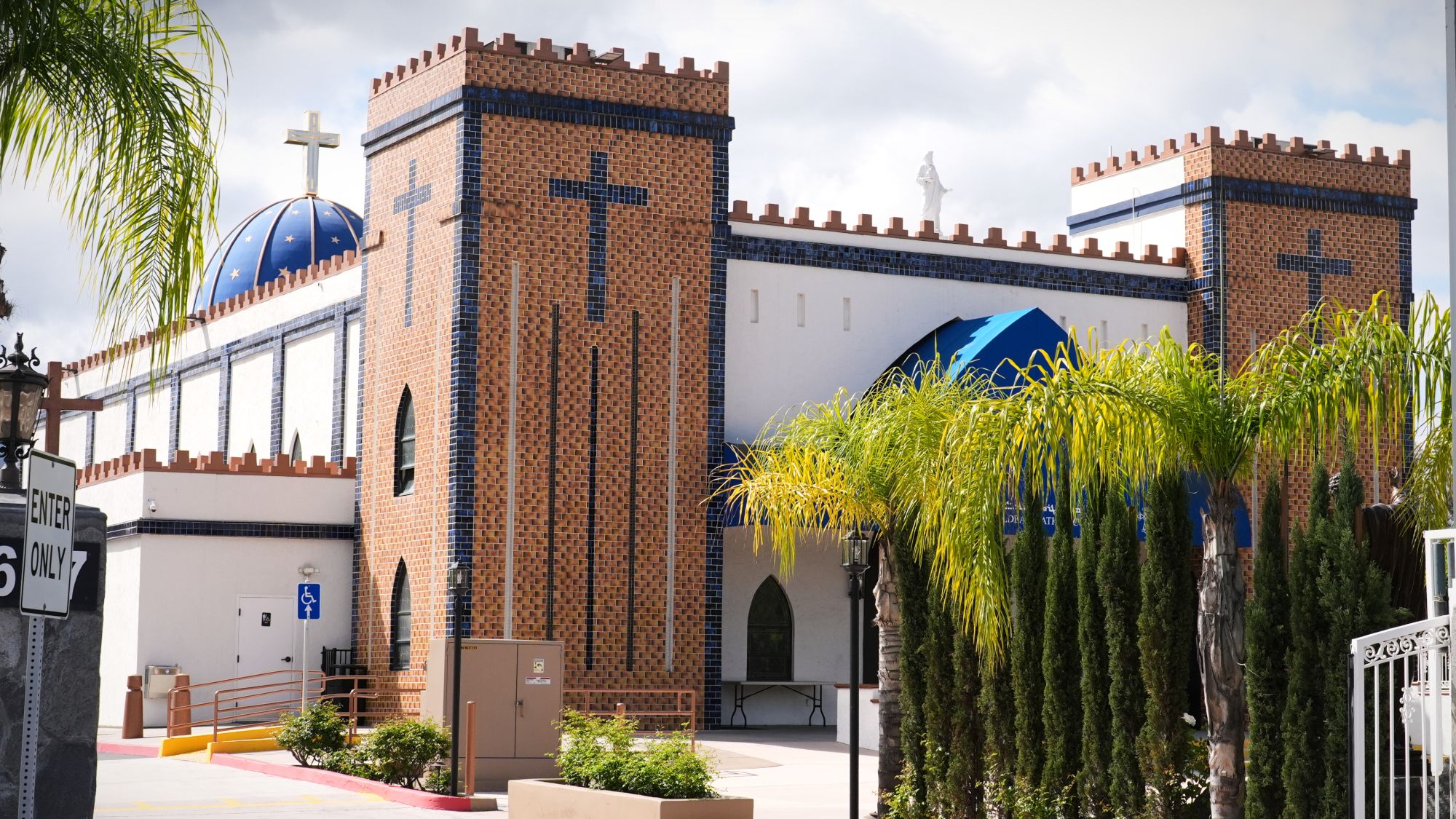
    Shaleta had led the "small Chaldean Catholic community" of about 71,000 in San Diego since 2017, Reuters said. Prosecutor Joel Madero said a parishioner at St. Peter Chaldean Catholic Cathedral (pictured above) turned over documents showing possible embezzlement in 2024, and Shaleta “provided completely unreasonable tales of where that money was going.” The bishop said during a Mass last month that he had never “abused any penny of the church money.”

    What next?
    Pope Leo named Bishop Saad Hanna Sirop as temporary administrator of the Chaldean San Diego diocese. Shaleta, who faces up to 15 years in prison if convicted, has a preliminary hearing scheduled for April 27.


    TODAY’S CAPITAL PUNISHMENT Story

    Alabama halts execution of man who didn’t kill victim

    What happened
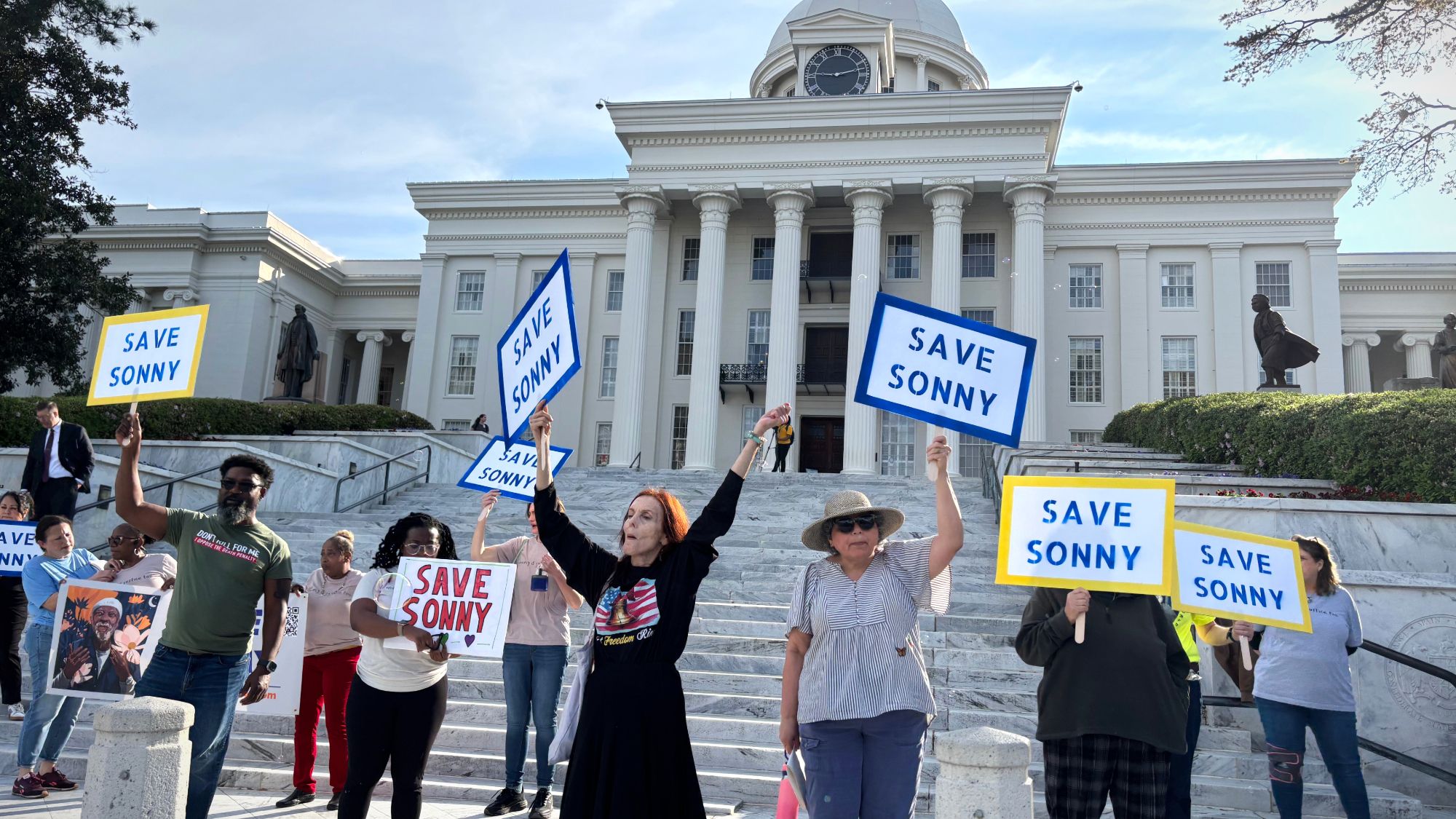
    Alabama Gov. Kay Ivey (R) yesterday commuted the death sentence of a 75-year-old inmate scheduled for execution tomorrow night for a murder he did not commit or even witness. Charles “Sonny” Burton and five other men robbed an AutoZone in Talladega in 1991, but Burton had left the building before an accomplice, Derrick DeBruce, fatally shot a customer, Doug Battle. DeBruce’s death sentence was overturned on appeal and he died in prison in 2020. 

    Who said what
    Ivey has presided over 25 executions and granted clemency to just one other inmate since taking office in 2017, and she said yesterday that she strongly supports capital punishment “for society’s most heinous offenders.” But “I believe it would be unjust for one participant in this crime to be executed while the participant who pulled the trigger was not,” she said in a statement. Burton “will now receive the same punishment as the triggerman” and “rightfully spend the remainder of his life behind bars.” 

    Ivey had been “facing mounting pressure to intervene in the execution,” USA Today said. Battle’s family and “at least six of the eight living jurors who voted for Burton’s execution” were among those urging clemency. State Attorney General Steve Marshall said he was “very disappointed” with Ivey’s decision. “There has never been any doubt,” he said, that Burton has “Battle’s blood on his hands.”

    What next?
    Burton’s execution would have been Alabama’s eighth using nitrogen gas, a “method that has drawn controversy for its potential to cause pain and suffering during an execution,” The Washington Post said. “Thank you, governor,” Burton said in a statement issued through his attorneys. “Just saying thank you doesn’t seem like much. But it’s what I can give her.”


    It’s not all bad

    Japan has become the first country to approve a stem-cell treatment for Parkinson’s disease, and it could be available to patients as early as this summer. The therapy, Amchepry, is made by Sumitomo Pharma and involves transplanting reprogrammed iPS cells into both sides of the brain to help improve motor symptoms like shaking and difficulty moving. During a small trial, millions of cells were implanted in the brains of participants. After two years, no major side effects were reported and four patients showed symptom improvements.


    Under the radar

    One Australian state’s work-from-home crusade

    Businesses in the Australian state of Victoria will be forced to allow staff to work from home two days a week under what the state government describes as a first-of-its-kind law. The “sweeping measures” will apply to employers of all sizes, said The Times of London, creating a legal guarantee that every employee in the state who can “reasonably” work from home will be eligible.

    Working from home suits families because it “saves time and money and gets more parents working,” said Victoria Premier Jacinta Allan. “If you can work from home for a small business, you deserve the same rights as someone working for a big bank.”

    There has been a “backlash” from small business owners, said The Guardian, and concerns that the law could push businesses to leave the state. But voters appear to like the idea.

    In last year’s federal election campaign, the Liberal-National Coalition, which was resoundingly beaten, had promised to “crack down on ‘unsustainable’ remote working patterns” and force staff back to five days a week in the office, said the Financial Times. That policy produced a “political spark,” and Allan’s Labor Party is seeking to benefit from it. Its work-from-home initiative will form a large part of her reelection campaign in November.

    It’s “hard to keep up with“ Australia, Pilita Clark said in the Financial Times. It has recently passed “some of the toughest anti-vaping laws on the planet,” a “world-first ban on social media for kids under the age of 16,” and banned “artificial stone used for kitchen worktops that’s linked with lung disease.”


    On this day

    March 11, 1959

    Lorraine Hansberry’s “A Raisin in the Sun” premiered at New York’s Ethel Barrymore Theatre, becoming the first play by a Black playwright to appear on Broadway. The drama, which follows a Black family on Chicago’s South Side, was also the first Broadway show with a Black director.


    TODAY’S newspaperS

    ‘Different goals for Iran war’

    “Israel, U.S. see different goals for Iran war,” The Wall Street Journal says on Wednesday’s front page. “Missiles, threats fly as war rages on,” says the San Francisco Chronicle. “While conflict rages, Trump has few tools to ease oil price spike,” The New York Times says. “Oil jolt triggers GOP anxiety,” The Washington Post says. “Trump, Tehran trade threats over crucial gulf shipping lanes,” says USA Today. “Total of U.S. wounded in Iran war rises to 140,” The Minnesota Star Tribune says. “Conflict could unleash threats on U.S. soil,” the Los Angeles Times says. “Runoff is set to decide who will replace Greene in U.S. House,” the Atlanta Journal-Constitution says. “Mullin’s Senate exit fuels intrigue,” says The Oklahoman.

    ► See the newspaper front pages


    Tall tale

    Charitable deduction

    Workers at a New Zealand charity shop were surprised when they opened a backpack left outside the store and found it filled with weed and $2,200 in cash. Despite the money, the bag did not turn out to be a donation. Instead, it had been left there accidentally by a pair of teenagers waiting for their car at a nearby mechanic, said New Zealand police. When the “agitated” teens returned to collect their stash, they were arrested. In New Zealand, it’s illegal to use marijuana recreationally.


    Morning Report was written and edited by Will Barker, Nadia Croes, Catherine Garcia, Scott Hocker, Anya Jaremko-Greenwold, Justin Klawans, Rafi Schwartz, Peter Weber and Kari Wilkin, with illustrations by Stephen Kelly and Julia Wytrazek.

    Image credits, from top: Mark Duncan / AP Photo; Gregory Bull / AP Photo; Kim Chandler / AP Photo; Illustration by Julia Wytrazek / Getty Images
     

    Recent editions

    • Evening Review

      The gamification of war

    • Morning Report

      Markets steady as Trump says war is ‘very complete’

    • Evening Review

      How will the Iran war end?

    VIEW ALL
    TheWeek
    • About Us
    • Contact Future's experts
    • Terms and Conditions
    • Privacy Policy
    • Cookie Policy
    • Advertise With Us
    • FAQ
    Add as a preferred source on Google Add as a preferred source on Google

    The Week UK is part of Future plc, an international media group and leading digital publisher. Visit our corporate site.

    © Future Publishing Limited Quay House, The Ambury, Bath BA1 1UA. All rights reserved. England and Wales company registration number 2008885.