The Week The Week
flag of US
US
flag of UK
UK
https://cdn.mos.cms.futurecdn.net/flexiimages/jzblygzdxr1769609154.gif

SUBSCRIBE

Try 6 weeks free

Sign in
  • View Profile
  • Sign out
  • The Explainer
  • Talking Points
  • The Week Recommends
  • Podcasts
  • Newsletters
  • From the Magazine
  • The Week Junior
  • More
    • Politics
    • World News
    • Business
    • Health
    • Science
    • Food & Drink
    • Travel
    • Culture
    • History
    • Personal Finance
    • Puzzles
    • Photos
    • The Blend
    • All Categories
  • Newsletter sign up Newsletter
  • The Week’s Saturday Wrap
    The battle for Minneapolis, AI comes for human jobs, and Trump’s detention centers expand

     
    controversy of the week

    Minneapolis: What did ICE accomplish?

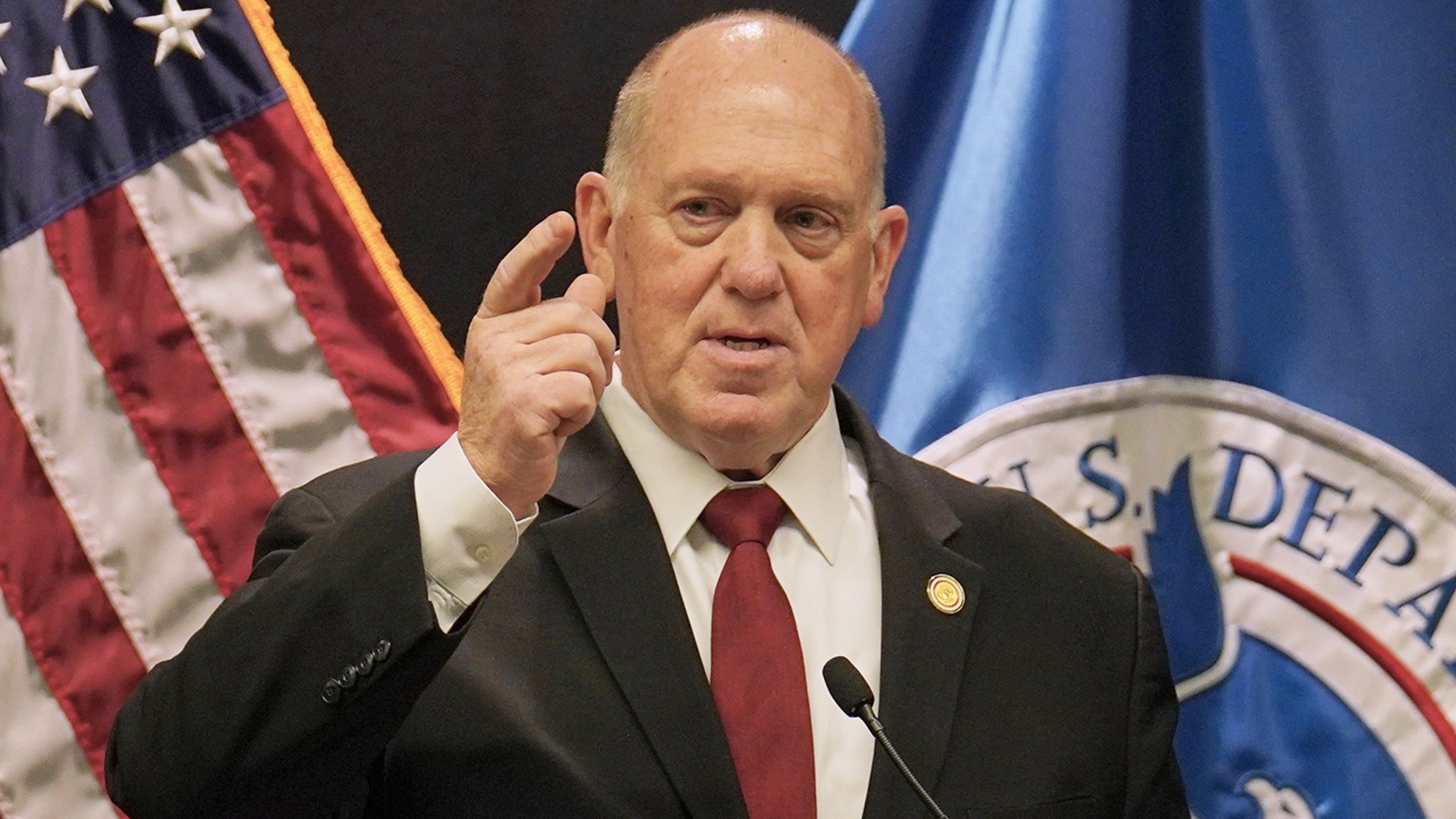
    The people of Minneapolis just handed President Trump the “biggest political humiliation” of his second term, said Erika D. Smith in Bloomberg. Border czar Tom Homan last week announced the end of Operation Metro Surge and a “significant drawdown” of the masked ICE and Border Patrol agents whose thuggish, trigger-happy tactics traumatized the city and left two U.S. citizens dead. Homan did his best to “save face,” citing 4,000 undocumented migrants detained, and touting a new agreement with local jails to assist in deportations. But city officials deny any deal, and it took 3,000 federal agents two months to arrest those 4,000 immigrants, at an estimated cost of about $50,000 a detainee. Metro Surge “was a failure by every metric” said Zeeshan Aleem in MS.now. On its first “test drive,” Trump’s fledgling “secret police force” was defeated by citizens armed with smartphones and whistles. And the brutal scenes captured by bystanders—of the killings of protesters Renée Good and Alex Pretti, of people being dragged from their homes and cars, of 5-year-olds being detained— generated some brutal poll numbers. Trump’s approval rating has sunk to about 40%, a plurality of voters say he’s doing a worse job than President Joe Biden, and his approval on immigration is 12 percentage points underwater. For a president once thought to be “unbeatable” on this issue, this could be a turning point. 

    The “optics” of Metro Surge were a predictable disaster, said National Review in an editorial. The theory was that a muscular show of force in Minneapolis would persuade illegal immigrants nationwide “to self-deport.” But a “broader audience” of Americans was also watching, and they sided with civilians over the agents in camouflage. The operation needed more focus and discipline, and the “no-nonsense” Homan—who recently took over in Minnesota from buffoonish Border Patrol commander Greg Bovino—could have supplied it. But to “throw in the towel” like this, handing a win to leftist “agitators,” sets an awful precedent that will hamstring future efforts to enforce immigration laws. 

    ICE did accomplish its mission in Minneapolis, said Larry Lee in the Fort Wayne, Ind., Journal Gazette. As with Trump’s deployment of the National Guard to Los Angeles and Chicago, the “real purpose” of Metro Surge was to “normalize” the presence of troops in U.S. cities, and to “scare away” nonwhite citizens who might otherwise head to the polls in the midterms. Trump ally Steve Bannon has said openly that the plan is “to have ICE surround the polls in November,” said Paul Blumenthal in HuffPost. That’s probably bluster, but ICE has already “spread enough fear and chaos to terrorize” many members of minority communities into staying home on Election Day. 

    If Metro Surge was a ploy “to scare citizens out of voting,” said Nick Catoggio in The Dispatch, it won’t work. Every viral video of agents tear-gassing children and demanding Americans show their papers was a de facto “campaign commercial for Democrats.” Come November, minority voters are more likely to “show up in numbers to signal their defiance” than to stay home in fear. “We still have three years left in Trump’s second term, and his descent into madness will continue,” said Peter Wehner in The Atlantic. But thanks to the “brave patriots of Minneapolis,” who refused to take the bait of constant provocations, “we have the beginnings of a road map to help us withstand the Trump assault” on our communities, our democracy, and the essential goodness of America.


    VIEWPOINT

    Nihilism trends 

    “A kind of post-ironic fatalism that was once endemic to seedy message boards [like 4chan] has bled into the broader culture. Nihilism is now the lingua franca of the internet. The 4chan logic that turned even the most hideous news and ideas into empty entertainment pervades everything on the internet now—more proof that lol, nothing matters. You can see it everywhere in different forms: In the mass shooters who seem to care about nothing other than performing for others online. In a culture of AI slop and brain rot, and in an administration that prioritizes propaganda and graft over governing. It threatens to rip us apart for good if we let it.” 

    Charlie Warzel in The Atlantic 


    briefing

    Trump’s detention empire

    As reports mount of abuse and neglect in ICE detention centers, vast new facilities are in the works.

    How many people are being held? 
    As of mid-January, Immigration and Customs Enforcement had some 73,000 people in detention, its highest number ever and an 81% increase from the same point in 2025. The numbers are spiking not only because of the Trump administration’s enforcement blitz, but also because of a radical shift away from decades-old policies. People charged with civil immigration violations—such as entering the U.S. unlawfully or overstaying a visa—now face mandatory detention while their cases wind through overtaxed courts. Previously, migrants in this situation would typically be released on bond, especially asylum seekers and those who’ve lived in the U.S. for years and don’t have criminal records. The result of that change is a crush of detainees being kept in more than 200 locations, including county jails, ICE field offices, military sites, and tent facilities such as Florida’s notorious “Alligator Alcatraz.” The U.S. already had “the largest detention and removal infrastructure of any country in the world,” said Doris Meissner of the Migration Policy Institute. “And now it’s being put on steroids.” 

    What are conditions like? 
    Detainees describe a litany of horrors, from extreme overcrowding to physical abuse. “It’s like a concentration camp,” said Seamus Culleton, an Irish national who’s spent five months at Camp East Montana, an ICE facility in El Paso, Texas. A Boston plastering contractor who is married to a U.S. citizen and has applied for a green card, Culleton said he is being held in a cold, damp room with some 70 other men; is constantly hungry because the meals are child-size; and has been allowed outside fewer than a dozen times. It’s not just detainees blowing the whistle. A former worker at a Baltimore ICE facility said officers there treated migrants like “animals,” with people left “lying in feces” and detainees in overstuffed cells “lying on the floor head to toe.” That scene reminded the worker of images “of how they brought the slaves from Africa.” Nonprofit groups that focus on human-rights abuses have also produced damning reports on U.S. facilities. 

    What do they say? 
    An Amnesty International report on Alligator Alcatraz detailed food contaminated with maggots, sewage seeping into sleeping areas, and insect infestations. At other facilities in Florida, Human Rights Watch documented people sleeping on cold concrete floors, inmates in psychological distress subjected to solitary confinement, and men being forced to eat with their hands shackled behind their backs. “The guards treat you like garbage,” said a Colombian detainee. “You feel like your life is over.” Numerous reports and lawsuits include allegations of medical neglect, among them the dismissal of serious complaints such as chest pains; at least 32 people died in ICE custody last year, up from 11 in 2024. Six more died in January, including Geraldo Lunas Campos, a 55-year-old Cuban immigrant at Camp East Montana who stopped breathing after a struggle with detention guards. The Trump administration said the guards tried to save Lunas Campos from a suicide attempt; an autopsy report gave the cause of death as homicide by asphyxiation. Despite such reports, the administration is planning to significantly expand its detention capacity. 

    How many facilities are in the works? 
    Flush with $45 billion allocated for new detention centers in last year’s spending bill, ICE has in recent weeks bought seven massive warehouses in five states. They include a $70 million warehouse the size of seven football fields outside Phoenix and a $119 million, 1.3-million-square-foot former Big Lots distribution center near Harrisburg, Pa., that’s expected to house up to 7,500 people. That’s nearly double the number of inmates currently held at the largest federal prison. In all, ICE is proposing 23 new sites that together would hold 80,000 people. But fierce local opposition is hampering those plans. 

    Have any new facilities been blocked? 
    Protests and political pressure have led some site sellers to back out of deals. “We understand that the conversation around immigration policy is particularly heated,” the owners of an Ashland, Va., warehouse said after canceling a federal sale. A firm in Oklahoma City reversed course following a meeting with Republican Mayor David Holt, while the owners of a Salt Lake City warehouse rumored to be in ICE’s sights said they had no plans to sell after protests outside their offices. Many opponents of the facilities are motivated by humanitarian concerns; others cite strain on local resources and loss of tax revenue. A mega-detention center planned for Byhalia, Miss., would “foreclose on economic opportunities better suited for this site,” Sen. Roger Wicker (R-Miss.) wrote to Homeland Security Secretary Kristi Noem. An ICE official said such facilities make “communities safer for business owners and customers”; the agency also denies allegations of neglect and abuse at its centers. But critics and detainees say the brutality is real, and a deliberate policy choice. 

    What do they say is the goal? 
    To deter anyone else who might come to the U.S. unlawfully, and to make those already here self-deport—even if their immigration cases are still working through the system. “They do it so you give up,” said Julio Cesar Santos Avalos, who was held at an ICE facility in California City, Calif. Detainees there have complained of being denied insulin and other medications; in a lawsuit, immigrants called the center a “torture chamber.” It was too much for Avalos, 47, who suffers from chronic pain due to a foot deformity. Denied pain meds and forced to sleep on a top bunk, he left his two children in California and selfdeported to El Salvador, which he last saw at age 7. Some of his former fellow detainees are wrestling with similar choices. “This place,” said Cambodian national Sokhean Keo, “is built to break us.”



    Only in America

    A proposed bill in Tennessee would make it illegal for landlords to “livestream” the evictions of tenants. Rep. Antonio Parkinson says he was alerted to the practice when the landlord of an 84-year-old constituent broadcast what turned out to be her wrongful eviction on social media. Eviction is “a very traumatic moment,” says Parkinson. Those livestreaming the process are “exploiting individuals who are at their lowest.”


    It wasn’t all bad

    Age is just a number

    U.S. bobsledder Elana Meyers Taylor, 41, made history in Italy this week, becoming the oldest athlete to win an individual gold medal in any Winter Olympics when she beat Germany’s Laura Nolte by 0.04 seconds in the women’s monobob. Meyers Taylor has competed in every Winter Games since 2010, and this was her sixth medal overall but her first gold. Her teammate Kaillie Humphries, 40, claimed bronze. Ahead of the event, Meyers Taylor said she taught her two deaf sons some new signs. “We went over what ‘champion’ is,” she said, as well as “gold.” It’s not her first time setting records: In 2022 she became the most decorated Black Winter Olympian in Team USA history.


    talking points

    AI: Yes, it’s coming for your job

    “Humans no longer are—or soon will no longer be— the most intelligent beings on the planet,” said Noah Smith in The Free Press. Artificial intelligence has advanced so rapidly over the past year that it’s surpassing human intelligence in performing nearly every task. That’s the thesis of a viral essay published last week by Matt Shumer, CEO of AI company OthersideAI. Shumer said the latest AI versions from Claude and ChatGPT—available only through paid subscriptions—are such a major leap that he can give them a complex assignment like creating an app, and voilà! Far faster than any human, the AI will write all the code, create the app, test it, and refine it. Shumer warns that AI may replace half of all white-collar jobs within five years. Critics call Shumer an alarmist, but I suspect he “understates the pace and magnitude of the changes taking place.” Like Native Americans who saw sailing ships disgorging European settlers on their shores, we’re coming face-to-face with “forces greater and more powerful” than ourselves. We may soon lose control of our destiny—“forever.” 

    AI will certainly be very disruptive to jobs, said James Pethokoukis in Vox. But energy capacity and decisions about AI regulation, development, and adoption will “move at ordinary speeds.” About 80% of U.S. businesses do not currently use AI, and they won’t shift to heavy reliance overnight. Over time, the economy will adapt and shift jobs toward hands-on, human work AI can’t do well, such as health care, education, and creative work. Some “urgency may be warranted,” but Shumer’s “AI apocalypse warning” of a rapid job wipeout is overly pessimistic. 

    Still, what “if the doomers are right?” asked Philip Klein in National Review. If AI advances so quickly that millions of highly educated, well-paid white-collar workers become not only unemployed but unemployable, “it will be more destabilizing to our politics than anything we have previously experienced.” In the worst-case scenario, “elite anger” could fuse with populism and spark “revolutionary fervor that sweeps through the nation and topples the republic.” Remember, though: “We get to decide how technology is used,” said Jonathan V. Last in The Bulwark. Before it’s too late, we must “create rules that govern how industries may use AI,” just as we regulate so many other endeavors. We don’t “have to walk into a dystopian future just because OpenAI builds it.”


    people

    Fox’s fight against Parkinson’s shame

    Michael J. Fox wants Parkinson’s patients and their families to know it’s OK to be angry, said Joe Nocera in The Free Press. Diagnosed with the disease at 29, the Back to the Future star has become the face of Parkinson’s for many people, through his charitable work and by living openly and acting with the neurodegenerative condition. “One of the things I’m most happy about is helping take the shame out of having Parkinson’s,” says Fox, 64. While he’s a relentless optimist, he doesn’t hide the grim realities of the disease. “I’ve broken both arms, both shoulders, my face, and a few other things. I still get frustrated. I was always moving, so to not be able to move the way I want to, that’s frustrating.” Even simple tasks “like walking across the room to get a book off a shelf” require him to get help. Fox is currently guest-starring on the Apple TV show Shrinking, and a line his character delivers with defiance, “F--- Parkinson’s,” has resonated with the community. “My brother, who is 70, wrote me and said, ‘Fuck Parkinson’s.’ Because it’s pissed him off too. The thing you have to acknowledge is that Parkinson’s is more powerful than you. It’s going to have the last word, but you can’t be afraid of dealing with it or negotiating around it. I don’t have to make it my bully.” 


    Saturday Wrap was written and edited by Theunis Bates, Chris Erikson, Bill Falk, Allan Kew, Bruno Maddox, Rebecca Nathanson, and Zach Schonbrun.

    Image credits, from top: AP; WUSA; Getty; Getty
     

    Recent editions

    • Evening Review

      An end to ‘never complain, never explain’?

    • Morning Report

      Police release Andrew under investigation after arrest

    • Evening Review

      Is Europe right to sit out the Board of Peace?

    VIEW ALL
    TheWeek
    • About Us
    • Contact Future's experts
    • Terms and Conditions
    • Privacy Policy
    • Cookie Policy
    • Advertise With Us
    • FAQ
    Add as a preferred source on Google

    The Week UK is part of Future plc, an international media group and leading digital publisher. Visit our corporate site.

    © Future Publishing Limited Quay House, The Ambury, Bath BA1 1UA. All rights reserved. England and Wales company registration number 2008885.