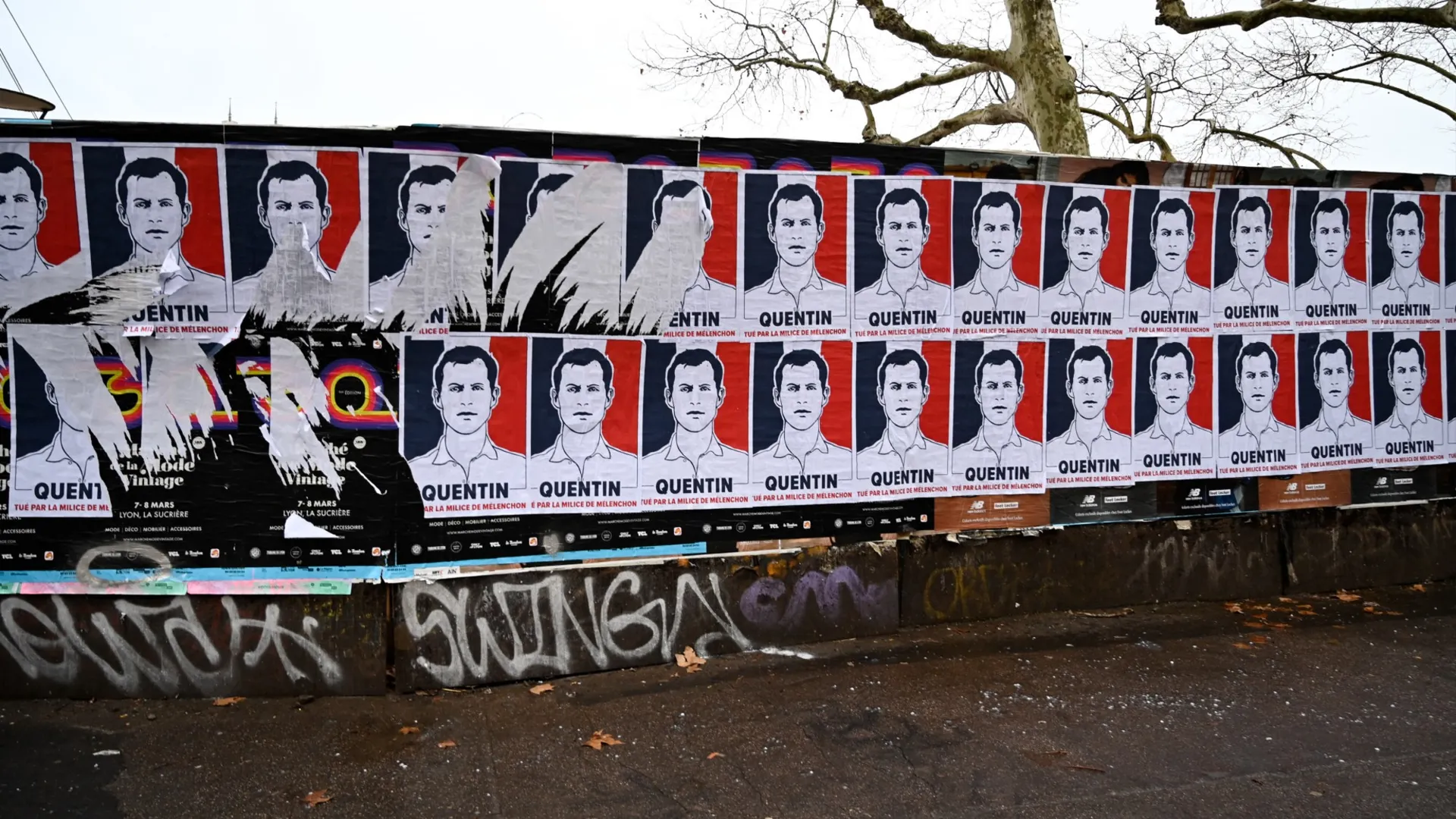
The beating death of ultraconservative activist Quentin Deranque in the French city of Lyon last week has pushed both the country’s far right and left flanks toward bellicosity, as both ends of the political spectrum blame the other for his death and the threat of further violence. That two of the people detained for the killing, which occurred during a street brawl between far-left and right activists, were aides in a far-left lawmaker’s office has only inflamed already fraught tensions ahead of upcoming local elections and a national election next year to replace outgoing President Emmanuel Macron. As French politicos jockey for influence in the wake of Deranque’s death, has Europe reached its own Charlie Kirk-esque inflection point?
‘Lawless party, unfit to govern’
Deranque’s killing has “spiraled into a bitter war of words” and “intense political jockeying” that offer a “preview of the tensions that could erupt” ahead of France’s national elections next year, said The New York Times. The arrest of suspects associated with the far-left France Unbowed party has led to “thunderous condemnations” from the nation’s far-right, including the National Rally Party, which has “spent years trying to shake off a legacy of xenophobia and antisemitism.” Under party leader Jordan Bardella, National Rally now has an “opportunity” to frame its leftist nemesis as a “lawless party, unfit to govern France.”
Despite France Unbowed’s efforts to “distance the party from Deranque’s violent death,” it has nevertheless “come under attack from rivals across the political spectrum,” said the BBC. Even “more moderate figures on the left,” including ex-President François Hollande, have accused France Unbowed of broadly “being responsible for lowering the tone of politics in France.” The “backlash” against France’s left is, in ways, “reminiscent of the American right’s offensive against ‘antifa’ movements” following the shooting death of far-right wing provocateur Charlie Kirk, said Jacobin.
The Week
Escape your echo chamber. Get the facts behind the news, plus analysis from multiple perspectives.
SUBSCRIBE & SAVE
Sign up for The Week's Free Newsletters
Join more than 350,000 subscribers and keep yourself informed with a selection of The Week’s most interesting, enlightening and entertaining stories - plus daily puzzles.
Join more than 350,000 subscribers and keep yourself informed with a selection of The Week’s most interesting, enlightening and entertaining stories - plus daily puzzles.
Latest Videos FromThe Week US
Conversely, Deranque’s death is “proving to be a turning point for the French far right,” despite the movement being “riddled with deep divisions,” said Le Monde. A planned march of far-right factions this weekend could “provide an opportunity” for ultraconservatives to “rally around a common cause: the figure of Deranque,” who has been “elevated to the status of political martyr” for some. For many on France’s far right, his killing and the reaction could ultimately “strengthen the unity” of a political movement that has “always valued aesthetics and ritual more than doctrine,” said historian Nicolas Lebourg to the outlet.
Shift for France’s ‘cordon sanitaire’
Deranque’s death and the furor surrounding it are “reshaping” France’s domestic politics to the “benefit of the populist National Rally,” said The Times. It has cast the nationalist right wing as “victim” while pushing the left, which traditionally claims the moral high ground, into “disarray.” Now, France’s “partisan landscape” seems to be “reshaping itself around an unprecedented paradox,” said Euro News: The “cordon sanitaire” — a method by which political parties are isolated and excluded from governing coalitions — which has “long applied to the far right” is now being used against France Unbowed.
The National Rally has “turned a corner,” said political communications professor Philippe Moreau-Chevrolet to Euro News. Rather than pushing back against demonization efforts, the party is in the “process of normalization” by framing itself as a “French political force that is here to stay, with a significant presence that is part of the landscape.”