Florida-based doctor arrested, accused of playing leading role in assassination of Haiti's president
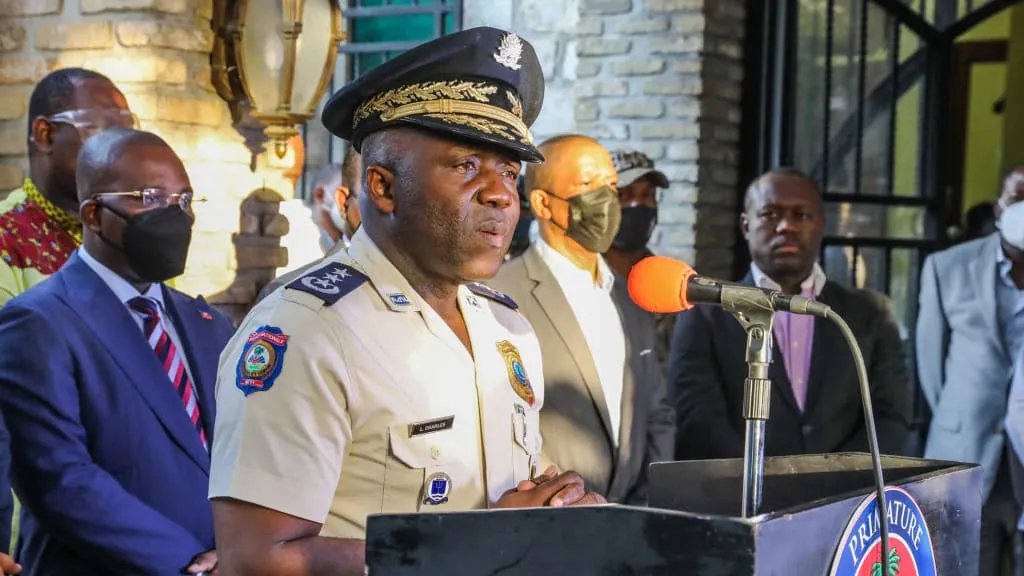
Haitian National Police Chief Léon Charles announced on Sunday that 63-year-old Christian Emmanuel Sanon, a doctor based in Florida, is suspected of playing a major role in last week's assassination of President Jovenel Moïse, and has been arrested.
Moïse was shot and killed by gunmen who entered his home early last Wednesday morning. Charles said Sanon flew into Haiti in June and had "political objectives." He alleged that Sanon used a security firm to recruit some of the men involved in the assassination, telling them they would work as his bodyguards.
Haitian authorities say the hit squad that carried out the assassination was comprised of 28 people, with most soldiers from Colombia. So far, Haitian police have arrested 21 people in connection with Moïse's assassination, including two Haitian Americans who allegedly served as translators for the Colombians.
The Week
Escape your echo chamber. Get the facts behind the news, plus analysis from multiple perspectives.
Sign up for The Week's Free Newsletters
From our morning news briefing to a weekly Good News Newsletter, get the best of The Week delivered directly to your inbox.
Police said that upon Moïse's death, Sanon intended to assume the presidency, The Washington Post reports. Under Haiti's constitution, the head of the Supreme Court is the president's successor, but the chief justice recently died of COVID-19 and hasn't been replaced. There are multiple people fighting to be Haiti's leader, including Claude Joseph, the acting prime minister, and neurosurgeon Ariel Henry, who was appointed prime minister by Moïse shortly before his assassination. On Friday, members of Haiti's senate, which is not functioning, voted and made its leader, Joseph Lambert, Haiti's acting president.
A free daily email with the biggest news stories of the day – and the best features from TheWeek.com
Catherine Garcia has worked as a senior writer at The Week since 2014. Her writing and reporting have appeared in Entertainment Weekly, The New York Times, Wirecutter, NBC News and "The Book of Jezebel," among others. She's a graduate of the University of Redlands and the Columbia University Graduate School of Journalism.
-
How oil tankers have been weaponisedThe Explainer The seizure of a Russian tanker in the Atlantic last week has drawn attention to the country’s clandestine shipping network
-
The rise of the spymaster: a ‘tectonic shift’ in Ukraine’s politicsIn the Spotlight President Zelenskyy’s new chief of staff, former head of military intelligence Kyrylo Budanov, is widely viewed as a potential successor
-
5 critical cartoons about the deadly crackdown on protesters in IranCartoons Artists take on twinning, booed off stage, and more
-
Why Greenland’s natural resources are nearly impossible to mineThe Explainer The country’s natural landscape makes the task extremely difficult
-
Iran cuts internet as protests escalateSpeed Reada Government buildings across the country have been set on fire
-
US nabs ‘shadow’ tanker claimed by RussiaSpeed Read The ship was one of two vessels seized by the US military
-
Maduro pleads not guilty in first US court hearingSpeed Read Deposed Venezuelan leader Nicolás Maduro and his wife Cilia Flores pleaded not guilty to cocaine trafficking and narco-terrorism conspiracy
-
Iran’s government rocked by protestsSpeed Read The death toll from protests sparked by the collapse of Iran’s currency has reached at least 19
-
Israel approves new West Bank settlementsSpeed Read The ‘Israeli onslaught has all but vanquished a free Palestinian existence in the West Bank’
-
US offers Ukraine NATO-like security pact, with caveatsSpeed Read The Trump administration has offered Ukraine security guarantees similar to those it would receive from NATO
-
Hong Kong court convicts democracy advocate LaiSpeed Read Former Hong Kong media mogul Jimmy Lai was convicted in a landmark national security trial