Sign up to get Today’s Best Articles in your inbox
Join 350,000+ subscribers and keep yourself informed with a selection of
The Week’s most interesting, enlightening and entertaining stories - plus daily puzzles.
You are now subscribed
Your newsletter sign-up was successful
Want to add more newsletters?
An account already exists for this email address, please log in.
Poutine: why posh chips and gravy are taking over the UK
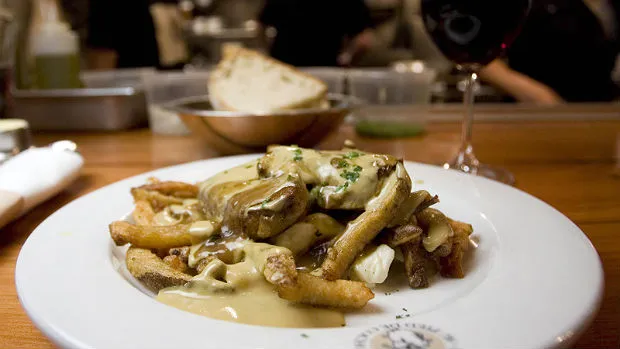
Google trends shows that interest in a Canadian dish of chips, cheese and gravy is growing around the world
A late-night snack from Canada is gaining currency across the UK, as aficionados embrace "posh chips and gravy".
Poutine has its origins in Quebec in the late 1950s, according to The Guardian, which says its precise origins and constitution are much disputed.
While the dish in its purest form consists only of chips mixed with cheese curd and smothered in gravy, a number of restaurants claim responsibility for its creation.
The Week
Escape your echo chamber. Get the facts behind the news, plus analysis from multiple perspectives.
Join more than 350,000 subscribers and keep yourself informed with a selection of The Week’s most interesting, enlightening and entertaining stories - plus daily puzzles.
Join more than 350,000 subscribers and keep yourself informed with a selection of The Week’s most interesting, enlightening and entertaining stories - plus daily puzzles.
Regardless of how it came into existence, poutine has been a French-Canadian staple for decades. And now it is growing in popularity elsewhere in the world, including the UK.
In Glasgow, it can be found in a number of locations including burger bar Bread Meets Bread, where the menu features four different types of poutine. The "Glaspoutine", which features grated cheddar instead of cheese curd, promises a Scottish twist to the Canadian classic.
The dish is also now available in street stalls in London, including the Putinerie Stall on Brick Lane and P'tite Poutine on Broadway Market.
At the higher end, Gordon Ramsay put a poutine on the menu of Foxtrot Oscar last year and popular steak restaurant Hawksmoor serves its own version. Canadian-themed venues such as the Maple Leaf in Covent Garden also offer a classic poutine.
Sign up to get Today’s Best Articles in your inbox
A free daily email with the day’s biggest news and analysis – and the best features from TheWeek.com
Paul Dunits, who runs the Putinerie told the Guardian that British people readily embraced the sloppy concoction because of its familiarity. "Once they taste it, it makes sense," he explains. "It's the saltiness of the cheese curd and the starchy stuff that fills the void."
Elsewhere in the world, the dish is being reinterpreted with all kinds of variations and – to the purists – blasphemies, such as the "harmonious clash of cuisines" the sushi poutine and the poutine pizza.
Google trends shows that interest in the poutine is growing worldwide, with surges of interest in March, June and August this year.
The owner of Chicago restaurant Spritz Burger, Dan Smith told ABC News that the poutine is poised to really take off for a few reasons: "I think partly because it's still comfort food, but it's a kind of bumped up, trendy version of comfort food," he said. "It's unfamiliar, but at the same time it's still fries. So there's that comfort level to it."