Sign up to get Today’s Best Articles in your inbox
Join 350,000+ subscribers and keep yourself informed with a selection of
The Week’s most interesting, enlightening and entertaining stories - plus daily puzzles.
You are now subscribed
Your newsletter sign-up was successful
Want to add more newsletters?
An account already exists for this email address, please log in.
SeaWorld to end killer whale breeding programme
Animal rights groups welcome news and call on company to release its 29 orcas into the wild
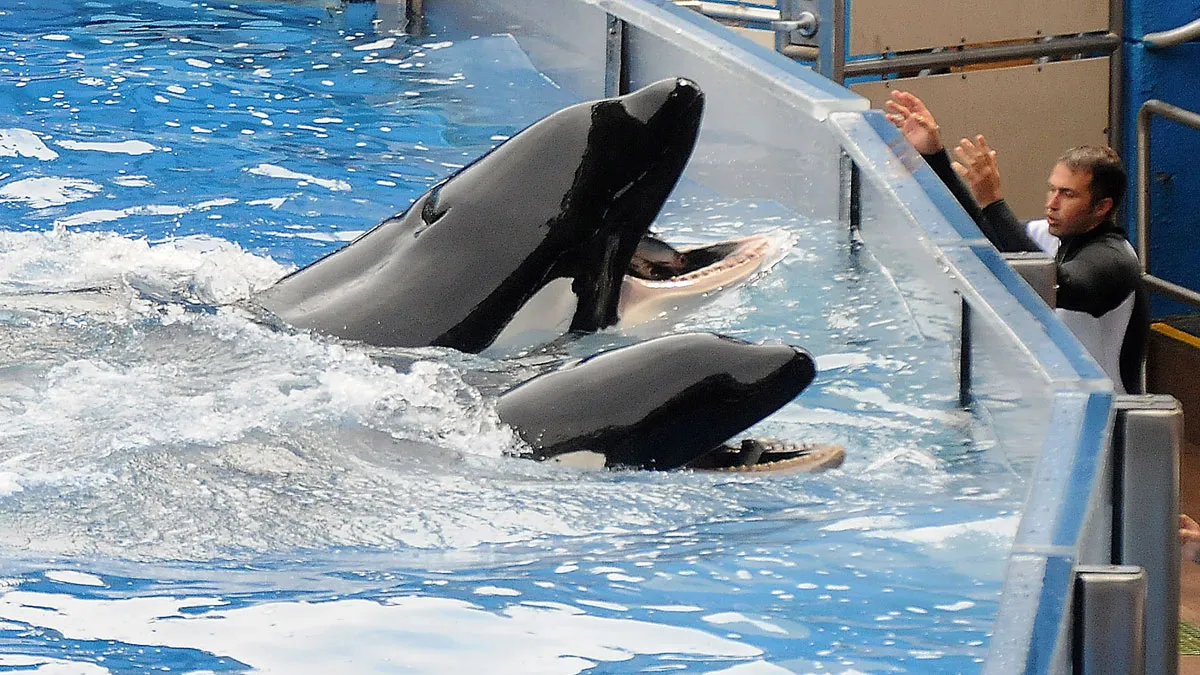
SeaWorld has announced an end to its killer whale breeding programme following years of controversy over of its treatment of the captive marine animals.
The decision comes after California regulators threatened to bar the company from breeding the mammals if it went ahead with expansion plans, Reuters reports.
In November, the theme park chain began phasing out a number of its orca shows after mounting pressure, particularly in the wake of the damning 2013 documentary Blackfish, which focussed on Tilikum, one of SeaWorld's whales.
The Week
Escape your echo chamber. Get the facts behind the news, plus analysis from multiple perspectives.
Join more than 350,000 subscribers and keep yourself informed with a selection of The Week’s most interesting, enlightening and entertaining stories - plus daily puzzles.
Join more than 350,000 subscribers and keep yourself informed with a selection of The Week’s most interesting, enlightening and entertaining stories - plus daily puzzles.
"Since the film was released visitor numbers have fallen at SeaWorld's main theme parks and its share price has halved," says the BBC.
But writing in the Los Angeles Times, the company's chief executive, Joel Manby, said SeaWorld had helped to change public perception of the animals.
"They were feared, hated and even hunted. Half a century later, orcas are among the most popular marine mammals on the planet," he said.
Animal rights groups welcomed an end to the breeding programme, but urged SeaWorld to go further and release the 29 captive orcas it owns into the wild.
Sign up to get Today’s Best Articles in your inbox
A free daily email with the day’s biggest news and analysis – and the best features from TheWeek.com
But Manby says opening the tanks wouldn't be wise. "If we release them into the ocean, they will likely die. In fact, no orca or dolphin born under human care has ever survived release into the wild," he said.
Highlighting SeaWorld's recent partnership with the Humane Society of the United States, he added: "The real enemies of wildlife are poaching, pollution, unsustainable human development and man-made disasters such as oil spills, not zoos and aquariums."
Peta, however, disagrees. "Although SeaWorld touts its conservation efforts in slick television ads, it's a business first and foremost, and it chooses profit over the best interests of marine mammals," it says.
"The ultimate hope for those animals lies in protecting their habitats, not in life sentences in a tank."