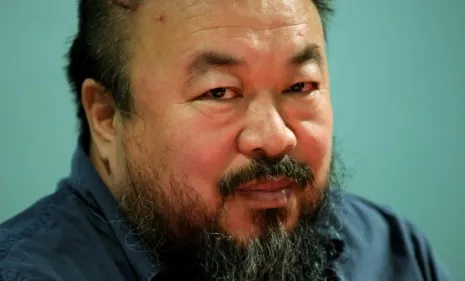
It's been almost two weeks since one of China's most famous artists, the maverick prankster Ai Weiwei, was detained by his government for "economic crimes." Best known for his work on Beijing's "Bird Nest" Olympic Stadium, Ai had openly mocked China's autocratic rulers for some time, and seemed impervious to censorship. But, as the Chinese "Big Chill" continues, Ai has now become the government's most notorious detainee. Will the widespread Western condemnation of Ai's arrest hurt China's push to be recognized as a global superpower?
This has renewed opposition to Chinese autocracy: The detention of Ai has "put a global spotlight on the current bout of repression," says Austin Ramzy at TIME. The U.S., Europe, and Australia have all "raised his case," and the censorship of free thought in China has the world's attention. "It's an irony that Ai would appreciate: His criticisms of the Chinese state can be heard loudest now that he can't be heard at all."
The Week
Escape your echo chamber. Get the facts behind the news, plus analysis from multiple perspectives.

Sign up for The Week's Free Newsletters
Join more than 350,000 subscribers and keep yourself informed with a selection of The Week’s most interesting, enlightening and entertaining stories - plus daily puzzles.
Join more than 350,000 subscribers and keep yourself informed with a selection of The Week’s most interesting, enlightening and entertaining stories - plus daily puzzles.


