Sign up to get Today’s Best Articles in your inbox
Join 350,000+ subscribers and keep yourself informed with a selection of
The Week’s most interesting, enlightening and entertaining stories - plus daily puzzles.
You are now subscribed
Your newsletter sign-up was successful
Want to add more newsletters?
An account already exists for this email address, please log in.
Florida economy faces a workforce reckoning as TPS for Haitians ends
Thousands of South Florida employees are facing deportation, as Trump ends the program protecting them
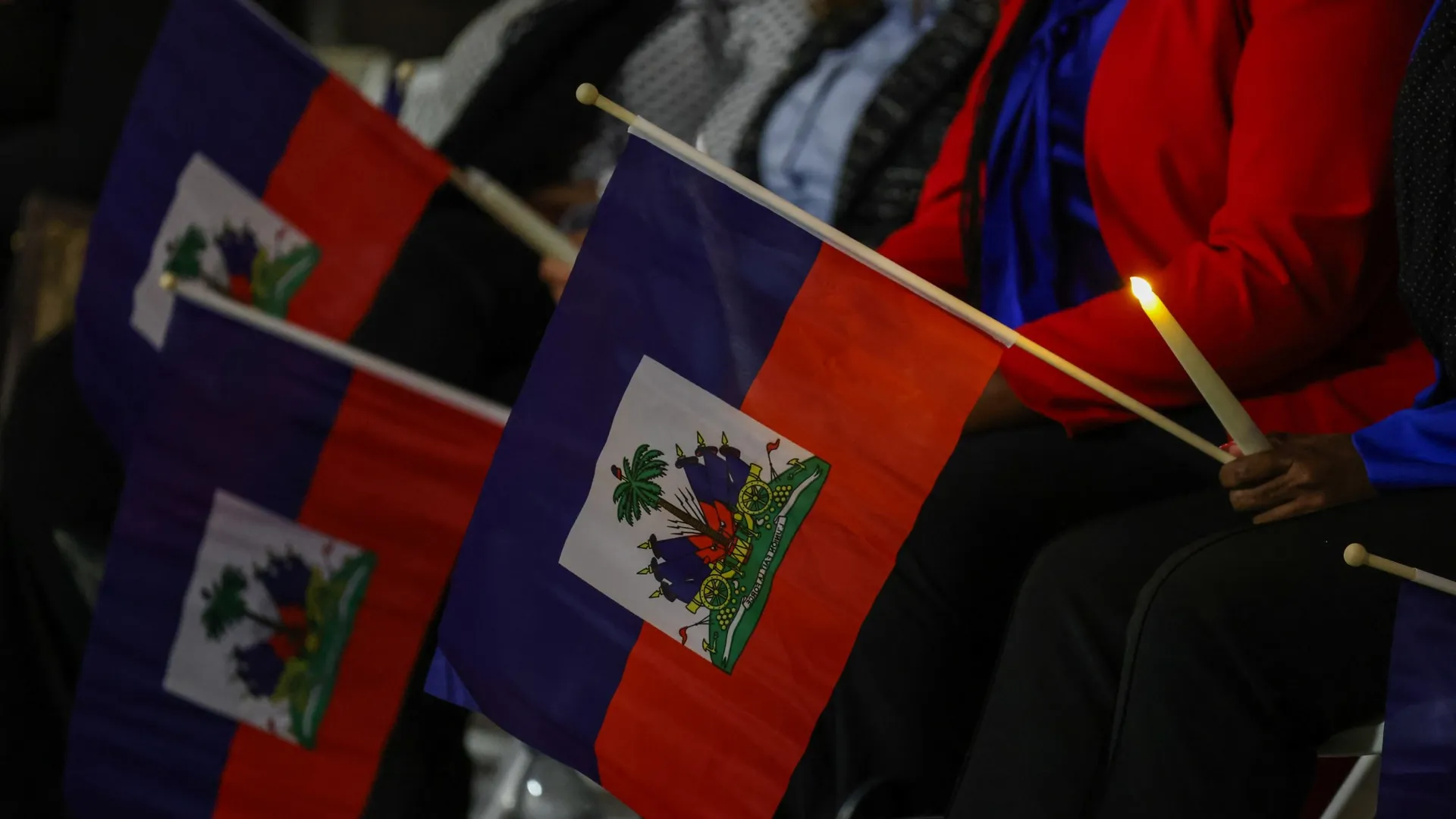
Since the Trump administration ended Temporary Protected Status for Haitian immigrants last month, terminating employment authorization for beneficiaries, South Florida has been bracing for impact. The sudden loss of TPS for so many Haitian employees who reside in the region has hit its economy hard.
What is happening in Florida?
As a result of the end of TPS for Haitian immigrants, “some home-care agencies have shut down,” said The Wall Street Journal. Nursing homes in South Florida are “scrambling to fill vacant positions,” and restaurants are “scaling back operating hours.”
Few industries have been left untouched. Hotels, retailers, airport contractors and small businesses are also struggling with staffing shortages. No other U.S. state has “more Haitian TPS holders than Florida,” said the Journal. Of the “roughly 350,000 Haitian TPS holders” in the US, almost half live in the state. Around 93,000 of them are part of the state’s workforce, according to an analysis by three immigrant-rights groups — FWD.us, Haitian Bridge Alliance and UndocuBlack Network.
The Week
Escape your echo chamber. Get the facts behind the news, plus analysis from multiple perspectives.
Join more than 350,000 subscribers and keep yourself informed with a selection of The Week’s most interesting, enlightening and entertaining stories - plus daily puzzles.
Join more than 350,000 subscribers and keep yourself informed with a selection of The Week’s most interesting, enlightening and entertaining stories - plus daily puzzles.
The changes have affected both Haitian workers and “South Florida’s tourism industry,” said the Miami Herald. About 52,000 Haitian TPS holders were part of the workforce in Miami-Dade, Broward and Palm Beach counties, according to Phillip Connor, a research fellow at Princeton University’s Center for Migration and Development, per the Herald. Of those, a “significant number worked in tourism-related jobs.”
The Department of Homeland Security has for decades “granted TPS designations for foreign-born people who can’t return to their home countries because of “unsafe conditions such as armed conflict or natural disasters,” said the Journal. When Trump returned to office, his administration moved to “terminate TPS status for 13 countries, including Haiti,” arguing that prior administrations had “misused the program by repeatedly extending its protections.” In June, the Supreme Court ruled that Trump could end TPS status for both Haitian and Syrian nationals. There are “significantly fewer Syrian TPS holders in the U.S. than Haitian ones.”
Critics of TPS argue that people with the status “make up a fraction of the overall labor force — a loss the economy can absorb,” and that any difficulties in replacing them could “have the benefit of raising wages.” Their departure creates “real opportunities for less-educated, American-born workers,” Steven Camarota, the director of research at the Center for Immigration Studies, said to the Journal.
Who is feeling the impact?
Employers and deportees aren’t the only ones feeling the impact. Businesses are “terminating employees with lots of experience,” Wendi Walsh, the secretary-treasurer of the South Florida hospitality workers’ union Unite Here Local 355, said to the Herald. That will “put pressure on the workers left behind.”
Sign up to get Today’s Best Articles in your inbox
A free daily email with the day’s biggest news and analysis – and the best features from TheWeek.com
The local economy will “miss the workers’ income too,” said the Herald. Haitians on TPS in South Florida provided “$1.5 billion in annual economic contributions, $174 million in annual federal and payroll taxes, and $176 million in annual state and local taxes,” according to estimates by the Princeton research fellow.
In South Florida and elsewhere across the nation, many “de-documented” immigrants are “taking refuge in a growing underground economy,” where transactions are “in cash and remain off the books,” said the Sun Sentinel. Some are “going mobile to quietly deliver services that once yielded paychecks.” Others rely on friends and family to go grocery shopping, “fearing they’ll be arrested by agents from Immigration and Customs Enforcement.”
Many of them are “scared the government will deport them to Haiti” when they know they “cannot survive” there, Margarette Nerette, a vice president at the Florida branch of the Service Employees International Union, which represents healthcare workers, said to the Sun Sentinel. They have “kids who go to school” but don’t seek medical care or go shopping. They don’t know “what to do to survive the crisis the government has put them in.”
Theara Coleman has worked as a staff writer at The Week since September 2022. She frequently writes about technology, education, literature and general news. She was previously a contributing writer and assistant editor at Honeysuckle Magazine, where she covered racial politics and cannabis industry news.