Sign up to get Today’s Best Articles in your inbox
Join 350,000+ subscribers and keep yourself informed with a selection of
The Week’s most interesting, enlightening and entertaining stories - plus daily puzzles.
You are now subscribed
Your newsletter sign-up was successful
Want to add more newsletters?
An account already exists for this email address, please log in.
Why is the trade deficit getting bigger?
Trump’s tariffs are intended to narrow the gap. It is widening.
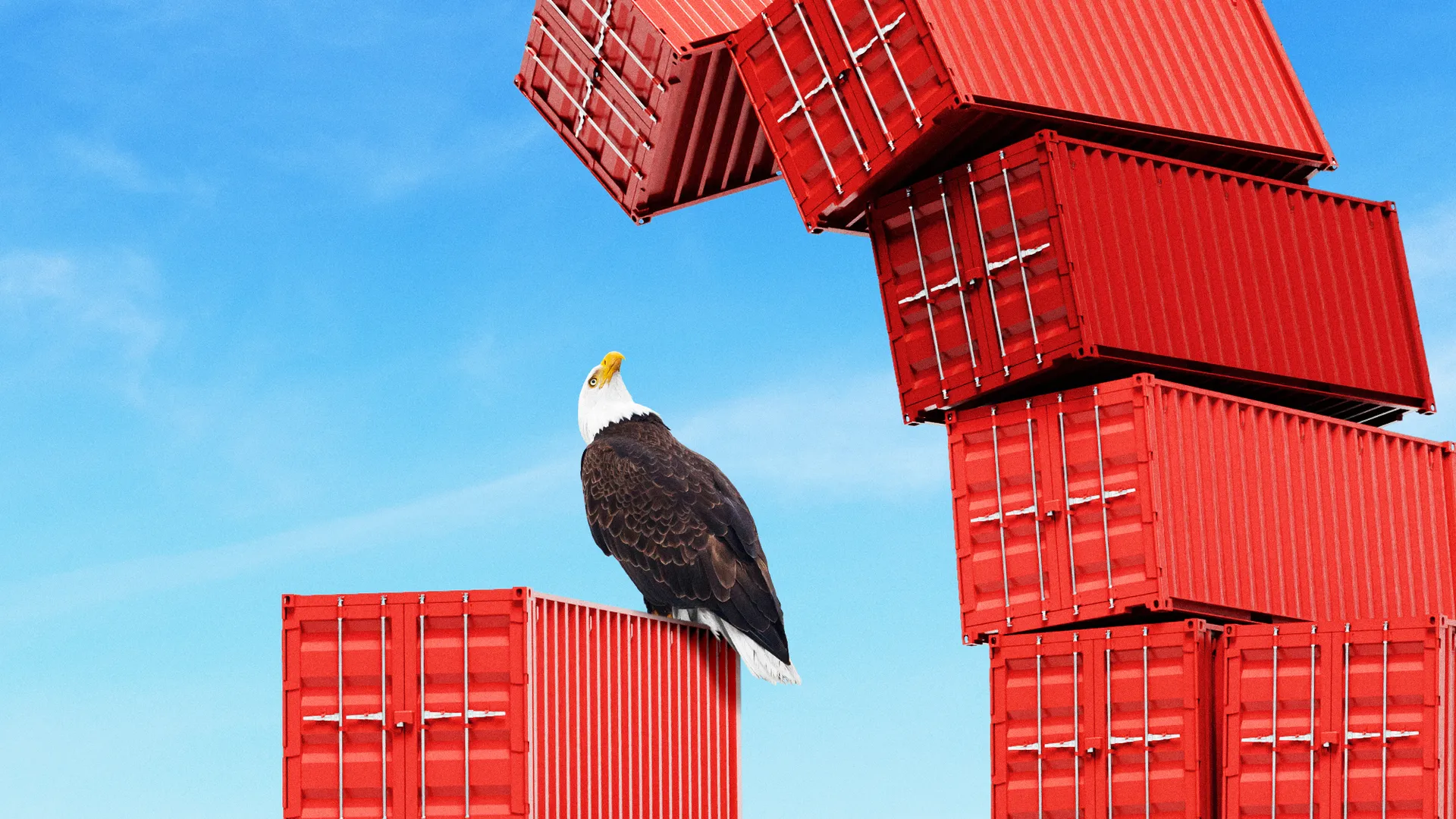
President Donald Trump’s tariffs and trade wars were intended to reduce the U.S. trade deficit. It is getting bigger instead. The gap between imports and exports hit $100 billion in August, a sign that Trump is losing ground on a signature policy.
What did the commentators say?
The latest trade deficit report marked a “17-month high, after also rising significantly in July,” said The New York Times. The last time the gap reached $100 billion was in March 2025, before Trump launched his “Liberation Day” tariffs — later struck down by the Supreme Court — and this fall’s trade war with Canada. But U.S. imports “hit a record $420.8 billion” in August. The United States is “just as dependent as ever on foreign-produced goods,” said Christopher Rupkey, the chief economist at FWDBONDS, to the Times.
The trade gap has actually been “gradually increasing in fits and starts” for most of the last year, said Sabri Ben-Achour at Marketplace, driven in part by the artificial intelligence buildout. It is also a consequence of foreigners investing in “all kinds of American stuff.” The trade number is driven by foreign investors using their dollars to “invest in our companies, lend to our government and buy our assets,” said John R. Puri at the National Review. U.S. officials should “treat that preference as a compliment.”
The Week
Escape your echo chamber. Get the facts behind the news, plus analysis from multiple perspectives.
Join more than 350,000 subscribers and keep yourself informed with a selection of The Week’s most interesting, enlightening and entertaining stories - plus daily puzzles.
Join more than 350,000 subscribers and keep yourself informed with a selection of The Week’s most interesting, enlightening and entertaining stories - plus daily puzzles.
The $100 million milestone suggests the president’s economic agenda is “failing on his own terms,” said Steve Benen at MS NOW. Trump’s trade deficit is “now larger than at any time during Joe Biden’s presidency.” The importance of the import-export gap may be “exaggerated,” but the president has also argued that “this is a metric that matters.” That makes the latest report “notable.”
What next?
Trump has “scrambled the politics of U.S. trade policy,” said Marc L. Bush at The Hill. A “durable realignment in U.S. trade politics” might come after he leaves the scene. Democrats are arguing the president’s tariffs “raise costs and undermine ‘affordability,’” and it’s unclear if Republicans will be “willing to defend” the regime going forward.
Sign up to get Today’s Best Articles in your inbox
A free daily email with the day’s biggest news and analysis – and the best features from TheWeek.com
Joel Mathis is a writer with 30 years of newspaper and online journalism experience. His work also regularly appears in National Geographic and The Kansas City Star. His awards include best online commentary at the Online News Association and (twice) at the City and Regional Magazine Association.