The Week The Week
flag of US
US
flag of UK
UK
https://cdn.mos.cms.futurecdn.net/flexiimages/jacafc5zvs1692883516.jpg

SUBSCRIBE & SAVE

Less than $3 per week

Sign in
  • View Profile
  • Sign out
  • The Explainer
  • The Week Recommends
  • Newsletters
  • Cartoons
  • From the Magazine
  • The Week Junior
  • More
    • Politics
    • World News
    • Business
    • Health
    • Science
    • Food & Drink
    • Travel
    • Culture
    • History
    • Personal Finance
    • Puzzles
    • Photos
    • The Blend
    • All Categories
  • Newsletter sign up Newsletter
  • The Week Evening Review
    A transatlantic alliance, charity shop challenges, and God on the campaign trail

     
    TODAY’S BIG QUESTION

    Could Canada join the EU?

    In a speech to the European Parliament, Canadian Prime Minister Mark Carney yesterday welcomed the European Union’s call for closer cooperation with his country on defence, critical minerals and energy security. President of the European Commission Ursula von der Leyen has proposed “opening the door” to Canada becoming an “associate member” of the EU – “a status that does not currently exist”, said the BBC.

    What did the commentators say?
    A closer alliance makes sense: “Canada is vast and blessed with natural resources but relatively few people, while the EU is small, cramped and mineral-poor”, said The Economist last year. Its Arctic border with Russia presents shared strategic interests with Brussels, while, culturally, Canada’s social-welfare state and social-democratic foundations align with the values of European democracies.

    Associate membership of the EU could, in theory, allow Canada to tap into Europe’s strategic supply chains in key sectors such as energy, AI, critical minerals (needed for batteries and semiconductors) and, crucially, defence. Cables could be laid under the Atlantic linking data centres and cloud storage, and new pipelines could redirect Canadian gas to meet Europe’s ever-growing needs.

    In the face of a hostile Trump administration south of its border waging an all-out tariff war, the thinking in Ottawa is simple, political scientist Bruno Maçães told The New Yorker: “If you cannot change your neighbour geographically, change it institutionally.”

    What next?
    If European leaders “want to shift the relationship into a new gear”, they will have to rethink their current arms-length attitudes towards third countries, “particularly in defence and security”, where “dependence on the US runs deepest”, said Anand Sundar from the European Council on Foreign Relations think tank. And, for Canada, economic “diversification away from the US will not come overnight”, said Peggy Corlin on Euronews. “Geography, after all, matters.”

    This is a “tectonic change” that would need to be achieved by “working groups and bureaucracy”, one Canadian official told The Wall Street Journal. That’s “terribly unsexy, but terribly consequential nonetheless.”


    THE EXPLAINER

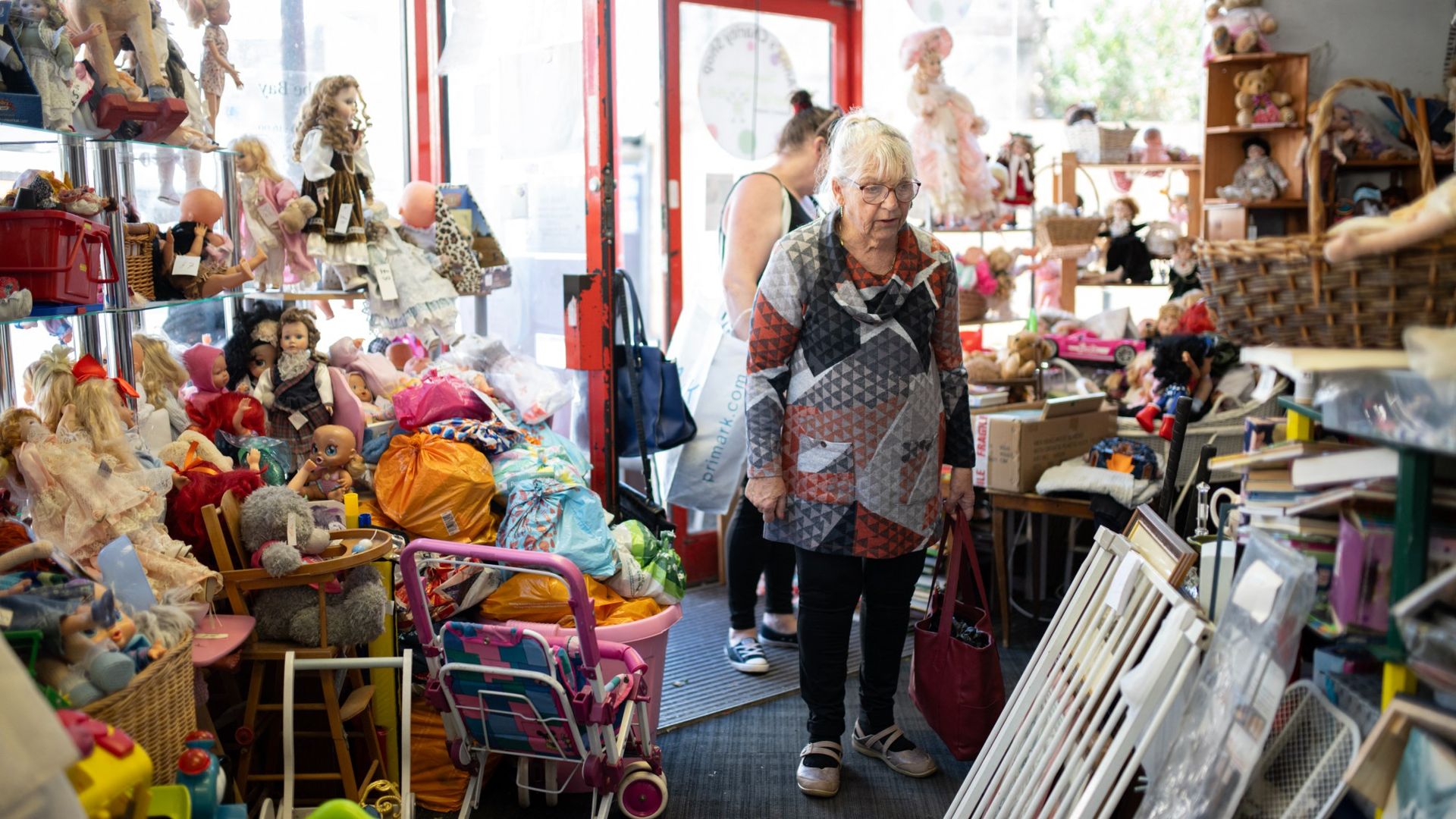
    What’s driving all the charity shop closures?

    The future of the UK’s charity shops seems in doubt as “more and more” close their doors. Oxfam is considering shutting 100 of its 500 stores, only months after the British Heart Foundation announced plans to close 150 of its 640 shops.

    How do charity shops operate?
    The UK’s charity shops are staffed by about 223,000 volunteers and 24,900 paid employees. Together, they made more than £300 million in 2024-25. Charity shops don’t have to pay business rates, although they’re “still hit by increases in national insurance and wage bills”, said The Guardian.

    What’s happening now?
    The rise of fast fashion means charities are inundated with low-quality clothing donations, said Tansy Hoskins, author of “Charity Shop World: An Investigation into Community, Consumption and Waste”, in The Telegraph. Charities sell them off to recycling companies in “ragbags”, but the average price paid to charities for a kilo of worn clothes has “dropped from 45p to 15p” over the past decade.

    Charity shops are also competing with second-hand online retailers like Vinted and eBay. But that has an upside, too: resellers buying up charity-shop finds to sell online can be a source of “significant income”, said The Guardian.

    What has the reaction been?
    Some in the sector are more upbeat. Robin Osterley, outgoing chief executive of the Charity Retail Association, told Civil Society that charity shops are facing challenges “maintaining their profitability in the face of some really significant rising costs” but I don’t “have any concerns about the future of shops”. I also “think some of the trends we’ve been seeing towards higher standards, and towards larger shops in particular, will continue”.

    I’m not sorry to see the sector shrink, said Simon Heptinstall in The Spectator. Charity shops’ exemption from business rates has given them a “ridiculous near monopoly” on high streets, supported by “an army” of “unpaid volunteers” and prices worthy of a “Bond Street boutique”. They are no longer a community asset but an “optimised extraction racket” by charities to prop up their own “sprawling corporate infrastructure”.


    Poll watch

    Brits are divided about music artists getting political during live performances, according to a YouGov poll of 4,833 adults. Almost half (49%) think it’s somewhat or completely unacceptable for musicians to use their concerts as a platform for political statements, while 41% think it’s acceptable.


    Statistic of the day

    94%: The proposed rise in council tax for residents of Wandsworth, London, taking it to £958 for a Band D property. The Tory-led borough has long had one of the country’s lowest rates, and councillors blame the increase on government funding reforms – which Kemi Badenoch has condemned as “outrageous” and instructed lawyers to challenge.


    IN THE SPOTLIGHT

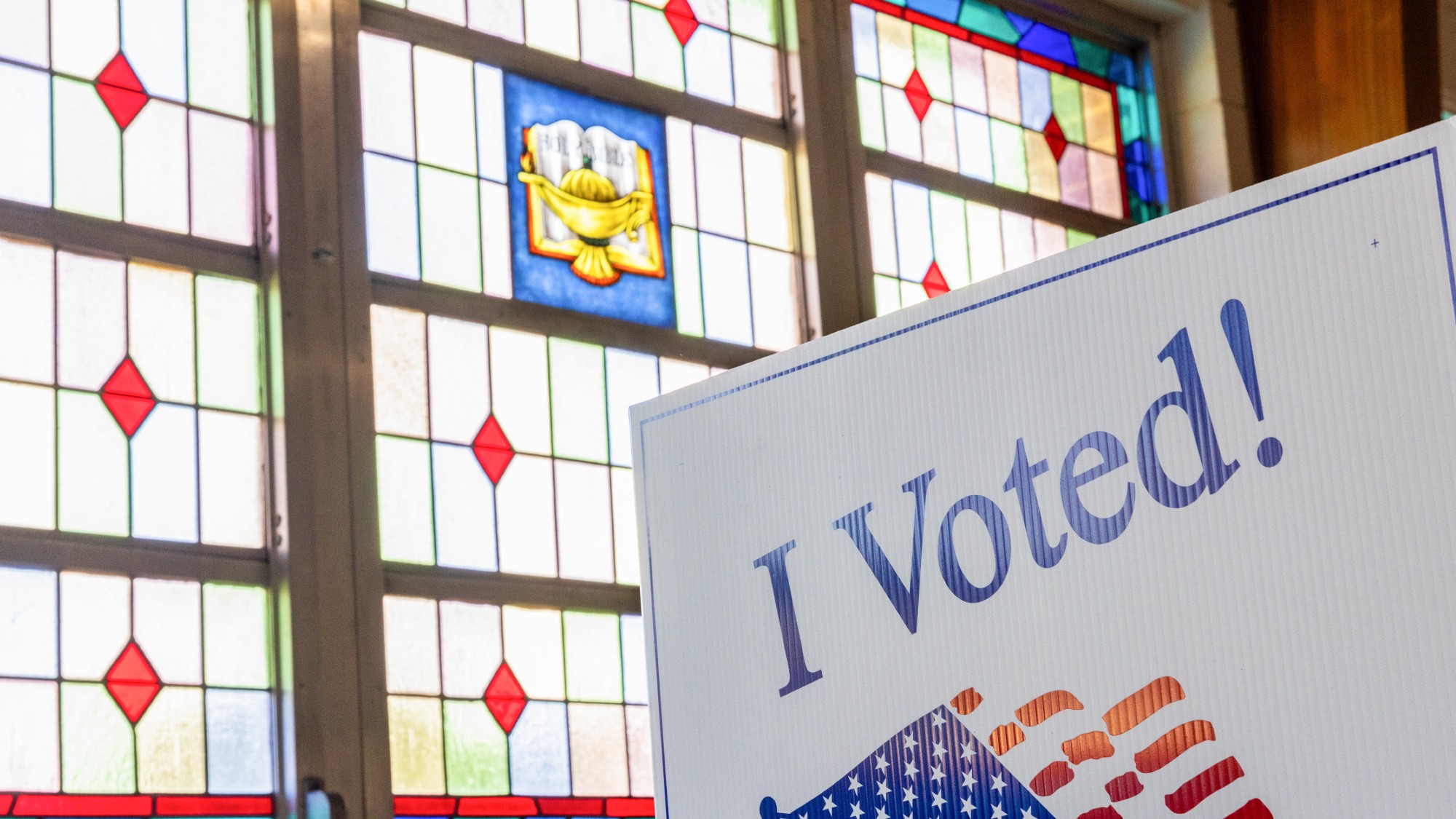
    The US Democrats courting the Christian vote

    It’s usually the Republicans who claim the faith mantle in US politics but, in the run-up to this November’s midterm elections, Democratic candidates like James Talarico in Texas and Adam Hamilton in Kansas are busy highlighting their religious bona fides on the campaign trail.

    Other Democrats on the ballot include a Lutheran minister and an evangelical pastor, while the campaign for Iowa governor candidate Rob Sand emphasises “how his faith is deeply woven into his public service”, said anti-Republican Christian activist Doug Pagitt on The Hill.

    ‘Faith-forward’ candidates
    Democratic Socialists receive a lot of attention during the campaign cycle “but Democratic Christians may prove more influential this November”, said The New Yorker. Candidates like Talarico and Hamilton are leading a “resurgence of the once dominant and long-dormant mainline Protestant tradition” in Democratic politics. Their prominence can be seen as a response to the right-wing “hijacking of the Gospel message” and the evangelicals’ embrace of Donald Trump.

    “Faith is back in Democratic politics,” said Religion News Service. Democrats have often chosen to “ignore, dismiss or even discredit religion” because they did not know how to talk about Christian values without sounding as though they were “imposing their religion upon a pluralistic society”. But a new generation of “faith-forward” candidates is “reclaiming religion” as a “moral framework for public service”.

    Reaching out
    Democratic efforts to “reclaim God” are “unlikely to succeed”, unless the party moves toward the centre, said The Washington Post. Today’s progressive Christians do not reach out to “socially conservative religious voters” but rather “use the language of faith to argue for positions generally associated with the secular left”. Barack Obama, for example, embraced religious rhetoric during his rise to the presidency but then went on to advance causes – abortion access, LGBT rights – that are “at odds with evangelical priorities”. 

    But a “sense of belonging” is important in “both religion and politics”, said Pagitt. With Republicans “narrowing their definition of who belongs and which faith matters”, Democrats have an opportunity to “welcome those Trump is denying”.


    Good day 🎓

    … for Imperial College London, which has been named University of the Year by The Times and Sunday Times, beating both Cambridge and Oxford for the first time. “The ‘STEMMB’ (science, technology, engineering, maths, medicine and business) high-flyer” was also crowned best for Graduate Employment.


    Bad day📂

    … for Downing Street security, as an internal strategy document is leaked to Sky News. It includes 50 policy ideas, drawn up by advisers while Keir Starmer was still in office, around 20 of which were announced before his resignation. Six more have since been announced by Andy Burnham.


    picture of the day

    Conflicted history

    A man in Kosovo Liberation Army uniform protests the imprisonment of Kosovo’s former president at a rally in Pristina. A tribunal at The Hague sentenced Hashim Thaçi to 25 years in prison for war crimes committed as a commander in Kosovo’s 1998-99 independence war against Serbia.

    Armend Nimani / AFP / Getty Images


    PUZZLES AND QUIZZES

    Quiz of The Week

    Have you been paying attention to The Week’s news? Try our weekly quiz, part of our puzzles section, which also includes sudoku and crosswords 

    Play here


    THE WEEK RECOMMENDS

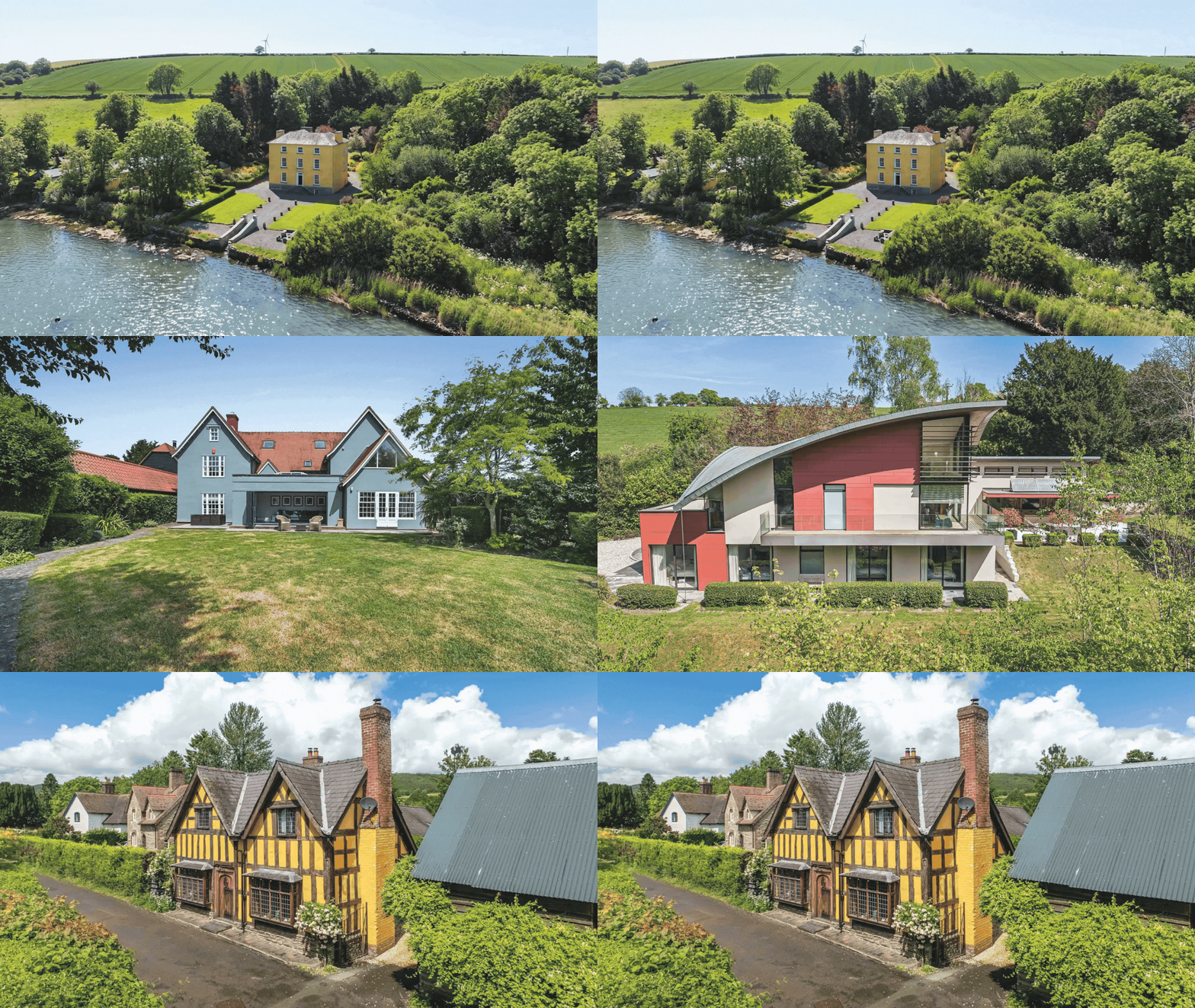
    Properties of the week: colourful houses

    Isle of Wight: Vine Cottage, Old Town, Cowes
    This attractive, period cottage enjoys glimpses of the sea from the upper floors. With easy access to the high street. 4 beds, 2 baths, kitchen, 2 receps, garden. £545,000; Spence Willard.

    Ceredigion: Brynymor House, Cardigan
    A stunning Georgian house on the Teifi Estuary. Newly renovated, it boasts glorious views and direct access to the river. 8 beds, 2 baths, kitchen, 2 receps, outbuildings, garden, parking. OIEO £1.65 million; Country Living Group.

    Shropshire: The Old School House, Bucknell
    A delightful Grade II early 17th century timber-framed village house. Situated in a tranquil rural area, and set in mature gardens on the banks of the Redlake river. 4 beds, 2 baths, kitchen-breakfast room, 3 receps, garden, period barn, parking. £695,000; Knight Frank.

    Wiltshire: Stoford House, Stoford
    A fine Grade II Georgian house set in mature gardens in the Wylye Valley. Main suite, 3 further beds, shower, kitchen, 3 receps, study, outbuilding, garden, parking. £895,000; Myddelton & Major.

    See more


    QUOTE OF THE DAY

    “Whilst it was not the only cause, if you are in respiratory failure, the heat is a death sentence.”

    A nurse in Wales describes the devastating effect of this summer’s heatwaves on elderly hospital patients, in a survey of 2,471 nurses for the Royal College of Nursing. Others spoke of ward temperatures of 44C, and one reported wounds infected with maggots.


    instant opinion

    Today’s best commentary

    The British right’s patriotism problem
    Janan Ganesh in the Financial Times
    Reform’s message of “Life is crap, vote for us” is becoming “a drag”, writes Janan Ganesh, especially with a new prime minister who “seems at ease in his own country”. Voters may be “glum” about Britain “in the abstract”, but they’re “not about their own lives”. If Andy Burnham were “to run on patriotism” at the next election, he could “stigmatise Reform as the plaything of Trump-smitten exiles” and foreign “bitcoin bros whose first loyalty is to their purses”.

    We don’t need more Austen adaptations. Or do we?
    Beatrice Scudeler in The Spectator
    We’re getting new film adaptations of “Sense and Sensibility” and “Pride and Prejudice”, writes Beatrice Scudeler. Are they needed? “Probably not.” But “will I still watch them” immediately? “Very likely.” As marriage rates plummet and more young people shrink from online dating, Jane Austen’s “aspirational” romances offer us “joy” and the “comfort of predictability”. Contemporary authors like Sally Rooney can show us “relationships as they are” but we still “need a Jane Austen to show us what they could be”.
     
    Britain needed Bonnie Greer
    Diane Abbott in The New Statesman
    My friend Bonnie Greer, who has died at 77, “burst on the British cultural and arts scene like an explosion of fireworks”, writes MP Diane Abbott. In the 1980s, it was a “revelation” to see “a Black woman on national television” talking “with complete confidence”. Pundits at that time “were all white, nearly all Oxbridge and nearly all male”. When she moved into political commentary, she had the “clarity” and “incisiveness” to face the BNP leader on “Question Time”. “I admired her courage.”


    word of the day

    Saifullah

    An Islamic honorific, meaning “sword of Allah” in Arabic. The Archbishop of Canterbury has retracted an interfaith harmony award given to a Pakistani imam after it emerged that he had suggested the title should be applied to Osama bin Laden. Hafiz Muhammad Tahir Mehmood Ashrafi made the comment in 2007, in an angry response to the knighting of Salman Rushdie.


     Evening Review was written and edited by Rebecca Messina, Jamie Timson, Will Barker, Joel Mathis, Elliott Goat, Chas Newkey-Burden, Deeya Sonalkar, Erica Jones, David Edwards and Helen Brown.

    Image credits, from top: illustration by Stephen P. Kelly / Getty Images / Shutterstock; Oli Scarff / AFP / Getty Images; Sam Wolfe / Bloomberg / Getty Images; Armend Nimani / AFP / Getty Images; Country Living Group / David Burr / Knight Frank / Knight Frank
     

    Recent editions

    • Evening Review

      Will you get $5K from Trump?

    • Morning Report

      Fed puts inflation above Trump

    • Evening Review

      Canada seeks EU solace

    VIEW ALL
    TheWeek
    • About Us
    • Contact Future's experts
    • Terms and Conditions
    • Privacy Policy
    • Cookie Policy
    • Advertise With Us
    • FAQ
    Add as a preferred source on Google Add as a preferred source on Google

    The Week is part of Future US Inc, an international media group and leading digital publisher. Visit our corporate site.

    © Future US, Inc. Full 7th Floor, 130 West 42nd Street, New York, NY 10036.