The Week The Week
flag of US
US
flag of UK
UK
https://cdn.mos.cms.futurecdn.net/flexiimages/jacafc5zvs1692883516.jpg

SUBSCRIBE & SAVE

Less than $3 per week

Sign in
  • View Profile
  • Sign out
  • The Explainer
  • The Week Recommends
  • Newsletters
  • Cartoons
  • From the Magazine
  • The Week Junior
  • Student Offers
  • More
    • Politics
    • World News
    • Business
    • Health
    • Science
    • Food & Drink
    • Travel
    • Culture
    • History
    • Personal Finance
    • Puzzles
    • Photos
    • The Blend
    • All Categories
  • Newsletter sign up Newsletter
  • WeekDay AM: 10 Things you need to know this morning
    Kane rescues England, Canada joins Eurovision, and the birth of synthetic cells

     
    today’s sport story

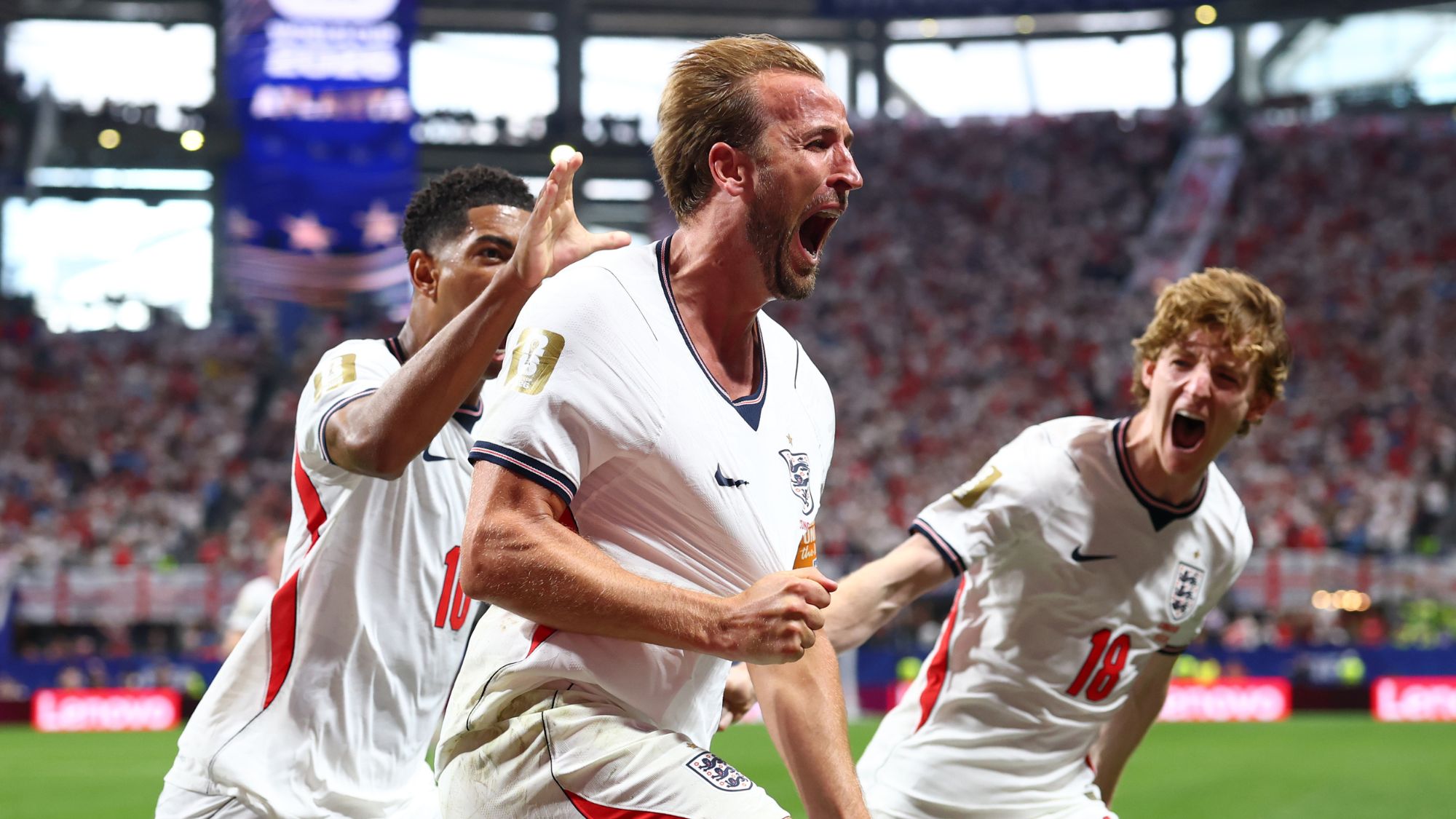
    Kane saves England from humiliating World Cup exit

    What happened
    England fought back to defeat the Democratic Republic of the Congo 2-1 in a tense knockout match in Atlanta, booking a place in the World Cup last 16.

    The underdogs struck early through Brian Cipenga, exposing England’s “shaky defence”, said Shivam Pathak on ESPN. Lionel Mpasi then produced a “string of outstanding saves” to keep the Congolese advantage intact, said France 24. England created numerous opportunities, but could not find an equaliser until captain Harry Kane headed home from Anthony Gordon’s cross with 15 minutes remaining. Kane then completed the turnaround with a powerful finish from a tight angle, sealing the victory and setting up a meeting with Cup co-host Mexico.

    Who said what
    England fans joyfully sang “Wonderwall” at Kane as the final whistle blew. In this World Cup, the Three Lions skipper has become a “temporary fix for a great deal of wrong”, said Barney Ronay in The Guardian. On days like this he has become a “one-man national team”.

    What next?
    England will next face Mexico at the Estadio Azteca on Monday at 1am. This presents the “intimidating prospect of confronting the host nation on home soil, where they boast a formidable record”, said Scott Trotter in The Daily Star.


    today’s science story

    Synthetic cells mark major step towards creating life

    What happened
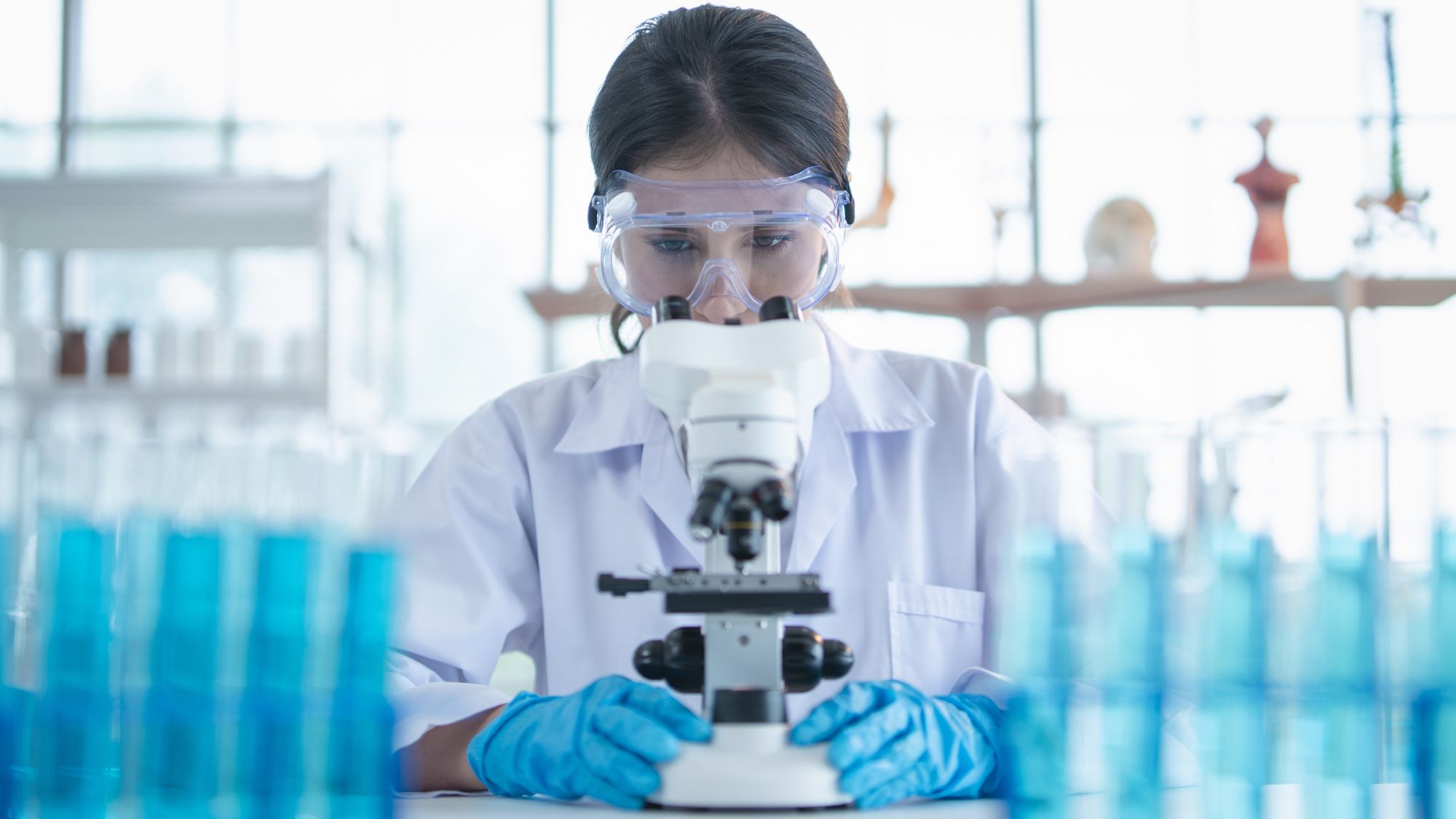
    Researchers at the University of Minnesota have developed a laboratory-made synthetic cell capable of carrying out many of the activities associated with living organisms, including feeding, growing, dividing and competing for nutrients.

    Nicknamed “SpudCell” because of its potato-like shape and in tribute to the pioneering Sputnik spacecraft, the artificial cell contains just 36 genes and is assembled from proteins, genetic material and other chemical components rather than originating from an existing organism.

    Who said what
    “Life is not binary,” said lead researcher Dr Kate Adamala, while clarifying that she was reluctant to describe the cells as fully alive.

    This is certainly “not life in the full, familiar sense”, said The Times’s science editor Rhys Blakely. However, it appears to mark the first time that basic processes associated with living cells have been demonstrated in an entity that, in Adamala’s words, was “built rather than born”.

    Researcher Dr John Glass described the achievement as “dazzling”. “We’re going to remember this moment,” said Dr Roseanna Zia, a computational biologist who was not involved in the project.

    What next?
    The team of experts has established a non-profit organisation to expand the technology, encourage open collaboration and develop more advanced synthetic cells with additional characteristics of living organisms. The group also intends to establish safeguards against any future misuse of the research.


    Today’s music story

    Eurovision to welcome another unlikely entrant

    What happened
    Canada will take part in next year’s Eurovision Song Contest, organisers have announced.

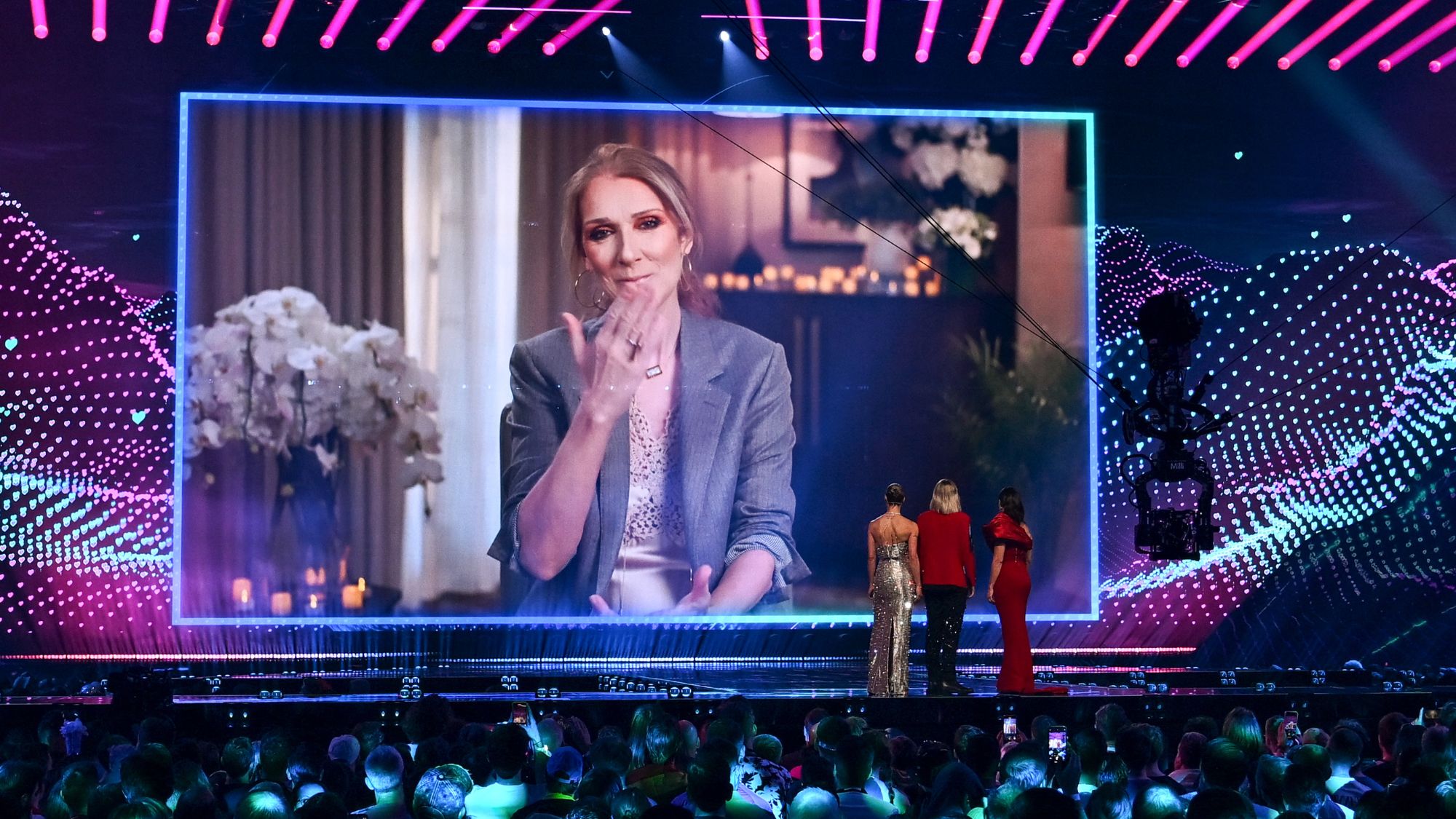
    While it mark the first time that the country has appeared, Quebec-born Celine Dion (pictured above) represented Switzerland in the 1988 contest and won with her song “Ne Partez Pas Sans Moi”.

    Who said what
    Canada “becomes the first new country to join since Australia in 2015”, said the BBC. Its entry into the competition comes after “a turbulent year where long-standing competitors such as Ireland and Spain pulled out over Israel’s participation”.

    Commenting before the news was confirmed, The New York Times said “it would be seen as both a sign of Eurovision’s increasing global ambitions and Canada’s desire to align itself more with Europe”, particularly “as its relations with the United States are strained under the Trump administration”.

    What next?
    Next year’s contest will be held in Sofia. It remains unclear whether the countries who boycotted this year’s event will participate in 2027.


    It’s not all bad

    Obese adults over the age of 40 now face a similar risk of heart attack as those of a healthy weight, thanks largely to the widespread use of statins and blood pressure medications, a major new study has found. Researchers at Imperial College London analysed data from one million people across seven countries and said the drugs had dramatically reduced cardiovascular risk in older adults with obesity. Experts called the findings a significant public health success, while stressing that obesity still raises the risk of diabetes, cancer and other illnesses.


    under the radar

    How women are hacking hormonal health

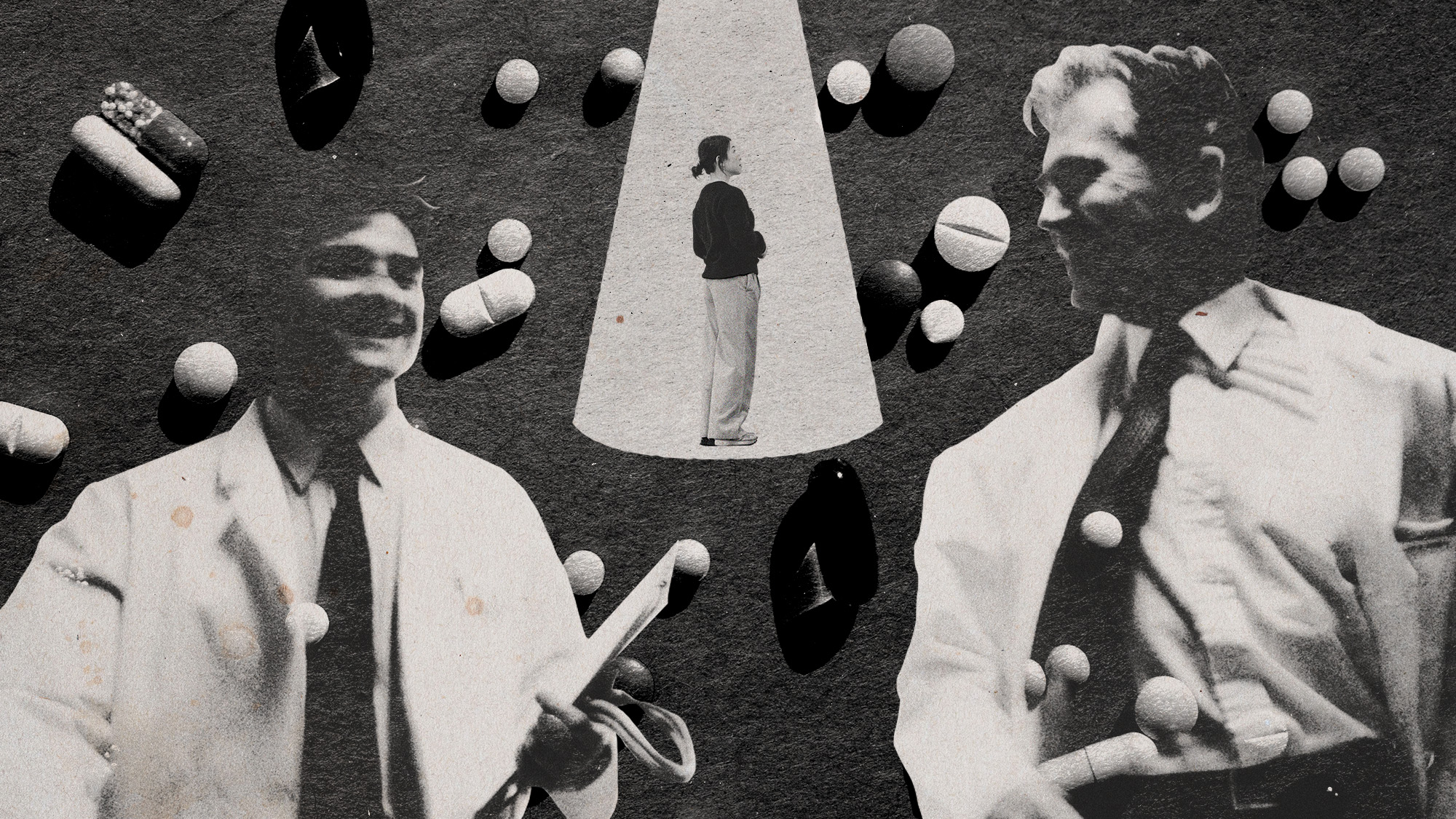
    Desperate to soothe symptoms caused by unbalanced hormones, women are turning to a TikTok trend that recommends combining allergy medication and antacids to treat conditions like PMS or menopause. Despite a lack of clinical evidence, experts say there may be a reason that the cocktail is helping some keep persistent symptoms at bay.

    Those who feel “extra rotten in the days leading up to their period” are finding relief with this TikTok-approved concoction, said NPR.

    To date, there have not been any clinical trials testing the safety or efficacy of this trend. Those who are using the combo are operating in an “evidence-free zone”, Dr Leigh Frame, the executive director of the Office of Integrative Medicine & Health at George Washington University, told NPR. There is “no evidence that it does or doesn’t work”.

    However, experts agree that there is a “plausible biological mechanism” for why some women may be seeing benefits, added NPR. It has to do with histamine, a chemical released when you come into contact with an allergen, triggering an inflammatory response. There is evidence that suggests “histamine also fluctuates with your menstrual cycle”. And both allergy medications and antacids are histamine blockers that interact with different receptors throughout the body, Dr Mara Rivera, a psychiatrist who specialises in reproductive health challenges, told NPR.

    Experts are not against open discussion and the sharing of symptoms and potential remedies over social media. It is “great that we are asking these questions and bringing up these ideas” because we “desperately need more research into midlife women’s health”, gynecologist Dr Amy Voedisch told Everyday Health.


    on this day

    2 July 2005

    Ten “Live 8” concerts were held in cities around the world, organised by Bob Geldof to raise awareness of poverty. Last year he told The Sunday Times that he would not be arranging any more events because he doesn’t think music is a unifying force in the world any more.


    Today’s newspapers

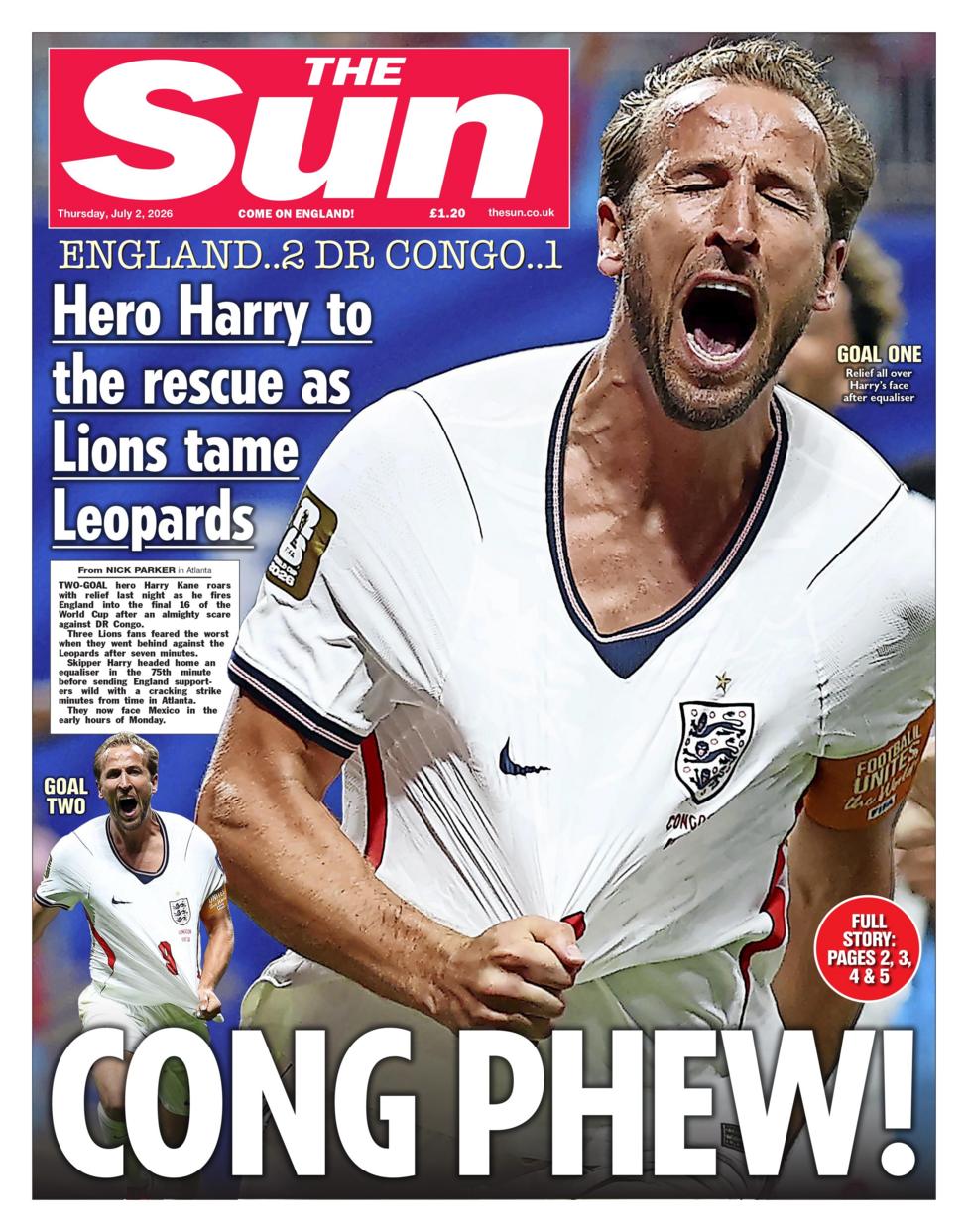
    ‘Hero Harry’

    “Cong phew”, says The Sun after Harry Kane rescued England against DR Congo. He’s “Harry Houdini”, says the Daily Star. “That was Tuch and go, Harry,” says The Mirror. There’s “fresh fury at prostate betrayal”, says the Daily Mail. “Defence black hole triples to £15bn”, says The Telegraph. “Burnham’s first job will be to find £7bn of cuts”, The Times says. “US trade deal on medicines will cost the NHS £45bn”, The Guardian says.

    See the newspaper front pages


    tall tale

    Yodel-ay-hee-H₂O

    Europe’s savage heatwave has claimed another victim: the sweltering conditions have forced yodellers at an annual Swiss festival to sing in fountains. The water features in Basel became “impromptu rehearsal spaces” as yodellers “squeezed in last-minute practice” before performing at the national yodelling festival, said Associated Press. At one fountain, a band “dipped their toes in the water” as festivalgoers “clapped along” or “cooled their hands” during the spontaneous aquatic practice sessions.


    Morning Report was written and edited by Arion McNicoll, Jamie Timson, Theara Coleman, Ross Couzens and Chas Newkey-Burden, with illustrations by Julia Wytrazek.

    Image credits, from top: Chris Brunskill / Fantasista / Getty Images; Vithun Khamsong / Getty Images; Fabrice Coffrini / AFP / Getty Images; Illustration by Julia Wytrazek / Getty Images.

    Morning Report and Evening Review were named Newsletter of the Year at the Publisher Newsletter Awards 2025
     

    Recent editions

    • Morning Report

      Birthright citizenship wins, in loss for Trump

    • Evening Review

      Democrats’ battle over Israel

    • Morning Report

      Supreme Court grants Trump new powers

    VIEW ALL
    TheWeek
    • About Us
    • Contact Future's experts
    • Terms and Conditions
    • Privacy Policy
    • Cookie Policy
    • Advertise With Us
    • FAQ
    Add as a preferred source on Google Add as a preferred source on Google

    The Week is part of Future US Inc, an international media group and leading digital publisher. Visit our corporate site.

    © Future US, Inc. Full 7th Floor, 130 West 42nd Street, New York, NY 10036.