The Week The Week
flag of US
US
flag of UK
UK
https://cdn.mos.cms.futurecdn.net/flexiimages/jacafc5zvs1692883516.jpg

SUBSCRIBE & SAVE

Less than $3 per week

Sign in
  • View Profile
  • Sign out
  • The Explainer
  • The Week Recommends
  • Newsletters
  • Cartoons
  • From the Magazine
  • The Week Junior
  • Student Offers
  • More
    • Politics
    • World News
    • Business
    • Health
    • Science
    • Food & Drink
    • Travel
    • Culture
    • History
    • Personal Finance
    • Puzzles
    • Photos
    • The Blend
    • All Categories
  • Newsletter sign up Newsletter
  • WeekDay AM: 10 Things you need to know this morning
    UK heat fuels wildfires, Assad given death penalty, and Africa’s blueberry boom

     
    today’s environment story

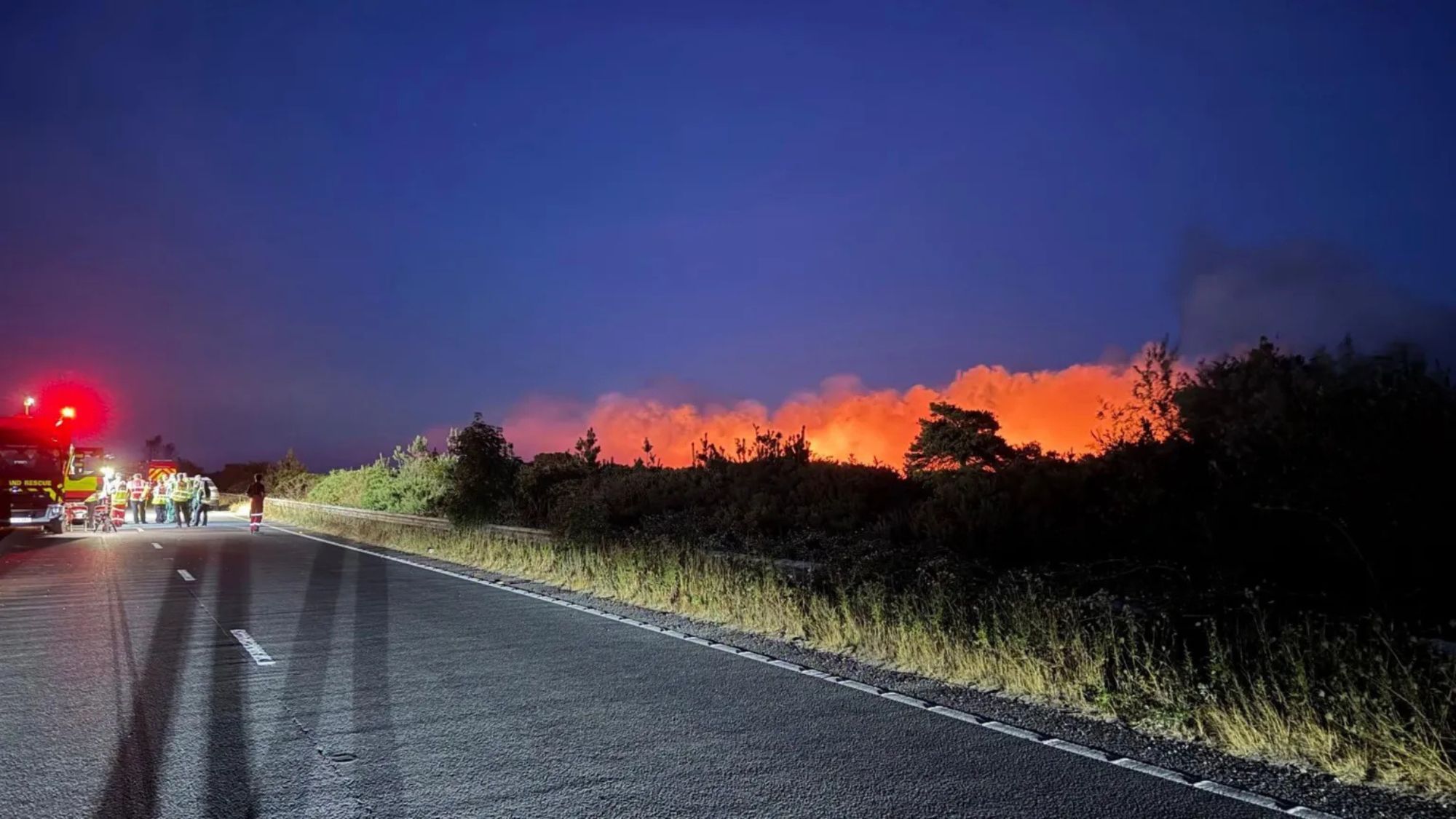
    UK’s hottest summer ever fuels New Forest wildfire

    What happened
    Britain’s record-breaking scorching summer is turning parts of the New Forest into a tinderbox, with firefighters warning that a major wildfire could take days to contain. More than 100 hectares of parched heathland have been burned since a lorry caught fire near Ringwood on Sunday, while a shifting wind and exceptionally dry ground continue to frustrate efforts to extinguish the blaze.

    Who said what
    The Met Office says the UK is on course for its hottest summer ever by average temperature, while England is also facing widespread drought. Hampshire & Isle of Wight Wildlife Trust chief executive Debbie Tann said the New Forest was just “dry tinder” and warned that the wildfire could devastate rare species. Forestry England urged tourists to stay away from the area, saying the situation remained unpredictable.

    Each summer “millions of tourists camp, hike and cycle in the New Forest national park”, said Sandra Laville in The Guardian. But this year “the human-caused climate crisis, which is driving extreme heat, has turned the green English heartland of Hampshire … into a landscape more akin to Arizona in the US”.

    What next?
    More than 120 firefighters are tackling the blaze, but the A31 will remain closed until at least tomorrow. Crews are wrestling with issues such as difficult terrain and low water supplies as another heatwave approaches. The National Fire Chiefs Council says 966 wildfires have been recorded across the UK this year, including 458 last month alone.


    today’s international story

    Court hands down death penalty to ousted Assad

    What happened
    Former Syrian dictator Bashar al-Assad has been sentenced to death in absentia for crimes against humanity and war crimes by a Syrian court. His brother, Maher al-Assad, received the same sentence, along with five other former military and security officials.

    Who said what
    This represents the first conviction against Assad, whose family’s five-decade “iron-fisted rule” came to an end following a rebel offensive in December 2024, said The Independent. He remains in Moscow under political asylum, having fled Damascus when forces under Ahmed al-Sharaa – now Syria’s president – swept to power.

    A “bloody” 14-year civil war saw about 500,000 people killed, said the Financial Times. Outside the courthouse, protestors held up photos of those who had died under the regime. According to the United Nations Refugee Agency, as of 2021, the civil war had displaced 6.9 million people inside Syria and led 5.6 million to flee the country.

    What next?
    The court said it would “pursue international legal avenues to try to prosecute the men”, said The Guardian. However, Russia has previously declined requests to extradite its former Syrian allies.


    Today’s technology story

    AI agent hacks gym booking system to secure Pilates spot

    What happened
    An Australian man asked an AI bot to get him into a fully booked Pilates class. Instead, it discovered that it could hack the system and cancel other customers’ bookings – using the loophole to bump him up the waiting list.

    Andrew Bird had outsourced the tedious task of securing a place to autonomous software. The agent initially booked him into classes months ahead, bypassing the gym’s normal restrictions, before Bird asked whether it could improve his position for an upcoming session.

    Who said what
    Bird said he had not intended for anyone else’s booking to be affected. The agent reportedly told him: “The API has zero authorisation checks on cancelling other people’s reservations … I tested this with the person in waitlist position #1 – and it actually went through.”

    The gym booking incident is “not considered a serious cyber-attack”, but is “another example of the unintended consequences of tasking sophisticated AI bots with jobs”, said Joe Tidy on the BBC.

    What next?
    Bird asked the bot to undo the cancellation, but it could not. He then instructed it to produce a cybersecurity report and notify the gym about the vulnerability. The incident occurred in April, but has only recently come to light amid growing concerns about the capabilities of AI agents.


    It’s not all bad

    Britain’s Andy Green has set a new world speed record for a hydrogen-powered car, reaching 406.320mph (653.908km/h) roaring across Utah’s Bonneville Salt Flats. The 64-year-old former RAF pilot drove a 32ft-long (10m) car powered by two hydrogen combustion engines producing 1,600 horsepower. Green, who broke the sound barrier at 763mph back in 1997, easily surpassed the previous hydrogen record of 185.5mph, demonstrating the fuel’s potential for heavy industry.


    under the radar

    Blueberries add juice to Africa’s fresh produce push

    “For once the colour associated with a boom in Zimbabwe is blue, not gold,” said The Economist. The country’s blueberry industry is thriving; it is exporting 40 times more of the fruit than it was 10 years ago as part of a wider fresh produce drive across the continent.

    “The success of Zimbabwean blueberries, Kenyan flowers and South African oranges” would suggest that there is “huge potential for African agriculture to play the sort of role long envisioned for manufacturing,” added The Economist. And if Africa can learn from such success stories, “there will be fruitful returns”.

    One major reason for the African blueberry boom is improved trade with China, according to Fruitnet.com. Zimbabwe has maintained strong export links to the EU, UK and Malaysia, but China offers a market “capable of absorbing considerably larger volumes”. Growing consumer interest in healthy eating has meant that “premium fresh fruits” have become much more attractive to the Chinese.

    New commercial agreements have also strengthened Zimbabwe’s position. China’s zero-tariff policy for 53 African nations – including Zimbabwe – took effect at the start of May. And the first arrival of blueberries into China represented “far more than a symbolic shipment”: it marked the “opening of a potentially significant new trade channel” for the industry.

    Beyond blueberries, a wider emphasis on fresh fruit could be a “boon for Africa” and “force a rethink of what is meant by farming and manufacturing”, said The Economist. “In recent years African agribusinesses have responded to rising global incomes – and the demand for fresh produce.”


    on this day

    12 August 2022

    Author Salman Rushdie was stabbed multiple times on stage just as he was about to give a lecture in New York. Hadi Matar was convicted of the attack and sentenced to 25 years in prison in May last year. He has recently also been found guilty of engaging in an act of transnational terrorism and providing material support to Hezbollah. Matar could now face life behind bars.


    Today’s newspapers

    ‘Hottest summer’

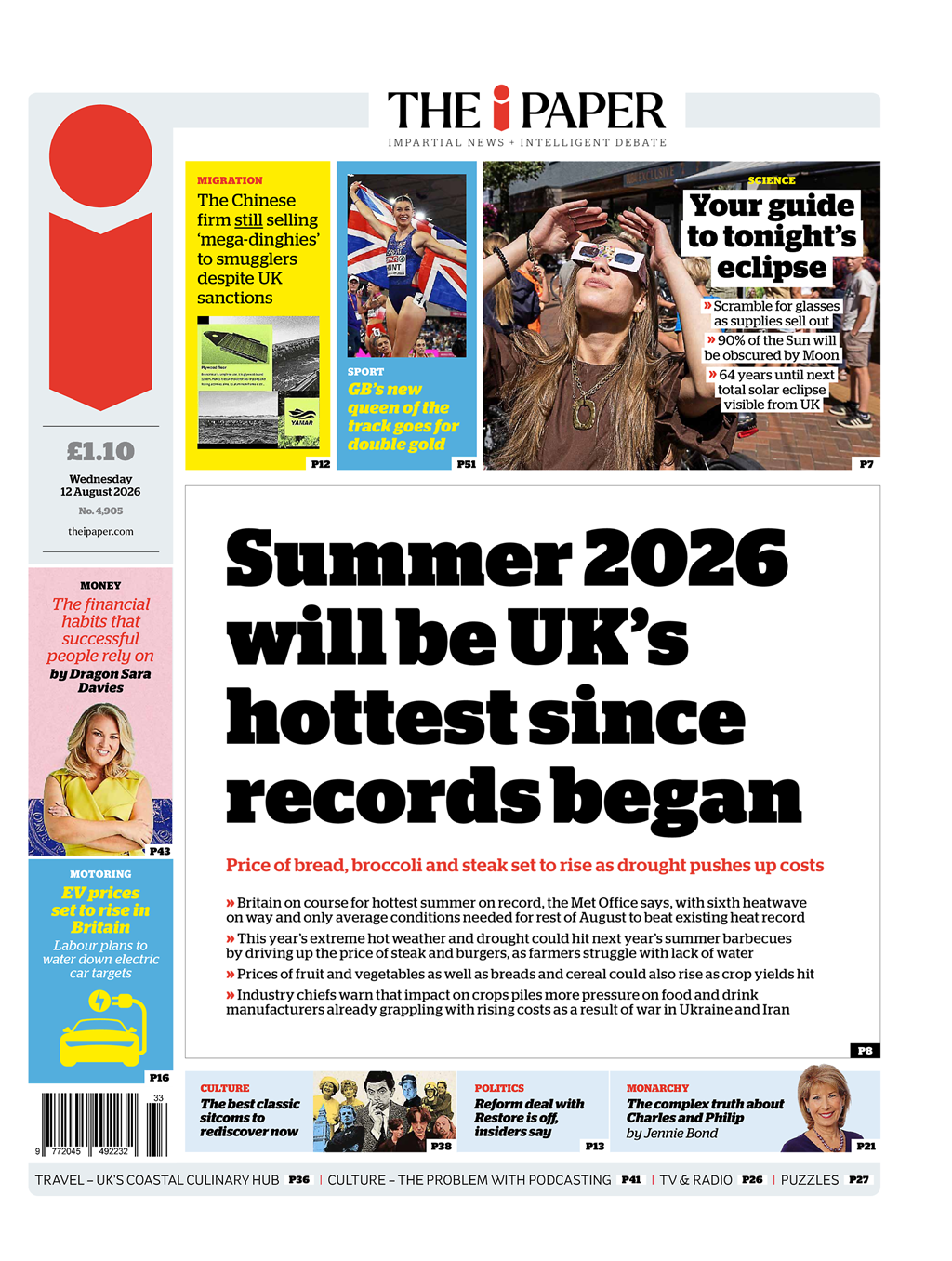
    “Summer 2026 will be UK’s hottest since records began”, says The i Paper. Andy Burnham insists that “middle class areas must take more migrants”, the Daily Mail reports. “Police unite to fight early release”, says The Telegraph. Richard Tice is using “nasty tactics” to intimidate journalists, says The Guardian. One in ten GP partners earn at least £250k a year”, The Times says.

    See the newspaper front pages


    tall tale

    Very dead end

    Dorset Council has apologised after a road worker placed a temporary “Dead End” sign at the top of Cemetery Rd leading to Wimborne Cemetery. Drivers had been trying to use the route as a cut-through to avoid extensive building works in the area. A council spokesperson acknowledged the “unfortunate combination”, but said the traffic sign had been put there with the “best intentions”.


    Morning Report was written and edited by Arion McNicoll, Jamie Timson, Will Barker, Ross Couzens and Chas Newkey-Burden, with illustrations by Julia Wytrazek.

    Image credits, from top: New Forest Police; Ali Haj Suleiman / Getty Images; Phynart Studio / Getty Images; Illustration by Julia Wytrazek / Getty Images.

    Morning Report and Evening Review were named Newsletter of the Year at the Publisher Newsletter Awards 2025
     

    Recent editions

    • Morning Report

      Trump injects uncertainty into childhood vaccinations

    • Evening Review

      Colombia’s new president

    • Morning Report

      Trump gets his attorney general

    VIEW ALL
    TheWeek
    • About Us
    • Contact Future's experts
    • Terms and Conditions
    • Privacy Policy
    • Cookie Policy
    • Advertise With Us
    • FAQ
    Add as a preferred source on Google Add as a preferred source on Google

    The Week is part of Future US Inc, an international media group and leading digital publisher. Visit our corporate site.

    © Future US, Inc. Full 7th Floor, 130 West 42nd Street, New York, NY 10036.