The Week The Week
flag of US
US
flag of UK
UK
https://cdn.mos.cms.futurecdn.net/flexiimages/jacafc5zvs1692883516.jpg

SUBSCRIBE & SAVE

Less than $3 per week

Sign in
  • View Profile
  • Sign out
  • The Explainer
  • The Week Recommends
  • Newsletters
  • Cartoons
  • From the Magazine
  • The Week Junior
  • Student Offers
  • More
    • Politics
    • World News
    • Business
    • Health
    • Science
    • Food & Drink
    • Travel
    • Culture
    • History
    • Personal Finance
    • Puzzles
    • Photos
    • The Blend
    • All Categories
  • Newsletter sign up Newsletter
  • WeekDay AM: 10 Things you need to know this morning
    Nepal tunnel rescue, Badenoch’s reshuffle, and Messi retires from international duty

     
    today’s international story

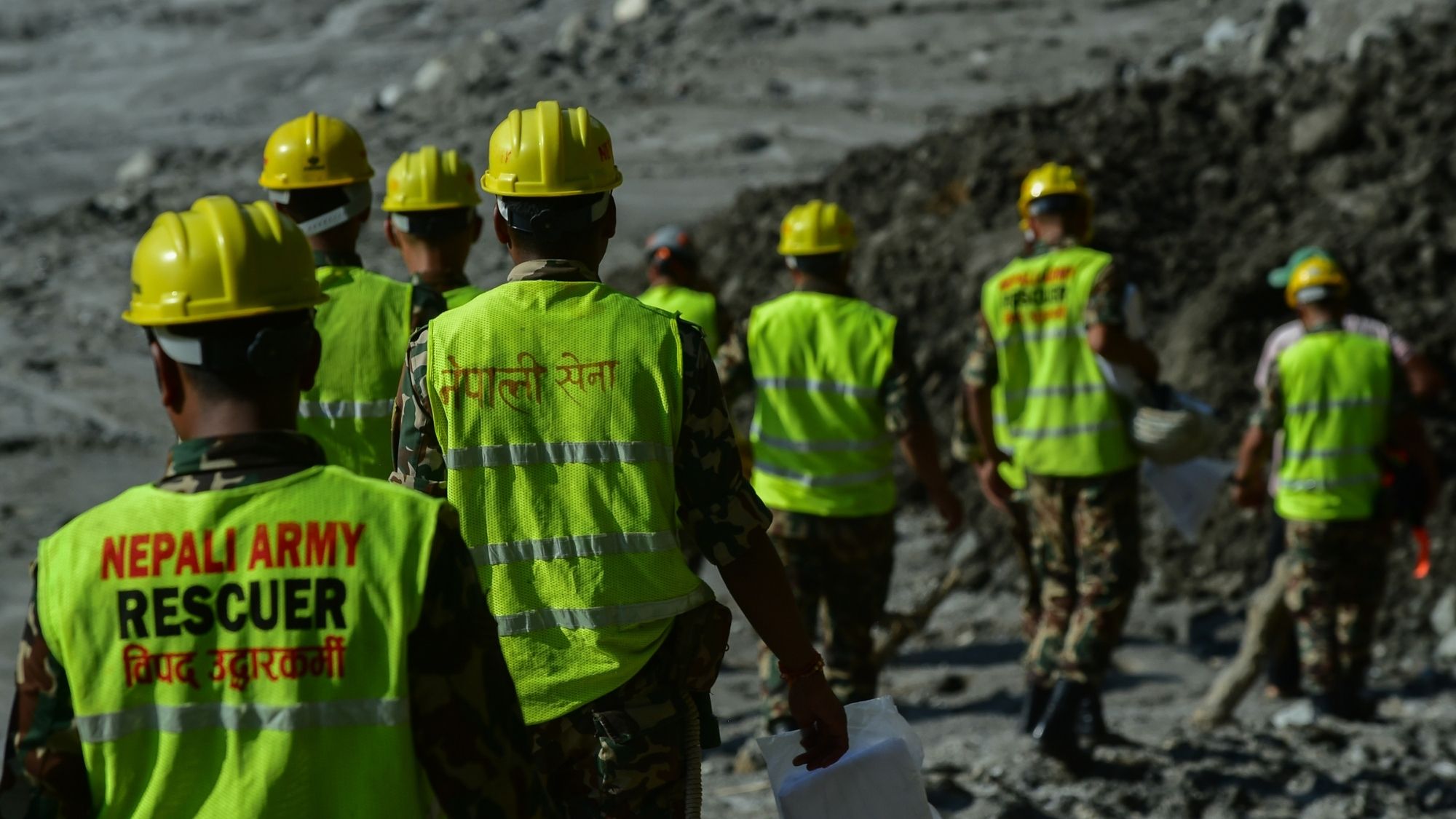
    Race to save hundreds trapped in Nepal tunnels

    What happened
    Rescue teams in Nepal are battling to reach more than 600 workers thought to be stuck inside mud-choked tunnels at hydropower projects along the Trishuli River. Crews have used explosives to clear blocked routes and are forcing air underground as concerns grow that the survivors may have little time left.

    The disaster has killed at least 939 people, while 3,925 remain unaccounted for, including 592 foreign nationals. Eleven hydropower projects were damaged by the flooding and landslides.

    Who said what
    Australian tunnelling expert Arnold Dix said the destruction had erased many signs of the underground structures, adding: “It looks like a lunar landscape.”

    Rescue efforts have been “complicated by difficult terrain, persistently high flood waters and difficult weather”, said Cait Kelly and William Christou in The Guardian.

    Yet “amid the soaring toll of death and missing was some hope”. Yesterday rescuers heard a six-year-old girl crying and pulled her out of the mud. “Her body was trapped, but her head was outside,” Nepali armed police spokesperson Netra Bahadur Karki told Agence France-Presse.

    What next?
    Chinese and Nepalese military personnel are leading the search, with assistance from experts from India, South Korea and Australia. Authorities say the rescue efforts have been intensified, while families are urging the teams to move faster.


    today’s politics story

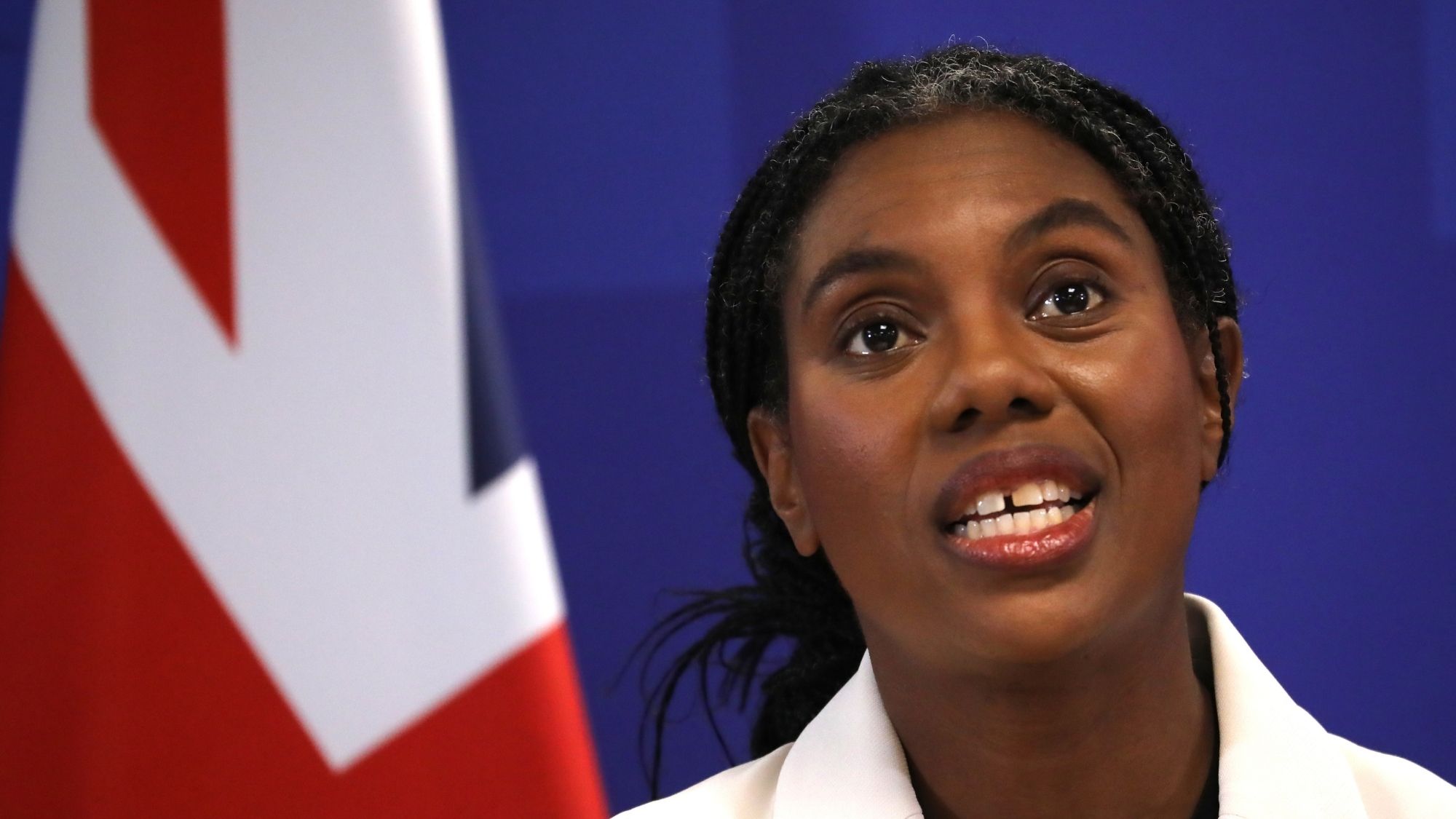
    Badenoch reshuffles team to put Tories on ‘war footing’

    What happened
    Kemi Badenoch has overhauled her shadow cabinet as the party prepares for the possibility of an early general election. Mel Stride has been removed as shadow chancellor and Priti Patel has lost the foreign affairs brief.

    Andrew Griffith takes over the post of shadow chancellor, with a new economic unit intended to concentrate on growth, living standards and financial credibility. Tom Tugendhat becomes shadow foreign secretary, with additional responsibility for defence.

    Several newer Conservative MPs have also been promoted, including Katie Lam as shadow housing secretary and Harriet Cross as shadow Scotland secretary.

    Who said what
    Badenoch has put the Tories on a “war footing” for a potential early general election “by clearing out the party’s big beasts”, said Ben Clatworthy in The Times. “Kemi’s finally showing the ruthlessness that the Tories need,” said Jake Wallis Simons in The Telegraph. “Sacking Mel Stride and Priti Patel signals Badenoch is building a serious government-in-waiting.”

    What next?
    The reshuffle comes as Andy Burnham prepares for his first appearance in the Commons as prime minister.


    Today’s sport story

    Messi quits Argentina in ‘decision that hurts my soul’

    What happened
    Lionel Messi has ended his international career, seven weeks after the country lost the World Cup final to Spain. The 39-year-old leaves as Argentina’s most-capped player and leading scorer, with 207 appearances and 125 goals. He is “perhaps the greatest player of all time”, said Harry Latham-Coyle in The Independent.

    Messi made his senior debut in 2005 and eventually won the 2021 Copa América, two further Copa América titles and the 2022 World Cup. Argentina also reached the final of this year’s tournament, but was beaten 1-0 after extra time.

    Messi said he had decided to retire shortly after that defeat and became “more convinced than before” following the death of his father, Jorge, last month.

    Who said what
    Addressing Argentina supporters, Messi said: “It is a decision that hurts my soul, but I know it is time.”

    The announcement is “not a surprise”, said Oliver Kay in The Athletic, but “the legacy he leaves behind is enormous”. The “icon” is bowing out “having won everything possible”, said Etienne Fermie in The Sun. He is truly “a fine Messi”.

    What next?
    Messi will continue playing for Inter Miami, where his contract runs until 2028. He previously announced his international retirement in 2016, but returned after being persuaded to continue.


    It’s not all bad

    Researchers from the University of Cape Town have developed a simple, chemical-free way to turn polluted river water into irrigation water for growing food. Using stones, sand and heat-treated wood, the solar-powered system filters 36,000 litres a day, removing about 99% of toxins and pathogens. About 3,000 litres irrigates vegetable gardens in the Langrug settlement where it is being tested, helping to feed residents. Researchers hope the low-cost approach can offer a model for improving food and water security in other communities facing climate change.


    under the radar

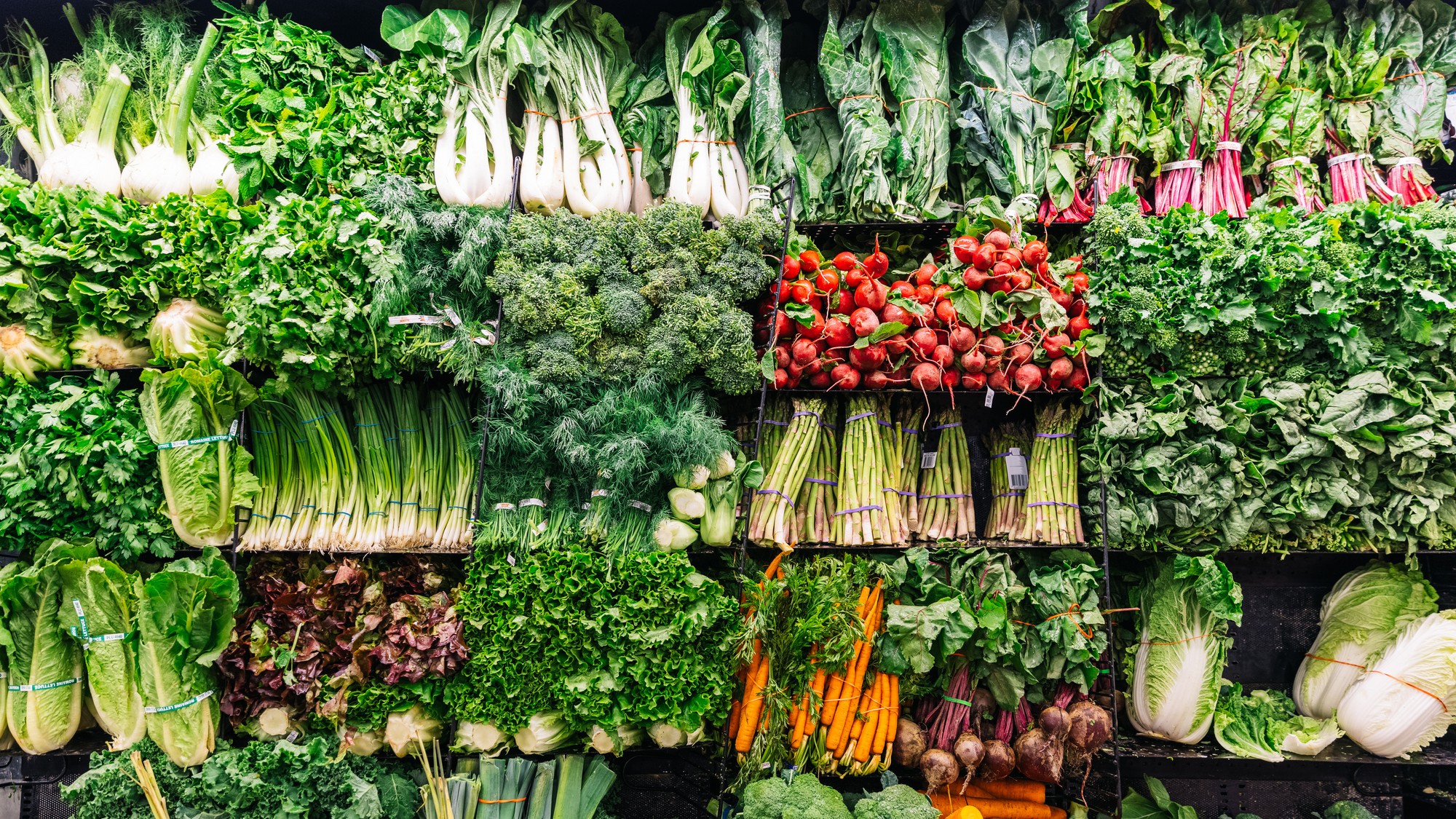
    Why vegetables are rapidly disappearing

    Produce shelves are becoming sparser and featuring fewer options. Economic, cultural and environmental factors have reduced the variety of vegetables available to consumers. Prioritising the same produce can have negative health effects and could make crops more susceptible to climate change.

    Vegetable diversity is “declining due to market homogenisation, land-use change and other threats”, and its “current conservation is insufficient”, said a study published in the journal PNAS. There have been “substantial declines in the range of traditional vegetable varieties grown over the past century, while almost one quarter of assessed wild relatives of major vegetable crops are threatened with extinction”, said a release by the World Vegetable Center about the study.

    “Vegetable biodiversity is one of the world’s greatest assets for improving diets and adapting agriculture to a changing climate,” Colin Khoury, the global conservation lead at the crop diversity preservation non-profit Crop Trust, said in the release. “But we’re losing it at exactly the time we need it most.”

    “The solution isn’t simply to grow more vegetables,” Dr Maarten van Zonneveld, who led the research, said in the release. “It’s also to grow more kinds of vegetables.” Many nutrient-rich vegetables – like “spider plant, slippery cabbage and other dark green leafy vegetables – receive little breeding attention due to their lower commercial value compared to crops such as pepper and tomato,” added the study.

    The good news is that “much of the vegetable biodiversity we need is still out there”, said Zonneveld. The “urgency is to conserve it properly so that we can use it wisely to diversify diets amid climate change.”


    on this day

    1 September 1969

    Colonel Muammar Gaddafi deposes King Idris in the Libyan Revolution. In May this year a Tripoli appeals court acquitted 31 former Gaddafi regime officials of suppressing the 2011 revolution, closing a case that resulted in multiple death sentences in 2015.


    Today’s newspapers

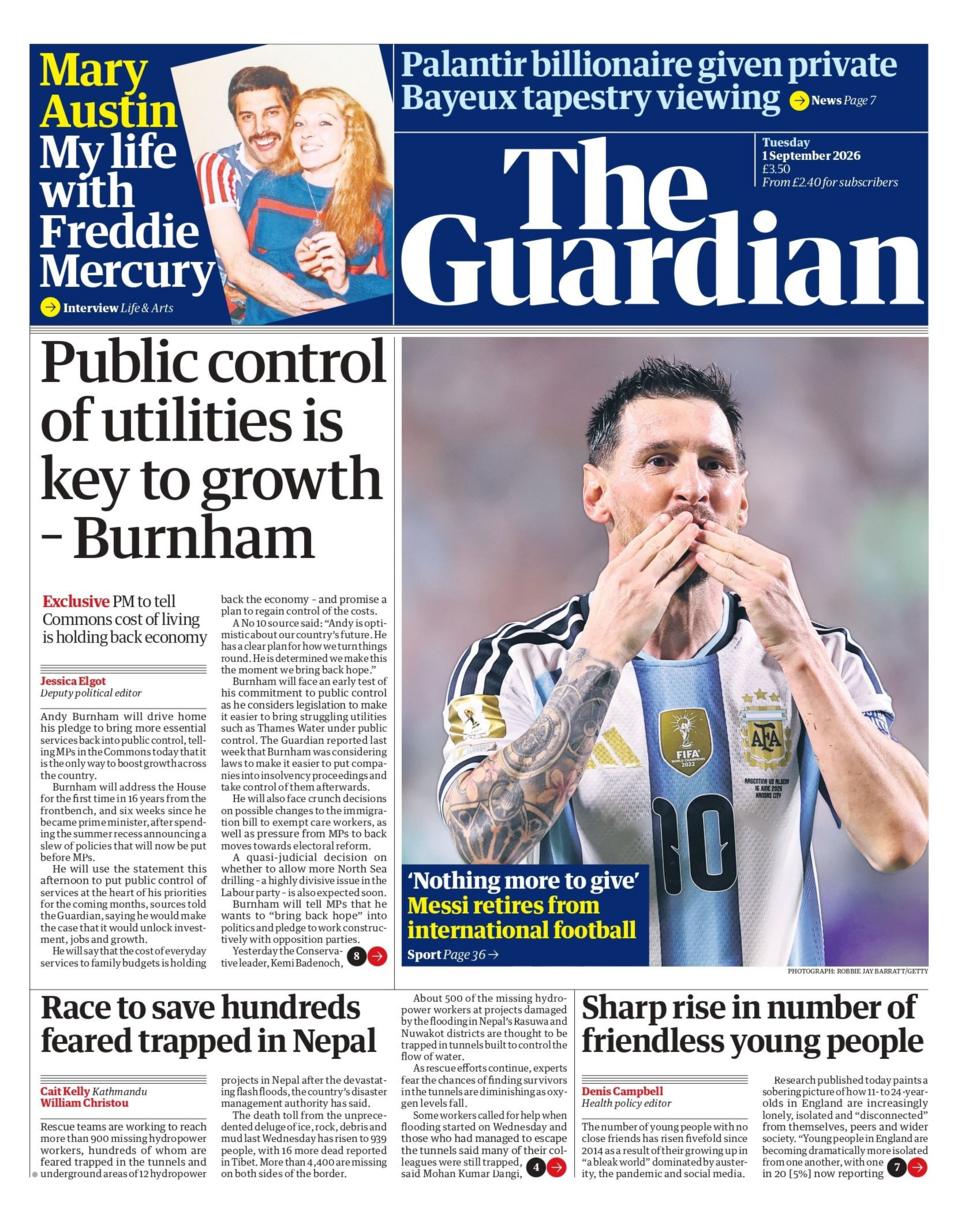
    ‘The friendless young’

    There has been a “sharp rise” in the number of “friendless young people”, reports The Guardian. The “threat of a water supply catastrophe” has been “upgraded”, The Times says. A “witch hunt” against the army puts the UK “at risk”, says The Telegraph. The i Paper reports on “killer kitchen dust” while the Daily Star notes the “flipping idiots” causing a “huge rise” in car accidents because they're “driving in flip-flops”.

    See the newspaper front pages


    tall tale

    Backpack back after 60 years

    An elderly Austrian hiker has been reunited with his backpack more than six decades on due to the melting of the Sulztalferner glacier in Austria’s Tyrol region. Items including an ice axe, camera and pipe dating from the 1950s or 1960s were found in July. Austrian police began an investigation and – through heavily frayed documents found in the backpack – discovered the owner’s name and tracked him down. He had thrown his backpack into a crevasse in order to lighten his weight while he was being rescued from the glacier in August 1963.


    Morning Report was written and edited by Arion McNicoll, Jamie Timson, Devika Rao, Ross Couzens and Chas Newkey-Burden.

    Image credits, from top: Ritesh Shukla / Getty Images; Alishia Abodunde / Getty Images; Michael Regan – FIFA / Getty Images; Alexander Spatari / Getty Images.

    Morning Report and Evening Review were named Newsletter of the Year at the Publisher Newsletter Awards 2025
     

    Recent editions

    • Morning Report

      Iran war veers back into dueling strikes

    • Sunday Shortlist

      Wile E. Coyote takes Acme to court

    • Saturday Wrap

      Natalie Harp’s outsized influence

    VIEW ALL
    TheWeek
    • About Us
    • Contact Future's experts
    • Terms and Conditions
    • Privacy Policy
    • Cookie Policy
    • Advertise With Us
    • FAQ
    Add as a preferred source on Google Add as a preferred source on Google

    The Week is part of Future US Inc, an international media group and leading digital publisher. Visit our corporate site.

    © Future US, Inc. Full 7th Floor, 130 West 42nd Street, New York, NY 10036.