The Week The Week
flag of US
US
flag of UK
UK
https://cdn.mos.cms.futurecdn.net/flexiimages/jacafc5zvs1692883516.jpg

SUBSCRIBE & SAVE

Less than $3 per week

Sign in
  • View Profile
  • Sign out
  • The Explainer
  • The Week Recommends
  • Newsletters
  • Cartoons
  • From the Magazine
  • The Week Junior
  • More
    • Politics
    • World News
    • Business
    • Health
    • Science
    • Food & Drink
    • Travel
    • Culture
    • History
    • Personal Finance
    • Puzzles
    • Photos
    • The Blend
    • All Categories
  • Newsletter sign up Newsletter
  • WeekDay AM: 10 Things you need to know this morning
    Falling AI-linked stocks, the US postal voting battle, and the secret life of fog

     
    today’s technology story

    AI-linked stocks slip before traders shake off worries

    What happened
    AI safety fears saw technology stocks plunge yesterday after senior figures in the industry called for a slower approach to developing increasingly powerful systems. Nvidia fell 3.3% in New York while AMD dropped 4% and Micron Technology and Sandisk each lost 5%. SoftBank, a major OpenAI investor, slumped 13%, while European chipmaker ASML dropped 6% – though there was a rally late in the day.

    Who said what
    The sell-off followed Anthropic chief executive Dario Amodei’s warning that “building too fast is reckless” and that autonomous AI systems could eventually cause hundreds of billions of dollars in damage.

    “His claims have been disputed by some experts,” said Lauren Almeida in The Guardian. But yesterday “investors began to price in a slowdown that would make it harder for the industry to pay for hundreds of billions of dollars in investments in AI infrastructure”.

    OpenAI boss Sam Altman, Google DeepMind chief Demis Hassabis and Elon Musk also backed Amodei’s call for greater caution. Anthropic co-founder Jack Clark went even further, suggesting that governments may eventually require AI companies to maintain independently verified “kill switches”.

    However, Donald Trump dismissed the concerns as a “sick conspiracy”, arguing that AI needed only a “STRONG AND SMART (High IQ!) PRESIDENT”.

    What next?
    Despite the market dip, “traders largely shook off warnings that the AI industry should slow down”, said Steve Kopack on NBC News. A late rally in software and cybersecurity stocks “propelled indexes off their worst levels of the day”.


    today’s international story

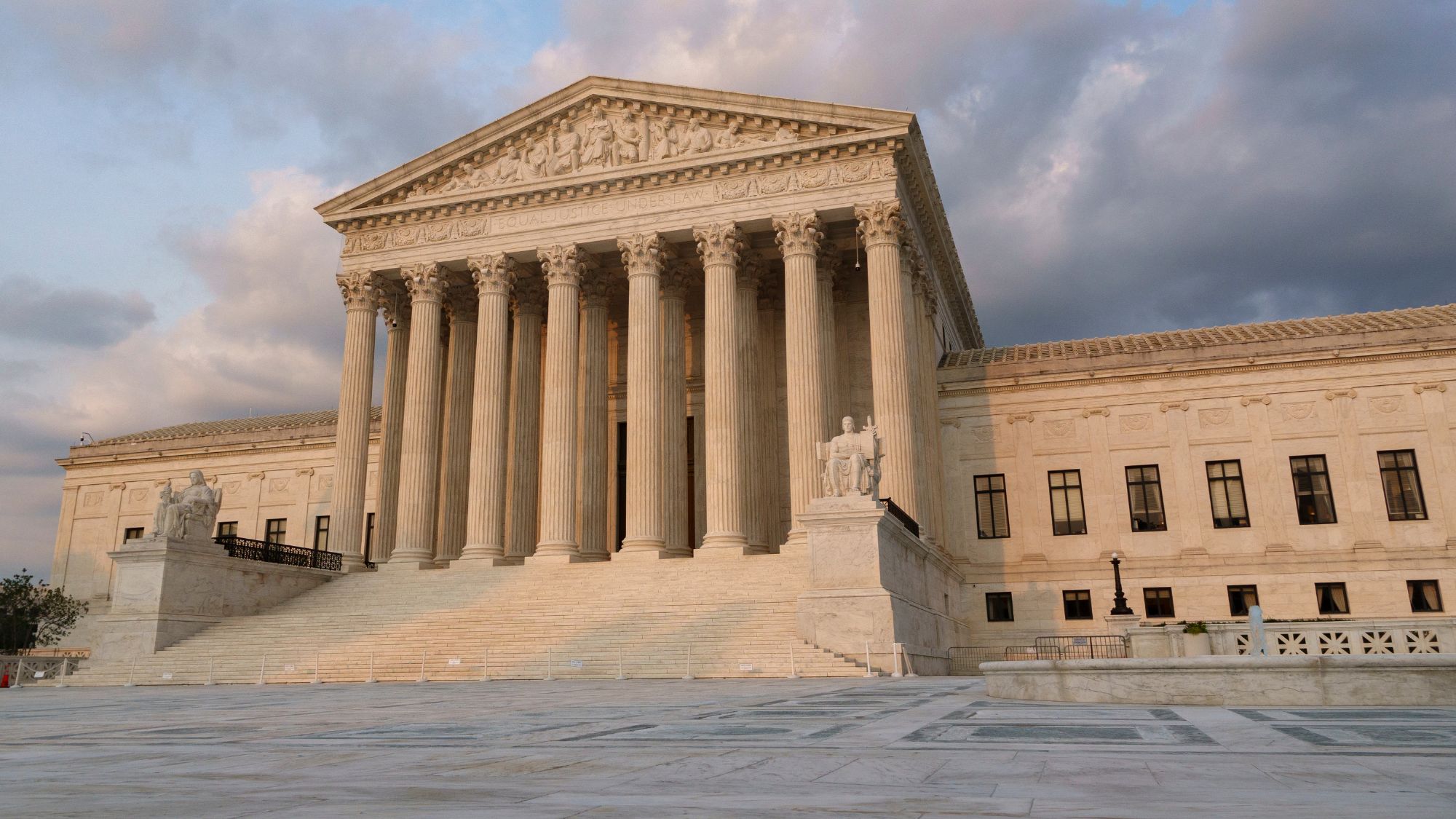
    US Supreme Court rejects Trump’s postal vote curbs

    What happened
    Donald Trump has suffered another legal defeat over postal voting after the US Supreme Court declined to let his administration introduce tighter requirements for mail-in ballots ahead of November’s midterm elections. The justices left in place a lower court order preventing the US Postal Service from implementing the measures, which included checking voters against citizenship lists. Twenty-three states and Washington DC had challenged the changes, arguing that election administration is a state responsibility.

    Who said what
    Conservative justice Brett Kavanaugh backed the immediate decision, but suggested that the administration could ultimately prevail. He said applying the proposed rules this year would be “arbitrary and capricious”, while justices Samuel Alito and Clarence Thomas dissented. They described the legal challenge as a “Hail Mary pass”. Trump has argued that tighter postal controls are needed to prevent electoral fraud despite having previously voted by mail himself.

    This is “not the first setback on postal ballots for Trump before the Supreme Court”, said Lisa Lambert on the BBC. In June the justices ruled that states could count ballots postmarked by election day, rejecting an effort by the Trump administration to exclude them.

    What next?
    The latest ruling is unlikely to settle the dispute, with the underlying legal battle continuing. Some states have already begun sending out ballots for November’s elections, which will determine control of Congress and Senate.


    Today’s nature story

    Wild dogs complete record-breaking trip

    What happened
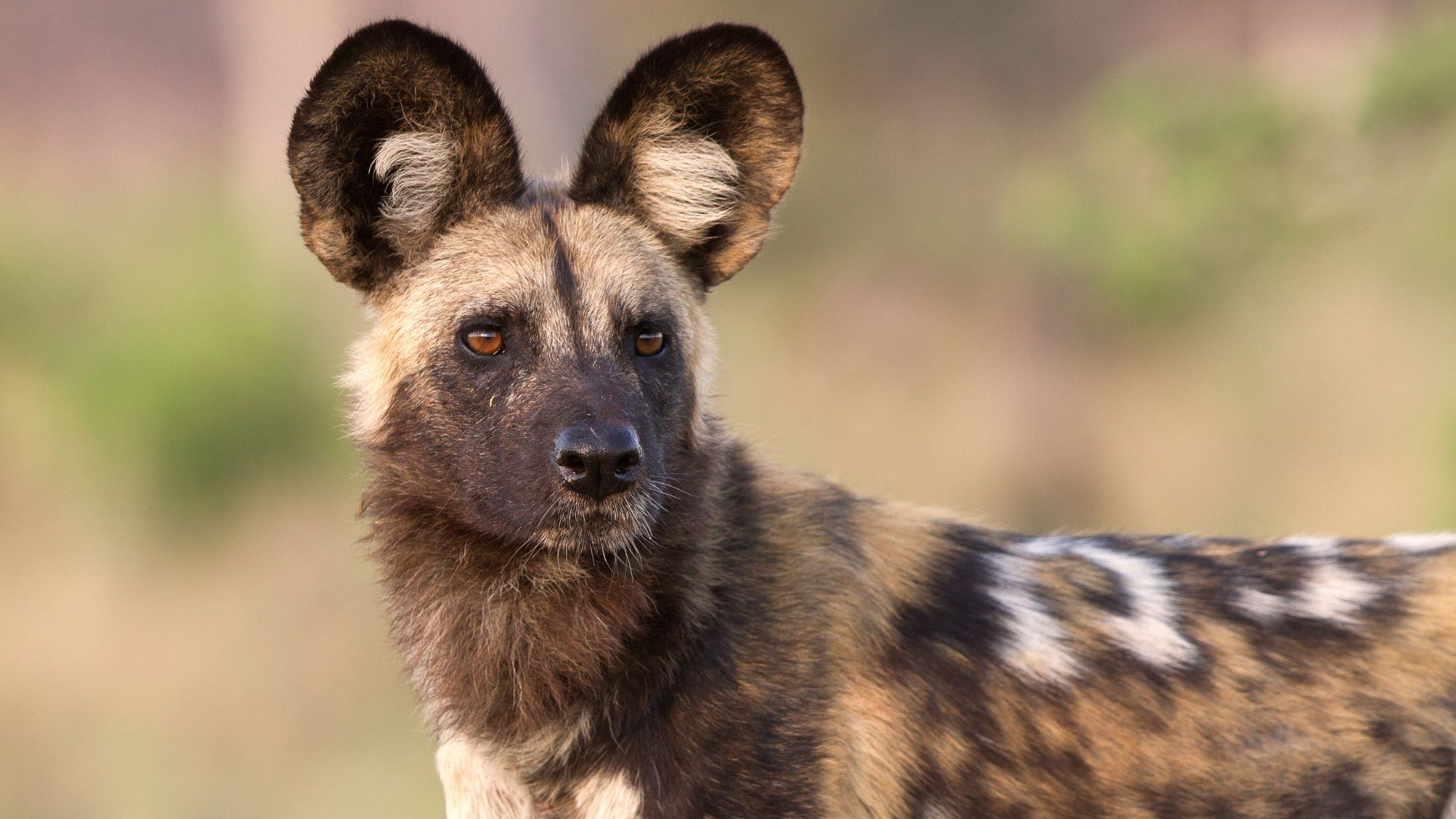
    Three African wild dogs in Zambia have completed an unprecedented 2,485-mile (4000km) journey across the continent, marking what researchers believe is the longest recorded movement by an African mammal.

    Scientists say the mammoth trek, tracked by GPS collars, offers hope that wildlife can still travel across vast distances despite growing human pressures.

    Who said what
    The research, published in the journal Ecology, “adds weight to calls to create strips of natural land outside protected areas that connect separate wildlife areas broken apart by roads, towns, or farms”, said the BBC.

    Bruce Ellender, one of the paper’s co-authors, told the broadcaster that species that roam over large areas, such as wild dogs and elephants, needed connected landscapes if they were to survive into the future. “We can’t see these protected areas as islands and expect them to be functional in the long term; we need to think much broader than that.”

    What next?
    African wild dogs are among the continent’s rarest predators, with only about 6,000 remaining. Researchers said the movement also demonstrated that wild dog populations across parts of southern and eastern Africa might be even more connected than previously thought.


    It’s not all bad

    Scientists have discovered nine new species of deep-sea sponge off the coast of Alaska, offering fresh insights into the region’s largely unexplored marine life. The National Oceanic and Atmospheric Administration said the sponges were found in the Gulf of Alaska and the Aleutian Islands. The discoveries bring the number of known sponge species around Alaska to 232, highlighting how much remains to be discovered in the ocean’s depths.


    under the radar

    Fog has bacteria that eat air pollution

    While fog can create an eerie, lonely atmosphere, it’s actually teeming with life. Scientists have found vibrant microbial communities in low-hanging clouds, including bacteria that can detoxify air pollution. And these microbes could play a larger role in our air quality than previously thought.

    Fog water can have “bacterial concentrations similar to those in continental or marine bodies of water” and “contain microbiomes well-differentiated in composition from those in the dry aerosol microbiomes”, said a study published in the journal mBio. While scientists had been aware that bacteria and other microbes existed in the air, not much was known about “whether those airborne microbes are doing much”, be it “growing, feeding, dividing and changing the air around them” or “simply waiting to land somewhere better”, said ZME Science.

    While “fewer than 1% of fog droplets contain bacteria”, when “averaged together they represent an astounding amount of life”, said a release from Arizona State University (ASU). “When you take all of the droplets together, the concentration of bacteria is the same as in the ocean,” said study co-author Professor Ferran Garcia-Pichel, the director of ASU’s Biodesign Center for Fundamental and Applied Microbiomics.

    And the potential for “harvesting fog for drinking water has also been up for discussion”, said The Weather Channel. “Now we need to consider and further study if these air-cleaning benefits are too good to pass up.”

    People “think of fog as just water droplets”, said study co-author Derek Straub, an associate professor at Susquehanna University. But there’s a “tremendous amount happening inside those droplets that we are only beginning to understand”.


    on this day

    15 September 1997

    The domain name “Google.com” was registered by founders Larry Page and Sergey Brin, a year before the company’s formal incorporation. About five billion people now visit Google every year, performing more than five trillion searches.


    Today’s newspapers

    ‘Village revolt’

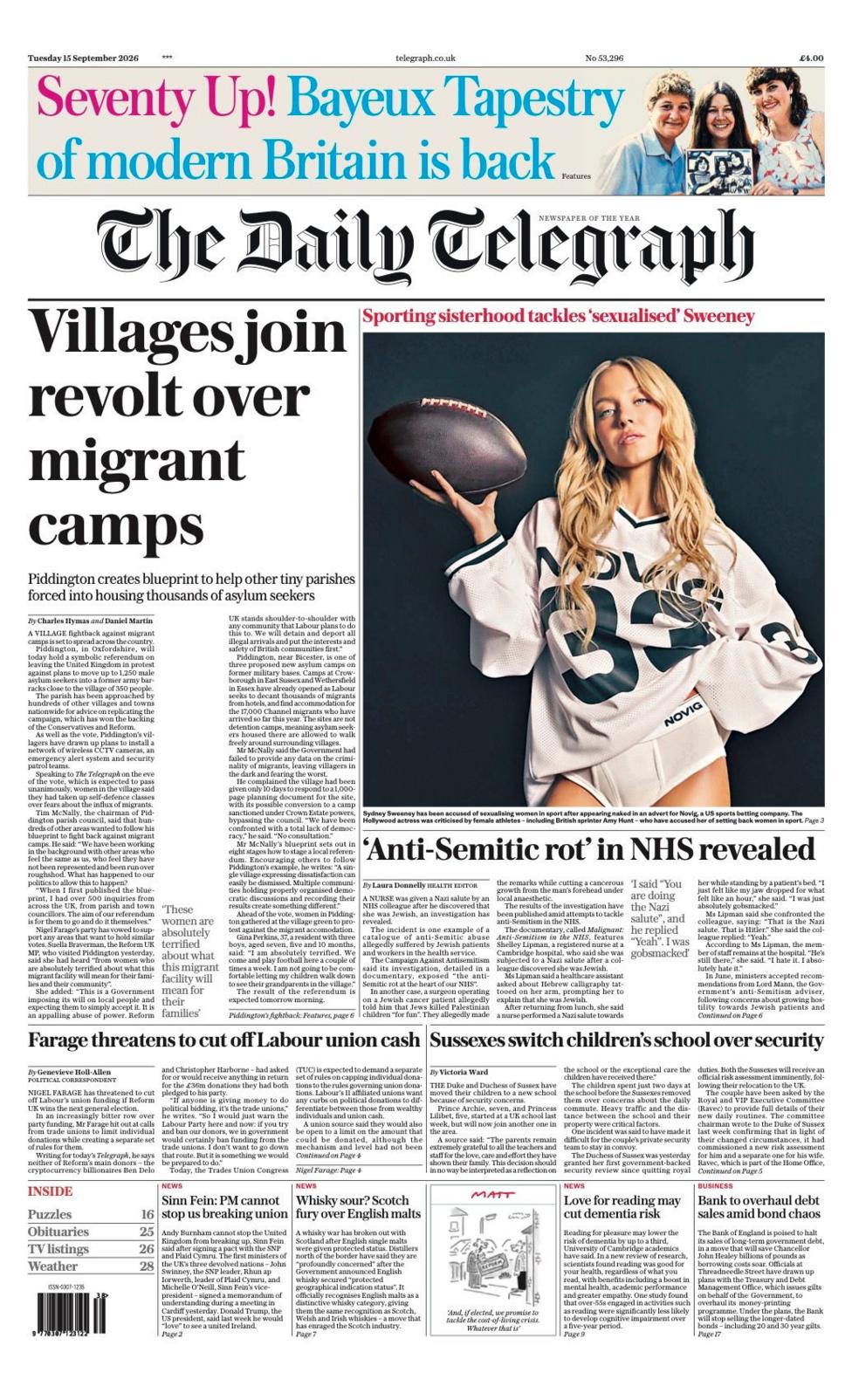
    “Villages join revolt over migrant camps”, says The Telegraph. “Harry and Meghan pull children out of their new school after just two days”, says the Daily Mail. A report is set to find that ADHD is “not being overdiagnosed in the UK”, says The i Paper. “Heartbroken”, says The Mirror, after the death of Andy Burnham’s father. “Definitely mayhem”, says The Sun, after Oasis announced another tour in 2027.

    See the newspaper front pages


    tall tale

    Paw-ly worded

    Chester Zoo had to hastily rename a ticket offering after briefly advertising a “child predator tour” to see its tigers and lions. The online promotion allows visitors to take their child on a tour showcasing the zoo’s Sumatran tigers, lions, rhinos and Komodo dragons. But the name was branded “sinister” by visitors and a zoo spokesperson said the error was “due to the default naming convention in our system” and had been “quickly changed”. Nonetheless, the mistake provided some mirth, with one wag remarking: “I hope this has been cleared by Cheshire Police – seems a bit dangerous.”


    Morning Report was written and edited by Arion McNicoll, Jamie Timson, Rebecca Messina, Devika Rao, Ross Couzens and Chas Newkey-Burden, with illustrations by Julia Wytrazek.

    Image credits, from top: Jakub Porzycki / NurPhoto / Getty Images; Kevin Carter / Getty Images; Thomas Retterath / Getty Images; Illustration by Julia Wytrazek / Getty Images.
     

    Recent editions

    • Morning Report

      Trump’s diesel pain blame game

    • Sunday Shortlist

      Ridley Scott’s post-apocalyptic drama

    • Saturday Wrap

      A new forever war?

    VIEW ALL
    TheWeek
    • About Us
    • Contact Future's experts
    • Terms and Conditions
    • Privacy Policy
    • Cookie Policy
    • Advertise With Us
    • FAQ
    Add as a preferred source on Google Add as a preferred source on Google

    The Week is part of Future US Inc, an international media group and leading digital publisher. Visit our corporate site.

    © Future US, Inc. Full 7th Floor, 130 West 42nd Street, New York, NY 10036.