The Week The Week
flag of US
US
flag of UK
UK
https://cdn.mos.cms.futurecdn.net/flexiimages/jacafc5zvs1692883516.jpg

SUBSCRIBE & SAVE

Less than $3 per week

Sign in
  • View Profile
  • Sign out
  • The Explainer
  • The Week Recommends
  • Newsletters
  • Cartoons
  • From the Magazine
  • The Week Junior
  • Student Offers
  • More
    • Politics
    • World News
    • Business
    • Health
    • Science
    • Food & Drink
    • Travel
    • Culture
    • History
    • Personal Finance
    • Puzzles
    • Photos
    • The Blend
    • All Categories
  • Newsletter sign up Newsletter
  • The Week Evening Review
    China’s export economy, Japan’s succession crisis, and choline’s importance

     
    TODAY’S BIG QUESTION

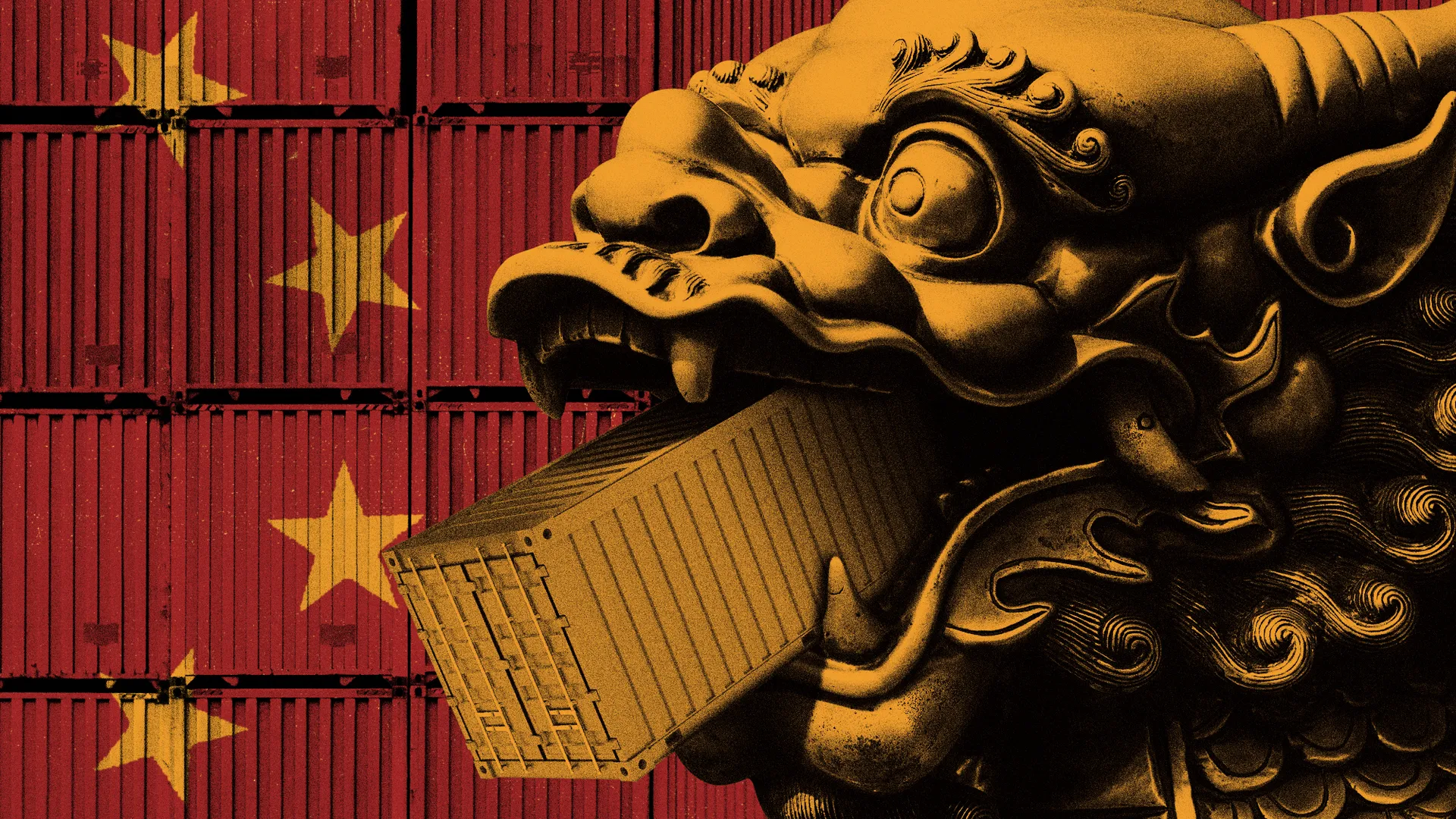
    How will China’s trade surplus change the world?

    President Donald Trump’s tariff-driven trade war is not slowing down China’s export economy. Beijing this week reported a record $1 trillion trade surplus with the rest of the world this year, raising concerns about “growing imbalances” in the global economy.

    The trillion-dollar milestone puts China’s well-known “dominance” of world trade into “even starker relief,” said The Wall Street Journal. While Trump’s tariffs have limited the country’s exports to the U.S. this year, China’s exports to Africa, Southeast Asia and Latin America have “surged” significantly. The trend has “raised alarms around the world, especially in Europe,” whose automotive and luxury goods sectors find themselves threatened by “nimble Chinese competitors.”

    That leaves Europe “squeezed between an ultracompetitive China and a protectionist America,” said Politico. Europe could impose Trump-style tariffs on imports, but perhaps leaders would prefer a “truce” with Beijing.

    What did the commentators say?
    China’s gigantic trade surplus reveals the difficulty that Trump and others will have “trying to rebalance global trade,” said Amy Hawkins at The Guardian. But it also demonstrates how much Beijing’s economic might is “still overwhelmingly reliant on foreign markets.” And it has raised fears that the country is now flooding non-American markets with “cheap goods that threaten local industry.” It’s more likely, though, that those goods will “ultimately end up in the U.S.” after traveling through third countries to avoid Trump’s tariffs.

    We could be looking at a “second China shock,” said Alexandra Stevenson at The New York Times. The first shock came two decades ago when American and European companies outsourced manufacturing to China while closing factories at home. The second will come now that China is “redirecting more of its exports to developing countries” that have “less control over how it unfolds.” And there could be “profound” social consequences like unemployment and unrest in countries like Indonesia, Thailand and Malaysia. 

    What next?
    China’s economy will increasingly “ride on the strength of domestic demand,” said Bloomberg. For now, though, Beijing “faces a worsening economic picture” at home. There has been a slowdown in domestic consumption and investment is falling. As a result, analysts believe that China will continue to rely on exports and take “only incremental steps” toward relying on its own people to be customers for the goods it makes.


    IN THE SPOTLIGHT

    Japan’s Princess Aiko is a star whose fans want even more

    Japan stands torn between tradition and the future, as Princess Aiko, the only child of Emperor Naruhito, finds herself at the center of a growing movement to change the country’s patriarchal rules of royal succession. Treated like a pop star by many in Japan, the 24-year-old princess’ rocketing popularity comes at a fraught time for the royal family and Japan’s traditionally patriarchal society.

    ‘Rising prestige’ and a reopened debate
    After having “impressed with her maturity and clear sense of duty” during her first state visit to Laos last month, Aiko’s “huge popularity” domestically will only further raise questions about why she’s barred from taking on a “more prominent royal role going forward,” said Tatler. “Strict male-only succession laws” established in 1947 mean that Prince Hisahito of Akishino, Aiko’s first cousin, is often “touted as the future of the Japanese royal family.”

    Aiko’s “rising prestige” has “reopened the debate” about male-only royal succession in Japan’s “patriarchal and traditionalist society,” said El País. Japan “broke with gender prejudices” by electing Sanae Takaichi as its first woman prime minister in October. And there’s “strong public support” for the notion that Aiko, or “any other woman in the future,” could be made royal successor.

    Cartoonist Yoshinori Kobayashi has authored comic books that push for a rule change, which “supporters keep sending to parliamentarians” to raise the issue, said The Associated Press. Other advocates have “set up YouTube channels and distributed leaflets.” But while there’s public support for updating the succession rules, “conservative lawmakers,” including Takaichi, “oppose the change.”

    ‘Kicking the can down the road’
    Japan’s royal succession debate has gone on “for decades,” particularly after a 2005 government panel recommended the crown be passed to the oldest child “regardless of their sex,” said the Japan Times. But while that recommendation “appeared to pave the way” for Aiko’s rise, the birth of Hisahito the following year “silenced the debate.” Following the arrival of a young, male heir, Japanese politicians are “kicking the can down the road” on changing the rules, said Kenneth Ruoff, the director of Portland State University’s Center for Japanese Studies, to the Japan Times.

    Hisahito is “likely to become emperor one day,” said Al Jazeera. “After him, however, there’s nobody left” unless the succession rules change.


    Statistic of the day

    150: The number of children and staffers who remain in captivity after 300 were abducted from a Catholic school in Nigeria last month, according to The Associated Press. At least a dozen mass abductions have occurred in Nigerian schools over the past decade.


    QUOTE OF THE DAY

    ‘Switching to Calibri achieved nothing except the degradation of the department’s official correspondence.’

    Secretary of State Marco Rubio in an order halting the State Department’s official use of the “wasteful” font and returning to Times New Roman — part of eliminating Biden-era DEIA (diversity, equity, inclusion and accessibility) efforts. Calibri is considered more accessible for readers with disabilities like low vision and dyslexia.


    the explainer

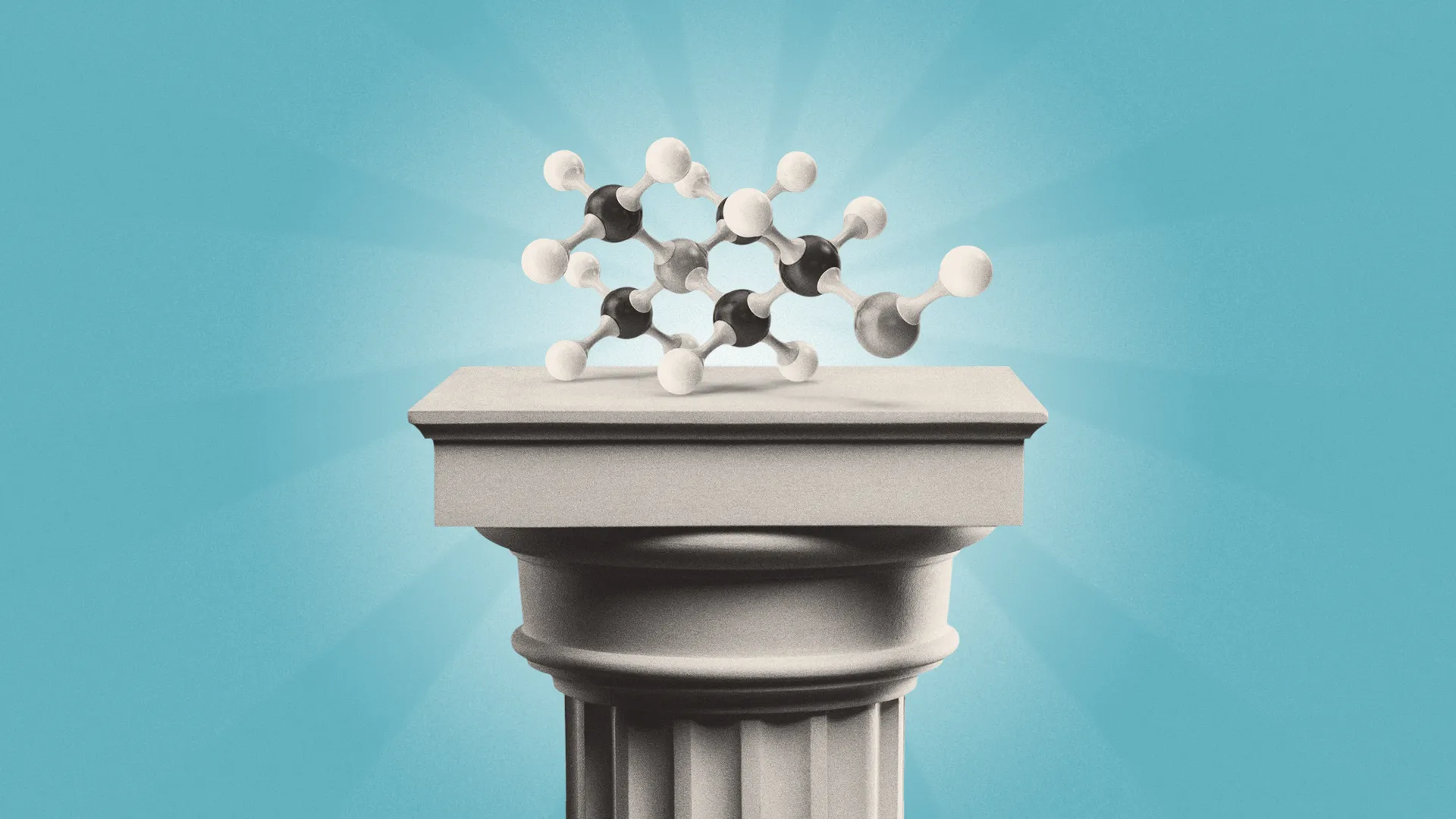
    Choline: the undervalued nutrient

    A growing body of evidence suggests that a compound called choline plays an underappreciated role in our health, particularly in our brains. New research suggests low levels of choline in obese people could contribute to brain aging and potentially trigger the kind of neurodegenerative changes that can lead to Alzheimer’s disease. The study — in addition to others linking choline to higher bone density, better memory and improved mental health — has led some scientists to classify choline as a “wonder nutrient” that has been “hugely overlooked,” said BBC Future. 

    What’s choline? 
    This essential nutrient is not a vitamin or a mineral but an organic compound closely related to the B-vitamin group. Humans need choline for numerous bodily functions, including liver function and the production of acetylcholine, a brain chemical that plays a major role in memory, thinking and learning. 

    We produce small amounts of choline in our livers, but to get enough, we need to get it through food. The most common sources are eggs, red meat, chicken, potatoes, yogurt, fish, leafy greens and kidney beans. The average adult needs about 425 milligrams a day (about three eggs’ worth). Pregnant and breastfeeding women need more, as choline “plays a key role” in the healthy development of a baby’s brain, said The Telegraph. 

    What did the latest study find? 
    Researchers from Arizona State University analyzed key chemical levels and biomarkers in 15 people with obesity and compared them with those of 15 people of a healthy weight. The results, published in the journal Aging and Disease, show that those with obesity had less circulating choline, more biomarkers associated with inflammation, and higher levels of blood proteins, indicating neuron damage. 

    The small study didn’t prove cause and effect, but the “big picture” is that obesity, choline and the accelerated brain aging that can lead to dementia “could all be connected,” said ScienceAlert. Low levels of choline could be an “early warning sign” of diseases such as Alzheimer’s, and a “boost” in choline levels could be an effective “preventive measure.” 

    What about other studies? 
    Low levels of choline have been identified as having a “significant link” with anxiety disorders, according to a meta-analysis published last month in Molecular Psychiatry. University of California researchers looked at data from 25 studies and found that levels of choline were 8% lower in the brains of people with anxiety disorders. That “doesn’t sound like that much,” study co-author Richard Maddock said to New Atlas, but “in the brain, it’s significant.”


    Good day 🐆

    … for the cheetah. A sperm bank at the Cheetah Conservation Fund in Namibia has been collecting cheetah specimens for over 30 years should there be a “worst-case scenario for the big cats,” whose numbers have “dropped alarmingly in the wild over the last 50 years,” said The Associated Press. Zoologist Laurie Marker hopes the “frozen zoo” of cheetahs won’t be necessary.


    Bad day ⚽

    … for the World Cup. Out of 16 World Cup 2026 stadiums in the U.S., Canada and Mexico, 14 exceed safe-play thresholds for major climate hazards, including extreme heat, unplayable rainfall and flooding, according to the Intergovernmental Panel on Climate Change. Nearly 90% are projected to face unplayable heat by 2050.


    Picture of the day

    ‘Lights & Ice’

    An abseiler descends at the opening of an ice cave in New Zealand’s Aoraki / Mount Cook National Park. The image, captured by Tori Harp, is among the 25 winners of the 2025 Northern Lights Photographer of the Year competition, published on the Capture the Atlas blog. 
    Tori Harp / Northern Lights Photographer of the Year


    Puzzles

    Daily crossword

    Test your general knowledge with The Week's daily crossword, part of our puzzles section, which also includes sudoku and codewords

    Play here


    The Week recommends

    Extra-special gifts for everyone on your list

    Stuck on what to get for that special person? Do they always say, “Don’t get me anything,” or do you think they already have everything? Fear not. This gift guide is built for even the hardest person to shop for.

    For the creative: Caran d’Ache custom pen
    Design a pen that’s as one-of-a-kind as they are. With the customized Caran d’Ache + Me 849 ballpoint pen, you can choose the colors and finishes for the body, clip, button and cartridge and add a custom message with emojis on the side of the pen and packaging. Caran d’Ache is known for using high-quality materials and creating instruments that are lightweight and write smoothly. (starting at $70, Caran d’Ache)

    For the warm-weather seeker: Glasshouse Fragrances Mocktail Meditation candle
    This calming candle turns a cold, dreary winter day into a summery moment. Glasshouse Fragrances is known for offering intense, “unique and enchanting scents,” said Who What Wear (a sister publication of The Week), and Mocktail Meditation is a dreamy blend of salted cucamelon and starfruit. ($60, Glasshouse Fragrances)

    For the puzzler: Sunday Club holiday gift bundle
    If their favorite thing to do on the weekend is finish the crossword puzzle, Sunday Club will be right up their alley. There are no headlines in this newspaper, just games, including sudoku, search-and-find, pictogram, word searches and, of course, a regular and mini crossword. The holiday gift bundle comes with Sunday Club’s first three issues, postcards with original art, a pencil and sticker set, and three more issues sent in January, February and March. ($50, Sunday Club)

    Read more


    Poll watch

    Nearly half of Europeans (48%) view Trump as an “enemy of Europe,” according to a survey across nine countries by French journal Le Grand Continent. Among the 9,553 respondents, Belgium and France are the most likely to think Trump is a foe, at 62% and 57%, respectively, compared with 37% in Croatia and 19% in Poland.


    INSTANT OPINION

    Today's best commentary

    ‘Autarky and nostalgia aren’t cure-alls’
    Jack Butler at The Wall Street Journal
    Searching the internet for “tables, chairs, futons and bookshelves,” there are “great options. Almost none of them were made in the U.S. Many came from China,” says Jack Butler. It’s “OK that the U.S. isn’t a powerhouse producer of faux-marble tables and adjustable futons,” because it does “other things — high-end manufacturing, energy production, design — and it does them better than anyone else.” There are “better jobs for Americans than making cheap tables and chairs.”

    ‘Benin’s real coup already happened under President Talon’
    Tafi Mhaka at Al Jazeera
    The attempted coup in Benin was the “visible peak of a deeper political crisis years in the making,” says Tafi Mhaka. In its “aftermath, order was restored but not legitimacy.” Benin’s “real coup — the systematic overthrow of its democracy — had already occurred.” All the “attempted takeover did was to lay bare a political system that had already been undermined from within,” as “any illusion of democracy in the country disappeared.”

    ‘Singapore’s latest antisocial scourge is pickleball’
    Owen Walker at the Financial Times
    There has been an “active pickleball-playing community in Singapore for at least three decades, but for years it was known as an old man’s game,” says Owen Walker. It has become a “lightning-rod issue, pitching enthusiastic picklers against neighbors driven mad by the sport’s relentless ‘pock, pock, pock’ soundtrack.” In “entrepreneurial Singapore, the dilemma has prompted some to spot a business opportunity.” Other cities “enduring the same public backlash against the sport’s growing popularity could take note.”


    WORD OF THE DAY

    Miura-ori

    An origami fold that can collapse from a compact shape and expand back out with a single motion. New York City teen Miles Wu has turned art into innovation after winning the Thermo Fisher Scientific Junior Innovators Challenge for a project that tested whether Miura-ori could be “leveraged to improve deployable structures used in emergency situations.”


    Evening Review was written and edited by Theara Coleman, Nadia Croes, Catherine Garcia, Scott Hocker, Justin Klawans, Joel Mathis, Summer Meza, Chas Newkey-Burden, and Rafi Schwartz with illustrations by Stephen Kelly and Julia Wytrazek.

    Image credits, from top: Illustration by Stephen Kelly / Getty Images; Shuji Kajiyama / Pool / AFP / Getty; Illustration by Stephen Kelly / Shutterstock / Getty Images; Illustration by Julia Wytrazek / Getty Images
     

    Recent editions

    • Morning Report

      Democrats take Miami

    • Evening Review

      ICE raids, by the numbers

    • Morning Report

      Trump’s Paramount concern

    VIEW ALL
    TheWeek
    • About Us
    • Contact Future's experts
    • Terms and Conditions
    • Privacy Policy
    • Cookie Policy
    • Advertise With Us
    • FAQ
    Add as a preferred source on Google

    The Week is part of Future US Inc, an international media group and leading digital publisher. Visit our corporate site.

    © Future US, Inc. Full 7th Floor, 130 West 42nd Street, New York, NY 10036.