The Week The Week
flag of US
US
flag of UK
UK
https://cdn.mos.cms.futurecdn.net/flexiimages/jacafc5zvs1692883516.jpg

SUBSCRIBE & SAVE

Less than $3 per week

Sign in
  • View Profile
  • Sign out
  • The Explainer
  • The Week Recommends
  • Newsletters
  • Cartoons
  • From the Magazine
  • The Week Junior
  • Student Offers
  • More
    • Politics
    • World News
    • Business
    • Health
    • Science
    • Food & Drink
    • Travel
    • Culture
    • History
    • Personal Finance
    • Puzzles
    • Photos
    • The Blend
    • All Categories
  • Newsletter sign up Newsletter
  • The Week Evening Review
    Rep. Kean’s disappearance, Iceland’s ‘Brexit moment,’ and the Spanish PM’s scandals

     
    TODAY’S BIG QUESTION

    Where is Congressman Tom Kean?

    New Jersey Congressman Tom Kean Jr. won his GOP primary election yesterday, a notable event given that he has not been seen in public for months. And the question of his whereabouts is drawing increasing scrutiny.

    The mystery is “frustratingly unsolved,” said The New York Times. Kean last cast a vote in Congress on March 5, then was sidelined by what his aides vaguely described as a “personal medical issue” from which he’s expected to recover. Voters, journalists and House colleagues “haven’t seen or heard directly from Kean” since then, said CNN.

    Kean is “focused” on “recovery” and expects to return to work “within a matter of weeks,” he said on X yesterday. But his ongoing and mostly unexplained absence is “rattling” Kean’s GOP allies who worry the “massive public relations failure” will damage the party’s ability to defend his “critical swing seat” in November, said CNN.

    What did the commentators say?
    Kean “owes voters” answers about his “mystery illness,” said The Bergen Record in an editorial. His absence has coincided with House debates about the “Iran war, funding for the Department of Homeland Security, and other critical issues.” His team spent weeks creating the “illusion of a fully functioning representative” by sending out a “steady stream of first-person social media posts and news releases” before acknowledging his medical issue in late April. 

    The lack of transparency is a “slap in the face to voters,” said Max Burns at MS NOW. Kean “can’t be blamed for battling health issues,” but he owes more candor to his constituents.

    What next?
    The congressman’s absence has not interfered with the operation of his political machine. At least five speeches in his name have “appeared in the Congressional Record” during his leave from Congress, said Roll Call. 

    Kean’s congressional district is “among the country’s most competitive,” said The Washington Post. The GOP “cannot hold the majority without this seat,” an anonymous operative said to the outlet. So Republicans urgently need to know if Kean is “capable of running for reelection and winning.”

    Kean still snagged President Donald Trump’s endorsement in the midterms, said The Hill. Kean “will never let you down!” said Trump on Truth Social.


    QUOTE OF THE DAY

    ‘These executives cannot gain the trust of the staff with lies. This is antithetical to everything we stand for and reveals contempt for what journalists do.’

    Former “60 Minutes” correspondent Scott Pelley, in a statement to The New York Times, on how he was not offered “a way back,” as CBS News Editor-in-Chief Bari Weiss stated to her staff this morning. The network fired Pelley after a tense exchange yesterday, during which he accused Weiss of “murdering ‘60 Minutes.’” 


    talking points

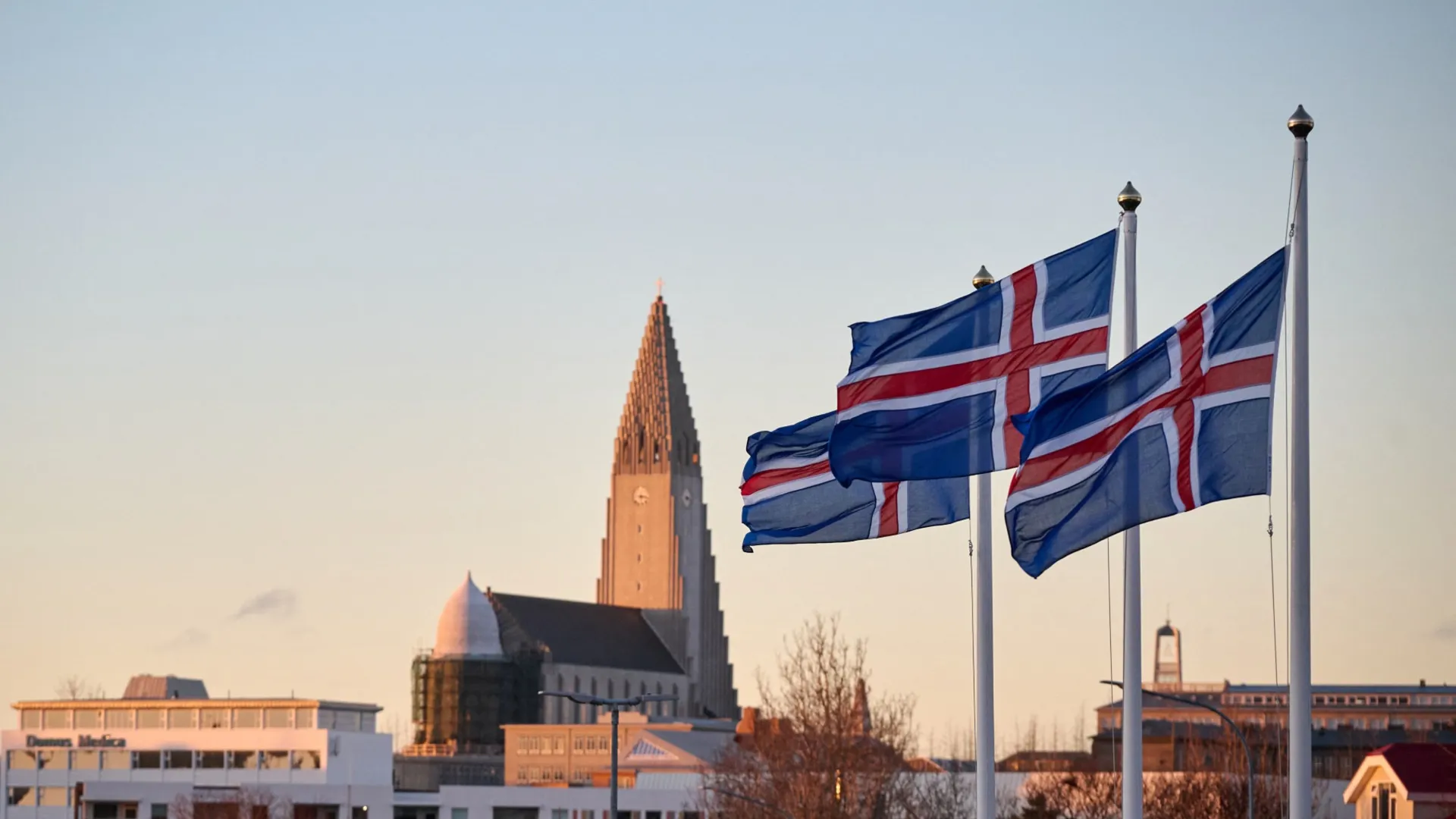
    Iceland approaches a crossroads with EU referendum

    The European Union could soon add a 28th member to its ranks, as Iceland is set to vote on joining the bloc this summer. But not all Icelanders support EU membership, with polls split down the middle, and what happens in the referendum could have ripple effects on the international order.

    ‘Important for international security’
    Icelanders will not be voting on whether to join the EU but on whether Iceland should resume negotiations about joining. If the referendum passes, a second vote would be held to make Iceland an EU member state. 

    Icelanders in favor of restarting talks view joining the EU as “important for international security and an opportunity for better integration in Europe,” said Miranda Bryant at The Guardian. There have been considerations for a while about Iceland joining the bloc, but the turbocharged referendum is “in part motivated by threats from the U.S., a longtime close ally of Iceland, to forcibly acquire its closest neighbor, Greenland.” The EU has “intensified a rethink of its Arctic strategy since Trump’s rhetoric over Greenland, a semi-autonomous Danish territory, reached a peak earlier this year,” said Mari Novik at the Financial Times. 

    ‘Half the country will be upset’
    Not all Icelanders are eager to join the EU. “About half the country will be upset with the result” of the referendum no matter which side wins, according to polls, said Elías Þórsson at Icelandic news magazine The Reykjavík Grapevine. Some feel that EU membership means “giving up Iceland’s sovereignty,” said political scientist Ólafur Harðarson to the Grapevine.

    The country’s fishing industry may be what the referendum ultimately comes down to. Icelanders have “watched with alarm as Ireland, an EU member, has endured cuts to fishing quotas that have devastated its coastal communities,” said Amelia Nierenberg at The New York Times. And the island’s people are fearful the EU could do the same thing to Iceland without a carve-out. 

    “People feel that they might be forced to pick a side,” said Eirikur Bergmann, a politics professor at Iceland’s Bifrost University, to the Times. And then there’s “really only one side to pick.”


    Statistic of the day

    23.1 million: The number of insurance plan sign-ups in the Affordable Care Act Marketplace during this year’s open enrollment period — a drop of over 1 million since 2025, according to data from the Centers for Medicare and Medicaid Services and the Department of Health and Human Services. It’s the “sharpest single-year drop” since the marketplaces launched, said KFF. 


    THE EXPLAINER

    Pedro Sánchez and Spain’s corruption scandal

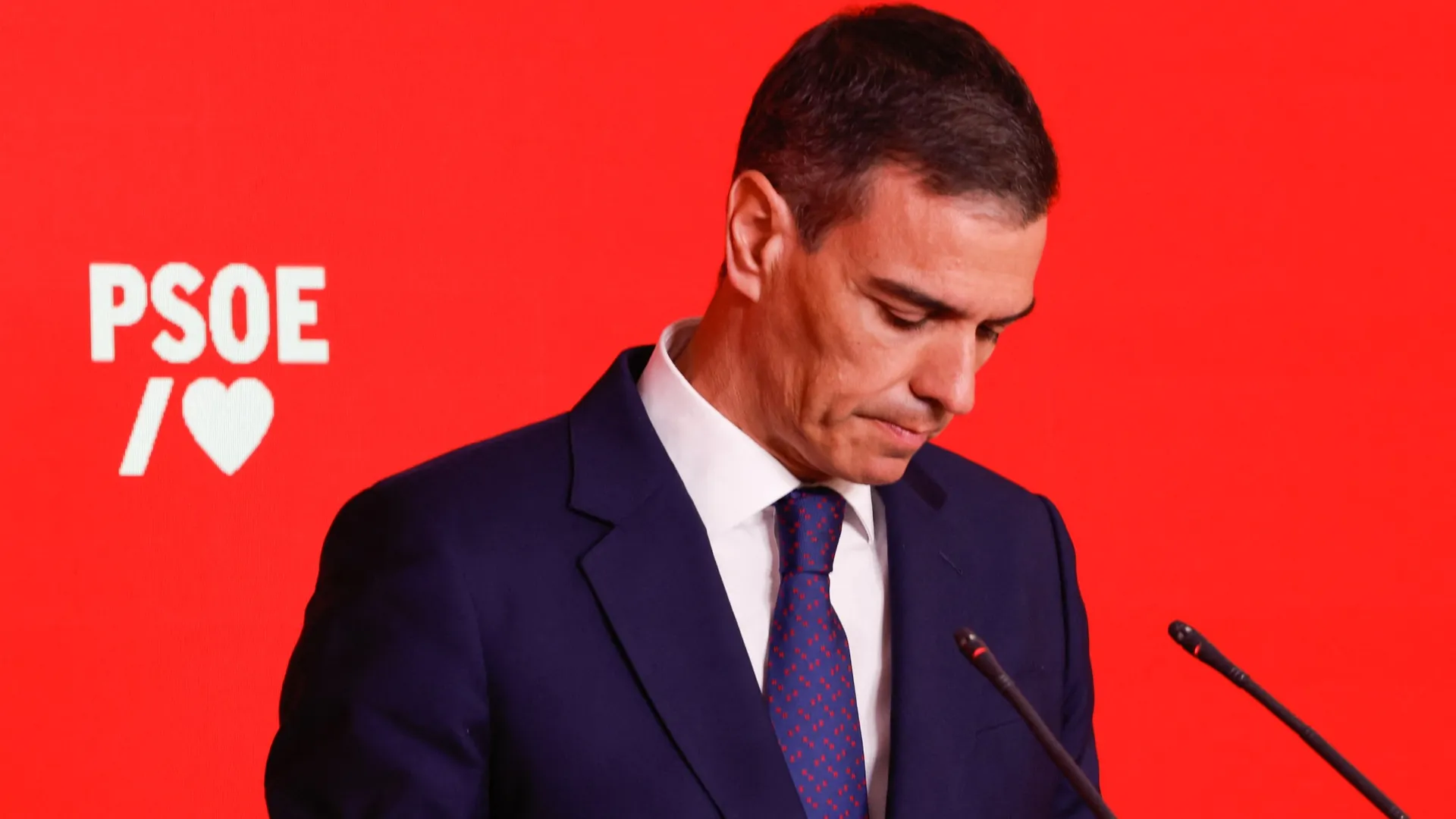
    The raid on the headquarters of Spain’s governing Socialist Party last week is only the latest in a “blizzard of corruption scandals” to hit the leadership of Pedro Sánchez, said Politico. “Scandal after scandal” involving the prime minister’s political allies and relatives and the alleged misuse of party funds have left him “on the ropes.”

    What are the allegations?
    An investigating judge has accused former Socialist PM José Luis Rodríguez Zapatero of leading a criminal network that used his influence to arrange a $61 million Covid-era government bailout for the airline Spanish Plus Ultra. He’s accused of receiving $3 million from the network and has been charged with criminal organization, influence peddling and falsifying documents. Zapatero, a close ally of Sánchez (pictured above), denies the charges.

    In a separate case last fall, Attorney General Álvaro García Ortiz, a government appointee, was found guilty of revealing secrets. And a party operative, Leire Díez, has been accused of being paid to “carry out a campaign of misinformation” with the intention of “impeding” the legal cases connected to the party, said the BBC. She has also denied any wrongdoing.

    What about Sánchez’s family?
    Last month, his wife, Begoña Gómez, was charged with embezzlement, influence peddling, corruption in business dealings, and misappropriation of funds. She denies the charges, and Sánchez has described the case as an “obscene farce.”

    In an unrelated case, the PM’s brother, David, is on trial with 10 other defendants over his appointment to a musical director post in 2017. He denies charges of influence peddling and misuse of public office.

    What does this mean for Spain?
    Sánchez came to power in 2018 on an anti-corruption ticket, after a corruption scandal brought down the conservative government of Mariano Rajoy. Although Sánchez has not been directly implicated in any of the investigations, questions over whether he knew about, tolerated or benefited politically from the alleged actions of those around him are damaging his standing.

    Crucially, it’s “increasingly awkward” for Sánchez’s allies to “stick with him” as the “scale” of the alleged corruption “comes into focus,” said Politico. Although Spain does not have to hold elections until August of next year, he may be “forced to move earlier.”


    Good day 💸

    … for Hong Kong wealth. The Chinese territory has surpassed Switzerland as the world’s largest hub for cross-border wealth, as an “influx of investment from the Chinese mainland helped it eclipse the traditional haven,” said the Financial Times. The gap will widen between the two countries to “almost $600 billion by the end of the decade,” said the Boston Consulting Group.


    Bad day 🪸

    … for climate research. The Trump administration will dismantle a decade-old $368 million deep-ocean observation system that has been used to “monitor coastal environments, marine ecosystems and powerful currents that affect the global climate,” said The New York Times. The National Science Foundation will send ships to begin removing “more than 900 deep-sea instruments.”


    Picture of the day

    Morning haul

    Fishing crews pull in their nets at sunrise in Kolkata, West Bengal. The image, titled “Early Morning Catch, Hooghly River” and captured by Dutch photographer Marco Rutten, is among 27 winners chosen from almost 9,000 entries in the 2026 World Food Photography Awards.
    Marco Rutten / World Food Photography Awards 


    Puzzles

    Daily sudoku

    Challenge yourself with The Week’s daily sudoku, part of our puzzles section, which also includes guess the number

    Play here


    The Week recommends

    The new TV to watch to start the summer

    With many parts of the world bracing for a scorching summer driven by the Super El Niño climate pattern, people might be spending more time indoors than they had expected. If so, they will have an impressive array of new and returning shows to help pass the time.

    ‘The Witness’
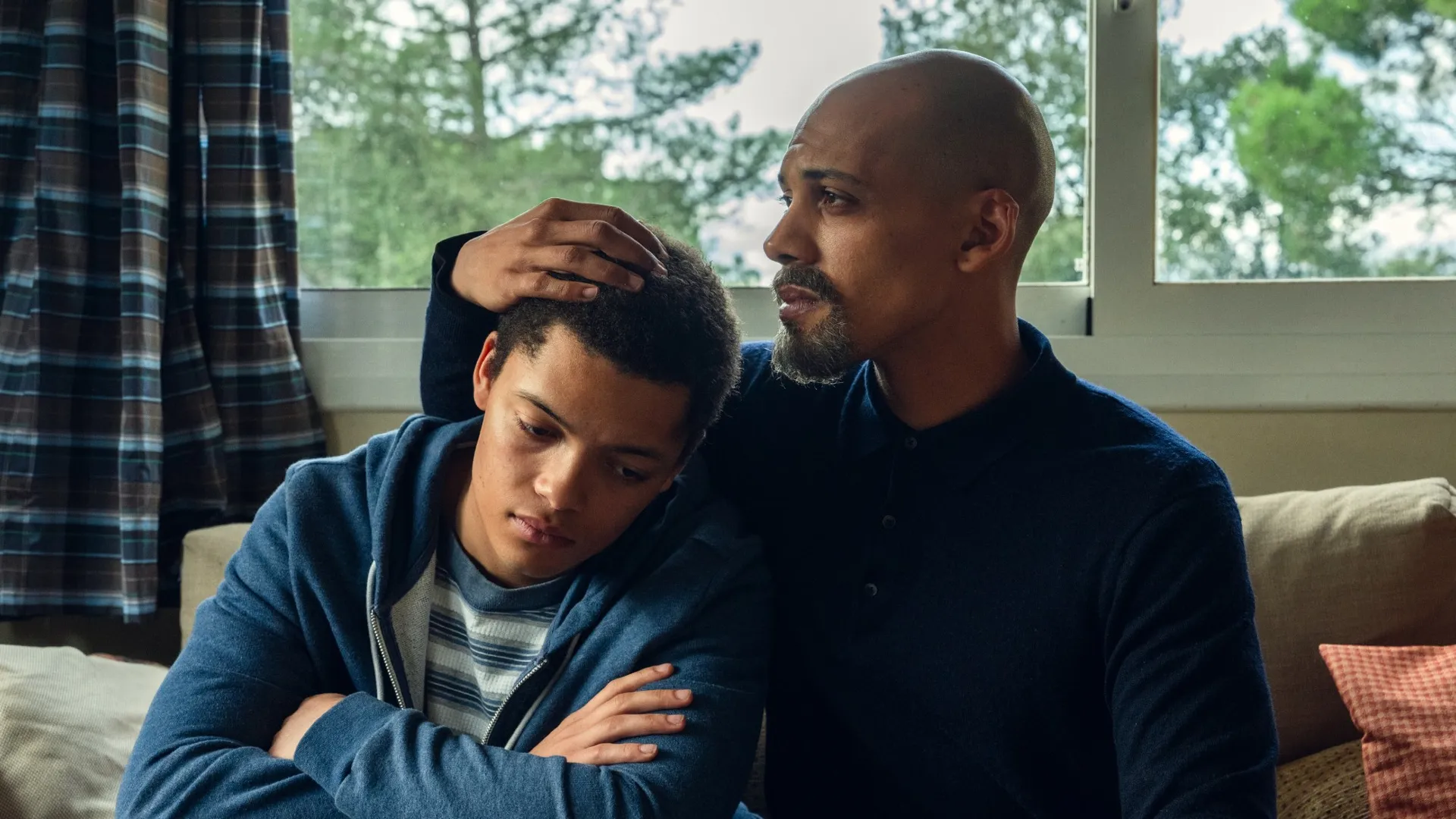
    A two-timeline potboiler, “The Witness” (pictured above) is about a 2-year-old who’s the lone witness to the brutal 1992 murder of his mother. The “gripping but distressing” three-part series, based on a true story, shows a family working through “unimaginable trauma” while dealing with the long-term aftermath, said Phil Harrison at The Guardian. (June 4 on Netflix)

    ‘The Bear’ season 5 
    FX’s Chicago-set restaurant drama returns for its fifth and final season. The fourth season told viewers that “if you are tired, it’s OK to take a break” because “you can’t save someone else until you save yourself,” said Whitney Friedlander at Paste Magazine. The final season of creator Christopher Storer’s show is a slam dunk for fans and destined to be the subject of a thousand think pieces. (June 25 on Hulu)

    ‘Life, Larry and the Pursuit of Unhappiness’
    Larry David’s HBO Max sketch comedy series will inadvertently function as a kind of counterprogramming to the White House’s celebration plans for the Declaration of Independence’s 250th anniversary. David is “gearing up to take his ‘world’s most yelled-at man’ bona fides back into history,” said William Hughes at The A.V. Club. (June 26 on HBO Max)

    Read more


    Poll watch

    About 65% of Americans believe same-sex marriage should be legal — down slightly from 71% in 2022 and 2023, according to a Gallup survey of 1,001 adults. The change is largely due to “dropping acceptance among Republicans,” said The Associated Press. Only 37% of right-wingers think same-sex marriage should be legally valid.


    INSTANT OPINION

    Today’s best commentary

    ‘Remembering Muhammad Ali’s message of peace’
    Amina J. Mohammed at Al Jazeera
    “Ten years after the world said goodbye” to Muhammad Ali, his “voice still echoes,” says Amina J. Mohammed. Ali “wrote words that still stop me in my tracks: ‘Service to others is the rent we pay for our room here on Earth.’” People are “living in a moment when peace feels increasingly fragile,” but Ali “speaks to something disarmingly simple: Peace remains possible but only if we are willing to make it our personal responsibility.”

    ‘Why people stopped having kids’
    Shadi Hamid at The Washington Post
    “Contrary to popular belief,” mothers “aren’t necessarily having fewer children compared with a decade or two ago,” says Shadi Hamid. It’s that “fewer women are becoming mothers in the first place.” A “fertility-rate crisis is a marriage crisis, and a marriage crisis is a dating crisis.” Houses of worship have been a “way for like-minded young people to partner up.” But “even religiously conservative societies cannot fully escape the forces of secularization and modernization.”

    ‘America’s warcraft are aging and often mismatched to the task’
    Robert Jordan at The Dallas Morning News
    The war in Iran has “exposed significant weaknesses in America’s military industrial base,” says Robert Jordan. Part of the “problem is our dependence upon sophisticated systems that rely on supply chains with uncertain availability, especially considering the Iran war.” If the U.S. is “going on a wartime footing, we can expect pressure to spend more,” and “for a nation already $39 trillion in debt, that could lead to significant fiscal challenges.”


    WORD OF THE DAY

    auto-brewery

    A rare condition caused by an imbalance of gut microorganisms in which the body produces ethanol faster than it can be metabolized, leading to intoxication without consuming alcohol. After 10 years of such episodes, a Nova Scotian man has been diagnosed with auto-brewery syndrome, which he now manages by “following a low-carbohydrate diet and taking antifungal treatment,” said the CBC. Fewer than 100 cases have been documented, according to the Cleveland Clinic. 


    Evening Review was written and edited by Theara Coleman, Nadia Croes, David Faris, Scott Hocker, Anya Jaremko-Greenwold, Justin Klawans, Chas Newkey-Burden and Joel Mathis, with illustrations by Julia Wytrazek.

    Image credits, from top: Illustration by Julia Wytrazek / Getty Images; Halldor Kolbeins / AFP / Getty Images; Oscar Del Pozo / AFP / Getty Images; Leon Bennett / Getty Images
     

    Recent editions

    • Morning Report

      Midterms take shape after key primaries

    • Evening Review

      UAE’s role in Sudan’s crisis

    • Morning Report

      Trump’s $1.8B ‘anti-weaponization’ fund falters

    VIEW ALL
    TheWeek
    • About Us
    • Contact Future's experts
    • Terms and Conditions
    • Privacy Policy
    • Cookie Policy
    • Advertise With Us
    • FAQ
    Add as a preferred source on Google Add as a preferred source on Google

    The Week is part of Future US Inc, an international media group and leading digital publisher. Visit our corporate site.

    © Future US, Inc. Full 7th Floor, 130 West 42nd Street, New York, NY 10036.