The Week The Week
flag of US
US
flag of UK
UK
https://cdn.mos.cms.futurecdn.net/flexiimages/jacafc5zvs1692883516.jpg

SUBSCRIBE & SAVE

Less than $3 per week

Sign in
  • View Profile
  • Sign out
  • The Explainer
  • The Week Recommends
  • Newsletters
  • Cartoons
  • From the Magazine
  • The Week Junior
  • More
    • Politics
    • World News
    • Business
    • Health
    • Science
    • Food & Drink
    • Travel
    • Culture
    • History
    • Personal Finance
    • Puzzles
    • Photos
    • The Blend
    • All Categories
  • Newsletter sign up Newsletter
  • The Week Evening Review
    The interest rates question, Trump’s African acclaim, and GLP-1 ‘nonresponders’

     
    TODAY’S BIG QUESTION

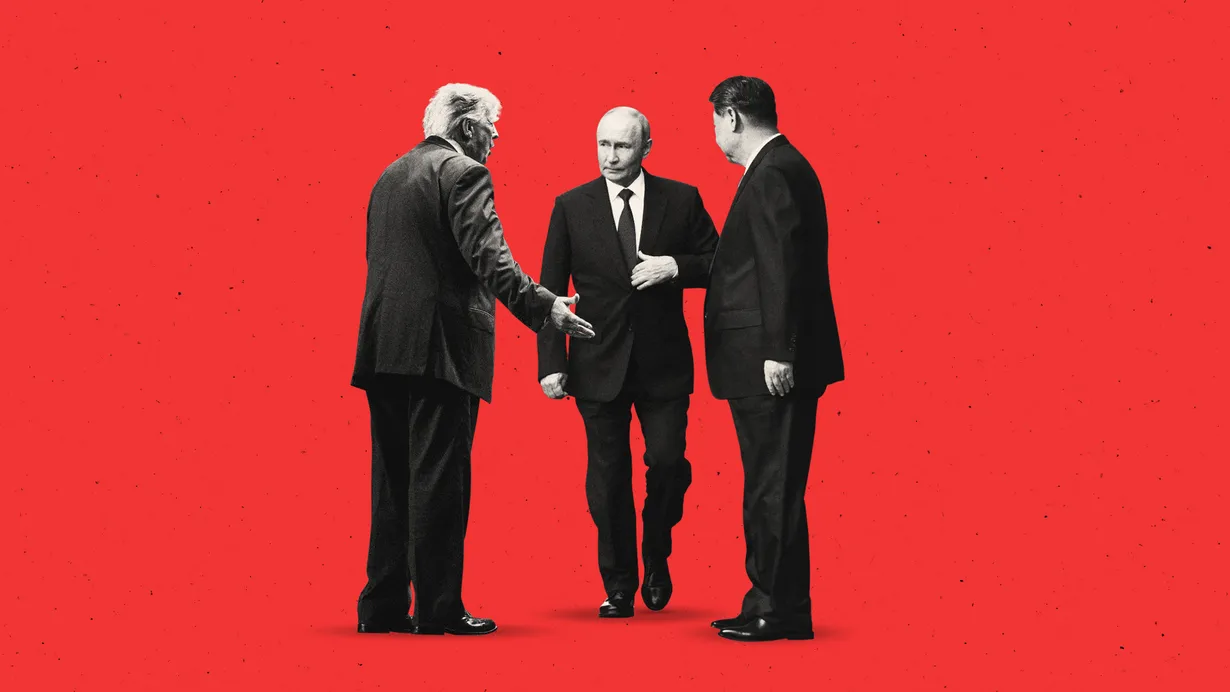
    Will Kevin Warsh raise interest rates?

    President Donald Trump had a clear goal when he appointed Kevin Warsh to lead the Federal Reserve: lower interest rates to spur economic growth. Now, Warsh has signaled that the Fed could raise rates to rein in rising prices, putting him on course to clash with the president.

    What did the commentators say?
    Raising rates before the midterm elections would “create an immediate showdown” with the Trump administration, said The New York Times. The president has “gone to great lengths” to get the Fed to lower rates, and Warsh was “handpicked” for the job after an “elaborate audition process” shaped by Trump’s rate preferences.

    The financial markets have demanded signs that Warsh is “serious about bringing inflation under control,” said the Financial Times. And the Fed chairman is in a tough spot. The war with Iran has “sent global energy prices soaring,” which has “kept inflation from slowing,” said Jonathan Levin at Bloomberg. The AI spending boom has also “kept prices elevated.” 

    A rate hike before the midterm elections would “surely raise the ire of the White House,” but it would be the “right thing” for Warsh to do to bring rising prices under control, said Levin. It would also “bolster his credibility in the financial markets” if he was seen “putting American households above politics.”

    What next?
    There’s “still significant uncertainty” as to whether Warsh will move to raise rates this month, said Jamie McGeever at Reuters. “Markets aren’t totally convinced” the Fed chair would contradict Trump’s pressure campaign. And the president might actually benefit if Warsh decides to ignore the White House and set his own course. Rising prices and higher borrowing costs “aren’t particularly palatable” to voters heading into the midterm elections.

    Trump administration officials maintain that a rate hike is not justified by the current evidence. Core inflation has “remained very, very restrained,” said Treasury Secretary Scott Bessent to CNBC.

    Trump’s preferences remain clear. The Fed should lower interest rates, “or I’ll stop trading with countries with which we have a deficit,” he said in a Truth Social post. The next Federal Reserve policy meeting is on Tuesday.


    QUOTE OF THE DAY

    ‘What he’s doing with this platform on X cannot be ignored, because he’s stoking flames that don’t exist in the real world.’

    Former MAGA influencer Ashley St. Clair, at the Venice Film Festival premiere of the documentary “Musk,” on whether her ex-partner Elon Musk is actually scared of a civil war or actively trying to stoke one. He’s sowing “deliberate division,” said the mother of one of his 14 children.


    IN THE SPOTLIGHT

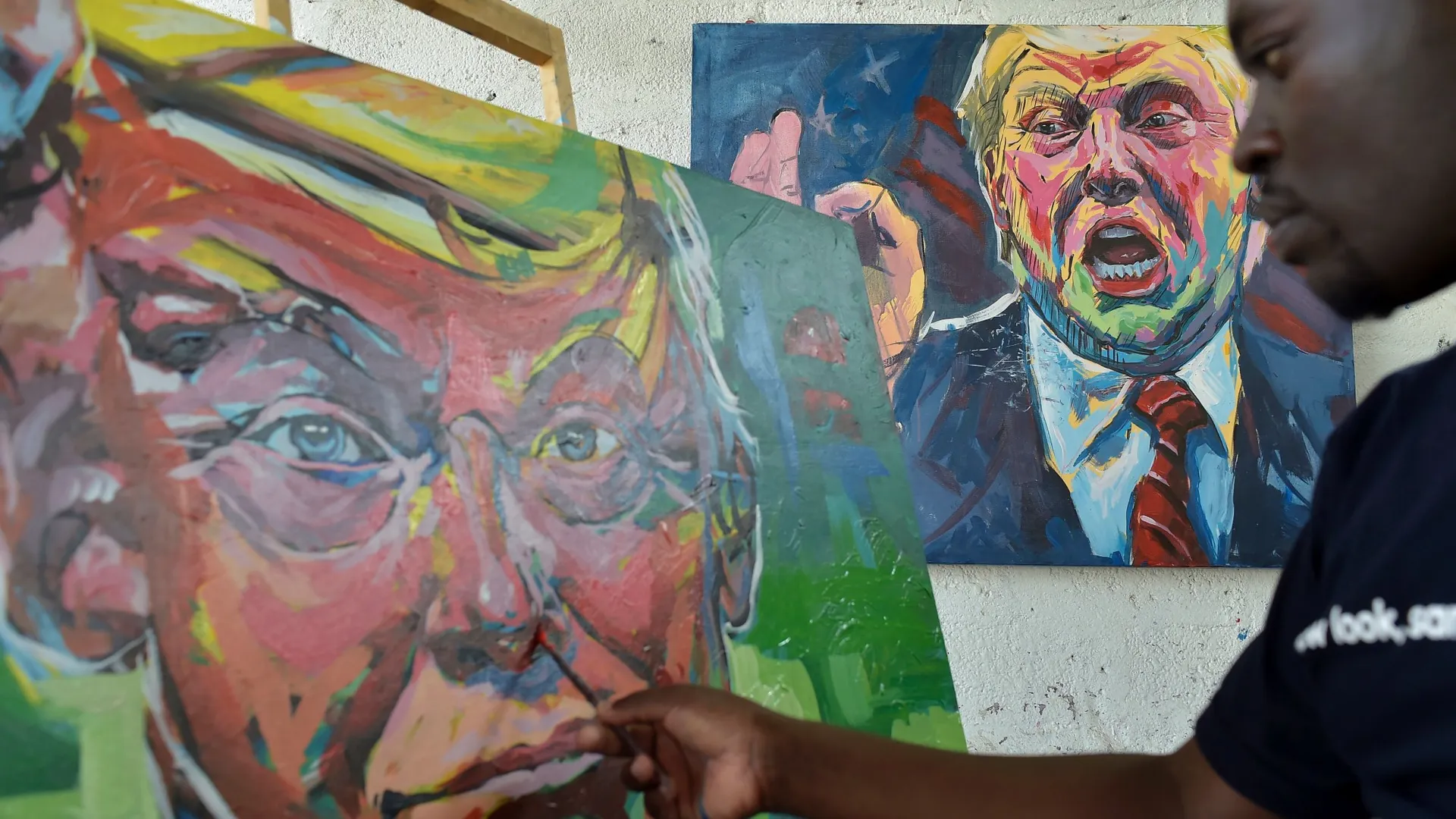
    Trump’s surprising popularity in Africa

    Before the 2024 U.S. presidential election, young Africans were asked whether they expected their continent to fare better under Joe Biden or Donald Trump. Across a range of measures, responses to the African Youth Survey showed Biden as a better bet (42%-44%) than Trump (23%-24%). Cut to the most recent African Youth Survey, and nearly two-thirds of the 18- to 24-year-old participants believe Trump’s leadership could benefit their countries. That’s despite the president’s foreign aid cuts, dismantling of development programs, and “disparaging remarks about the continent,” said Foreign Policy.

    ‘Bombastic, straight-talking’
    Trump has “seldom been polite” about Africa, said The Economist, “allegedly dismissing Nigerians as ‘hut-dwellers’ and African states as ‘shitholes.’” Yet he’s “more popular in Africa than in any other region.”

    In Nigeria, the most populous African nation, there has long been a “large affinity toward him,” said The Guardian. His image as a “bombastic, straight-talking, self-made billionaire made his books a hit” even before he became president. He “strikes a chord,” and his business acumen is admired. 

    Nearly 80% of Nigerians have confidence in Trump to “do the right thing regarding world affairs,” according to a 2025 Global Attitudes Survey by the Pew Research Center. That’s over 20% higher than the same survey recorded in 2017. 

    ‘Defender of family values’
    Many Nigerian Christians see Trump as the only president to defend them, as his administration claims Islamist groups are persecuting them. There’s an “overall African evangelical love for Trump,” said the Council on Foreign Relations. African Christians share with American evangelicals a feeling of “being simultaneously persecuted by secular authority and pressured by a cultural momentum,” particularly concerning sexuality and gender. Trump is viewed as a “defender of family values.”

    The so-called manosphere exerts a strong influence in Africa, and it views Trump as a “positive role model,” said Foreign Policy. In South Africa, he also enjoys strong support among the anti-migrant movement. “As an African, what resonates with me most about the America First message is not that Africa should become America,” said a member of the anti-migrant group Operation Dudula, but that African countries “should also put their own citizens first.”


    Statistic of the day

    $1.1 million: The amount that Singapore Prime Minister Lawrence Wong, already the highest-paid government leader in the world, has been awarded in a one-off pay raise. His annual pay package will increase from $1.7 million to $2.8 million next month. He has promised to donate the difference to charity following criticism.


    THE EXPLAINER

    Why GLP-1s don’t work for everyone

    While glucagon-like peptide-1s have been widely celebrated for transforming weight loss, some who attempt to use the medications find themselves in a less-studied patient category called nonresponders. This minority of people haven’t experienced any significant change in weight even after adjusting their dose or switching brands.

    What are the influencing factors?
    Between “9% and a third of participants” in clinical trials for GLP-1 weight loss drugs lose less than 5% of their body weight after months of use, which is the threshold associated with health improvements, said The Guardian. Now, researchers are “trying to work out why.”

    For now, the “short answer” to why some people don’t respond is “we don’t really know,” said Alexander Miras, an obesity expert at Ulster University, to The Guardian. Research suggests factors such as “motivation, intelligence, education and socioeconomics” are not predictors. But characteristics such as age, sex and whether or not someone has Type 2 diabetes do appear to have an effect. 

    Certain medical factors like “thyroid disorders” can “disrupt metabolism,” said Yale Medicine. People with “impaired glucose regulation,” including those with diabetes, therefore tend to “lose less weight on these medications.” 

    Studies have also suggested “ancestry might have an impact,” with the medications “most effective in people of European ancestry and least effective in people of African American ancestry,” said The Guardian. And some labeled nonresponders simply “do not take the medication correctly” or “discontinue treatment before adequate therapeutic effect can be achieved,” said biologists Nadine Wehida and Ahmed Elbediwy at The Conversation. 

    Is there hope for nonresponders?
    There’s “no reliable way” to predict what group one will fall into when trying GLP-1s, said Stanford Medicine News Center. The good news is that “you don’t have to wait long to find out.” If the dose is not associated with weight loss, “waiting three months on the same dose is not going to give you more answers,” said Sun Kim, an endocrinologist at Stanford Medicine. You should “increase the dose and reassess.” Whether it’s working tends to become clear within a few weeks.

    There’s a “series of promising new drugs in development,” said The Guardian. In the meantime, for nonresponders still struggling to lose weight, “weight-loss surgery” can be a good option.


    Good day 😜

    … for trolling. “South Park” is now called “South America,” the television show’s creators have announced. The satirical rebrand is “inspired by the bravery and patriotism of Apple and Google,” said Trey Parker and Matt Stone in a statement, after the tech companies capitulated to Trump’s push to rename Lake Ontario and the Gulf of Mexico to include “America.”


    Bad day 🖼️

    … for protecting art. Thieves have stolen four paintings from the Renoir Museum in southern France in under five minutes, abandoning two as they fled, in the “latest heist targeting art and cultural artifacts,” said CNN. The incident has prompted the local mayor’s office to petition the French government for additional funding to safeguard collections.


    Picture of the day

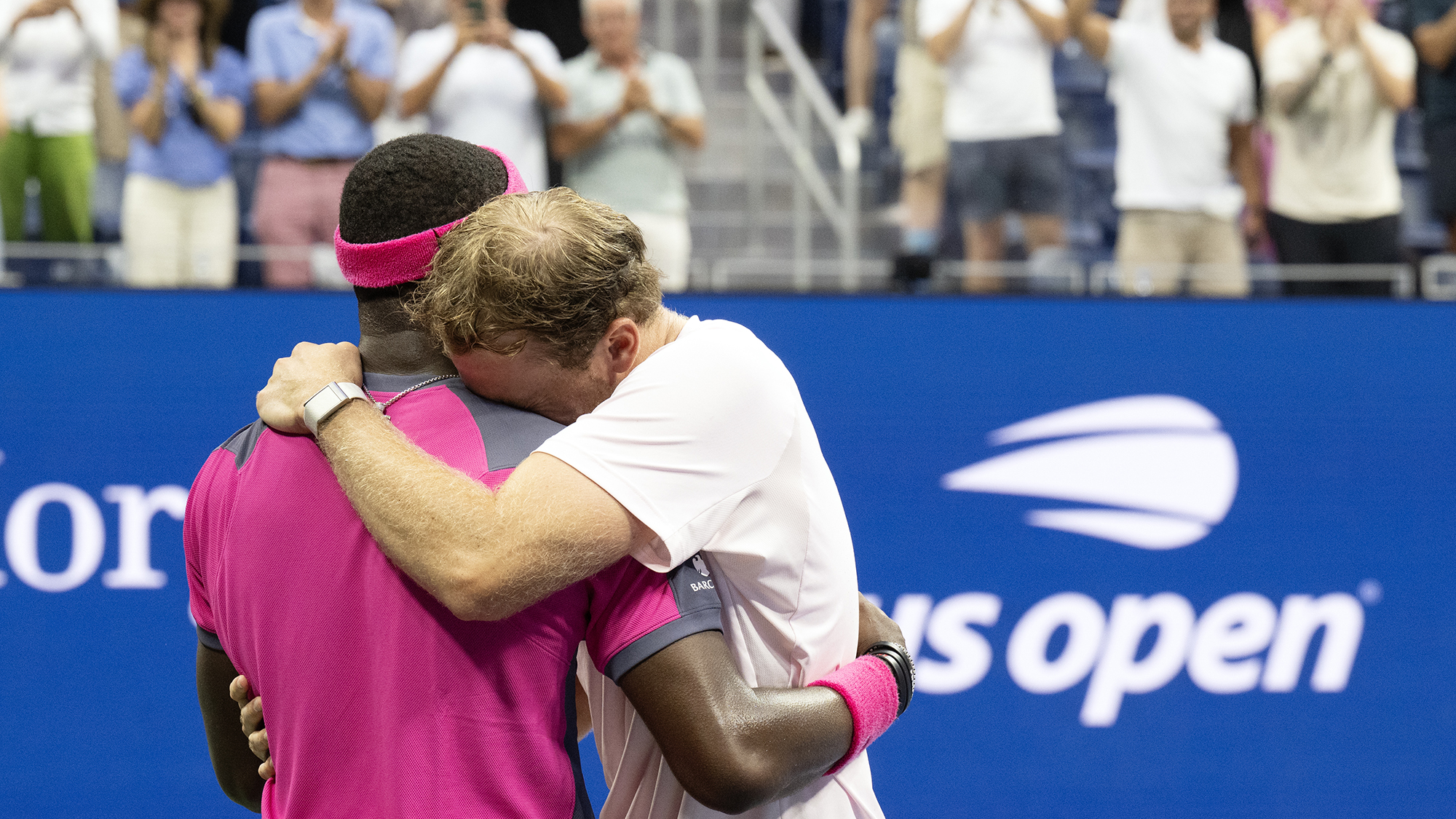
    Shouldering defeat

    Frances Tiafoe hugs fellow American tennis pro Alex Michelsen after beating him in a lengthy U.S. Open quarterfinals comeback. Michelsen “cried on” Tiafoe’s shoulder after the match’s “devastating end,” said ESPN. “We’re just good friends,” Tiafoe said to the media. “I just wanted to come up there and dap him up.” 
    Jennifer Pottheiser / USTA / Getty Images


    Puzzles

    Daily sudoku

    Challenge yourself with The Week’s daily sudoku, part of our puzzles section, which also includes guess the number

    Play here


    The Week recommends

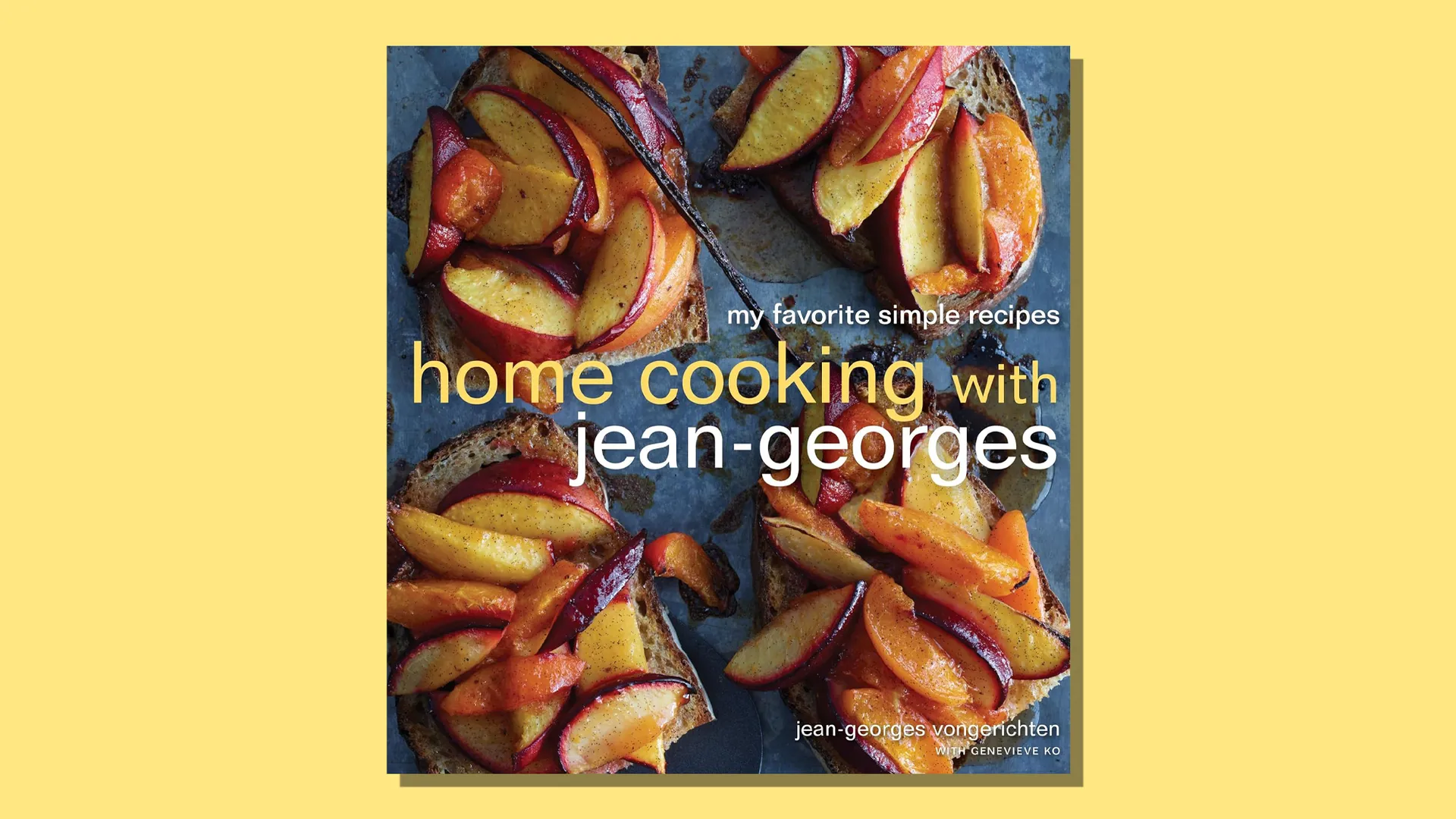
    This book will help you cook like a chef at home 

     Jean-Georges Vongerichten, the prolific chef and restaurateur in New York City, operates more than 45 restaurants around the world and has written five cookbooks. All of them capture the remarkable way he merges simplicity and elucidative flavor combinations. His fourth book, 2011’s “Home Cooking with Jean-Georges,” does so in particularly utilitarian fashion.

    Cooking with eyes wide open
    Take his watermelon salad, a ferocious overturning of how you think about a favorite fruit. The rich funk of the blue cheese and resonant twang of the black pepper convince the watermelon to let its sweetness glow. The fruit’s juicy core tangoes with the olive oil’s grassy unctuousness. Pop, pop goes the flaky salt.

    In the recipe’s intro, Vongerichten offhandedly notes the salad “tastes even better when the watermelon is cold and the cheese is room temperature and soft.” Texture steps into the spotlight and turns a sublime recipe all the grander. 

    Vongerichten tosses this intel at the reader as an aside. He cannot help himself. Wisdom plops out of him like ice in a sleet storm. This is a book in which the tricks, takeaways and techniques are embedded in the recipes themselves. 

    Famous chef, best-in-class writer
    A chef creating a cookbook is only as reliable as their writer. For “Home Cooking,” Vongerichten enlisted one of the finest in the game, Genevieve Ko, an editor at The New York Times. She ensures the recipe’s instructions are as pristine and legible as Vongerichten’s cooking is nimble and gleaming. 

    Read more


    Poll watch

    Almost one third (31%) of students and workers currently enrolled in school have changed or considered changing their chosen work industries because of artificial intelligence, according to the CNBC and SurveyMonkey Quarterly AI and Jobs Survey of 1,686 U.S. adults. Among these respondents, the technology, media and telecommunications industries had the greatest consideration (23%).


    INSTANT OPINION

    Today’s best commentary

    ‘European democracies are running out of time to turn away from the abyss’
    Rafael Behr at The Guardian
    Victory for the “Alternative fur Deutschland in the region of Saxony-Anhalt over the weekend is not the biggest electoral prize won by a far-right party in Europe in recent years, but it’s one of the most shocking because it’s Germany,” says Rafael Behr. No country had “more to learn from history if it wanted to immunize its democracy against extremism.” This “doesn’t have to be Europe’s destiny.” Nationalists “do not form a monolithic bloc.”

    ‘The American prison system is cruel. Maine is showing there’s another way.’
    Abdallah Fayyad at The Boston Globe
    In a “number of states, corrections leaders are starting to experiment with more humane ways to run prisons, looking to countries like Norway and Sweden as models,” says Abdallah Fayyad. In Maine, the “entire prison system has undergone various reforms that have so far yielded promising results.” The “idea is to make prison feel as normal as possible — more akin to the outside world so that people have an easier time adjusting to society when they are released.”

    ‘Fortress Yellowstone’
    Joseph Bullington at In These Times
    An “influx of wealth has made Teton County, Wyoming,” the “richest and most unequal county” in the U.S., says Joseph Bullington. Some of the “ultra-rich ranch owners celebrate the natural beauty of their land and are ardent conservationists when it comes to the Yellowstone ecosystem.” But “most of these landowners accumulated their wealth through industries that help drive the destruction of nature elsewhere.” Their “ranks include private equity investors, oil and gas billionaires, and real estate developers.”


    WORD OF THE DAY

    doomspending

    A portmanteau that describes frivolous spending. The “future looks bleak,” said NerdWallet, and this has led people to “stop saving for it and start buying small comforts instead.” In Canada, two-thirds of adults (66%) have spent money on something they did not need, at least partly due to concerns about the future, according to a NerdWallet survey of 1,516 Canadians.


    Evening Review was written and edited by Theara Coleman, Nadia Croes,  Scott Hocker, Anya Jaremko-Greenwold, Justin Klawans, Harriet Marsden and Joel Mathis, with illustrations by Stephen Kelly.

    Image credits, from top: Illustration by Stephen P. Kelly / Getty Images; Simon Maina / AFP / Getty Images; Thom Leach / Science Photo Library / Getty Images; Random House USA Inc
     

    Recent editions

    • Morning Report

      UK sanctions Israeli West Bank ‘settler terrorists’

    • Evening Review

      The trouble with Trump-a-palooza

    • Morning Report

      US-Canada trade war ramps up

    VIEW ALL
    TheWeek
    • About Us
    • Contact Future's experts
    • Terms and Conditions
    • Privacy Policy
    • Cookie Policy
    • Advertise With Us
    • FAQ
    Add as a preferred source on Google Add as a preferred source on Google

    The Week is part of Future US Inc, an international media group and leading digital publisher. Visit our corporate site.

    © Future US, Inc. Full 7th Floor, 130 West 42nd Street, New York, NY 10036.