The Week The Week
flag of US
US
flag of UK
UK
https://cdn.mos.cms.futurecdn.net/flexiimages/jacafc5zvs1692883516.jpg

SUBSCRIBE & SAVE

Less than $3 per week

Sign in
  • View Profile
  • Sign out
  • The Explainer
  • The Week Recommends
  • Newsletters
  • Cartoons
  • From the Magazine
  • The Week Junior
  • More
    • Politics
    • World News
    • Business
    • Health
    • Science
    • Food & Drink
    • Travel
    • Culture
    • History
    • Personal Finance
    • Puzzles
    • Photos
    • The Blend
    • All Categories
  • Newsletter sign up Newsletter
  • The Week Evening Review
    Trump’s slipping GOP hold, Iran’s defiant president, and mortgages’ rising rates

     
    talking points

    Are conservatives getting fed up with Trump?

    President Donald Trump has dominated the GOP for a decade. But that hold may be slipping, as Republicans prepare for an anticipated “blue wave” in the midterm elections driven by his unpopularity. 

    ‘Trumpism is exhausted’
    The president has become a “real liability” for GOP candidates, said The Boston Globe. Senate candidates Ashley Hinson of Iowa and Mike Rogers of Michigan have called for an end to the war with Iran. Rep. Maria Salazar (R-Fla.) has criticized the president’s immigration policy, while Sen. John Curtis (R-Utah) has called for an investigation into the Russian oligarch who paid for Donald Trump Jr.’s wedding reception. There may be nothing “stopping a full-on revolt” against Trump’s brand.

    MAGA acolytes could once argue that Trump’s agenda is what “Americans voted for in 2024,” said Jim Geraghty at The Washington Post. But polls now suggest the electorate is “sick and tired of this version” of Trump and that “Trumpism is exhausted.” Republicans have to decide if they still want to be the party of tariffs, enmity toward Canada, and mass deportations to remove every “agricultural worker, hotel maid and restaurant busboy.” 

    The GOP under Trump has “blown one of the great opportunities in political history,” said Gerard Baker at The Wall Street Journal. Trump’s 2024 election was a “real chance to establish a new governing order” favorable to conservatives, and the president could have succeeded by controlling the border, reining in prices and keeping the U.S. out of “costly, ineffective” foreign wars. He instead has “widened the deficit,” levied tariffs and set off on a “reckless military adventure” that’s damaging the U.S. economy. 

    ‘Wide open’ GOP future
    Polling shows that Trump is “slipping significantly with his own party,” said pollster G. Elliott Morris at Strength in Numbers. His approval rating with Republican and GOP-leaning independent voters remains high at 71%. But that’s still an “11-point drop and the lowest we have recorded.” 

    This could be the beginning of a longer process for Republicans. If they truly begin to believe that Trump is a “failure,” a full-on reassessment could occur, said Andrew Prokop at Vox. The party’s future will be “wide open.”


    QUOTE OF THE DAY

    ‘What we are seeing isn’t diplomacy so much as “diplotainment,” which won’t do much to solve the serious problems in the US-China relationship.’

    Danny Russel, a former diplomat under the Obama administration, expressing concern that Trump and China’s Xi Jinping spent more time on social and ceremonial events than the planned state summit. Pandas are cute, but “what America needs are rare earths,” he added. 


    IN THE SPOTLIGHT

    Masoud Pezeshkian: Iran’s defiant president

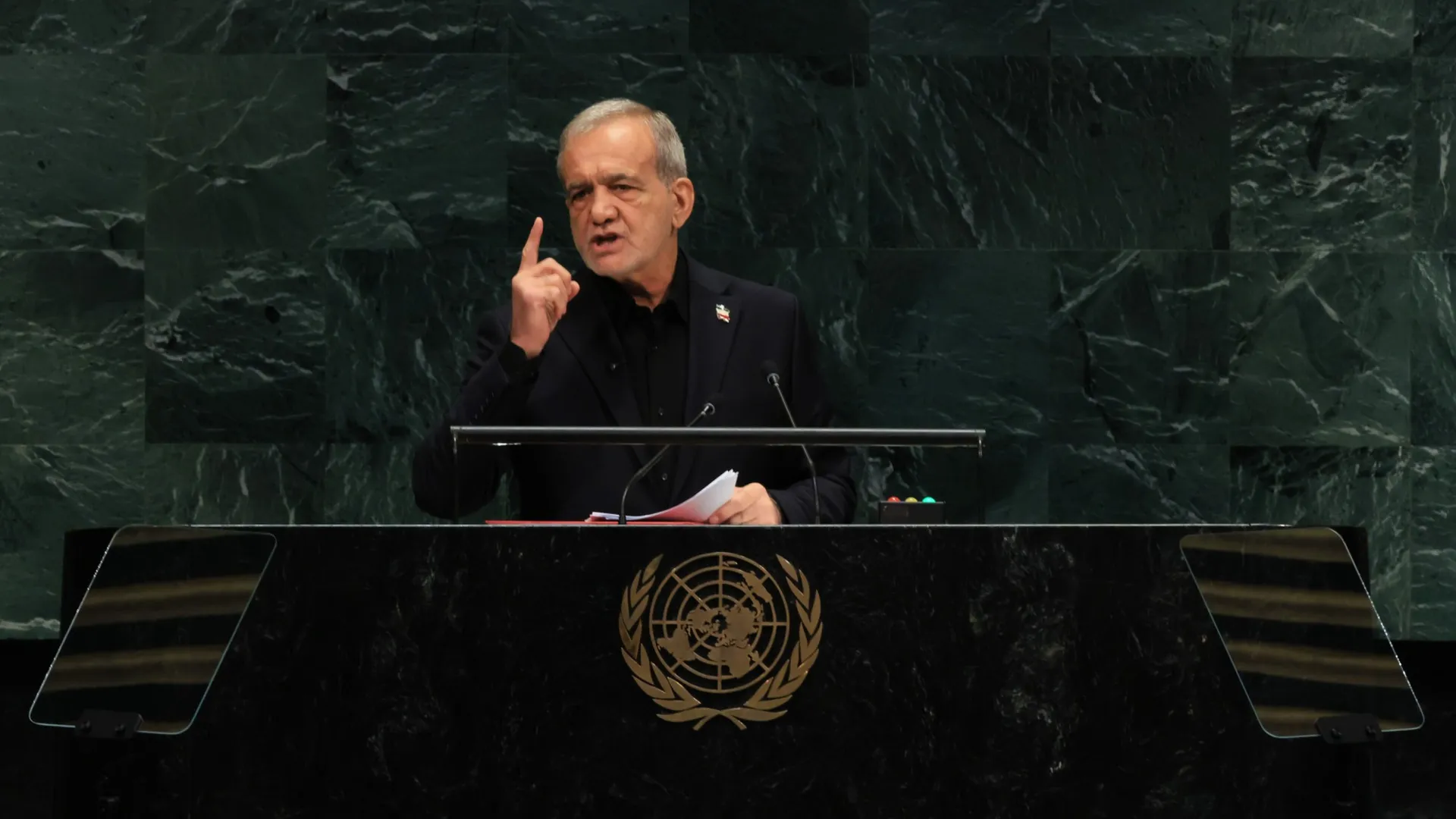
    This week, the world heard from an often quiet figure at the center of the Iran-U.S. war: Iranian President Masoud Pezeshkian. While subservient to Iran’s Supreme Leader Mojtaba Khamenei, Pezeshkian wields immense power as the head of government, and a fiery speech at the United Nations General Assembly showed that the Iranian president has no intention of rolling over for the U.S.

    Heart surgeon-turned-president
    Pezeshkian, 71, was born in the city of Mahabad and completed his military conscription service at age 19. During conscription, he served in Zabul, “one of the most deprived cities in Sistan and Balochestan province — an experience that was said to be his political awakening,” said The Guardian. 

    In 2024, he ran for president as a moderate pledging to “open Iran to the world,” said Deutsche Welle. His campaign focused on “rebuilding trust between the government and the Iranian people” and “fighting disillusionment after persistent economic woes and political repression.” And while Khamenei remains the country’s ultimate authority, Pezeshkian has become a historically significant leader.

    ‘Never bow our head or bend at the knee’
    Pezeshkian has been pushing back against U.S. aggression. He struck back at the U.N. General Assembly against President Donald Trump, who spoke the day before and threatened Iran. 

    Iran will “never bow our head or bend at the knee,” said Pezeshkian in his speech. He repeatedly accused the U.S. of war crimes and “held up a photo of children killed in a U.S. strike on an Iranian primary school at the start of the war,” said USA Today.

    And while much of the ongoing tension surrounds Iran’s alleged attempts to enrich uranium, Pezeshkian has denied that his country “wanted a nuclear weapon” but “refused limitations on the country’s civilian nuclear program,” said NPR. His conditions for negotiating in the future are  the “halting” of U.S. “hostilities,” an end to the U.S. naval blockade of Iranian ports, and the release of Iranian funds.”


    Statistic of the day

    1%: The percentage of Anthropic’s and OpenAI’s customer base that contributes to 80% of the companies’ enterprise revenues, according to Ramp, a corporate charge card platform. This is a level of concentration risk “unseen in any other software category we track,” said Ramp lead economist Ara Kharazian on Threads.


    today’s big question

    How will 7% mortgage rates change home ownership?

    For most of this century, homebuyers could depend on relatively low mortgage rates at no more than 5%. But that’s no longer true. The average 30-year mortgage rate hit 7% this week, and high rates may be here to stay, which could profoundly impact an already dysfunctional U.S. housing market.

    What did the commentators say?
    The “sharp rise” in rates in recent months is “squeezing the budgets of homebuyers” and seems likely to “deepen the freeze” on a housing market that has been stymied by high prices in recent years, said NPR. Rising rates “contributed to a 2% decline” in existing home sales in August.

    High mortgage costs are “forcing home sellers to slash prices,” said Bloomberg. Nearly a fifth of homes for sale had a “price cut in August,” the highest rate since the pandemic. 

    While current rates are “far from the double-digit levels of the 1980s,” they discourage homebuying when combined with other factors like “stubborn inflation, rising energy prices” and “record-high home prices,” said Bloomberg. And would-be buyers who can afford the higher rates are “coming to the table expecting to negotiate the price down.” This leaves home sellers “feeling the strain.”

    More buyers are moving to adjustable-rate mortgages by which the rate “changes typically after five, seven or 10 years,” said Marketplace. That can make a “big difference in affordability” for buyers but is also risky. An adjustable-rate mortgage that starts at 6% today could in “five years be 8.10%,” said Susan Wachter, of the University of Pennsylvania’s Wharton School, to the outlet. Many buyers take the adjustable mortgages betting that rates will drop and they will “be able to refinance,” said Marketplace.

    What next?
    The high rates may play a role in November’s midterm election, said Politico. President Trump in 2024 “vowed that interest rates on mortgages would drop to 2%.” That promise is “looking less likely than ever” to come to fruition. We should “expect 7% as the new normal,” said economist Lawrence Yun in a blog post for the National Association of Realtors. 


    Good day 🧑‍🎓

    … for financial aid. The Department of Education has launched the Free Application for Federal Student Aid (FAFSA) earlier than ever. “We have simplified it,” said DOE Under Secretary for Higher Education Nicholas Kent to ABC News. Instead of taking hours to fill out, it takes “15 minutes on average.” The form went live on studentaid.gov Wednesday.


    Bad day 💊

    … for affordable meds. Millions of Americans use foreign mail-order pharmacies, mostly in Canada, to get cheaper gray-market prescription drugs. But they will soon get cut off, as a rule will take effect next month requiring medications mailed from abroad to go through a customs process with a “licensed customs broker” and “financial guarantee,” said The Wall Street Journal.


    Picture of the day

    Holy legacy

    Priests, along with 50,000 other Catholics, attend the beatification of Archbishop Fulton J. Sheen, who died in 1979, at America’s Center in St. Louis, Missouri. The U.S.’s “most visible Roman Catholic clergyman of the 20th century” was “responsible for 42,000 conversions,” said The New York Times.
    Kate Munsch / AP Photo


    Puzzles

    Daily sudoku

    Challenge yourself with The Week’s daily sudoku, part of our puzzles section, which also includes guess the number

    Play here


    The Week recommends

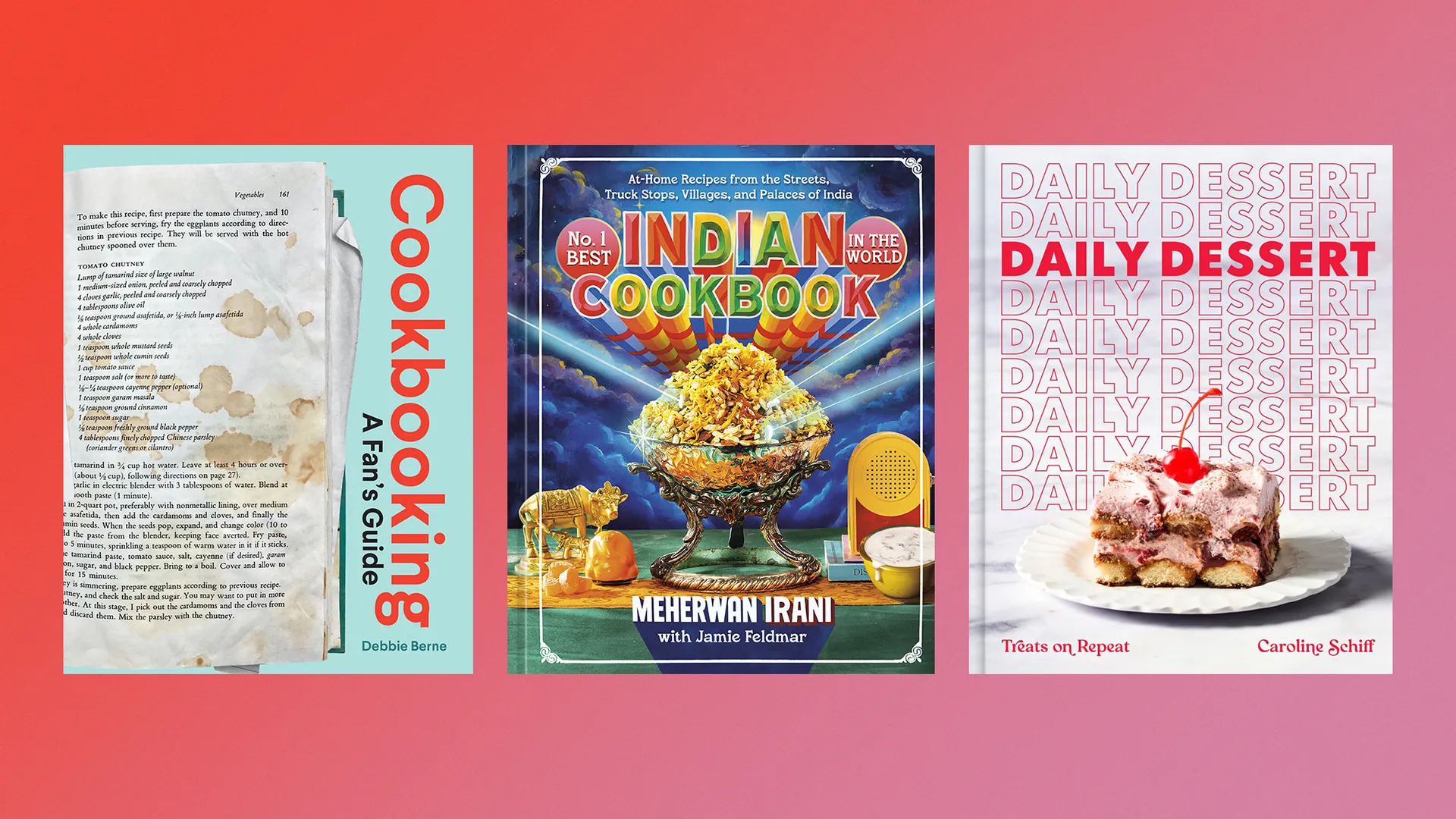
    Fall’s most exciting new cookbooks

    Bring on the hot-air blast of a roaring oven. Autumn’s new cookbooks are an inspiriting combination of history, practicality and endless attractive recipes.

    ‘Happy Snacking, Don’t Die!: Foraging and Vegan Recipes with Black Forager’ 
    If you know the Black Forager on social media, you love her — or you should. Alexis Nikole Nelson, the freewheeling, insanely knowledgeable person behind the handle, has debuted her first cookbook, and it’s a bounty of charming encouragement and cheeky asides. The “joy Nelson injects into the book makes foraging approachable,” said Emily Conover at ScienceNews. (out now, $35, Simon & Schuster)

    ‘No. 1 Best Indian Cookbook in the World’ 
    Meherwan Irani, the owner of a few Chai Pani restaurants in the southern U.S. and the spice company Spicewalla, is one of several Indian American chefs who have noted the strong parallels between the cooking of the Indian subcontinent and that of the South. Irani’s debut cookbook is proof that Indian cuisine is “not only approachable” but also “not that different from what you are already cooking and eating,” said Alana Al-Hatlani at Southern Living. (out now, $40, Ten Speed Press)

    ‘Daily Dessert: Treats on Repeat’ 
    Dessert-making need not always be like climbing Kilimanjaro. Sometimes it can be a stroll across a hillock, and celebrated New York City pastry chef Caroline Schiff has written a book about “making baking less annoying and more chill — a boon for anyone who would love baked goods more often but hates the thought of all the fuss,” said Bettina Makalintal at Eater. (Oct. 13, $35, Abrams)

    Read more


    Poll watch

    Socialism is winning favor with a record number of Americans, with 43% viewing the concept positively, according to a Gallup survey of 1,200 U.S. adults. This is the first time approval has exceeded 40% since tracking began in 2010. Meanwhile, approval of big business has hit a record low of 35%.


    INSTANT OPINION

    Today’s best commentary

    ‘How private equity is killing public access to hospitals and emergency care’
    Heather Prendergast at The Hill
    Safety-net hospitals “serve a patient population that’s disproportionately low-income, publicly insured and racially and ethnically diverse,” says Heather Prendergast. The “corporatization of the healthcare system by private equity has come with significant costs.” While private equity’s “ownership of hospitals may earn millions for their investors, they have put patients, communities and providers at risk.” It’s “worth asking what happens to the remaining safety-net hospitals once their primary funding source shrinks even further.”

    ‘What peacemaking loses when women are left out’
    Cristal Downing at Time
    Wars “exact a heavy toll on women, and yet too often their voices and concerns are pushed to the margins of global peacemaking,” says Cristal Downing. The U.N. has made “halting but real progress in bringing women into peace negotiations and postwar reconstruction from Guatemala to Bangsamoro,” but “now that progress is being reversed.” Finding “space for gender diversity could do more than ensure that women are heard; it could also give peace efforts a better chance of success.”

    ‘Advice for parents who want to prevent CTE in youth athletes’
    Leana S. Wen at The Washington Post
    Nobody “disputed that CTE is a serious issue, but many seemed to think that young athletes today are at lower risk than previous generations because of better safety precautions,” says Leana S. Wen. The “majority of head impacts that can cause brain damage do not result in a concussion diagnosis but can still contribute” to CTE. “Most important is taking repetitive head impacts out of the game for kids, including no bodychecking in ice hockey and no tackling in football.”


    WORD OF THE DAY

    handfasting

    A symbolic ritual in which couples “clasp hands or have them bound together with cord or ribbon” to represent their commitment, said The Times. The ancient Celtic marriage tradition has become a “popular choice for couples in pursuit of the ultimate ‘Instagrammable’ nuptials” after being featured in the Oscar-nominated film “Hamnet.”


    Evening Review was written and edited by Theara Coleman, Nadia Croes, Scott Hocker, Anya Jaremko-Greenwold, Justin Klawans and Joel Mathis, with illustrations by Stephen Kelly.

    Image credits, from top: Illustration by Stephen P. Kelly / Getty Images / Shutterstock; Spencer Platt / Getty Images; J Studios / Getty Images; Hardie Grant / Penguin Random House / Abrams Books
     

    Recent editions

    • Morning Report

      Trump fetes Xi

    • Evening Review

      Trump’s latest venture: 24-hour TV

    • Morning Report

      Iran’s presidential rebuttal

    VIEW ALL
    TheWeek
    • About Us
    • Contact Future's experts
    • Terms and Conditions
    • Privacy Policy
    • Cookie Policy
    • Advertise With Us
    • FAQ
    Add as a preferred source on Google Add as a preferred source on Google

    The Week is part of Future US Inc, an international media group and leading digital publisher. Visit our corporate site.

    © Future US, Inc. Full 7th Floor, 130 West 42nd Street, New York, NY 10036.