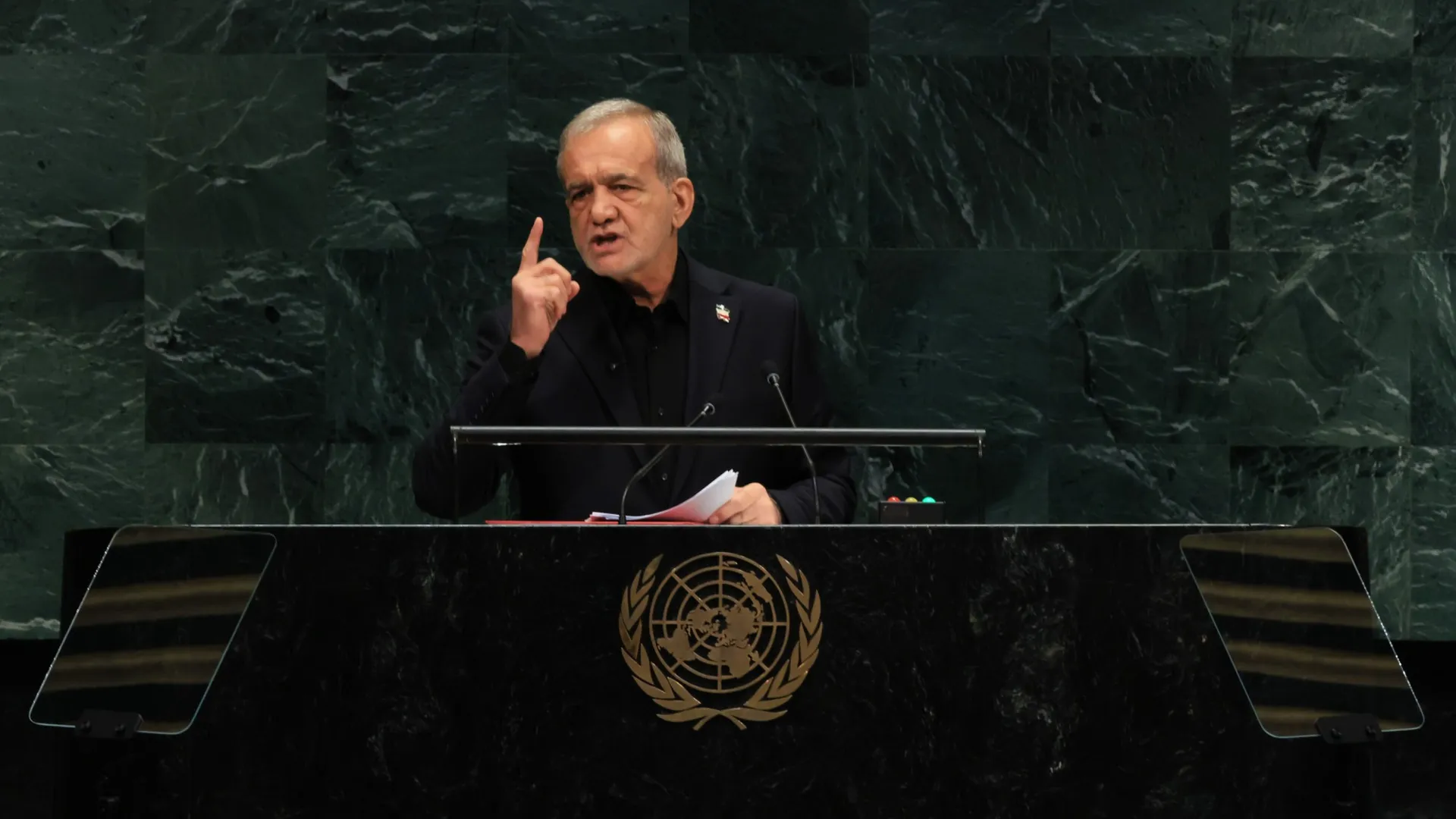
This week, the world heard from an often quiet figure at the center of the Iran-U.S. war: Iranian President Masoud Pezeshkian. While subservient to Iran’s supreme leader, Pezeshkian wields immense power as the head of government, and a fiery speech at the United Nations showed that he has no intention of rolling over for the United States.
Heart surgeon-turned-president
Pezeshkian, 71, was born in the city of Mahabad and completed his military conscription service at the age of 19. During his conscription, he served in “Zabul — one of the most deprived cities in Sistan and Balochestan province, an experience that was said to be his political awakening,” said The Guardian. After returning home, Pezeshkian decided to have a career in medicine and “returned to his hometown to start his medical training.”
He eventually pivoted to cardiac health and “became a heart surgeon and served as the head of the Tabriz University of Medical Sciences,” said The Associated Press. His middle life was also marked by tragedy, after a 1994 car accident “killed his wife, Fatemeh Majidi, and a daughter.” Pezeshkian eventually became a politician, serving as Iran’s “deputy health minister and later as the health minister under the administration of reformist President Mohammad Khatami.”
The Week
Escape your echo chamber. Get the facts behind the news, plus analysis from multiple perspectives.
SUBSCRIBE & SAVE
Sign up for The Week's Free Newsletters
Join more than 350,000 subscribers and keep yourself informed with a selection of The Week’s most interesting, enlightening and entertaining stories - plus daily puzzles.
Join more than 350,000 subscribers and keep yourself informed with a selection of The Week’s most interesting, enlightening and entertaining stories - plus daily puzzles.
Latest Videos FromThe Week US
In 2024, Pezeshkian ran for president as a moderate with a pledge to “open Iran to the world,” said Deutsche Welle. His campaign focused on “rebuilding trust between the government and the Iranian people, fighting disillusionment after persistent economic woes and political repression.” He won the election in a runoff, and his victory came as a stunning upset against his hardline opponent. While Supreme Leader Mojtaba Khamenei remains the country’s ultimate authority, Pezeshkian has become a historically significant leader.
‘Never bow our head or bend at the knee’
Since the war in Iran began, Pezeshkian has largely pushed back against what he views to be U.S. aggression. He asserted himself during a speech at the United Nations General Assembly against President Donald Trump, who had personally threatened Iran when he spoke to the body the day before. The country will “never bow our head or bend at the knee,” Pezeshkian said of Iran during his speech. The Iranian president was “defiant in the face of what he called ‘bullying’ by Trump, while saying Tehran is open to negotiations,” said USA Today.
Pezeshkian’s visit to the United Nations in New York City is an “extraordinary appearance,” given that the U.S. and Iran are in a state of war, said USA Today. Just “months after he and other Iranian leaders were targeted by U.S. airstrikes, Pezeshkian — like other world leaders — is traveling through Manhattan with a Secret Service escort.” Pezeshkian has repeatedly accused the U.S. of war crimes and during his speech he “held up a photo of children killed in a U.S. strike on an Iranian primary school at the start of the war.”
While much of the ongoing tension surrounds Iran’s alleged attempts to enrich uranium, Pezeshkian has denied that his country “wanted a nuclear weapon” but “refused limitations on the country’s civilian nuclear program,” said NPR. His conditions for negotiating in the future include the “halting” of “U.S. hostilities, an end to the U.S. naval blockade of Iranian ports and the release of Iranian funds.”