The Week The Week
flag of US
US
flag of UK
UK
https://cdn.mos.cms.futurecdn.net/flexiimages/jacafc5zvs1692883516.jpg

SUBSCRIBE & SAVE

Less than $3 per week

Sign in
  • View Profile
  • Sign out
  • The Explainer
  • The Week Recommends
  • Newsletters
  • Cartoons
  • From the Magazine
  • The Week Junior
  • Student Offers
  • More
    • Politics
    • World News
    • Business
    • Health
    • Science
    • Food & Drink
    • Travel
    • Culture
    • History
    • Personal Finance
    • Puzzles
    • Photos
    • The Blend
    • All Categories
  • Newsletter sign up Newsletter
  • Brand Logo
    Canada’s wildfires, Trump’s primetime speech, and contaminated lettuce

     
    TODAY’S climate story

    Wildfire smoke blankets Midwest, parts of Northeast

    What happened
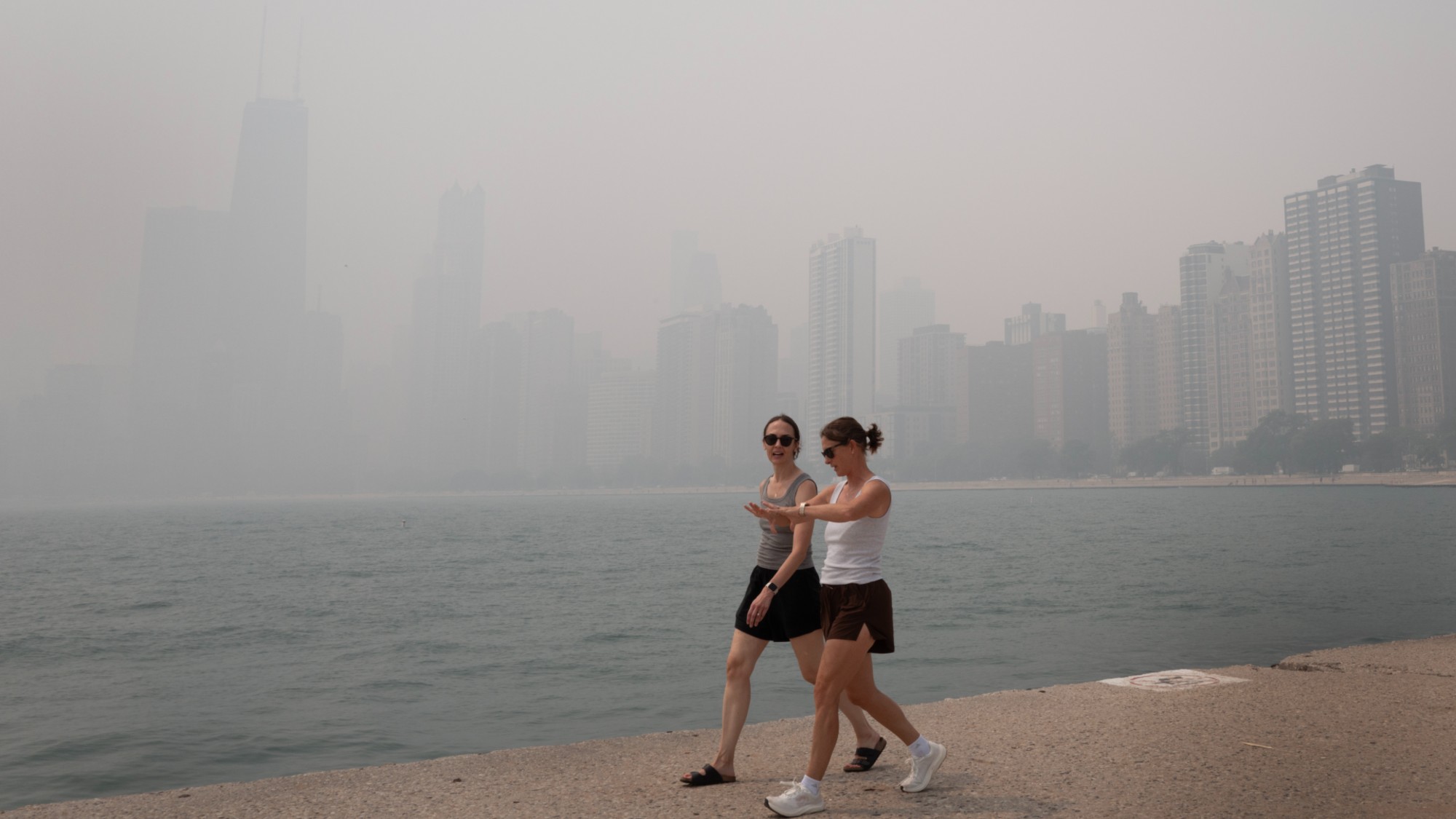
    Canadian wildfires have sent “massive plumes” of smoke “pouring over the border” into the U.S., CNN said. The “combination” of wildfires in Ontario and a “heat dome in the central U.S. spells smoky trouble,” with dangerous air quality for “more than 120 million people in the Midwest and Northeast.”

    Who said what
    In cities including Chicago, Cleveland, Detroit, Minneapolis and Toronto, air-quality readings “surged to levels so dangerous” that one public health expert warned “nobody should spend time outside,” The New York Times said. Sensors across the upper Midwest yesterday recorded the “worst air quality in North America”. 

    The smoke “arrived in force,” National Weather Service Meteorologist Steven Freitag told The Associated Press. “It’s really pretty extreme levels.” And air in coastal cities like New York, Philadelphia and Washington, D.C., was also at “unhealthy levels,” said the Times.

    What next?
    The Midwest could “face weeks to months of continued smoke and flare-ups,” depending on wind patterns, said Brent Williams, the head of the University of Minnesota’s Soil, Water and Climate Department, to the AP. Republican lawmakers have meanwhile “threatened punitive action against Canada,” accusing Ottawa of “mismanaging the wildfires,” said the Times. “I will be introducing a bill next week to sanction Canada and the responsible Canadian government officials for this atrocity,” said Republican Sen. Bernie Moreno of Ohio on X. 


    TODAY’S politics story

    Trump speech sows doubt about election security

    What happened
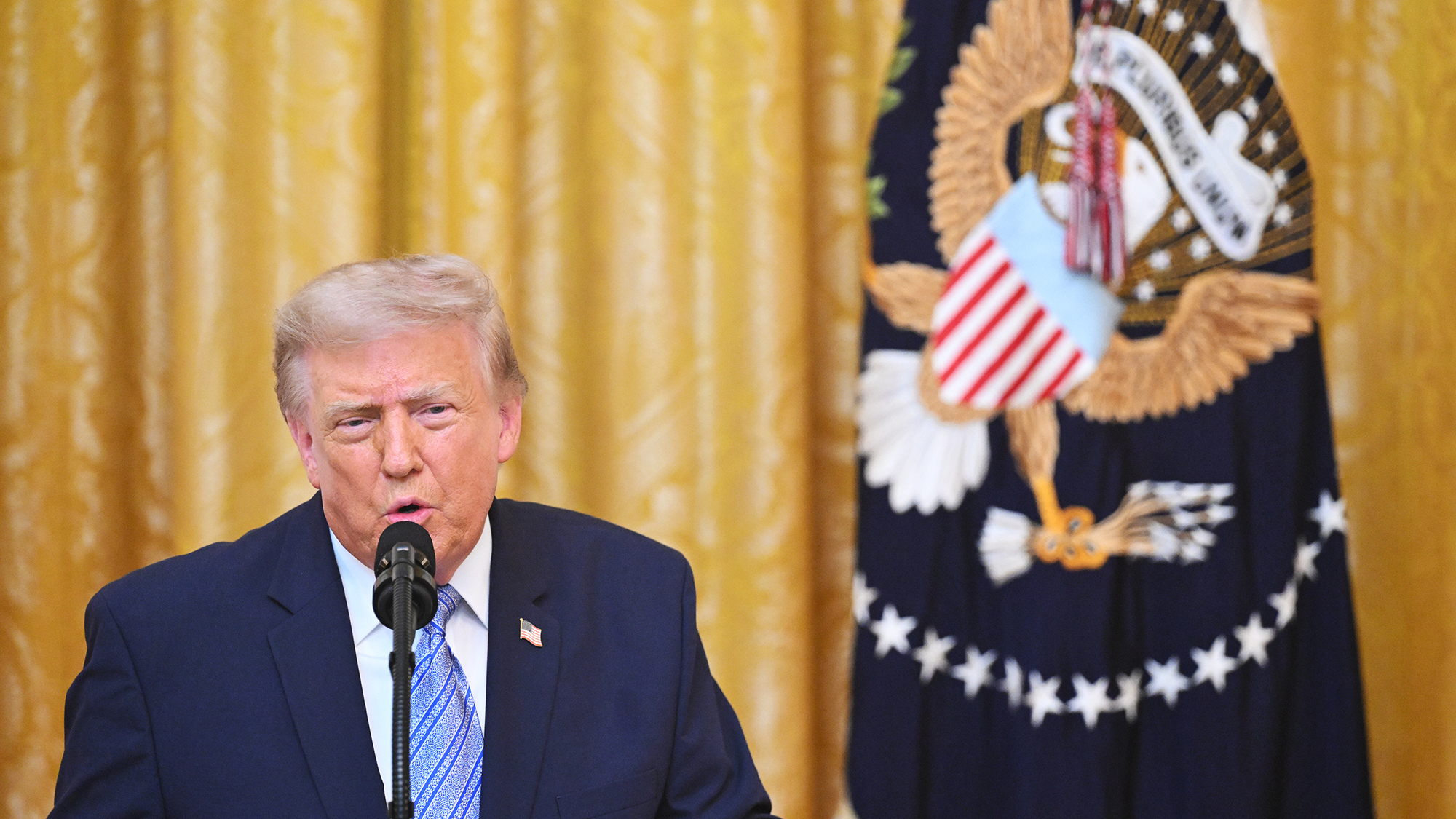
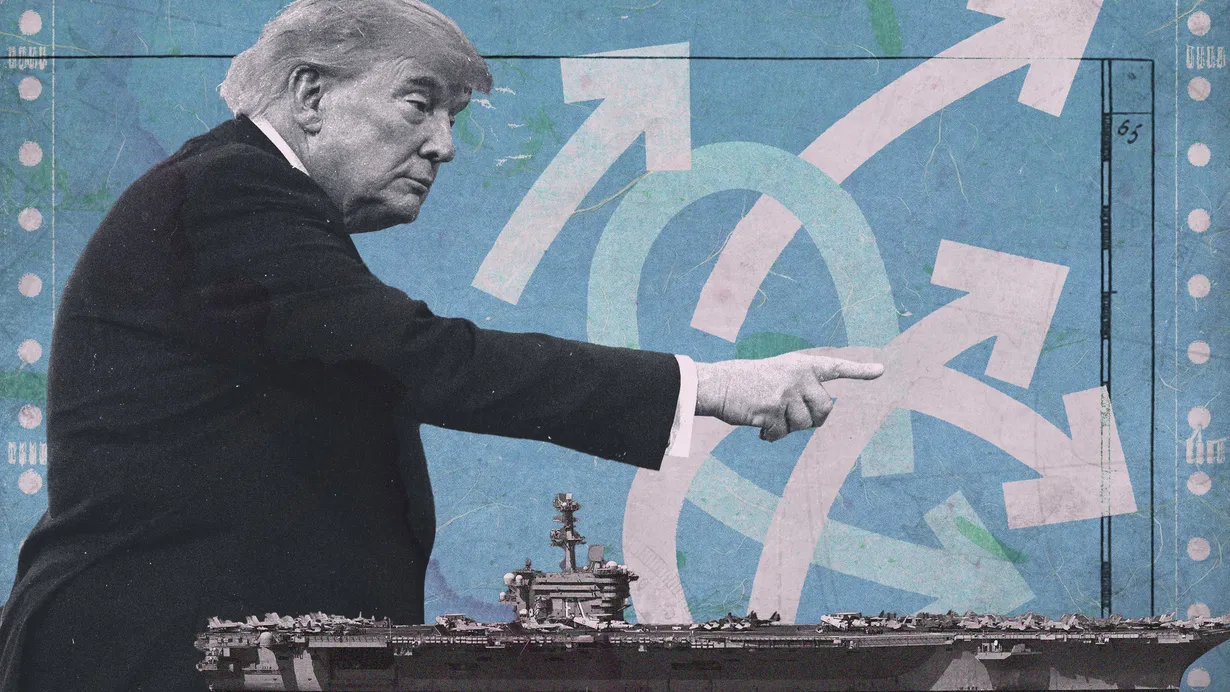
    President Donald Trump repeated his “long-running complaints” about the security of the American voting system in a primetime speech Thursday, Reuters said. The president claimed mail-in ballots are “inherently corrupt”; voting machines are “easily compromised”; China interfered with the 2020 elections; and 278,000 non-citizens registered to vote. He called on Congress to pass the SAVE America Act, a bill that would severely tighten ID rules for voters.

    Who said what
    These “unsubstantiated claims” are based on “incomplete” data with “no underlying evidence,” Bloomberg said. “All we got is more rehashed, debunked conspiracy theories,” David Becker of The Center for Election Innovation & Research told CBS News. The speech comes as Republicans “are facing the prospect of losing one or both chambers of Congress in ​November,” Reuters said.

    What next?
    The SAVE America Act “lacks the necessary support” to clear the Senate, NBC News said, but House Republicans want “to force the bill through” without Democratic support by weaving parts of it into a new reconciliation bill. It’s “far from clear” this legislation “will have enough support to pass,” The New York Times said. 


    TODAY’S health Story

    Taco Bell supplier potential source of parasitic infection

    What happened
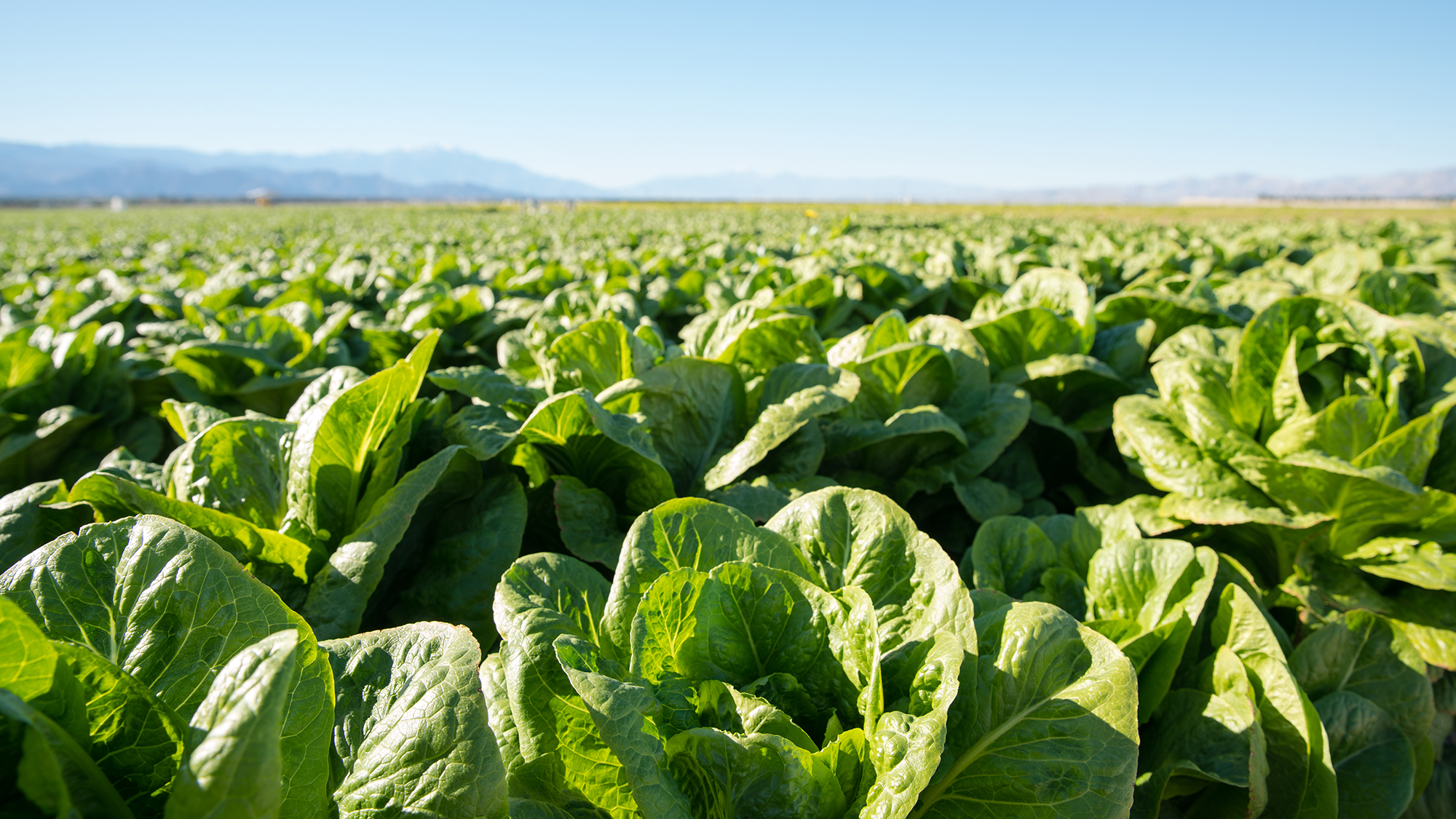
    U.S. health officials have linked an ongoing cyclosporiasis outbreak to iceberg lettuce from Mexico that was sent to Taco Bell locations across five states. The supplier has not been officially named, but “two individuals familiar with the inquiry” told The Washington Post it is Taylor Farms. At least 1,645 cases of the parasitic infection, which can cause explosive diarrhea, have been confirmed, most of them in Michigan.  

    Who said what
    “Do not eat shredded iceberg lettuce from Taco Bell locations in Indiana, Kentucky, Michigan, Ohio, and West Virginia,” the CDC said in a statement. The fast food company said it had “taken immediate action” to “indefinitely” remove the lettuce from its supply chain.

    What next?
    The FDA said it had “increased screening at the border” for the “implicated” products and is working with the supplier to figure out if any contaminated lettuce remains on the market. Taylor Farms is “one of the largest producers of fresh lettuce and vegetables in the country,” serving many leading restaurant chains, The New York Times said. “Additional implicated brands, restaurants, retailers, or distribution channels” may yet emerge, the FDA warned.


    It’s not all bad

    Humpback whales are thriving in the waters off Rio de Janeiro. A global whaling ban was enacted 40 years ago and, since then, the humpback population has grown steadily, with about 35,000 in the South Atlantic. The whales migrate between June and November to breeding and calving grounds in Brazil, and this month, the Humpback Whale Project launched an expedition to study their behavior, travel routes and gathering areas in the biodiverse Abrolhos Bank coral reef complex.


    Under the radar

    Australia and Fiji’s new defense pact

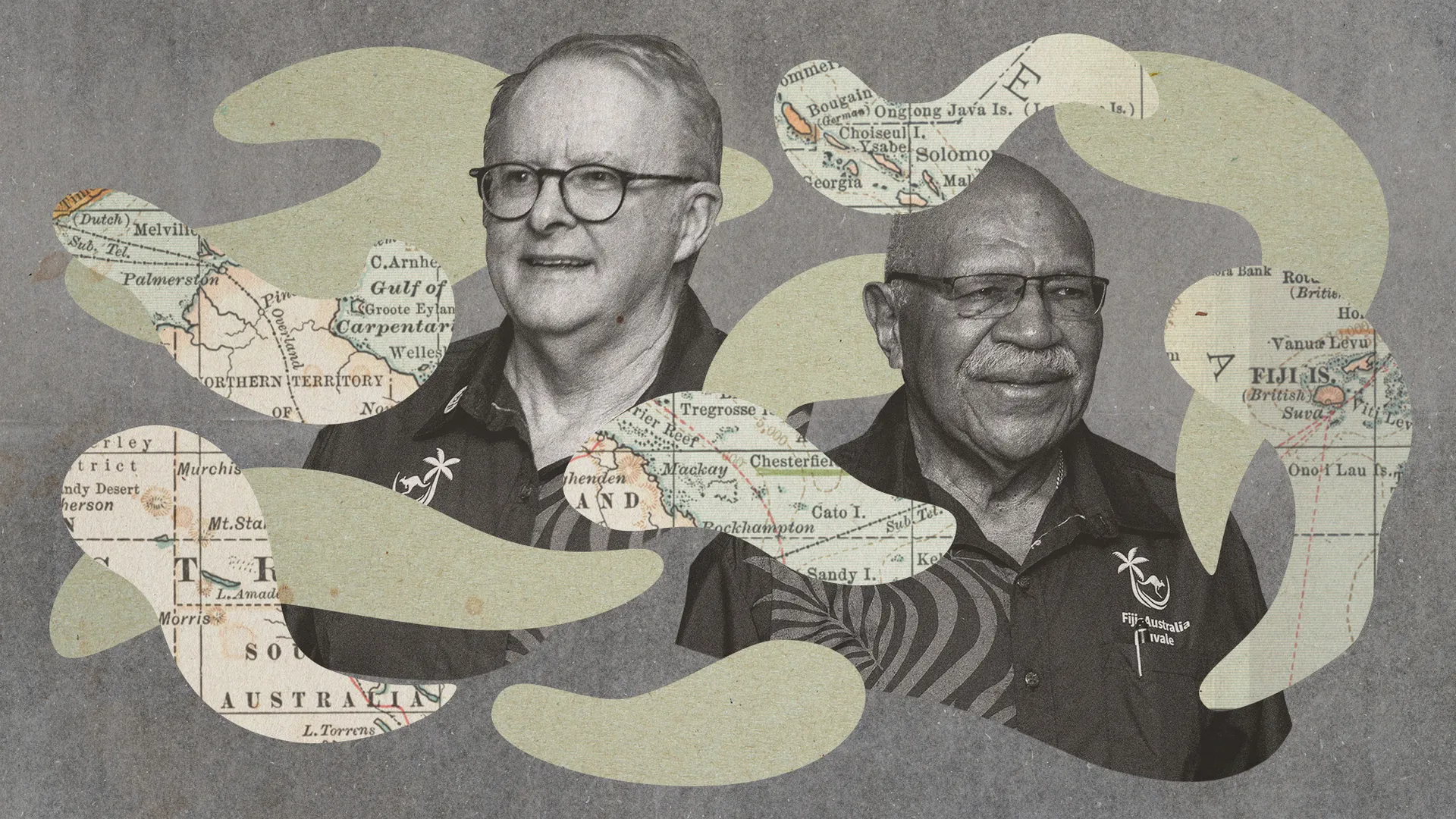
    Fiji and Australia have agreed to a new alliance, the latest in a series of regional pacts that could significantly alter the Pacific’s defense landscape. In a “surprise move,” Prime Ministers Anthony Albanese of Australia and Sitiveni Rabuka of Fiji elevated diplomatic ties between the two countries to a “formal treaty,” said The Guardian. The Ocean of Peace Alliance, which will be open to other Pacific nations, aims to bolster regional security and “limit China’s influence.”

    For 75 years, Australia had just two formal alliances, with the U.S. and New Zealand under the Anzus Treaty signed in 1951. But it has been “racing to shore up defense ties with its Pacific neighbors” to counter China’s “military expansion,” said the BBC. Last October, Australia signed a defense deal with Papua New Guinea, the most populous South Pacific nation, that granted access to PNG’s military facilities and troops.

    This latest Australia-Fiji pact, which complements the Vuvale Union that focuses heavily on economic integration, is more significant than previous deals because it includes a mutual defense agreement, committing each country to come to the other’s aid should there be the threat of an armed attack. It also offers closer military cooperation, including planning, exercises and intelligence sharing.

    Hours after the pact was signed, China test-launched a long-range ballistic missile with a dummy warhead into the Pacific Ocean. Beijing described it as routine and part of the country’s annual military program, but the launch provoked an angry response from Australia, which accused China of destabilizing the region. Ultimately, the test “underscored the need for Pacific Island countries to collectively think through their defense and security arrangements,” said The Conversation.


    On this day

    July 17, 2014

    Malaysia Airlines Flight 17 crashed in Ukraine after being shot down by a missile from Russian-backed forces, killing all 298 people on board. The downing of the plane was widely criticized in Western media. Over a decade later, Russia has been dealing with its own aerial attacks via drone strikes from Ukraine. 


    TODAY’S newspaperS

    ‘Hawaii rebuilding’

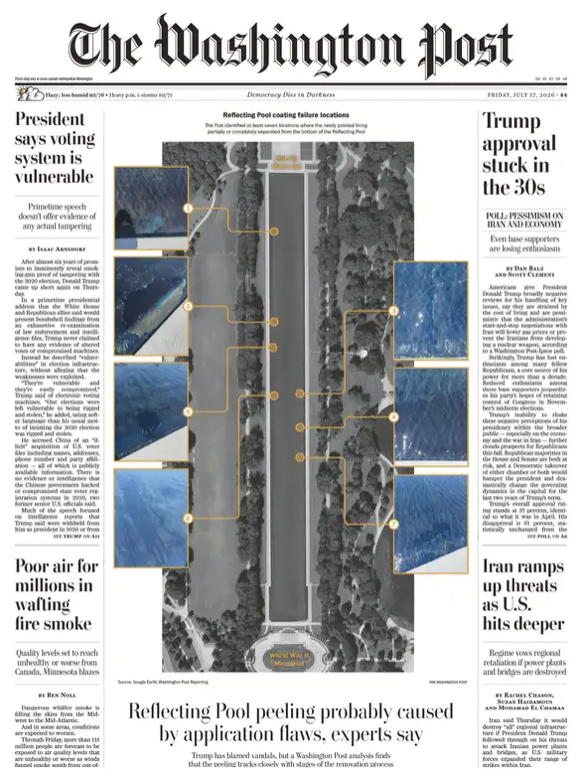
    “Pentagon options for potential attack on Cuba include large-scale air assault,” says the Miami Herald on Friday’s front page. “Hawaii rebuilding after fires and floods,” says USA Today. “Zelensky’s firing of defense chief ignites protests,” says The New York Times. “Trump approval stuck in the 30s,” The Washington Post says. “Warrant reveals Salgado van search,” says the Houston Chronicle.

    ► See the newspaper front pages


    Tall tale

    One person’s trash is another person’s political candidate

    In the U.K., a novelty candidate named Count Binface is running in a special election against right-wing populist Nigel Farage. Wearing a helmet shaped like a trash can, Binface is the alter ego of comedy writer Jon Harvey, who has also taken on (and lost to) former prime ministers Boris Johnson and Rishi Sunak and London Mayor Sadiq Khan. During previous elections, Count Binface pledged to rename London Bridge “Phoebe Waller-Bridge” and “nationalize Adele” if elected.


    Morning Report was written and edited by Nadia Croes, Catherine Garcia, Jessica Hullinger, Justin Klawans, Rafi Schwartz, Chas Newkey-Burden and Helen Brown, with illustrations by Julia Wytrazek.

    Image credits, from top: Scott Olson / Getty Image; Saul Loeb / Pool / AP Photo; thinkreaction / Getty Images; Illustration by Julia Wytrazek / Getty Images
     

    Recent editions

    • Evening Review

      Trump’s favorite measure of success

    • Morning Report

      Grilled on the Hill

    • Evening Review

      A solution to the housing crisis?

    VIEW ALL
    TheWeek
    • About Us
    • Contact Future's experts
    • Terms and Conditions
    • Privacy Policy
    • Cookie Policy
    • Advertise With Us
    • FAQ
    Add as a preferred source on Google Add as a preferred source on Google

    The Week is part of Future US Inc, an international media group and leading digital publisher. Visit our corporate site.

    © Future US, Inc. Full 7th Floor, 130 West 42nd Street, New York, NY 10036.