The Week The Week
flag of US
US
flag of UK
UK
https://cdn.mos.cms.futurecdn.net/flexiimages/jacafc5zvs1692883516.jpg

SUBSCRIBE & SAVE

Less than $3 per week

Sign in
  • View Profile
  • Sign out
  • The Explainer
  • The Week Recommends
  • Newsletters
  • Cartoons
  • From the Magazine
  • The Week Junior
  • Student Offers
  • More
    • Politics
    • World News
    • Business
    • Health
    • Science
    • Food & Drink
    • Travel
    • Culture
    • History
    • Personal Finance
    • Puzzles
    • Photos
    • The Blend
    • All Categories
  • Newsletter sign up Newsletter
  • The Week Evening Review
    Trump’s focus on stocks, a zoo’s data center battle, and the Falkland Islands’ history

     
    Talking Points

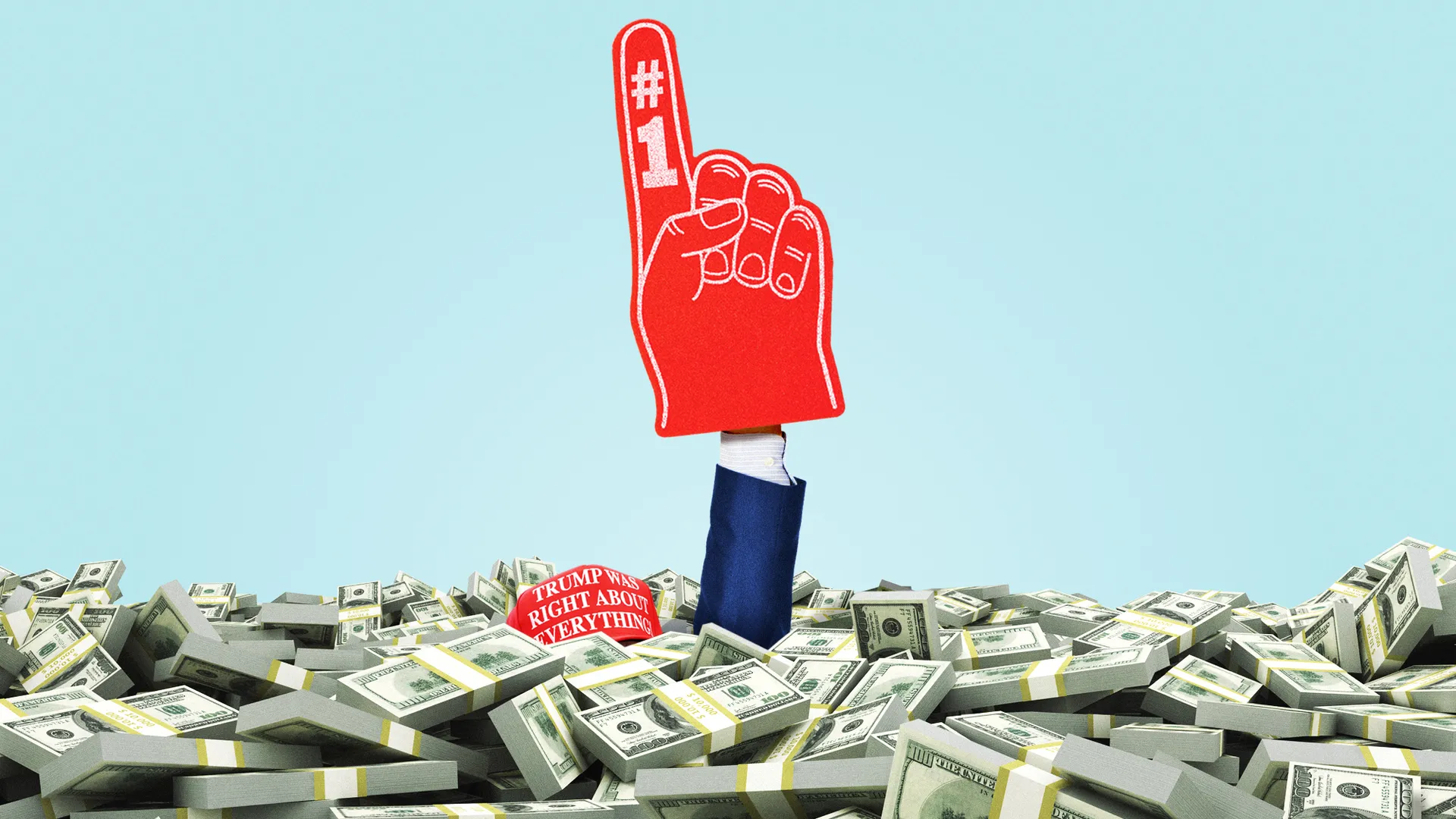
    The stock market as a measure of Trump’s success

    Polls matter, but the stock market might be President Donald Trump’s favorite barometer of success. “Everybody’s profiting” when the markets rise, he said to reporters recently. But that’s not quite true. Rising stock prices are nonetheless a consolation for the president, and shaky market responses to controversial policies have spurred him to shift course on tariffs and war with Iran.

    ‘Economic pressure’
    Trump “considers market reaction a key measure of success,” said The Washington Post. That metric helped spur the now-scuppered attempts to end fighting with Iran. Markets have reacted badly to surges in fighting, but “every time we talked about the possibility of peace, the stock market shot up like a rocket ship,” said Trump to reporters last month as he explained his attempts to reach a deal.

    Most presidents “play down the idea that they are susceptible to economic pressure” when making foreign policy, said the Post. But Iranians decided that Trump’s devotion to Wall Street and its negative reaction to the Strait of Hormuz closure “gave them leverage” to take a harder line and extract concessions, said Suzanne Maloney, of the Brookings Institution, to the outlet.

    Trump’s close attention to stock indexes “risks conflating the fortunes of ‌financial markets with the broader experience of U.S. households,” said Reuters. Roughly 40% of Americans “do not have money in the markets.” And the markets do not measure the health of private firms or small businesses that serve as the “backbone of the U.S. labor market.”

    ‘Not the litmus test’
    The president’s new “Trump Accounts” for newborns are expected to draw more young Americans into “long-term wealth building” via stock markets, said Yahoo Finance. But the markets are “not the litmus test the American public wants” from the presidency, said Ali Vitali at MS NOW. Trump’s recent financial disclosures revealed “billions in wealth growth for the president and his sons,” but the voters “standing at gas stations” and paying higher prices at the pump probably find it “unfair.”

    Stock investors have figured out they should “pounce” when Trump shows signs of “buckling” on unpopular decisions, said Katie Martin at the Financial Times. And American officials will have to “work a little harder” to keep attracting the bond investors they need to “balance the books.”


    QUOTE OF THE DAY

    ‘There’s still going to be more bloodshed unless they shut their mouth and let ICE enforce the laws that they enacted.’

    White House Border Czar Tom Homan, on Fox News’ “Ingraham Angle,” after the two most recent fatal shootings by ICE, blaming Democratic leaders, who “continually attack ICE and tell people to evade them, tell people don't comply, tell people to resist and tell people ICE isn’t a real law enforcement agency.”


    IN THE SPOTLIGHT

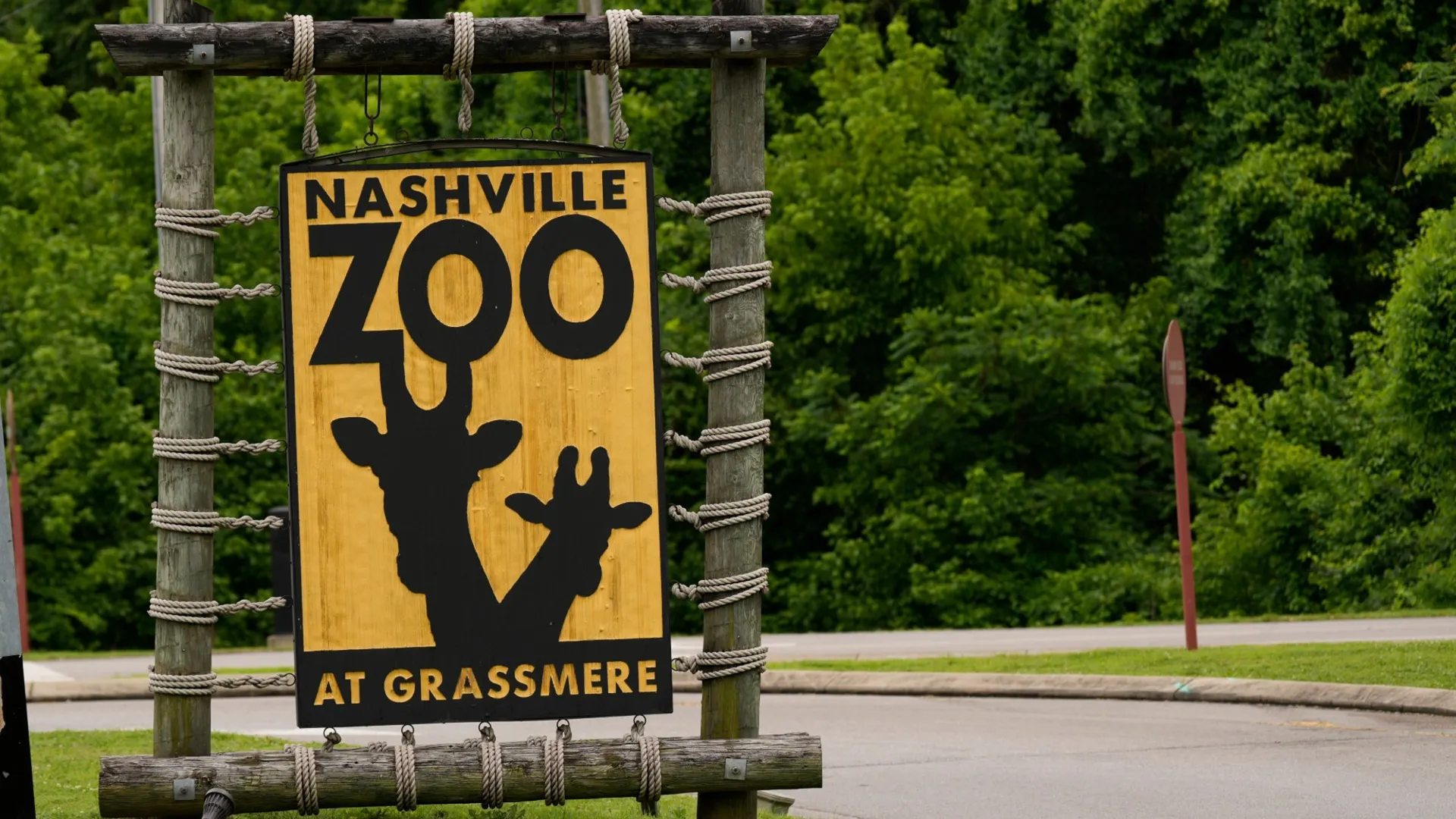
    Nashville Zoo becomes new front against data centers

    Across the country, people have been up in arms about the increasing ubiquity of AI data centers, and now a proposal to build a massive AI plant just steps from the Nashville Zoo has brought the subject of animal protection into the fray. As people in Nashville propose ways to stop the data center’s construction, the affected zoo animals could present a new wave of backlash against artificial intelligence.

    ‘Disrupt the environmental conditions’
    The proposed data center, built by the Atlanta firm DC BLOX, would be located about 50 yards from the boundary of the Nashville Zoo, officials said to NBC News. The zoo is “vehemently opposed to having a data center so close to animals” because the “noise could disturb its residents,” said Nashville Zoo President and CEO Rick Schwartz to NBC.

    For many, the “focus of the brewing anger is how it might affect the zoo’s most endangered or prized species,” said The New York Times. Much of the concern involves the facility’s clouded leopards, a threatened species. Their breeding enclosure would be “about 320 feet from the proposed data center’s property line.”

    Officials are “particularly concerned about the potential effect of light and noise from the data center, given that animals are more sensitive than humans,” said Dr. Heather Schwartz, who oversees animal health at the Nashville Zoo, to the Times. The facility has launched a petition to stop the data center that currently has over 500,000 signatures.

    Demanding stronger regulations
    After the plan was announced, an “unprecedented crowd” showed up to Nashville’s planning commission meeting as “hundreds of residents turned out to oppose data centers,” said The Tennessean. Numerous speakers “urged city leaders to slow the industry’s expansion, adopt stronger regulations and stop a proposed South Nashville data center project next to the zoo that critics say is far larger than originally disclosed.”

    The fight is the “latest example of data centers getting pushback in communities nationwide, as neighbors say they don’t want to live near them or object more broadly to the direction of the tech and AI industries,” said NBC. But even amid a “bipartisan push for regulation, as well as lawsuits and opposition to tax breaks,” DC BLOX is not backing down. “There will be no health risks to residents or animals,” said the company to NBC.


    Statistic of the day

    74: The age of the oldest inmate executed in Florida’s history. Dennis Sochor was convicted in 1987 of killing Patricia Gifford in 1982 and put to death this week. He’s the second of three Florida prisoners over 70 to be executed within five weeks, after Dusty Ray Spencer, 74, on June 25 and before Dominick Anthony Occhicone, 80, on July 28.


    THE EXPLAINER

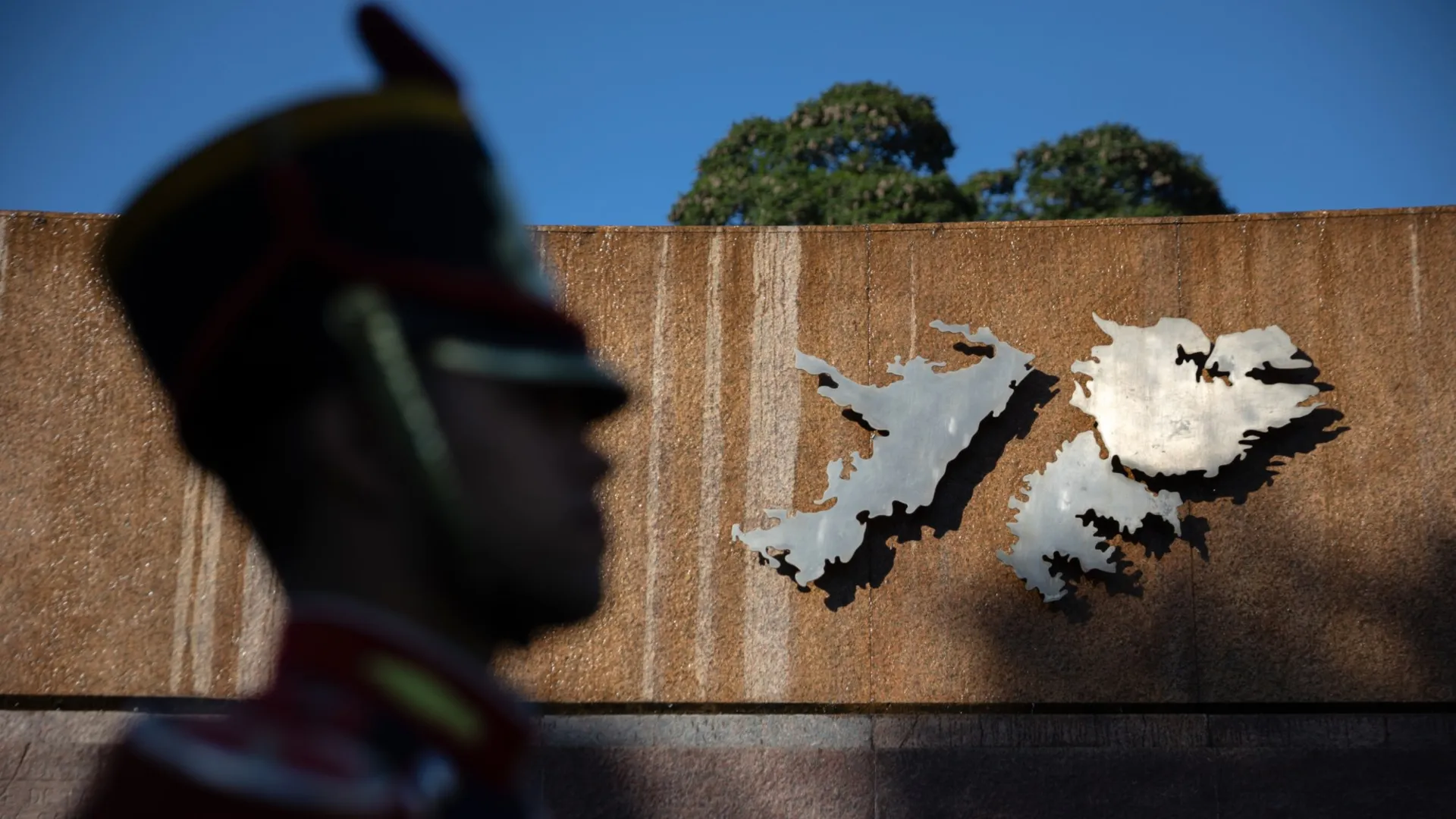
    The history and politics of the Falkland Islands

    When longtime rivals Argentina and the U.K. faced off in their World Cup semifinal match in Atlanta yesterday, with the former prevailing 2-1, extra police officers were deployed for the game. But the rivalry isn’t just a sports one but one with historical tensions rooted in claims to the Falklands. 

    Just ahead of the game, Argentine Vice President Victoria Villarruel pointed to this history, urging her country’s team to put the “brakes on the invaders,” she said on X. “We play against the usurping pirates. This isn’t just another match. I’m not going to be politically correct or cold-hearted; against the English, it’s always something more.”

    Her message alludes to the U.K. overseas territory, known to Argentina and other Spanish-speaking countries as the Islas Malvinas, a sparsely inhabited archipelago about 300 miles from the South American coast. English sailors made the first recorded landing there in 1690, naming the islands after the expedition’s sponsor, Viscount Falkland. Argentina laid claim to the islands in the early 19th century, but a dispute over seal hunting led the Royal Navy to recapture the Falklands in 1833, founding a British colony there in 1840.

    What caused the Falklands War?
    In the early 1980s, Argentina’s right-wing dictatorship was shaken by civil unrest and an economic crisis. The claim to the Islas Malvinas was one issue on which most Argentines agreed, and the military junta believed British Prime Minister Margaret Thatcher would be unlikely to engage in a distant war. Then on April 2, 1982, Argentina invaded the Falklands.

    What was the outcome?
    Thatcher sent a task force of 127 ships and 30,000 men, who retook the islands in a 74-day campaign. A total of 649 Argentine and 258 British lives were lost, and 11,000 Argentines were captured. Ever since, the Falkland Islands have been a self-governing British Overseas Territory, and in a 2013 referendum, 99.8% of the islanders voted to remain British. 

    Why is it still a source of tension?
    Argentina’s constitution makes sovereignty over the Falklands a “permanent and irrevocable objective” — something that 81% of Argentine voters support, according to a 2021 poll. Argentina’s current president, Javier Milei, told the BBC in 2024 that he accepted that the Falkland Islands are “in the hands of the U.K.” But the self-described libertarian has still “vowed to get the islands back through diplomatic channels.”


    Good day 🍸

    … for geriatric gin. A group of retirement home residents in the U.K. has won the top prize at the Gin Masters Awards after distilling its own gin, said The Times. Inhabitants of a Berkley Care home created Golden Hour, which judges praise for its “creamy texture” and “concentrated notes of lemon oil, coriander, juniper and buttery spice.”


    Bad day 📱

    … for parental attention. Parents’ attachments to phone screens can worsen anxiety and insecurity in children and teens, according to a study published in the journal Frontiers in Psychology. Phubbing, when a person ignores the “social setting in front of them in favor of their phone,” has “long-term negative effects” on kids when done around them, said The Guardian.


    Picture of the day

    Summer glow

    Two women dressed in casual summertime kimonos called yukatas take a selfie in front of thousands of lanterns during the Mitama Matsuri Festival, one of the largest summertime Obon festivals commemorating ancestors, at Yasukuni Shrine in Tokyo, Japan.
    Philip Fong / AFP / Getty Images


    Puzzles

    Daily sudoku

    Challenge yourself with The Week’s daily sudoku, part of our puzzles section, which also includes guess the number

    Play here


    The Week recommends

    The most spectacular waterfalls in the world

    Waterfalls are a gift of both sight and sound. They look magnificent, elegantly cascading into canyons and tumbling roughly over cliffs. And the steady din of rushing water and booming splashes only adds to their beauty. These awe-inspiring waterfalls are reminders of how, sometimes, Mother Nature loves to show off.

    Havasu Falls, Arizona
    This legendary waterfall, which “topples off fiery red rock and drops into a turquoise pool,” is so vibrant it almost doesn’t look real, said Travel and Leisure. It’s on the Havasupai Reservation near the Grand Canyon, and to get here, you must have a permit, book a stay at the Havasupai Campground or Havasupai Lodge and then hike (or helicopter) in. 

    Kuang Si Falls, Laos
    These waterfalls start off easy, with shallow pools that spill into wider pools. From there, the main waterfall brings the drama, with a 200-foot drop. During the dry season, visitors can cool off by swimming in the turquoise waters. But if you don’t want to get wet, there are several bridges and viewing platforms to soak in the gorgeous views of the water and surrounding forest.

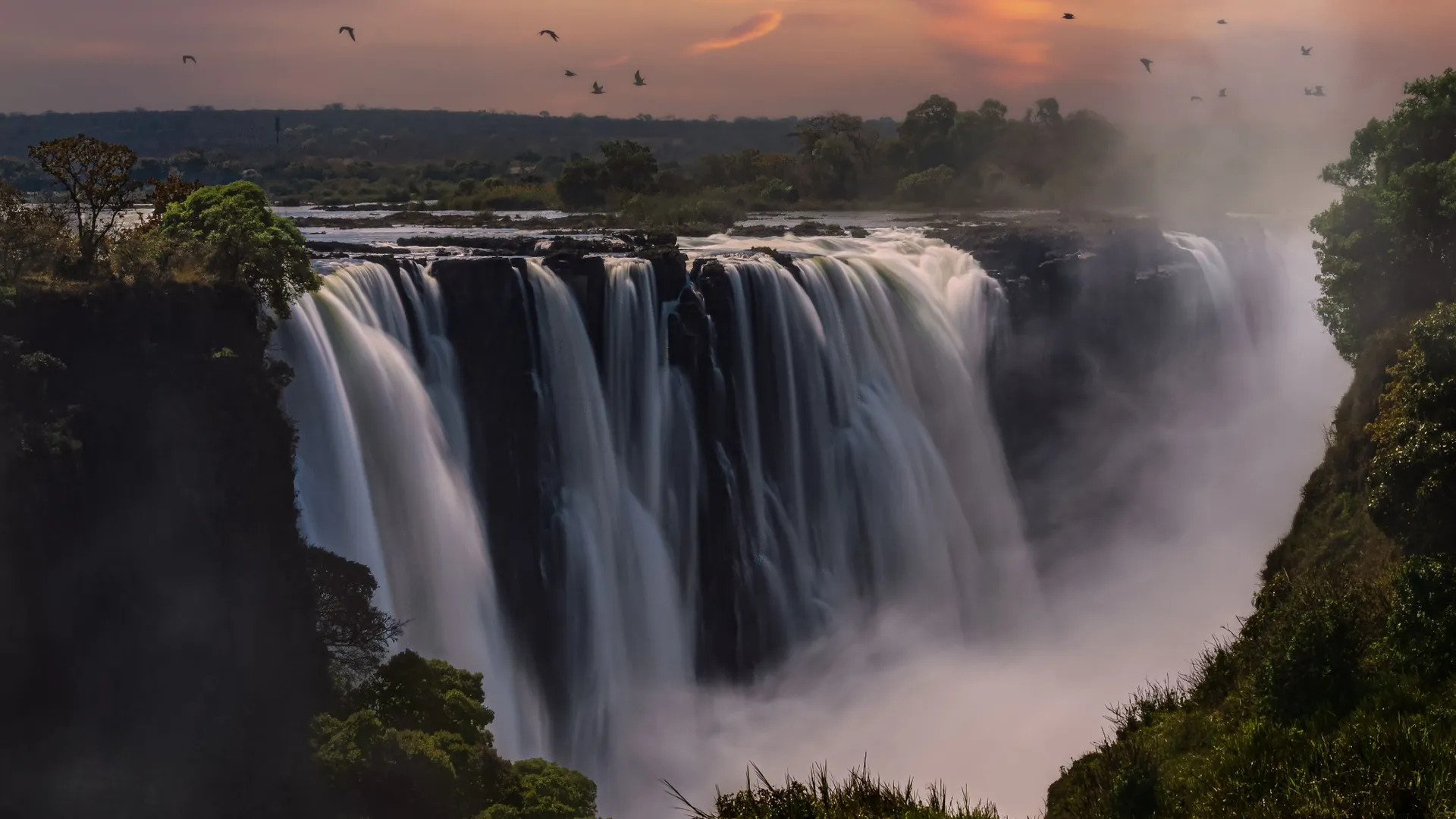
    Victoria Falls, Zambia and Zimbabwe
    The Lozi name for Victoria Falls (pictured above), Mosi-oa-Tunya, translates to the “smoke that thunders” and aptly describes the loud and misty scene. The falls change “dramatically” over the year and are at their most “powerful” after the summer rains, said Forbes, when “enormous clouds of spray” carry over the gorge, “drifting across the surrounding rainforest.”

    Read more


    Poll watch

    Only about one in four (27%) Americans express a “great deal” or “quite a lot” of confidence in 14 core countrywide institutions, one point above the record-low average in 2023, according to a Gallup survey of 1,001 adults. The 14 institutions Gallup has rated annually since 1993 include seven public-sector entities, like the presidency, and seven private-sector entities, like banks.


    INSTANT OPINION

    Today’s best commentary

    ‘Yemen is edging closer to renewed confrontation’
    Ahmed al-Shalafi at Al Jazeera
    Yemen is “slipping out of its fragile deescalation and back into the heart of regional tensions,” says Ahmed al-Shalafi. An incident involving the “Iranian aircraft that entered Yemeni airspace was not merely a dispute over a flight.” It “exposed the extent to which the war in Yemen has become intertwined with the confrontation between the United States and Iran and raised an old question in a new form: Can Yemen remain outside any broader regional escalation?”

    ‘The International Criminal Court, an imperfect but essential safeguard against impunity’
    Le Monde editorial board
    International justice is “not perfect, and at times those who uphold it may undermine it,” says Le Monde editorial board. But this does not “justify the all-out offensive launched by United States Secretary of State Marco Rubio against the International Criminal Court.” Washington has “consistently campaigned against an institution established to limit the principle of national sovereignty — a principle often invoked by perpetrators of the gravest crimes, whether heads of state or political leaders, to escape prosecution.”

    ‘Brace yourself for the AI public relations blitz’
    J.B. Branch at the Chicago Tribune
    While “some AI products have proved fun or useful, Americans are increasingly suspicious of the technology as a whole,” says J.B. Branch. But the “tech bros see it as nothing more than a serious public relations problem. So get ready for the rehabilitation campaign.” Americans “shouldn’t buy that narrative,” as companies “cannot spend two decades building social media platforms that fuel misinformation, destabilize institutions and harm children and then expect approval for a new technology that will hyperscale these problems.”


    WORD OF THE DAY

    microburst

    A localized column of sinking air within a thunderstorm that drops down and spreads out in all directions. Four microbursts “tore through Philadelphia with winds up to 70 mph” this week, downing hundreds of trees and power lines, said The Weather Channel. They brought an unprecedented level of damage, according to the city’s Parks and Recreation Commissioner Susan Slawson.


    Evening Review was written and edited by Theara Coleman, Nadia Croes, Catherine Garcia, Scott Hocker, Justin Klawans, Joel Mathis and Summer Meza, with illustrations by Stephen Kelly and Julia Wytrazek.

    Image credits, from top: Illustration by Stephen P. Kelly / Getty Images; AP Photo / George Walker IV; Tomas Cuesta / Getty Images; Wirestock / Getty Images
     

    Recent editions

    • Morning Report

      Grilled on the Hill

    • Evening Review

      A solution to the housing crisis?

    • Morning Report

      Back-to-back deadly ICE encounters

    VIEW ALL
    TheWeek
    • About Us
    • Contact Future's experts
    • Terms and Conditions
    • Privacy Policy
    • Cookie Policy
    • Advertise With Us
    • FAQ
    Add as a preferred source on Google Add as a preferred source on Google

    The Week is part of Future US Inc, an international media group and leading digital publisher. Visit our corporate site.

    © Future US, Inc. Full 7th Floor, 130 West 42nd Street, New York, NY 10036.