The Week The Week
flag of US
US
flag of UK
UK
https://cdn.mos.cms.futurecdn.net/flexiimages/jacafc5zvs1692883516.jpg

SUBSCRIBE & SAVE

Less than $3 per week

Sign in
  • View Profile
  • Sign out
  • The Explainer
  • The Week Recommends
  • Newsletters
  • Cartoons
  • From the Magazine
  • The Week Junior
  • Student Offers
  • More
    • Politics
    • World News
    • Business
    • Health
    • Science
    • Food & Drink
    • Travel
    • Culture
    • History
    • Personal Finance
    • Puzzles
    • Photos
    • The Blend
    • All Categories
  • Newsletter sign up Newsletter
  • Brand Logo
    Korea pivot, storm damage and Kushner meets Hamas

     
    TODAY’S INTERNATIONAL story

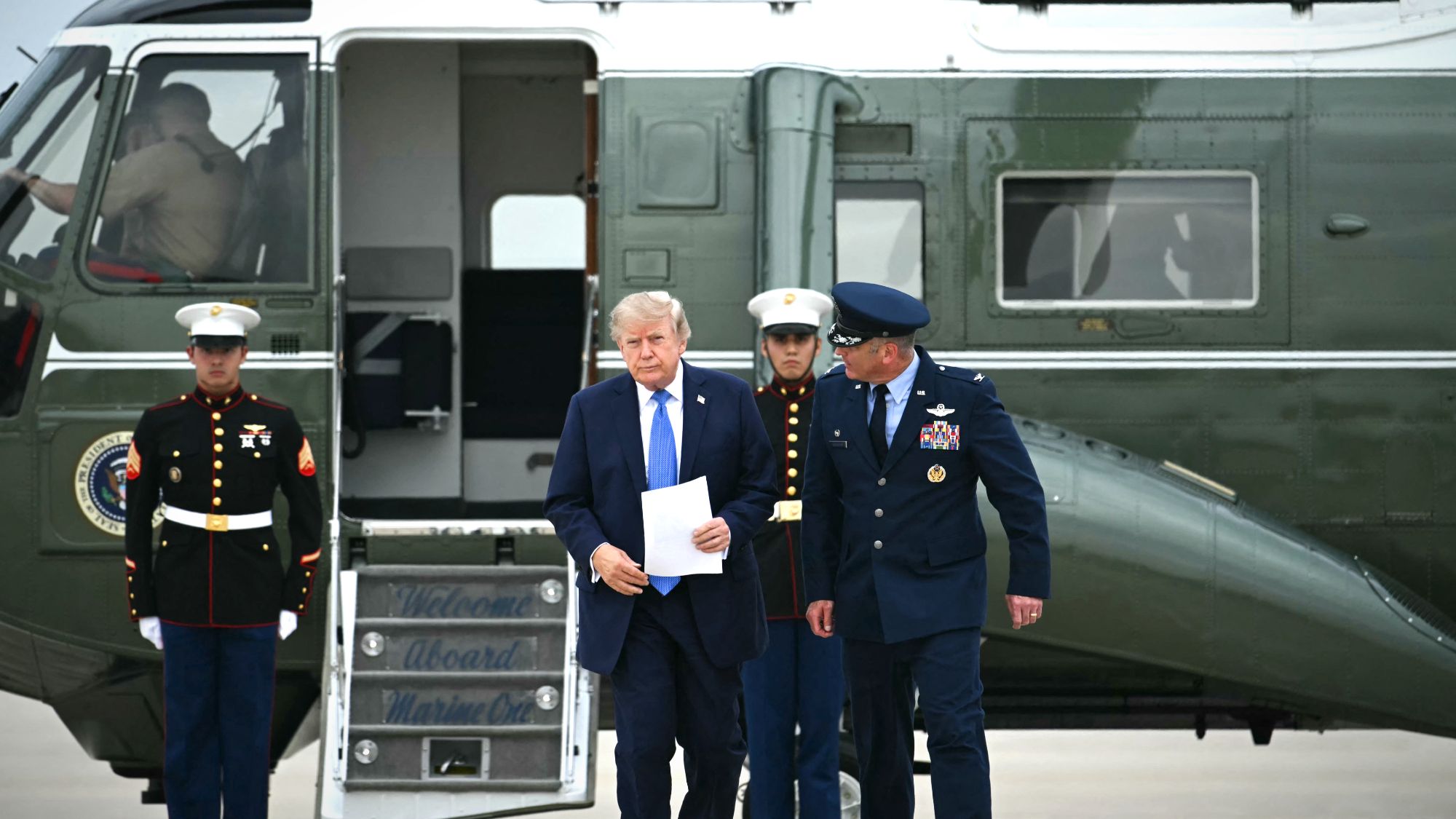
    Trump curtails joint South Korea military drills

    What happened
    President Donald Trump last night said on social media he had instructed the Pentagon to “substantially reduce” America’s annual joint military exercises with South Korea, citing their cost, his own “very good relationship” with North Korean leader Kim Jong Un and Seoul’s disinclination to join the U.S. in the Iran war. The defensive drills, which began today, are “totally inappropriate and hostile,” he said, as North Korea “has been unthreatening and respectful” while he is president.

    Who said what
    This is the “latest example” of Trump “appearing to turn against an ally in favor of a leader that previous administrations have cast as an adversary,” The Associated Press said. North Korea has been “pushing hard to enlarge its nuclear and missile arsenals since Kim’s high-stakes diplomacy with Trump collapsed in 2019.” Trump may intend this as “part of a larger effort to create a diplomatic opportunity” with Kim, Jenny Town at the Stimson Center told Reuters, but “the haphazard nature of this move is unlikely to make much of an impression in Pyongyang.” 

    The Pentagon was “taken aback” by Trump’s “convoluted social media post,” The New York Times said, citing a senior U.S. military official. “We need South Korea as an ally more than ever to maintain deterrence on the Korean Peninsula and to reinforce our industrial base in critical sectors like shipbuilding and semiconductors,” Hudson Institute Asian security expert Patrick Cronin told The Wall Street Journal. “We should not punish Seoul for our lack of a strategy in the Middle East.”

    What next?
    The annual Ulchi Freedom Shield exercises are scheduled to last until Aug. 27. 


    TODAY’S NATURAL DISASTER story

    Indiana, Hawaii reel after heavy storms

    What happened
    A week of relentless storms caused widespread destruction in the Midwest and killed at least seven people in Indiana and another one in Ohio, officials said yesterday. President Donald Trump on Saturday approved Indiana Gov. Mike Braun’s disaster emergency declaration for the entire state. In Hawaii, Hurricane Lala grazed the state over the weekend, battering the islands with heavy rains and winds, but did not make landfall. 

    Who said what
    Lala “continued to punish” Hawaii yesterday with “strong gusts and pounding rain, reaching a total of nearly three feet” in places, The Associated Press said. The Ka’u District on the southeastern side of the Big Island, “appeared to suffer the worst damage,” The New York Times said. There were no confirmed deaths, Gov. Josh Green (D) said. “But boy, a lot of work ahead.”

    Days of heavy rains in Indiana “caused significant flooding along the White River,” including in Indianapolis, The Wall Street Journal said. The National Weather Service in Indianapolis “had never issued a flash flood emergency — its most dire flood alert — until Wednesday,” the Times said. “It issued the warning three times that day.” 

    What next?
    As the Midwest shifts to recovery efforts, the “heavy rainfall has moved eastward” to the central Appalachians, the Journal said, “bringing the threat of flash flooding to West Virginia” this morning.


    TODAY’S MIDEAST Story

    Kushner meets Hamas chief, seeking Gaza advance

    What happened
    Jared Kushner, President Donald Trump’s Mideast envoy and son-in-law, reportedly met yesterday with Hamas political leader Khalil al-Hayya in Egypt, as the White House and regional allies attempt to revive the Trump-backed proposal for peace in Gaza. Representatives from Egypt, Turkey, Qatar and Trump’s Board of Peace also attended. 

    Who said what
    Trump said last month that Hamas had agreed to his Gaza road map, but the plan “​​appeared to hit a dead end” when Israeli Prime Minister Benjamin Netanyahu publicly rejected it, The New York Times said. Hamas leaders yesterday “reaffirmed their commitment to disarm and demilitarize” as Israel withdraws from Gaza, Axios said. Kushner “used the rare direct meeting to press Hamas for tangible steps,” warning that “Israel doesn’t trust the group to follow through.”

    Hamas told mediators it was waiting for Israel to agree to the plan so they could “work out a timetable for implementation,” The Associated Press said. Instead, “Israel has resumed airstrikes in the past few days,” Reuters said. 

    What next?
    Kushner and Board of Peace members Nickolay Mladenov and Tony Blair are set to meet with Netanyahu today. The Israeli leader “faces a challenging election on Oct. 27” with a “coalition that includes ministers taking a harsh line on Gaza,” the AP said, “and it’s not clear whether he will take decisive steps on the ceasefire before then.” 


    It’s not all bad

    Chewing gum made from lablab beans helps counter head and neck squamous cell carcinoma (HNSCC), a common cancer in the lining of the mouth and throat, according to University of Pennsylvania research. Lablab beans contain FRIL, an antiviral protein, and scientists bioengineered the gum to also contain protegrin, an antimicrobial peptide. Saliva samples of HNSCC patients found that the gum reduced three microbes tied to the cancer: human papillomavirus (HPV) levels dropped 93% and two bacteria were cut to nearly zero.


    Under the radar

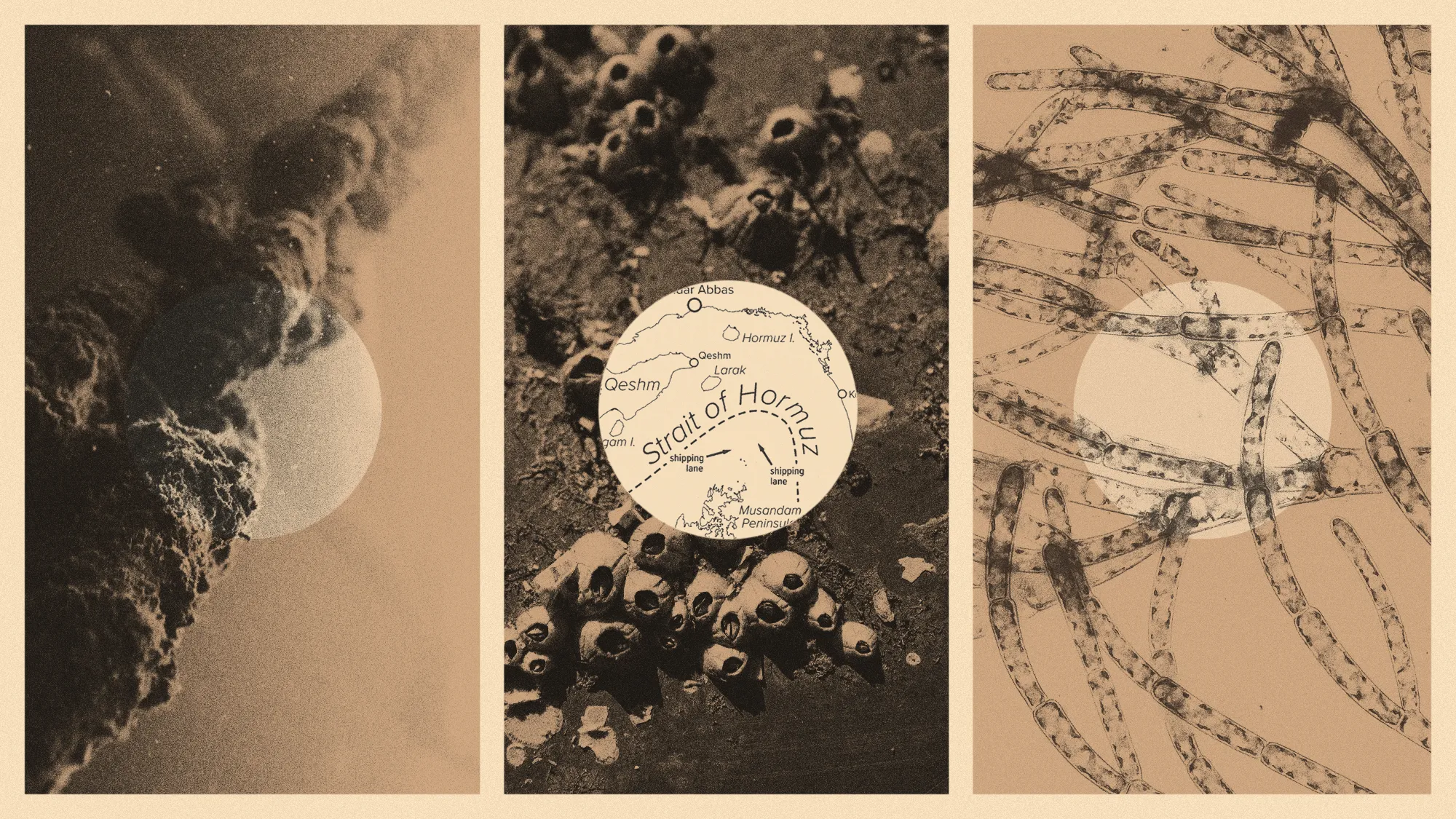
    Ships stuck in the Strait of Hormuz are a marine threat

    There’s trouble brewing in the water. The war with Iran has stranded more than 1,500 ships in the Strait of Hormuz, a waterway connecting the Persian Gulf to the Gulf of Oman, since February. While closure of the strait has led to severe economic consequences, there is also a burgeoning ecological crisis: Invasive species growing on the hulls of the trapped ships could soon voyage across the globe.

    There’s a “high likelihood” that the idle ships in the Strait of Hormuz will “facilitate the extensive spread of economically and ecologically damaging invasive species as they reenter the global shipping network,” according to a study published in the journal Biological Invasions. Ships “normally only remain at anchor in a harbor for one to three days,” said The Guardian. During the current block of the Strait of Hormuz, many vessels have “remained stationary for months, allowing dense marine communities to establish themselves.”

    The marine organisms of the Middle East “can withstand extremes,” Mario Tamburri, a professor at the University of Maryland Center for Environmental Science and the study’s lead author, said to USA Today. They are “tolerant organisms, which makes them good candidates for invasions when they go to a new location.” 

    Marine invasive species “have profound ecological and economic impacts on coastlines across the globe,” said Carolyn Tepolt, a biologist at the Woods Hole Oceanographic Institution and co-author of the study. They are “extremely difficult, if not impossible, to eradicate once they become established.”


    On this day

    August 17, 1807

    Robert Fulton’s North River, the world’s first commercially successful steamboat, embarked on its maiden voyage, heading up the Hudson River from New York City to Albany. The steamboat, later called the Clermont, helped prove that steam power was a viable method of transportation; steamships became ubiquitous on waterways until the early 20th century.


    TODAY’S newspaperS

    ‘Bipartisan fury builds’

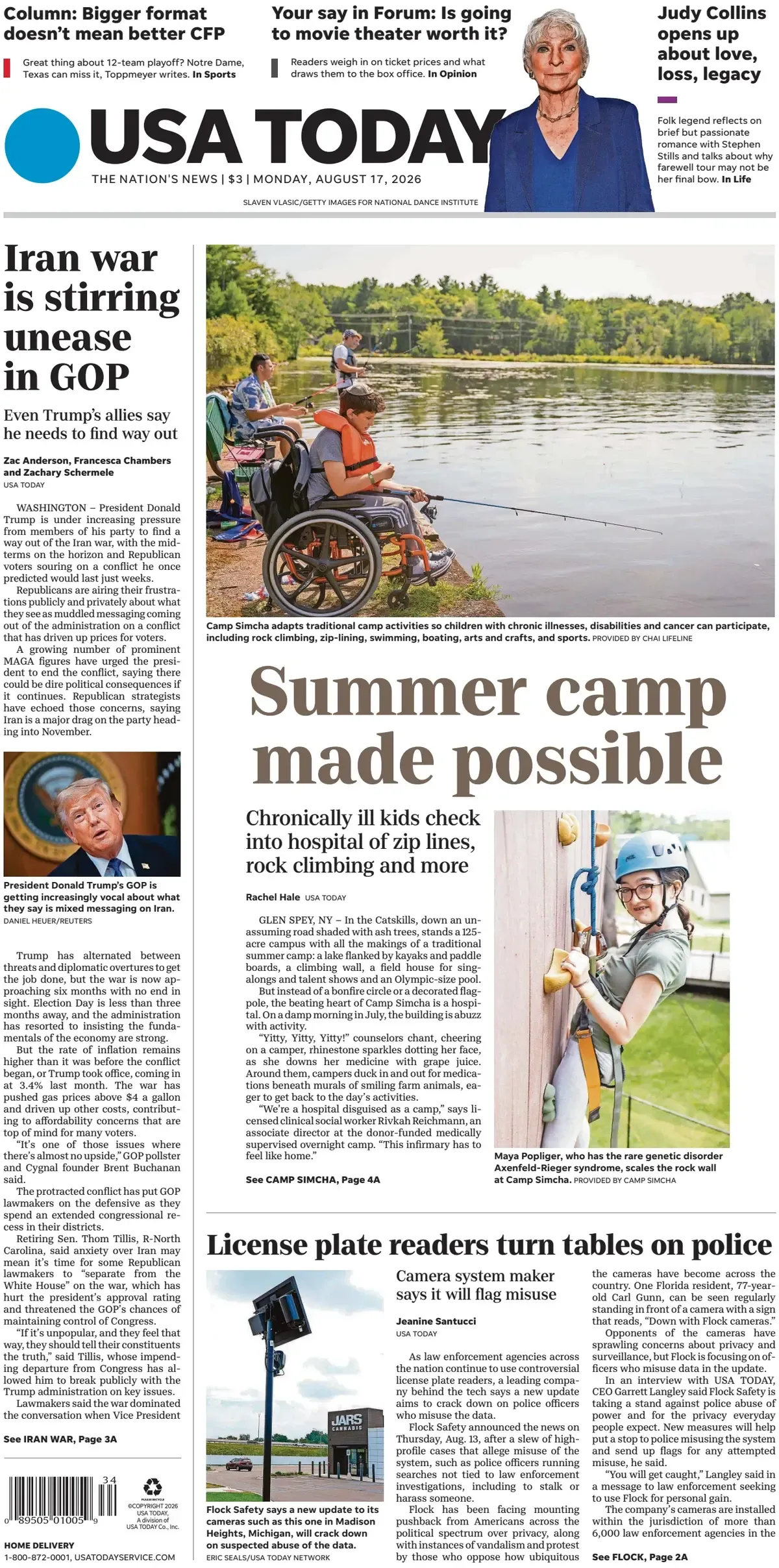
    Attorney General Todd Blanche “won’t pledge that DOJ will be independent,” The Washington Post says on Monday’s front page. “Bipartisan fury builds” as “bulldozers arrive in Big Bend,” despite Texas national park’s natural barriers, says the Los Angeles Times. “Trump’s Mideast envoys to push for Gaza peace plan,” The Kansas City Star says. “Israeli official says kill ‘30 to 40’ nightly in Gaza,” says The Philadelphia Inquirer. “Iran war is stirring unease in GOP,” says USA Today. “U.S. military is tripped up in AI race,” The New York Times says. “Rural Republicans express skepticism” of Texas Gov. Greg Abbott “on data centers,” the Houston Chronicle says. Divisive data center in Kentucky thwarted by “‘country hicks’ who refused $26 million from AI,” says The Wall Street Journal.

    ► See the newspaper front pages


    Tall tale

    No shirt, no shoes, no problem

    Once a month, diners at C.L.A.S.S. Soiree Steakhouse in Florida can enjoy a five-course meal in the nude. Chef and owner Maurad Ali came up with the concept to bring in new customers, and he sells about 20 tickets to each dinner ($250 for men, $150 for women, $300 for couples). The windows are covered so looky-loos can’t sneak a peak, and employees remain fully clothed. “My crew, we are all professionals,” Ali told The Independent.


    Morning Report was written and edited by Helen Brown, Nadia Croes, Catherine Garcia, Scott Hocker, Anya Jaremko-Greenwold, Justin Klawans, Rafi Schwartz and Peter Weber, with illustrations by Stephen Kelly and Julia Wytrazek.

    Image credits, from top: Kent Nishimura / AFP via Getty Images; Jill K. Briggs / AFP via Getty Images; Egyptian Presidency / Handout / Anadolu via Getty Images; Illustration by Stephen P. Kelly / Getty Images
     

    Recent editions

    • Sunday Shortlist

      Big screen Bourdain

    • Saturday Wrap

      Out of ammo

    • Evening Review

      One year of the National Guard in DC

    VIEW ALL
    TheWeek
    • About Us
    • Contact Future's experts
    • Terms and Conditions
    • Privacy Policy
    • Cookie Policy
    • Advertise With Us
    • FAQ
    Add as a preferred source on Google Add as a preferred source on Google

    The Week is part of Future US Inc, an international media group and leading digital publisher. Visit our corporate site.

    © Future US, Inc. Full 7th Floor, 130 West 42nd Street, New York, NY 10036.