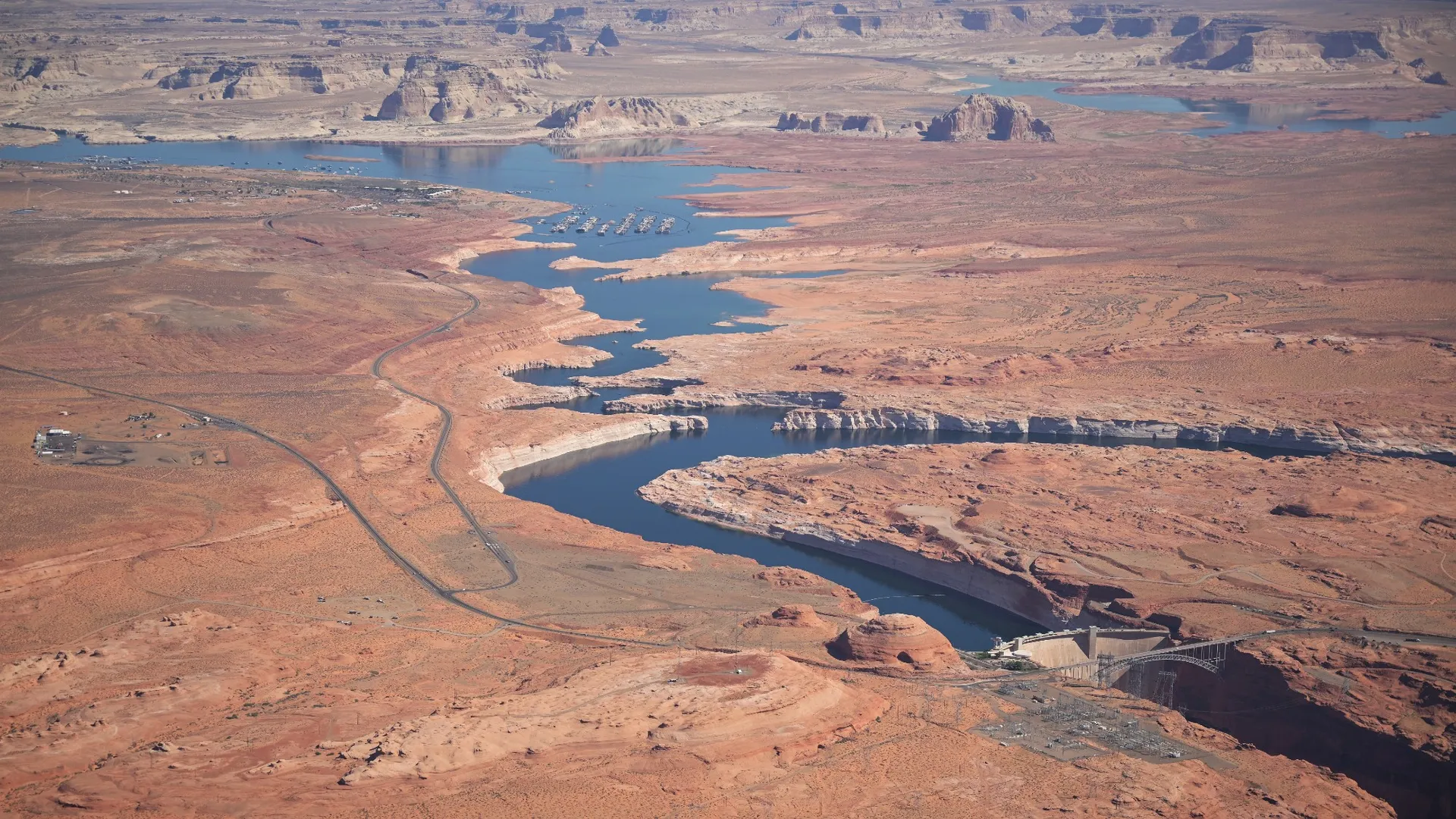
Years of drought and growing demand have taken their toll on the Colorado River, which supplies water and hydropower to 40 million people in seven Western states. Now the moment of crisis has arrived.
The river is “on the brink of disaster,” said The Wall Street Journal. An “unusually warm winter” deprived Colorado and Utah of the snowpack that feeds the river in the spring. That will have literal downstream effects: Lake Powell reservoir in Utah and Arizona “will receive the least amount of water this year” since its creation in 1963.
Western states have struggled for years to divvy up the dwindling supply, and old agreements are expiring. Now the Trump administration is preparing a “drastic” plan to “cut water deliveries to farms, cities and tribes” by a third, said E&E News. “There wasn’t enough water to start with, and there’s still less water,” Interior Secretary Doug Burgum said last month, per The Arizona Daily Star.
The Week
Escape your echo chamber. Get the facts behind the news, plus analysis from multiple perspectives.
SUBSCRIBE & SAVE
Sign up for The Week's Free Newsletters
Join more than 350,000 subscribers and keep yourself informed with a selection of The Week’s most interesting, enlightening and entertaining stories - plus daily puzzles.
Join more than 350,000 subscribers and keep yourself informed with a selection of The Week’s most interesting, enlightening and entertaining stories - plus daily puzzles.
Latest Videos FromThe Week US
Solutions ‘will not be popular’
“The clock is running out on a deal” between Western states to “keep the Colorado River alive,” Mike Gardner said at The Raincross Gazette in Riverside, California. The Interior Department’s proposal would likely face years of legal challenges, but the system of dams and reservoirs along the river “could cease to function due to lack of water” before the lawsuits play out. So the states must find agreement before the federal government imposes one. The “political reality,” though, is that elected officials who agree to water cuts “will not be popular” with their constituents.
States along the river have seen “enormous increases” in water consumption over the last half-century “with no thought for tomorrow,” Steve Hanley said at CleanTechnica. They have been “kicking this can down the road this entire century.” We are getting a “preview of the kind of wrangling” that will become common as “Earth becomes too hot in some places to sustain human life.”
Downsizing agriculture?
It is time to build more water desalination plants on the Pacific Ocean, Greg Walcher said at The Daily Sentinel in Grand Junction, Colorado. If the Colorado River “cannot continue to supply all the people who once relied on it” then desalination plants seem a logical solution to the West’s “seemingly unsolvable water dilemma.” Indeed, Arizona, Nevada and Utah are trying to “buy excess water” from San Diego, said The New York Times. The city built a desalination plant to process Pacific Ocean water in the 1990s and is now poised to sell its “surplus water” across the West.
Such solutions will take time and cutbacks loom in the short term. Farms use about three-fourths of Colorado River water to “grow alfalfa and other kinds of hay to feed cattle,” said the Los Angeles Times. It will be “critical” to “downsize” the sector’s water usage. Some agricultural lands “are going to go out of production,” The University of Colorado Law School’s Anne Castle said to the outlet.