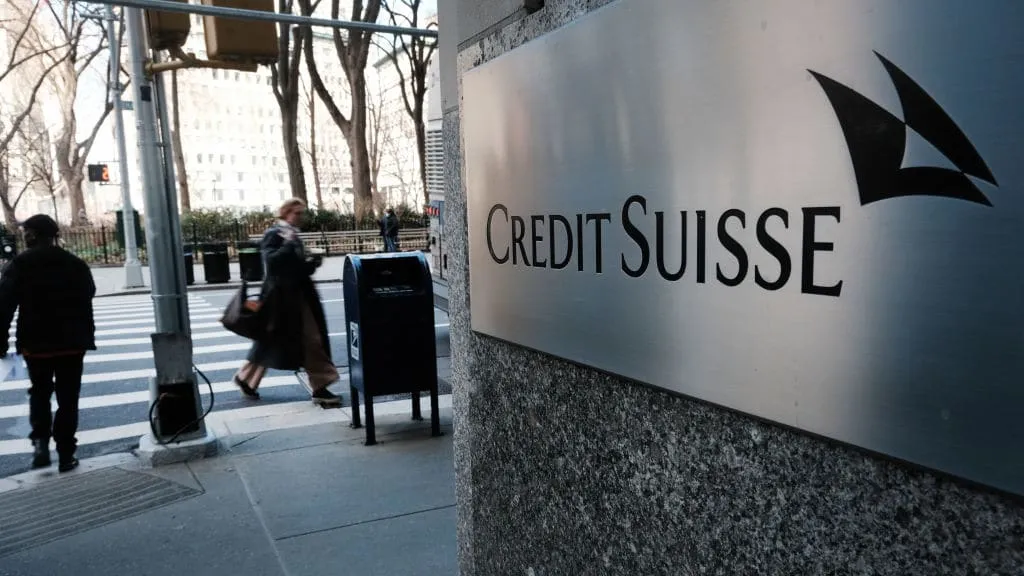
The Swiss government brokered a deal on Sunday for UBS to purchase its longtime rival Credit Suisse for roughly $3.2 billion.
The deal aims to stop a banking crisis spurred by the collapse of Silicon Valley Bank earlier this month. It took a few days to reach an agreement, which Swiss government leaders and regulators said "was the most effective way of reassuring investors about the health of the country's financial sector," The New York Times writes.
UBS is Switzerland's largest bank, and its takeover of Credit Suisse, which was founded in 1856 to finance Switzerland's rail network, "has laid the foundation for greater stability both in Switzerland and internationally," Karin Keller-Sutter, a member of the Swiss Federal Council, said Sunday.
The Week
Escape your echo chamber. Get the facts behind the news, plus analysis from multiple perspectives.
SUBSCRIBE & SAVE
Sign up for The Week's Free Newsletters
Join more than 350,000 subscribers and keep yourself informed with a selection of The Week’s most interesting, enlightening and entertaining stories - plus daily puzzles.
Join more than 350,000 subscribers and keep yourself informed with a selection of The Week’s most interesting, enlightening and entertaining stories - plus daily puzzles.
Latest Videos FromThe Week US
The agreement has UBS paying 0.76 of one of its shares for each share of Credit Suisse, with the Swiss National Bank agreeing to lend up to 100 billion Swiss francs so the deal can be carried out. "This is a historic day in Switzerland, but frankly, a day we hoped would not come," UBS Chairman Colm Kelleher said Sunday.
Last week, after Credit Suisse's shares and bonds floundered and depositors withdrew billions of dollars, the Swiss central bank gave the company a $54 billion lifeline to shore up liquidity. In the last few years, Credit Suisse has faced several scandals, including an espionage scheme, and changes in management, and a sell-off in shares began in 2021 following losses linked to the collapse of Greensill Capital and the investment fund Archegos, Reuters reports.