Sign up to get Today’s Best Articles in your inbox
Join 350,000+ subscribers and keep yourself informed with a selection of
The Week’s most interesting, enlightening and entertaining stories - plus daily puzzles.
You are now subscribed
Your newsletter sign-up was successful
Want to add more newsletters?
An account already exists for this email address, please log in.
The best books of 2025
A deep dive into the site of a mass shooting, a new release from the author of ‘Atonement’ and more
It was a banner year for literature, with a plethora of intriguing and memorable releases. The publishing world delivered boundary-pushing fiction alongside heavily researched and introspective nonfiction in 2025. Here are the best books of the year — ones that stood out among a host of excellent tomes.
‘A Flower Traveled in My Blood: The Incredible True Story of the Grandmothers Who Fought to Find a Stolen Generation of Children’ by Haley Cohen Gilliland
Journalist Haley Cohen Gilliland’s debut tackles the story of Argentina’s Dirty War through the lens of the Abuelas de Plaza de Mayo, a “courageous group of women who, since 1977, have worked tirelessly to locate the country’s stolen children and grandchildren,” said Time. The book primarily focuses on one woman, Rosa Tarlovsky de Roisinblit, and her “unwavering fight to find her missing grandson.”
Her battle for justice alongside the other Abuelas would “put them at odds with Argentina’s government” and lead to the “emergence of important new DNA science, which would result in the identification of 140 children who were kidnapped by the state.” Exhilarating, “emotional and exhaustively researched,” Gilliland’s book is a “testament to those grandmothers who never gave up” and a “heart-wrenching reminder that their work is far from over.” ($30, Simon and Schuster, Amazon)
The Week
Escape your echo chamber. Get the facts behind the news, plus analysis from multiple perspectives.
Join more than 350,000 subscribers and keep yourself informed with a selection of The Week’s most interesting, enlightening and entertaining stories - plus daily puzzles.
Join more than 350,000 subscribers and keep yourself informed with a selection of The Week’s most interesting, enlightening and entertaining stories - plus daily puzzles.
‘Book of Lives: A Memoir of Sorts’ by Margaret Atwood
The renowned author, best known for “The Handmaid’s Tale,” tells her life story in this “full, expansive and joyful” memoir, said The Washington Post. In it, Atwood describes her life as “radically unproscribed, prolific and hearty.” The book highlights the author’s “energy, generosity, focus and vigor,” as well as her “Canadian modesty, self-deprecation and good cheer.” Fans of hers will love the book, and for aspiring authors, it will “offer a model of productivity.” ($35, Penguin Random House, Amazon)
‘The Buffalo Hunter Hunter’ by Stephen Graham Jones
This horror and historical fiction mashup is a “weirdly satisfying and bloody reckoning with some of America’s most shameful history,” Kirkus Review. In this vampire western, Stephen Graham Jones weaves a “rich tapestry that winds around questions of identity, heritage and historical truth,” based on a “real historical atrocity,” the Marias Massacre, in which nearly 200 Native people were killed by the U.S. Army in 1870.
The pacing is surprisingly slow for a “tale with a truly visceral amount of carnage.” Nevertheless, “by the time the book winds back around,” it is as much an “autopsy of institutionalized treachery” as a “demonization of its tragic and terrifying ‘villain.’” ($30, Simon and Schuster, Amazon)
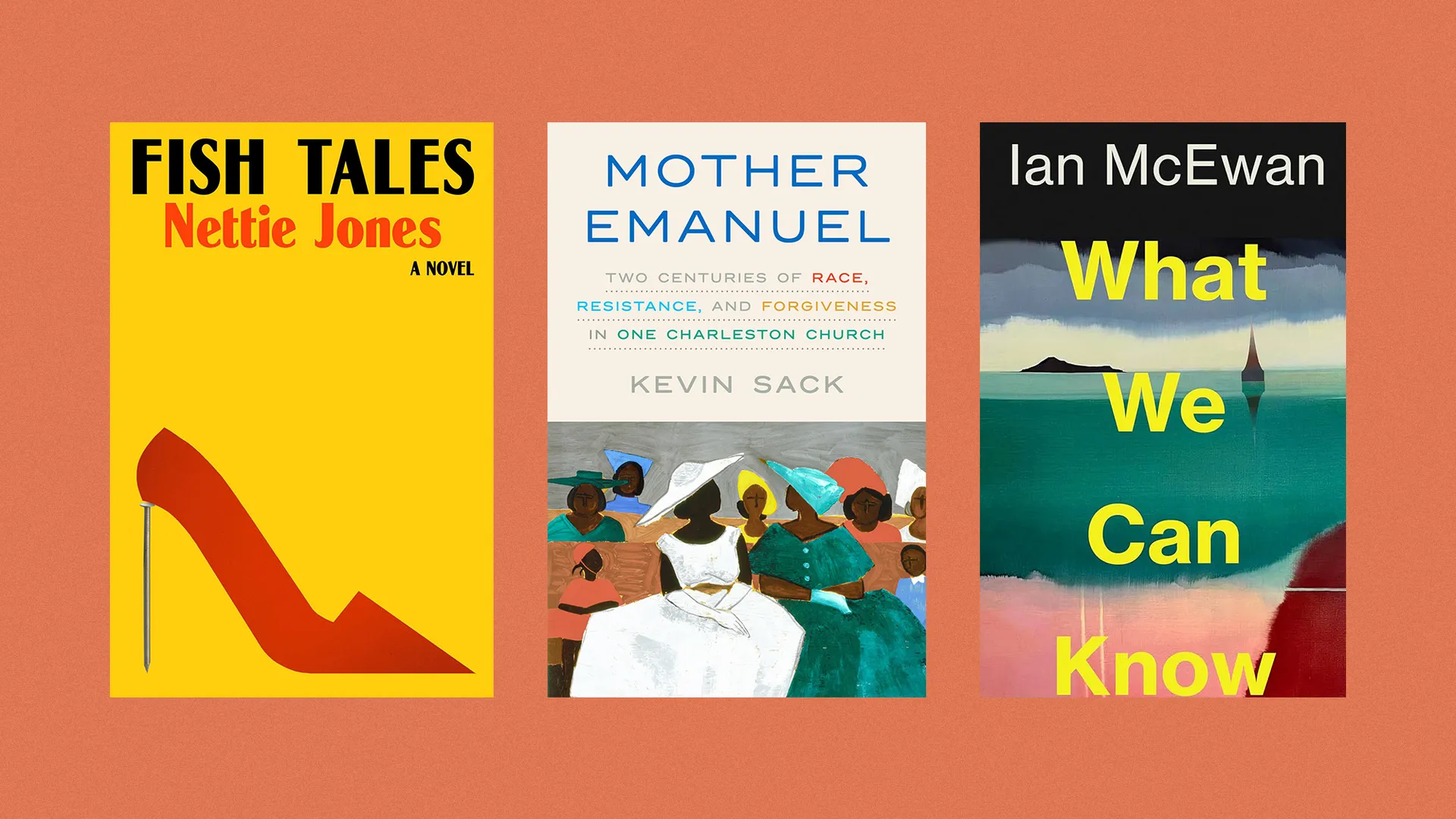
‘Fish Tales’ by Nettie Jones
Toni Morrison acquired and initially published this African American novelist’s manuscript in 1984. Once deemed a promising new author, Jones largely disappeared from the literary scene after releasing her second, and last, book in 1989.
Sign up to get Today’s Best Articles in your inbox
A free daily email with the day’s biggest news and analysis – and the best features from TheWeek.com
This year, her debut was finally rereleased. "Fish Tales" is a “burst of authentic energy, a rush of life from start to finish,” said the Chicago Review of Books. The novel follows the protagonist, Lewis Jones, as she navigates 1970s New York and Detroit, in a tale marked by a string of lovers from her youth into her late thirties. Hers is a “unique adventure, unafraid to display the grittiness and brutal ecstasy of a life of fast liaisons.”
Though the book was dismissed initially as smut, the novel is “about far more than the enjoyment of sex;” it is about “sadness and pain that cannot be erased by bright city lights.” It is a story of “trauma, confusion, lost souls” and a “wrathful love that may never know peace.” ($27, Macmillan, Amazon)
‘Katabasis’ by R.F. Kuang
“Yellowface” author R.F. Kuang turns her critical eye from the publishing world to academia, with an added twist of fantasy in her latest novel. The story follows Alice Law as she journeys through hell to secure a recommendation from her fallen mentor, Cambridge professor Jacob Grimes, widely regarded as the greatest magician in the world.
That “Katabasis” is a “fun, engaging novel is clear from the start," said NPR. What makes this novel shine is “the way it is happy being goofy, playful and campy,” but then “doesn’t shy away from being deep, smart, well-researched, innovative and surefooted” as it “pulls readers into a new magic system.” Kuang is “in control at all times,” and the “ease with which she navigates between the silly and the sublime is just one of the reasons she is one of the biggest names in contemporary fiction.” ($36, HarperCollins, Amazon)
‘Mother Emanuel: Two Centuries of Race, Resistance, and Forgiveness in One Charleston Church’ by Kevin Sack
“Mother Emanuel” is a “masterpiece” that tells the story of Emanuel African Methodist Episcopal Church in Charleston, South Carolina, which is sadly now best known as the site of a mass shooting by a white supremacist that killed nine congregants on June 17, 2015, said The New York Times. Former Times reporter Kevin Sack delivers a “dense, rich, captivating narrative,” featuring “vivid prose, prodigious research and a palpable emotional engagement that is disciplined by a meticulous attention to the facts.”
Over the course of a decade, he consulted a collection of scholarly sources and primary texts, and interviewed scores of Emanuel’s congregants, historians and theologians. The book’s pages “teem with information” often “eloquently conveyed,” leaving his readers “as enthralled as he is with his expansive, inspiring and hugely important subject.” ($35, Penguin Random House, Amazon)
‘Stone Yard Devotional’ by Charlotte Wood
This highly acclaimed book from Australian novelist Charlotte Wood was shortlisted for the 2024 Booker Prize before making its stateside debut earlier this year. The story follows a burnt-out, unnamed narrator as she seeks refuge at a cloistered convent in rural Australia.
She is forced to reckon with her past through the lens of three key events: a mouse plague, the discovery of a nun's skeletal remains and a visit from a celebrity activist nun. The surrounding apocalypse is “not so much the plot of the book as its anchor,” grounding the novel’s “ruminations on forgiveness and regret, on how to live and die, if not virtuously, then as harmlessly as possible,” said The New York Times. Wood offers readers a “wise, consoling novel for disquieting times,” said Kirkus Review. ($19, Penguin Random House, Amazon)
‘What We Can Know’ by Ian McEwan
In his latest novel, Ian McEwan takes readers to the year 2119, where the “humanities are still in crisis,” said The New Yorker. The literary detective story combines science fiction with elements of a thriller as the protagonist, scholar Thomas Metcalfe, investigates a mysterious poem from 2014.
Much of the novel’s charm “lies in its re-creation of our era as seen from the future.” The book feels like “a direct descendant of ‘Atonement,’” McEwan’s “most beloved work.” The new book suggests that “human beings have always been declinist, underselling the riches of the present and romanticizing what earlier generations merely made do with.” ($30, Penguin Random House, Amazon)
Theara Coleman has worked as a staff writer at The Week since September 2022. She frequently writes about technology, education, literature and general news. She was previously a contributing writer and assistant editor at Honeysuckle Magazine, where she covered racial politics and cannabis industry news.