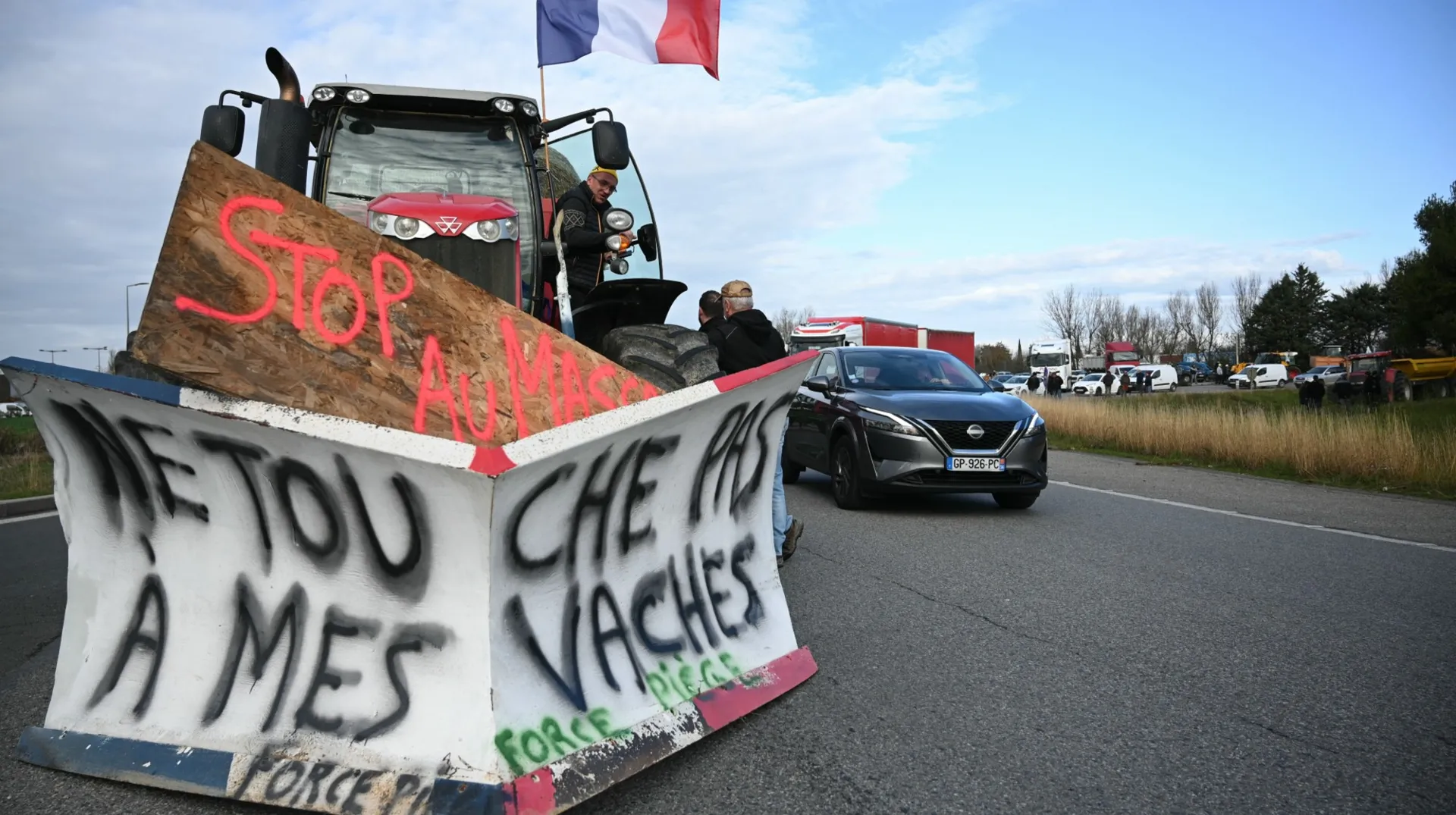
Officials in France have called for a Christmas truce as protests over government efforts to cull entire cow herds showing signs of a skin disease continue nationwide. For more than a week, farmers have blocked roadways and dumped manure outside government buildings. Meanwhile, authorities press on with their controversial plan to stem the outbreak of nodular dermatitis, also known as lumpy skin disease, an insect-borne infection that affects cattle but poses little risk to humans.
Authorities are claiming early success with containment. But French protesters have only sharpened their criticisms against the government as a broader movement of trade-based discontent sweeps the country.
‘Excessive and cruel’ culling policy
The outbreak is an “absolute emergency,” said Prime Minister Sébastien Lecornu in an address to the National Assembly on Tuesday. To that end, the government has “put all its hopes in vaccination” into an “ambitious” plan requiring the full inoculation of 1,000 farms in the Ariège department by Dec. 31, and some three-quarters of a million cattle that “must receive an injection as soon as possible,” said Le Monde. Such an expansive plan poses a “logistical and human challenge” amid tensions between veterinarians “tasked with both culling and vaccinating” herds and farmers who reject the “systematic culling of herds where the disease is detected.” This “toxic climate” between the two professions is “weighing on the vaccination campaign.”
The Week
Escape your echo chamber. Get the facts behind the news, plus analysis from multiple perspectives.
SUBSCRIBE & SAVE
Sign up for The Week's Free Newsletters
Join more than 350,000 subscribers and keep yourself informed with a selection of The Week’s most interesting, enlightening and entertaining stories - plus daily puzzles.
Join more than 350,000 subscribers and keep yourself informed with a selection of The Week’s most interesting, enlightening and entertaining stories - plus daily puzzles.
Latest Videos FromThe Week US
Protesters who have blocked roads and assaulted government buildings contend that the policy of culling entire herds over a single infection is “excessive and cruel,” said Reuters. But the “economic consequences” of unchecked lumpy skin disease are “severe,” as it can “devastate herd productivity” and “trigger international trade restrictions,” said Bovine Veterinarian.
While agricultural unions Conféderation Rurale and Conféderation Paysanne have accused the government’s policy of being “brutally applied” and unnecessary given selective culling and vaccinations, “most vets disagree,” said the BBC. Complicating things further is an abiding concern among French authorities that the fight over lumpy skin disease could “snowball into a wider movement” among local farmers who have fallen “under growing threat from the imposition of EU norms” and foreign competition.
'Volatile cocktail of rural discontent'
The civil unrest and disruptive protests that have blocked French motorways for days were “initially sparked” by frustration over the cullings and vaccinations, but they have since “expanded to cover wider discontent” over the EU’s Mercosur trade agreement with a group of South American nations, said The Connexion. Many farmers have accused the deal, whose official ratification has been pushed off until early 2026, of leading to “massive imports of products not meeting French standards,” said Reuters.
The combination of lumpy skin frustrations and broader trade anxieties has created a “volatile cocktail of rural discontent and growing protest,” said France 24. Along with Italy, France now leads EU nations in “opposition to the deal,” said Al Jazeera, and has coordinated with several member nations to “force a postponement” on the final vote.