Sign up to get Today’s Best Articles in your inbox
Join 350,000+ subscribers and keep yourself informed with a selection of
The Week’s most interesting, enlightening and entertaining stories - plus daily puzzles.
You are now subscribed
Your newsletter sign-up was successful
Want to add more newsletters?
An account already exists for this email address, please log in.
Melting Arctic ice is causing UK winters to get colder
New research suggests link between the Arctic melt and recent snowier winters
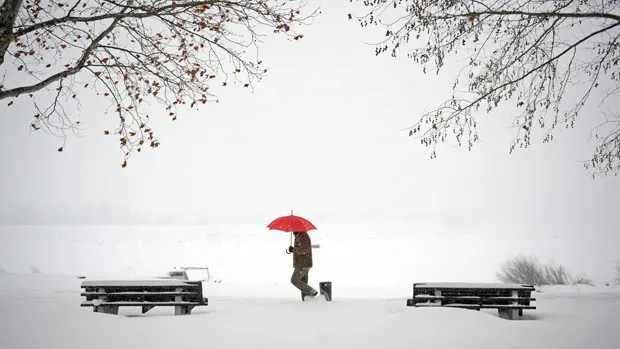
THE COLD, snowy northern hemisphere winters of the last few years may be down to the retreat of Arctic sea ice, according to research by American and Chinese scientists.
Rising global temperatures have caused a drop in the area of the Arctic Ocean covered by ice in summer and autumn. That has increased the temperature of Arctic air, according to the research headed by Dr Jiping Liu. This in turn reduces the temperature difference between the Arctic and more southerly latitudes over the Atlantic Ocean, which weakens the northern jet stream, the air current that normally brings Europe and the west its warmer weather. Warmer Arctic weather, it seems, also causes extra evaporation of water from the Arctic Ocean, which then falls as snow across northern latitudes.
The effect could account for the extremely cold weather which has killed hundreds of people across eastern Europe this year - as well as the snowy winters experienced by the British Isles in the two years previous. The Met Office's Adam Scaife told the New Scientist: "The study adds weight to a growing belief that Arctic sea ice is driving an increase of cold winters." He said his own team had also found evidence to support the link. But Dr Scaife warned that Arctic sea ice represents just one factor in a complicated picture. Last year, for example, a study found that small, entirely natural, changes in the Sun's output can also affect winter weather. Then there's the little-understood Arctic Oscillation which causes changes in northern weather through a natural variation in air pressure. However, while these other factors are variable, Arctic ice "is on a pretty consistent downward trend", says Scaife. A big question posed by the new research is whether the UK will get colder winters as Arctic ice melts further. "It's possible that future winters will be colder and snowier, but there are some uncertainties," cautioned Dr Liu. He hopes to clear up these uncertainties with his next project by running the data through various computer-generated climate models.
The Week
Escape your echo chamber. Get the facts behind the news, plus analysis from multiple perspectives.
Join more than 350,000 subscribers and keep yourself informed with a selection of The Week’s most interesting, enlightening and entertaining stories - plus daily puzzles.
Join more than 350,000 subscribers and keep yourself informed with a selection of The Week’s most interesting, enlightening and entertaining stories - plus daily puzzles.