Sign up to get Today’s Best Articles in your inbox
Join 350,000+ subscribers and keep yourself informed with a selection of
The Week’s most interesting, enlightening and entertaining stories - plus daily puzzles.
You are now subscribed
Your newsletter sign-up was successful
Want to add more newsletters?
An account already exists for this email address, please log in.
Why is Iran facing its biggest protests in years?
Iranians are taking to the streets as a growing movement of civic unrest threatens a fragile stability
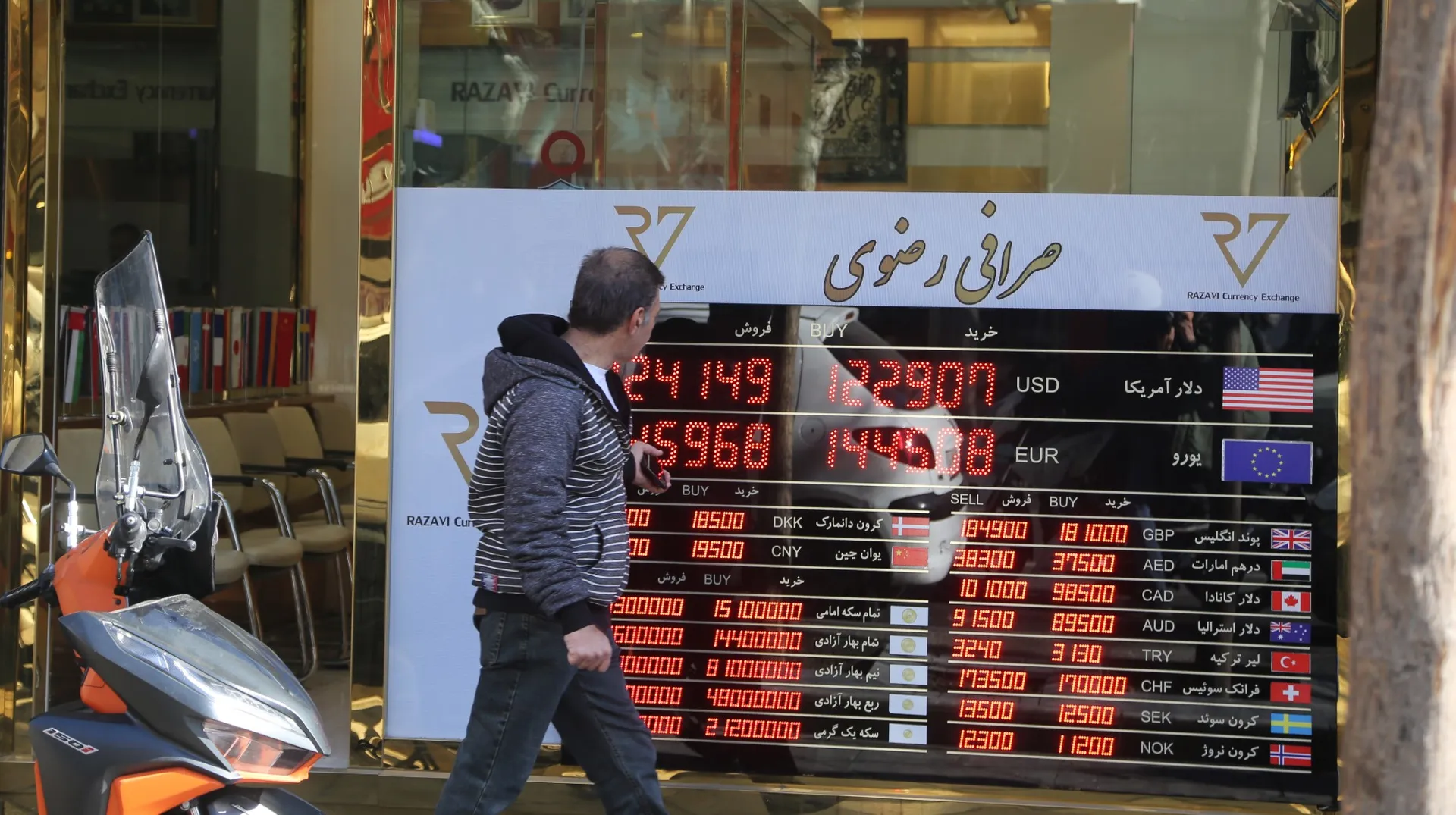
What began as dissatisfaction over a downtrending economy among Tehran-area store owners blossomed into a full-fledged protest movement across Iran this week, with Iranians taking to the streets to decry the broader state of their nation. On campuses in multiple cities, students have clashed with security forces as slogans decrying Iran’s acute economic anxiety give way to calls for regime change and wider national progress. After years marked by destabilizing regional violence and domestic unrest, is Iran on the brink of major change?
What did the commentators say?
Beginning as a strike by “shopkeepers and bazaar merchants” over the rampant devaluation of Iran’s rial currency, the growing protests have since become an “outcry of political anger,” said DW. The Tehran bazaar is seen as a “political early warning system and a potential multiplier,” and demonstrations there affect “not just the food supply but also the conservative backbone of the Islamic Republic.”
While Iran has for years grappled with “raging inflation, anemic economic growth and international isolation,” the situation there has recently “grown acutely worse,” said The Washington Post. The fact that these protests were “sparked by the country’s ‘bazaari’ merchant class” signals that “severe economic distress had spread beyond the poor and to those relatively better off.” The student protesters have “added a youthful contingent” to the growing demonstrations, “increasing domestic pressure over a sinking economy alongside mounting foreign threats,” said The New York Times.
The Week
Escape your echo chamber. Get the facts behind the news, plus analysis from multiple perspectives.
Join more than 350,000 subscribers and keep yourself informed with a selection of The Week’s most interesting, enlightening and entertaining stories - plus daily puzzles.
Join more than 350,000 subscribers and keep yourself informed with a selection of The Week’s most interesting, enlightening and entertaining stories - plus daily puzzles.
“Peaceful livelihood protests are part of social and understandable realities,” said Iranian Prosecutor General Mohammad Movahedi-Azad, according to Al Jazeera. However, any attempt to “turn economic protests into a tool of insecurity, destruction of public property, or implementation of externally designed scenarios” will be met with swift consequences.
Iran’s depreciating currency is “not the only challenge” facing Iranians who live with inflation levels at around 50%, “consistently one of the highest in the world for several years,” said Al Jazeera. The nation is also “facing an exacerbating energy crisis,” and dams leading to all major cities are at “near-empty levels amid a severe water crisis.”
But while the growing demonstrations “mark the latest chapter in growing discontent” in a country where the population “quietly reclaims public spaces and personal freedoms through uncoordinated acts of defiance,” the reaction from Iran’s theocratic leadership has been conspicuously muted, said CNN. Instead, it appears to be “overlooking the growing civil disobedience” to “focus on its own survival.” With “limited options” available, Supreme Leader Ayatollah Ali Khamenei has adopted a “cautious waiting game” and is “avoiding major decisions and drastic strategies despite the mounting domestic challenges.”
What next?
The “widening demonstrations” have since spread from population centers into Iran’s “rural provinces,” resulting in seven of the “first fatalities reported among security forces and protesters,” said NPR. The deaths may signal a “heavier-handed response” moving forward by the government over protests, which have slowed in the capital but “expanded elsewhere.”
Sign up to get Today’s Best Articles in your inbox
A free daily email with the day’s biggest news and analysis – and the best features from TheWeek.com
Iranian President Masoud Pezeshkian, who ran on “promises of good governance,” has agreed to meet protest representatives to “show he’s cut from a different cloth than his hard-line predecessor,” said The Atlantic. But he “doesn’t control the security forces.” So his statements supporting the right to peaceful protest “ring hollow.” To achieve the economic and social stability sought by protesters, the Khamenei regime would need to reach an agreement with the Trump administration that “lifts the sanctions or at least keeps Iran safe from war.”
The Trump administration and Iranian government have “exchanged dueling threats” over the protests, “further escalating tensions” between the two nations, said The Associated Press. The U.S. is “locked and loaded and ready to go” to defend protesters against state violence, President Donald Trump said on his Truth Social platform. But Trump should understand that “interference in this internal issue” would be “equivalent to chaos across the entire region and the destruction of American interests,” said top Khamenei adviser Ali Larijani on X.
Ultimately, if there is to be change, it “cannot be imposed on Iran from the outside,” said Scott Lucas, a professor of American studies at University College Dublin, to DW. Anything seen as endorsing violence against the regime will “give them the pretext to strike back and strike back hard.”
Rafi Schwartz has worked as a politics writer at The Week since 2022, where he covers elections, Congress and the White House. He was previously a contributing writer with Mic focusing largely on politics, a senior writer with Splinter News, a staff writer for Fusion's news lab, and the managing editor of Heeb Magazine, a Jewish life and culture publication. Rafi's work has appeared in Rolling Stone, GOOD and The Forward, among others.



 talking pointsA leadership power vacuum may await Republicans
 QUOTE OF THE DAY‘What kind of culture looks at sexual violence and sees an opportunity for profit? This is rape culture. And it should disturb every single one of us.’
 today’s big questionHow long can US consumers continue their spending spree?