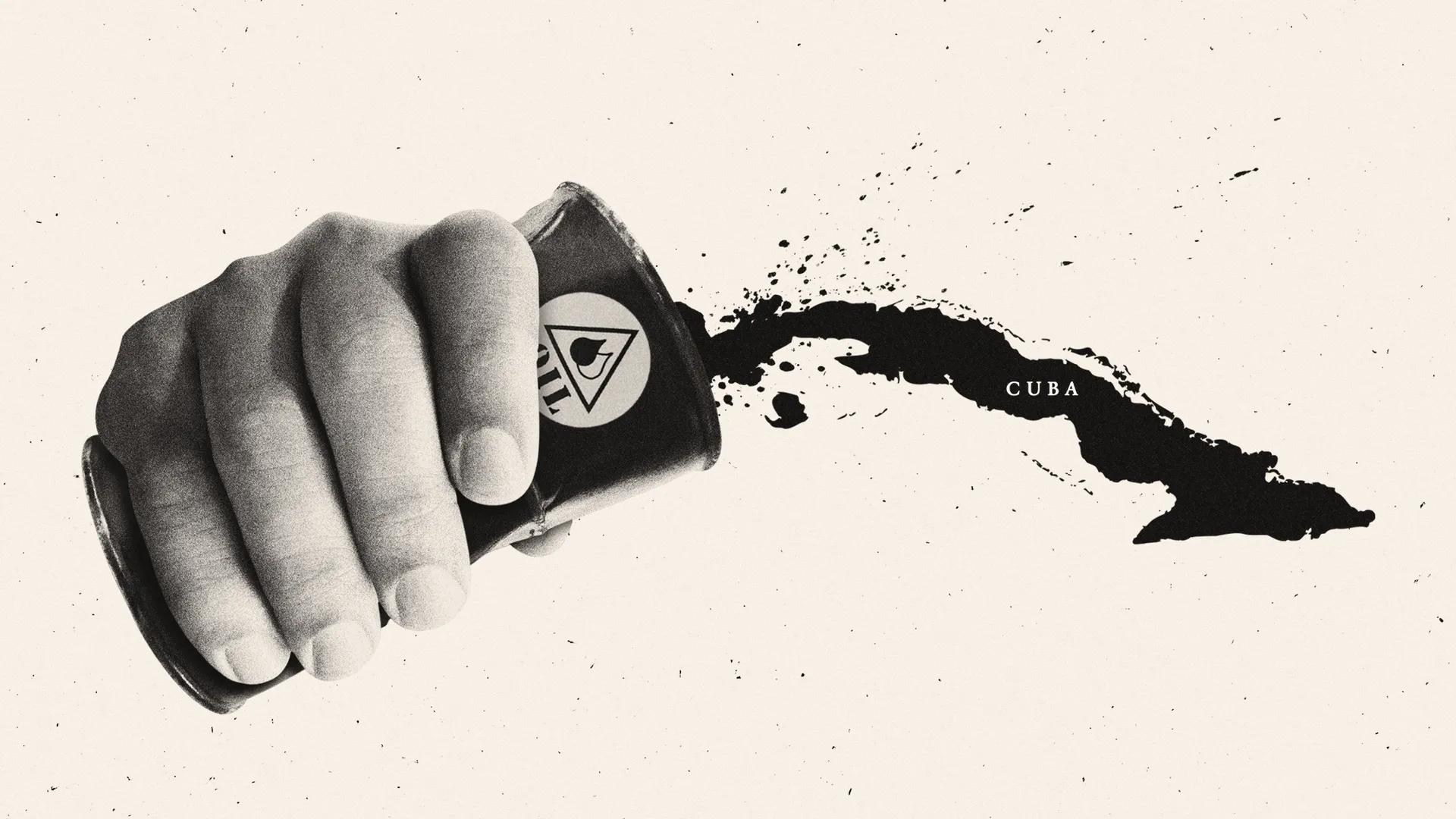
American presidents going back to Dwight Eisenhower have tried to dislodge the Communist regime in Cuba, but none succeeded. President Donald Trump thinks he may have found the pathway by cutting off Havana’s access to oil.
Last Thursday, the president signed an executive order mandating new tariffs on any country selling oil to Cuba during its ongoing energy crisis, said The Associated Press. The Communist government “looks like it’s something that’s just not going to be able to survive,” said Trump.
The White House is “actively seeking regime change in Cuba by the end of the year,” said The Wall Street Journal. American officials believe the country’s economy is “close to collapse,” and the loss of a benefactor in recently deposed Venezuelan leader Nicolás Maduro leaves the regime “fragile.”
The Week
Escape your echo chamber. Get the facts behind the news, plus analysis from multiple perspectives.
SUBSCRIBE & SAVE
Sign up for The Week's Free Newsletters
Join more than 350,000 subscribers and keep yourself informed with a selection of The Week’s most interesting, enlightening and entertaining stories - plus daily puzzles.
Join more than 350,000 subscribers and keep yourself informed with a selection of The Week’s most interesting, enlightening and entertaining stories - plus daily puzzles.
Latest Videos FromThe Week US
If so, the island’s government will not go quietly. Cuba “hit back” at the order, said Bloomberg. Trump’s new directive reveals the “fascist, criminal and genocidal nature” of his government, President Miguel Díaz-Canel said on X.
Analysts say his country has “less than three weeks of fuel left,” and that “transportation, agriculture and other basic services” could collapse if the fuel runs out, said Bloomberg. But the regime’s American opponents say ending the Communist government would be worth the pain. “Sometimes the cure is painful,” said Rep. Carlos Giménez (R-Fla.).
Losing oil supplies will be a “devastating” blow to Cuba’s economy, said William LeoGrande at Responsible Statecraft. But American officials have announced the “imminent end of the Cuban government since 1959” without much success in their efforts. President John F. Kennedy supported the Bay of Pigs invasion, multiple presidents enforced an embargo on the island nation, and President George H.W. Bush thought the end of the Soviet Union would do the trick.
None of them were right. Those failures partly stem from Cuba’s lack of a strong opposition party. Cubans have long found it “easier to emigrate than to confront the government.”
Cuba cannot be fixed by an “outside actor,” said Ricardo Torres at Time. “Geography and history” mean the U.S. will play a role in the country’s path forward, but strong-arming Havana “strengthens hardliners inside Cuba and invites overconfidence outside it.” External shocks may “accelerate the timeline” of a “failing” system, but American leaders cannot determine Cuba’s future. “The root cause of Cuba’s tragedy is Cuban; the remedy for Cuba will be Cuban, too.”
What next?
A recent CIA analysis was “inconclusive” on whether the country’s deteriorating economy would “destabilize the government,” said Reuters. Cuba has suffered under the U.S. embargo, but a drop in tourism following the pandemic and loss of a large number of people under 50 who fled the country for better prospects have compounded its pain. American officials believe Havana is ripe for a push. The Communist government has “no money. They have no oil,” Trump said on Saturday. Pressure will probably nudge Cuba’s leaders to “come to us and want to make a deal.”