Italy predicted to elect far-right leader Giorgia Meloni
A free daily email with the biggest news stories of the day – and the best features from TheWeek.com
You are now subscribed
Your newsletter sign-up was successful
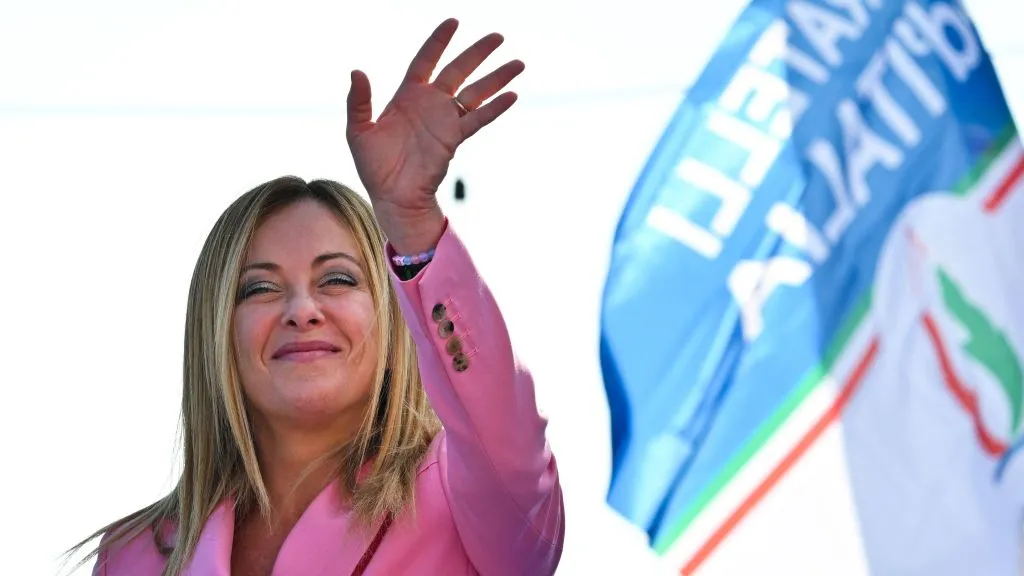
Italy could make history on Sunday by electing Giorgia Meloni to be its first woman prime minister and head of the most conservative Italian government since Benito Mussolini. Meloni, leader of far-right party Brothers of Italy, is currently leading in the polls as the general election draws closer.
Brothers of Italy evolved from a post-fascist lineage that began after Mussolini's death, reports The Washington Post. Meloni is running to replace outgoing centrist Prime Minister Mario Draghi, who resigned earlier this year after being unable to salvage his coalition. Meloni was the only party chief to refuse to join Draghi's coalition, causing a jump in her popularity, Reuters reports.
Meloni's conservative opinions include a push to "blockade the Mediterranean against undocumented immigrants and defend a traditional family identity she says is under attack," among others, the Post summarizes. Her rise also represents a bittersweet moment for women's rights activists, who are both excited by the prospect of a female leader but terrified Meloni might set the movement back. For example, Meloni opposes "pink quotas," an Italian policy intended to ensure a certain percentage of women are present in politics and boardrooms. Many activists see the quotas as key to affording women equal access and opportunity, says The New York Times.
The Week
Escape your echo chamber. Get the facts behind the news, plus analysis from multiple perspectives.
Sign up for The Week's Free Newsletters
From our morning news briefing to a weekly Good News Newsletter, get the best of The Week delivered directly to your inbox.
"I dream of a nation where people who have had to lower their heads for many years, pretending that they have different ideas so as not to be ostracized, can now say what they think," Meloni said at a rally last week.
A free daily email with the biggest news stories of the day – and the best features from TheWeek.com
Devika Rao has worked as a staff writer at The Week since 2022, covering science, the environment, climate and business. She previously worked as a policy associate for a nonprofit organization advocating for environmental action from a business perspective.
-
Buddhist monks’ US walk for peaceUnder the Radar Crowds have turned out on the roads from California to Washington and ‘millions are finding hope in their journey’
-
American universities are losing ground to their foreign counterpartsThe Explainer While Harvard is still near the top, other colleges have slipped
-
How to navigate dating apps to find ‘the one’The Week Recommends Put an end to endless swiping and make real romantic connections
-
Judge rejects California’s ICE mask ban, OKs ID lawSpeed Read Federal law enforcement agents can wear masks but must display clear identification
-
Lawmakers say Epstein files implicate 6 more menSpeed Read The Trump department apparently blacked out the names of several people who should have been identified
-
Japan’s Takaichi cements power with snap election winSpeed Read President Donald Trump congratulated the conservative prime minister
-
‘The West needs people’Instant Opinion Opinion, comment and editorials of the day
-
‘Various international actors hope to influence the result for their own benefit’Instant Opinion Opinion, comment and editorials of the day
-
Trump sues IRS for $10B over tax record leaksSpeed Read The president is claiming ‘reputational and financial harm’ from leaks of his tax information between 2018 and 2020
-
Trump, Senate Democrats reach DHS funding dealSpeed Read The deal will fund most of the government through September and the Department of Homeland Security for two weeks
-
How ‘Manchesterism’ could change the UKThe Explainer The idea involves shifting a centralized government to more local powers