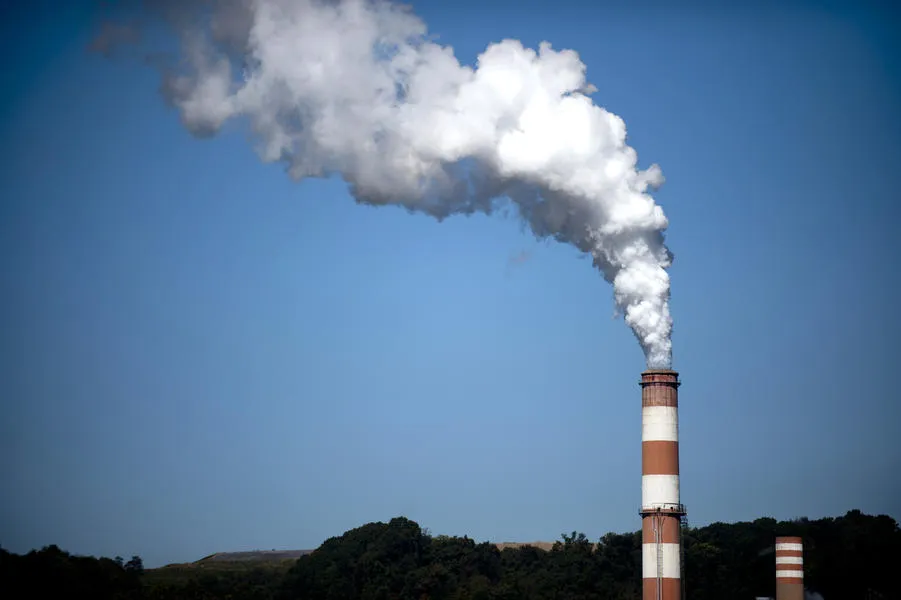
Proposed EPA rule will attempt to reduce carbon emissions 30 percent by 2030
Jeff Swensen/Getty Images
On Monday, the Obama administration is expected to formally propose new regulations that aim to cut U.S. greenhouse gas-emissions from existing power plants 30 percent by 2030, the Los Angeles Times reports. This new rule would set specific targets for carbon dioxide reductions in each state, and allow local officials to choose how to best meet the goals.
The Environmental Protection Agency (EPA) rule will target power plants that burn fossil fuels, which emit 40 percent of America's carbon dioxide, more than other sources. States will be charged with reducing carbon dioxide emissions 30 percent from the 2005 levels, when emissions were 10 percent higher than in 2012. States will be encouraged to use more renewable energy and to become more energy efficient.
If the proposal withstands the coming swarm of lawsuits and attacks from Congress (both political and legislative), it will eventually phase out hundreds of the 600 or so coal-fired power plants in the U.S., The New York Times reports, while ushering in systemic changes to how America generates and deploys energy.
The Week
Escape your echo chamber. Get the facts behind the news, plus analysis from multiple perspectives.
Sign up for The Week's Free Newsletters
From our morning news briefing to a weekly Good News Newsletter, get the best of The Week delivered directly to your inbox.
A free daily email with the biggest news stories of the day – and the best features from TheWeek.com
Catherine Garcia has worked as a senior writer at The Week since 2014. Her writing and reporting have appeared in Entertainment Weekly, The New York Times, Wirecutter, NBC News and "The Book of Jezebel," among others. She's a graduate of the University of Redlands and the Columbia University Graduate School of Journalism.
-
Moon dust has earthly elements thanks to a magnetic bridgeUnder the radar The substances could help supply a lunar base
-
World’s oldest rock art discovered in IndonesiaUnder the Radar Ancient handprint on Sulawesi cave wall suggests complexity of thought, challenging long-held belief that human intelligence erupted in Europe
-
Claude Code: the viral AI coding app making a splash in techThe Explainer Engineers and noncoders alike are helping the app go viral
-
The world is entering an ‘era of water bankruptcy’The explainer Water might soon be more valuable than gold
-
Climate change could lead to a reptile ‘sexpocalypse’Under the radar The gender gap has hit the animal kingdom
-
The former largest iceberg is turning blue. It’s a bad sign.Under the radar It is quickly melting away
-
How drones detected a deadly threat to Arctic whalesUnder the radar Monitoring the sea in the air
-
‘Jumping genes’: how polar bears are rewiring their DNA to survive the warming ArcticUnder the radar The species is adapting to warmer temperatures
-
Environment breakthroughs of 2025In Depth Progress was made this year on carbon dioxide tracking, food waste upcycling, sodium batteries, microplastic monitoring and green concrete
-
Crest falling: Mount Rainier and 4 other mountains are losing heightUnder the radar Its peak elevation is approximately 20 feet lower than it once was
-
Death toll from Southeast Asia storms tops 1,000speed read Catastrophic floods and landslides have struck Sri Lanka, Indonesia, Thailand and Malaysia