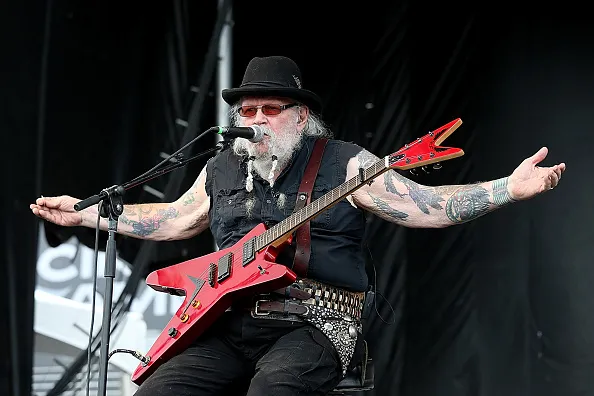
David Allan Coe, of 'Take This Job and Shove It' fame, owes the IRS $466,000
A free daily email with the biggest news stories of the day – and the best features from TheWeek.com
You are now subscribed
Your newsletter sign-up was successful
Country singer/songwriter David Allan Coe pleaded guilty on Monday to income tax evasion for failing to pay the IRS between 2008 and 2013. Coe, 76, owes at least $466,000 in back taxes, interest, and penalties, and he faces up to three years in jail.
Iframe Code
Article continues belowThe Week
Escape your echo chamber. Get the facts behind the news, plus analysis from multiple perspectives.
Sign up for The Week's Free Newsletters
From our morning news briefing to a weekly Good News Newsletter, get the best of The Week delivered directly to your inbox.
Coe is most famous for his 1977 song "Take This Job and Shove It," a No. 1 record for Johnny Paycheck, but he also wrote the Tanya Tucker hit "Would You Lay With Me (In a Field of Stone)" and scored some hits of his own in the 1970s and '80s, including the classic "You Never Even Called Me By My Name":
Coe still performs at least 100 shows a year, the U.S. Attorney's Office in Cincinnati says, and asks to be paid in cash (but not $50 bills, because "he believed they were bad luck and would not gamble with them," the government said). That cash arrangement was at least partly "an effort to impede the ability of the IRS to collect on the taxes owed," the U.S. Attorney's Office said, and instead of paying the taxman, he spent that cash on "other debts and gambling."
A free daily email with the biggest news stories of the day – and the best features from TheWeek.com
Peter has worked as a news and culture writer and editor at The Week since the site's launch in 2008. He covers politics, world affairs, religion and cultural currents. His journalism career began as a copy editor at a financial newswire and has included editorial positions at The New York Times Magazine, Facts on File, and Oregon State University.