Stephen Colbert recaps the Democratic debate, debuts a hilarious Bernie Sanders impersonation

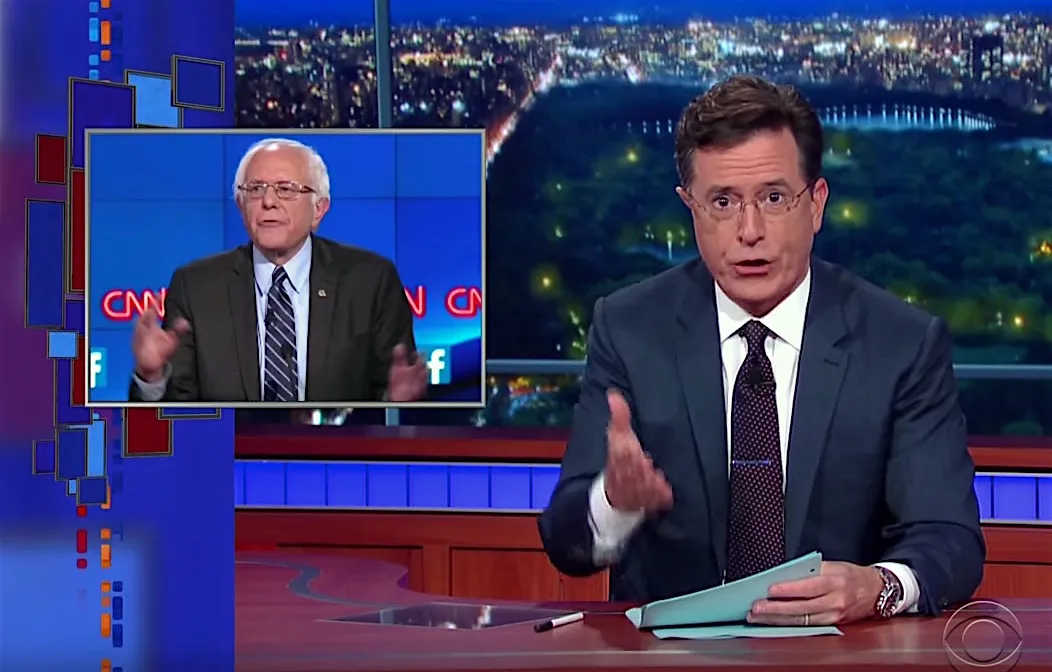
Tuesday night's Democratic debate was "different," Stephen Colbert said on Wednesday's Late Show. Unlike the Republican debates, "nothing really outrageous happened," he lamented. "There were no personal attacks, no salty language — except from the back wall, which for some reason kept repeating 'f CNN'" (the debate was cosponsored by Facebook). Colbert spent the next few minutes recapping the debate, anyways, and he trotted out some pretty dead-on impersonations.
The best was his first one: Sen. Bernie Sanders (I-Vt.). After playing a highlight reel of Sanders yelling out percentages, Colbert said, "I would not want to split a check with Bernie Sanders!" — then proceeded to hilariously imitate Sanders complaining over a brunch bill. His Hillary Clinton was a matronly figure telling Wall Street bankers they would have to go to bed without any cocaine if they didn't shape up. Jim Webb was represented by a lawn sign complaining about how little real estate it had, and Lincoln Chafee... well, his Lincoln Chafee was brutal. Martin O'Malley, for some reason, got left out of the recap, and honestly, he's probably fine with that. Watch Colbert in action below. Peter Weber
The Week
Escape your echo chamber. Get the facts behind the news, plus analysis from multiple perspectives.

Sign up for The Week's Free Newsletters
Join more than 350,000 subscribers and keep yourself informed with a selection of The Week’s most interesting, enlightening and entertaining stories - plus daily puzzles.
Join more than 350,000 subscribers and keep yourself informed with a selection of The Week’s most interesting, enlightening and entertaining stories - plus daily puzzles.