The Week The Week
flag of US
US
flag of UK
UK
https://cdn.mos.cms.futurecdn.net/flexiimages/jzblygzdxr1769609154.gif

SUBSCRIBE

Try 6 weeks free

Sign in
  • View Profile
  • Sign out
  • The Explainer
  • Talking Points
  • The Week Recommends
  • Podcasts
  • Newsletters
  • From the Magazine
  • The Week Junior
  • More
    • Politics
    • World News
    • Business
    • Health
    • Science
    • Food & Drink
    • Travel
    • Culture
    • History
    • Personal Finance
    • Puzzles
    • Photos
    • The Blend
    • All Categories
  • Newsletter sign up Newsletter
  • The Week Evening Review
    Orbán’s power play, local elections, and Iran’s ‘network of influence’

     
    Today’s Big Question

    Why is Hungary’s Orbán raising alarms over Ukraine?

    Viktor Orbán is accusing Ukraine of a plot to sabotage Hungary’s critical energy infrastructure, ahead of an election that threatens his grip on power. 

    “Facing the prospect of defeat” in the April parliamentary vote, Orbán has accused his rival, Péter Magyar, of being both pro-Ukraine and pro-European Union, said Politico. Last week, he ordered troops to protect “key sites”, such as oil pipelines, against the possibility of a Ukrainian attack. That drew an “exasperated response” from European leaders, who are trying to present a united pro-Ukraine front.

    What did the commentators say?
    Orbán is “widely seen as the Kremlin’s strongest ally” in Europe, said The Associated Press. He has cast his relationship with Moscow as “pragmatic”, to ensure Hungary’s “access to reliable supplies of Russian oil and gas”. But critics say his crackdowns on media and non-governmental organisations follow “Putin’s authoritarian playbook”.

    His actions are “aiding and abetting Russia’s kinetic war against Ukraine”, said Mark Toth and Jonathan Sweet in The Hill. Orbán has long hidden behind “economic excuses” for his refusal to oppose Russia, even as he “champions Putin’s interests in the West”. He would “gladly continue to crassly trade cheap Russian oil for Ukrainian lives”.

    Orbán is also “holding up” billions of dollars in “European funding for Ukraine”, said Ellen Francis in The Washington Post. He “used veto powers” to block the package intended to “reinforce Ukraine’s military and plug its budget gap” – a package he had already agreed to.

    The upcoming elections are “the most serious challenge” to Orbán’s power in two decades, said Timothy Ash in Kyiv Post. It is no coincidence that his campaign has been “shaped around picking fights” with the EU and Ukraine. He appears to believe he can “play Hungary as the victim”, with Ukraine as the culprit for higher fuel prices, thanks to energy disruptions caused by the war. 

    What next?
    Current polling puts Magyar ahead by eight points, suggesting Orbán’s tactics are not working. But Hungary’s constitution outlaws elections during a state of emergency, said The Bulwark. To some, the “manufactured” alarms over Ukraine look like the beginnings of a “deeply sinister” attempt to hold onto power.


    The Explainer

    The 2026 local elections

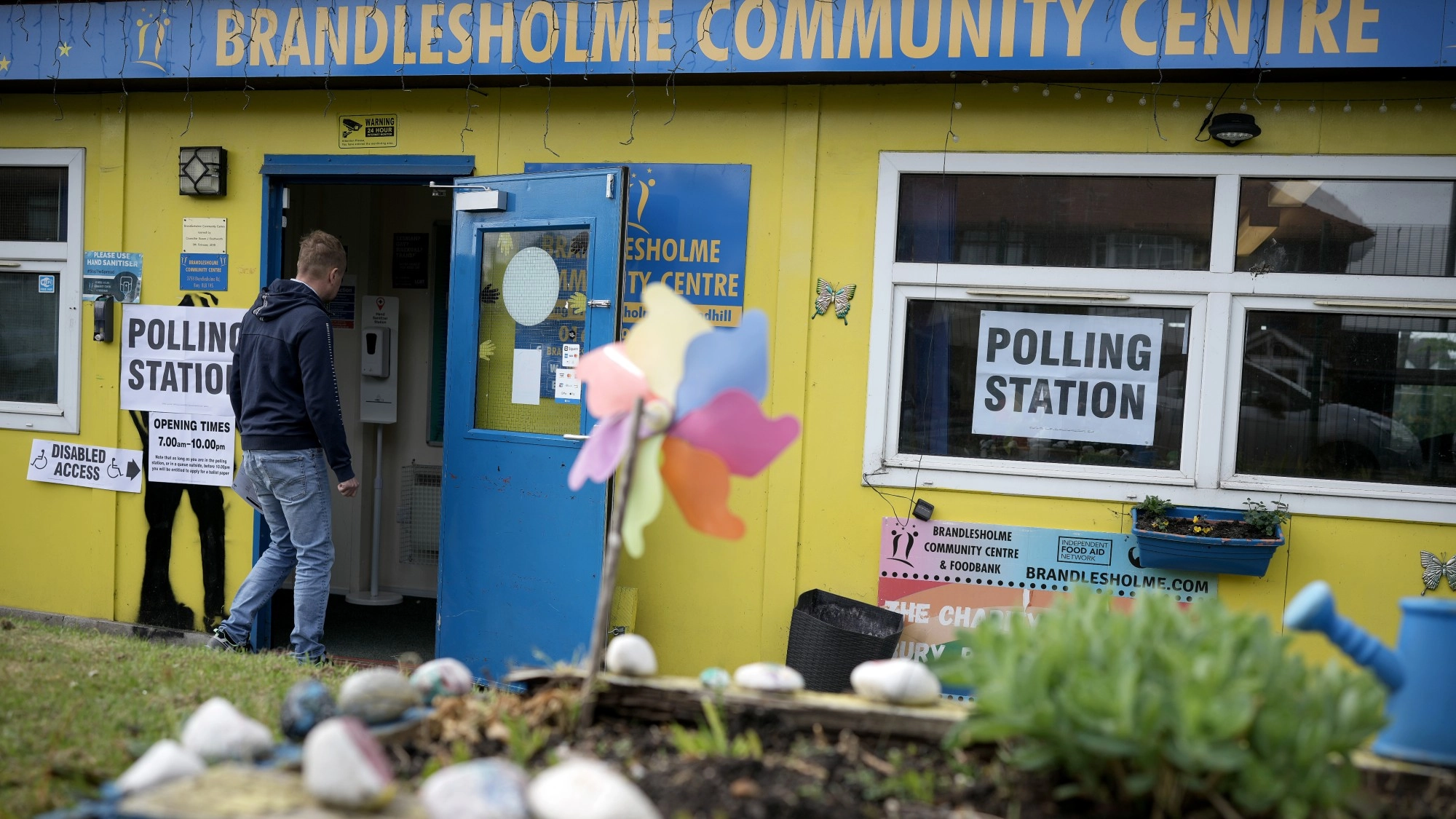
    Labour and the Conservatives are both braced for heavy losses in the upcoming local elections, with Reform UK and the Green Party poised to oust them in seats across the country. The Lib Dems “used to be the sole party of protest”, local government professor Tony Travers told The Standard. Now there is “a smorgasbord of choice”.

    When are the local elections?
    Thursday 7 May. About 42 million people across England are eligible to vote: the biggest ballot since the 2024 general election. Elections for the  devolved Scottish Parliament and Welsh Senedd will take place on the same day.

    Where are the English council elections?
    About 5,000 seats across 136 local councils will be “up for grabs”, said the BBC. These include: six county councils; 15 unitary authorities; 51 district councils; 32 metropolitan borough councils (out of the total of 36), and all 32 London borough councils.

    What are the results likely to be?
    All six English county councils are currently controlled by the Tories. Three – Norfolk, Suffolk and Essex – are “large councils where all the seats are up for grabs”, political scientist John Curtice told the Financial Times. These are the type of areas that should “mimic where Reform did well last year”.

    In cities such as “heavily Leave-voting Barnsley and Sunderland”, Reform has a “potential breakthrough in their sights”, Curtice said in The Independent. But it’s London, “prime Labour territory” where 1,800 seats are at stake, that is most “under threat” – from a rejuvenated Green Party, which already has “a track record of performing well in local elections”.

    At the last local elections, in 2022, Labour won 1,156 seats – about 64% of London – and seized three flagship Tory councils. But the party could lose more than half, Travers told The Standard. It could be “a worse blow” than the Gorton and Denton by-election, he said. That was “a rock-solid safe seat”, but “it was one seat”.

    What about the devolved elections?
    In Scotland and Wales, Labour are trailing behind the SNP and Plaid Cymru respectively, as well as Reform. In Scotland, the SNP is on track for a decisive win, according to an Ipsos poll published on Wednesday. In Wales, where Labour has run the devolved Welsh government since its inception in 1999, a defeat by Plaid Cymru would be “cataclysmic”, said Curtice.


    Poll watch

    A third (33%) of Brits have seen someone shoplifting in the past year but the younger they are, the less likely they are to see it as a serious crime. Only 35% of 18- to 24-year olds think it is, compared with 65% of 20- to 49-year-olds, 88% of 50- to 64-year-olds and 92% of over 65s, according to a YouGov poll of 2107 UK adults.


    Statistic of the day

    600,000: The number of documents reviewed by the Covid-19 Inquiry, which concluded yesterday after nearly four years of hearings featuring more than 350 witnesses. Inquiry chair Baroness Heather Hallet said completing the hearings in that time frame was an “extraordinary achievement”, and defended the cost, which at more than £200 million, outstrips that of the 12-year Bloody Sunday Inquiry.


    In the Spotlight

    Iran’s ‘network of influence’ in the UK

    After the arrest of four people suspected of spying for Iran on London’s Jewish community, focus is intensifying on the depth of Tehran’s reach across the Western world.

    The regime’s intelligence services “have long targeted Jewish and Israeli people, along with dissidents living in Britain, frequently using criminal proxies as part of their operations”, said The Telegraph.

    More than 20 “potentially lethal Iran-backed plots” were identified by MI5 in the year to October 2025, said the intelligence service’s director general Ken McCallum last year.

    ‘Outpost of the regime’
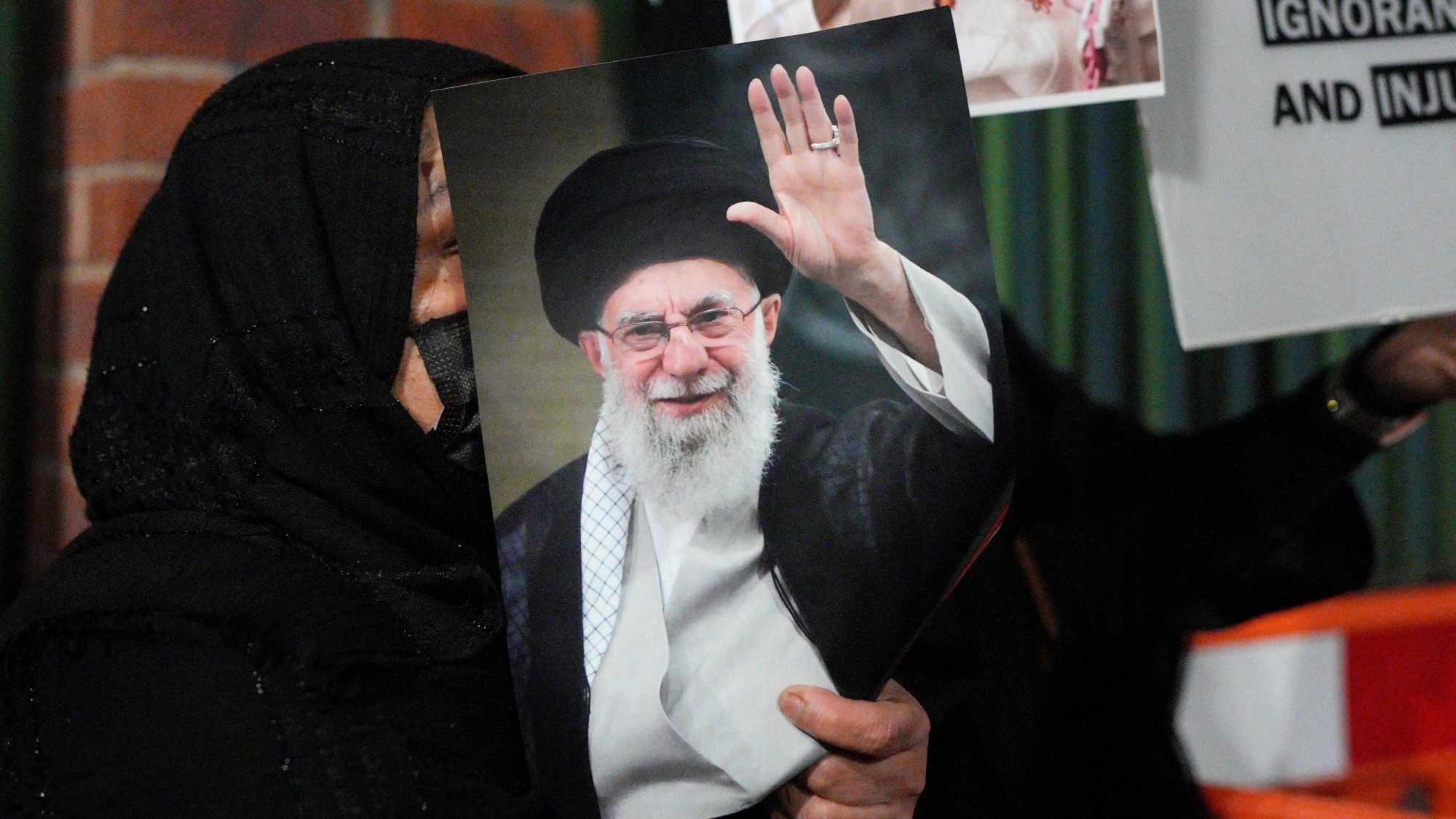
    Several Labour MPs have written to the government asking for a clamp-down on charities that could be operating an Iranian “influence network” in the UK, said The Telegraph. These include the London-based Islamic Centre of England, which has been “accused of being an outpost of the Iranian regime”, and where mourners this week lit candles in front of photographs of former Supreme Leader Ayatollah Ali Khamenei. “These are vigils for a man who had British blood on his hands, who ordered terror plots on British soil,” said Kasra Aarabi, of United Against Nuclear Iran, who has been monitoring the activity. “That is deeply concerning.”

    The centre broadcast daily religious messages from Khamenei during Ramadan last year, said The Times, dubbing the organisation “Iran’s nerve centre” in the UK. A spokesperson for the centre insisted it “does not represent, promote, or advocate for the political views or agendas of any state, figure or regime” and concerns itself only with “matters of faith, ethics, and spirituality”.

    ‘Radical zealots’
    Research published last June by the National Union for Democracy in Iran, a US-based think tank, found Britain had become a “flashpoint” of Iranian influence.

    It warned that education was at the “front line” of the Islamic regime’s efforts and it has been “ushering in a generation of radicalised, ideological-based zealots”. The regime is “planting seeds of suspicion” against the British government in British people’s minds, and “establishing historical falsehoods as reality”.


    Good day🐩

    … for French dog lovers, who are being courted by candidates in this month’s local town and village council elections. Would-be mayors are promising better municipal kennels, doggy food banks, shared human-dog drinking fountains and even a pet cemetery to win the canine-owner vote.


    Bad day 🐕

    ... for English dog lovers, as corgis and dachshunds could be banned if new parliamentary guidelines become mandatory. Campaigners say a new assessment tool, designed to drive out breeds with “extreme” physical traits, could classify dogs with short legs as unhealthy.


    picture of the day

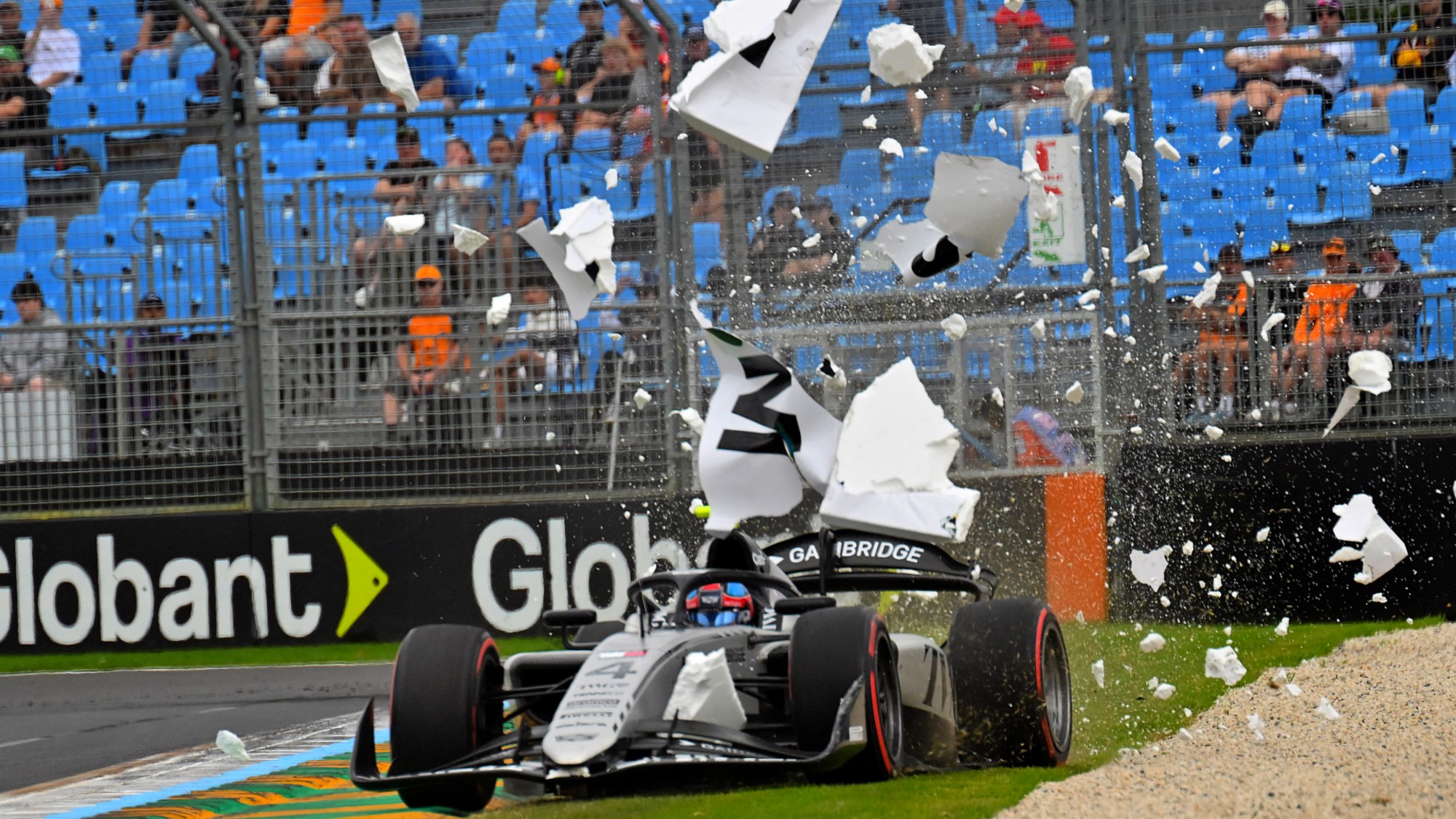
    Circuit breaker

    F2 driver Colton Herta crashes out of his debut practice session at the Albert Park Circuit in Melbourne, Australia. The former IndyCar star lost the rear of his Hitech F2 car but emerged from the crash unscathed to applause from fans.

    John Morris / AFP / Getty Images


    PUZZLES AND QUIZZES

    Quiz of The Week

    Have you been paying attention to The Week’s news? Try our weekly quiz, part of our puzzles section, which also includes sudoku and crosswords 

    Play here


    THE WEEK RECOMMENDS

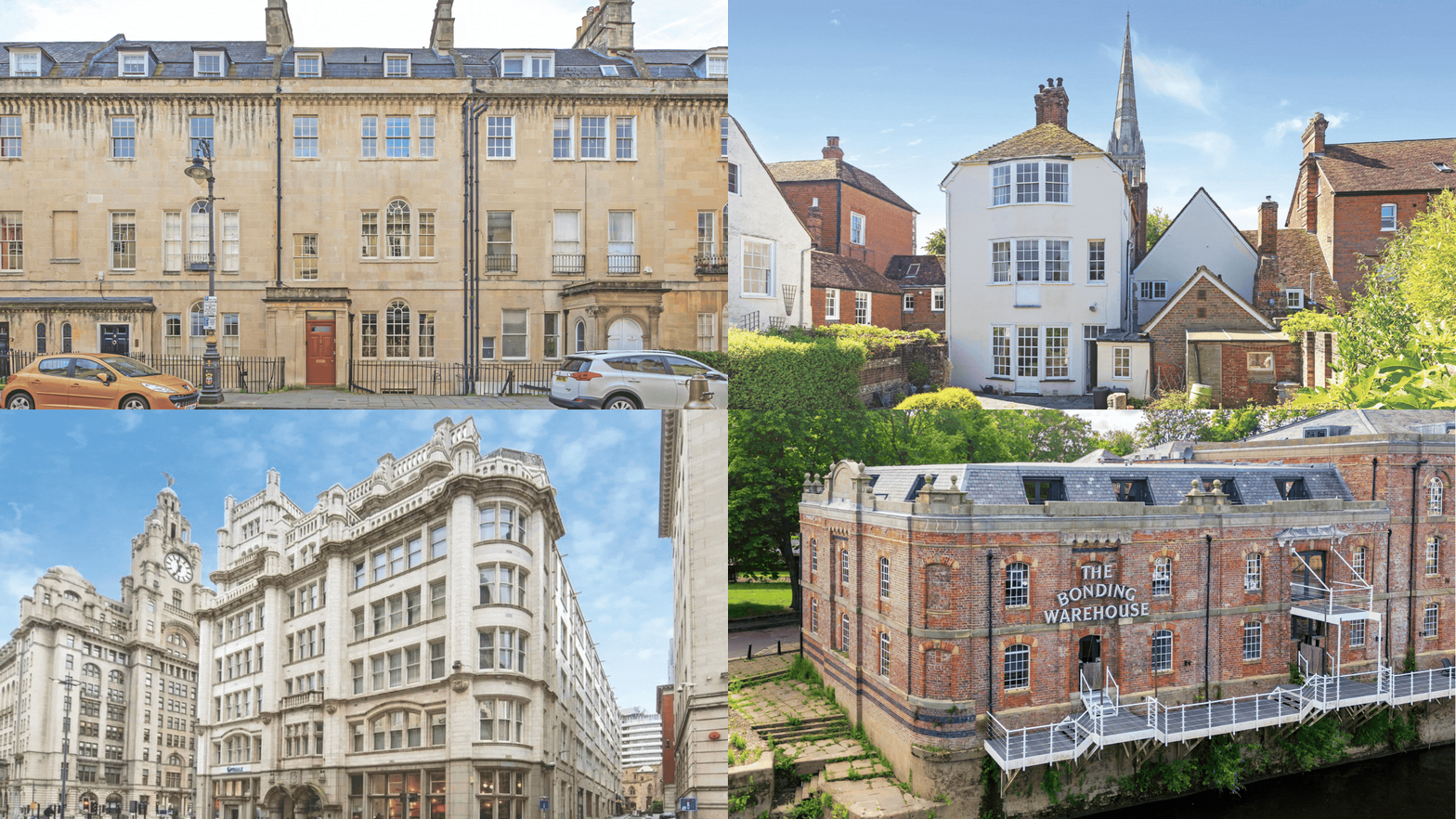
    Properties of the week: houses and flats in city centres

    Salisbury: The Close
    An elegant Grade II townhouse within Cathedral Close and overlooking this medieval early Gothic masterpiece. At 80 acres, this is the largest cathedral close in the country, described by Pevsner as “the most beautiful of England’s closes”; it is locked at night and has private security. Main suite, 3 further beds, 2 baths, kitchen, 3 receps, garden, parking. £1.7m; Myddelton & Major.

    Bath: Brock Street
    An impressive Grade II Georgian townhouse situated between The Royal Crescent and The Circus. The property boasts many period features, including a grand staircase, Venetian window and a beautifully landscaped walled garden. Main suite, 4 further beds, 2 showers, kitchen, 4 receps, garden. £3.5m; Knight Frank.

    London: Redhill Street, Regent’s Park NW1
    This stylish flat is close to Regent’s Park and Marylebone High Street. Main suite, 1 further bed, family bath, open-plan kitchen and dining room, balcony, courtyard. £950,000; Savills.

    Liverpool: Water Street
    A handsome flat in the Grade II Tower Building, designed by Walter Aubrey Thomas. One of the earliest steel-framed buildings in England, its striking façade is clad in grey granite and faced with white glazed terracotta made by Doulton. 1 bed, family bath, open-plan kitchen and living room. £160,000; Mistoria.

    See more


    QUOTE OF THE DAY

    “I guess.”

    Donald Trump admits Americans may be right to worry about Iran-backed attacks on US soil, contradicting Defense Secretary Pete Hegseth. “We plan for it,” the president told Time magazine. But “when you go to war, some people will die”.


    instant opinion

    Today’s best commentary

    Donald Trump must stop soon
    The Economist’s editorial board
    “Surrounded by sycophantic courtiers,” the US president “has become rash in his second term”, says The Economist. “When you command a machine as lethal and overwhelming” as the American military, “you have a responsibility to define what you want to achieve”. But Donald Trump’s failure to explain the goals of war with Iran risks “regional chaos” and a “hit” to the global economy. He should “degrade Iran’s military capabilities and then stop. He is almost there.”

    Why so many men my age want women to obey them
    Zak Asgard in The Times
    “We’re in trouble” if almost a third of Gen Z men really do think a wife should always obey her husband, as a new global study suggests, writes Zak Asgard. “Lads, your grandad is more progressive than you.” As to the reason, “my strong hunch” is that it’s “fear and anger”, fuelled by “online machismo” and the weak men who view “record numbers” of women in the workplace as a “threat”. Let’s hope it’s just a “temporary quagmire of naivety”.

    Influencers sold the world a fantasy Dubai – and now it’s gone in a puff of missile smoke
    Gaby Hinsliff in The Guardian
    “Who could have guessed that living a few hundred miles as the drone flies from Tehran might have risks?” writes Gaby Hinsliff. As “Dubai’s content-creating gym bros and wellness girlies” are forced to “pack up and run from falling bombs, I’d like them to interrupt the #sponsored content” to learn “from this luxury version of a refugee experience”. They should tell TikTok that “moving abroad for a better life – as millions do daily in far more life-threatening circumstances – isn’t as cushy as some pretend”.


    word of the day

    Regolith

    The layer of crushed rock and glassy dust that covers the Moon. Scientists have successfully grown chickpeas in simulated regolith, bolstering hopes that future off-world inhabitants could cultivate their own food. But “before anyone makes Moon hummus, we need to confirm they are safe and nutritious”, said research leader Jessica Atkin, a Nasa fellow at Texas A&M University.


     Evening Review was written and edited by Harriet Marsden, Jamie Timson, Rebecca Messina, Joel Mathis, Irenie Forshaw, Chas Newkey-Burden, Adrienne Wyper, David Edwards, Helen Brown and Kari Wilkin.

    Image credits, from top: Stephen Kelly / Getty Images / AP Photo; Christopher Furlong / Getty Images; Christopher Furlong / Getty Images; John Morris / AFP / Getty Images; Knight Frank; Myddelton & Major; Mistoria; Savills
    Morning Report and Evening Review were named Newsletter of the Year at the Publisher Newsletter Awards 2025
     

    Recent editions

    • Morning Report

      Trump wants to pick Iran's new leader

    • Evening Review

      The future of the special relationship

    • Morning Report

      Kurdish fighters ‘preparing to enter Iran’

    VIEW ALL
    TheWeek
    • About Us
    • Contact Future's experts
    • Terms and Conditions
    • Privacy Policy
    • Cookie Policy
    • Advertise With Us
    • FAQ
    Add as a preferred source on Google Add as a preferred source on Google

    The Week UK is part of Future plc, an international media group and leading digital publisher. Visit our corporate site.

    © Future Publishing Limited Quay House, The Ambury, Bath BA1 1UA. All rights reserved. England and Wales company registration number 2008885.