The Week The Week
flag of US
US
flag of UK
UK
https://cdn.mos.cms.futurecdn.net/skoGBi9qKFoUtnNWkovjJQ.jpg

SUBSCRIBE

Try 6 Free Issues

Sign in
  • View Profile
  • Sign out
  • The Explainer
  • Talking Points
  • The Week Recommends
  • Podcasts
  • Newsletters
  • From the Magazine
  • The Week Junior
  • More
    • Politics
    • World News
    • Business
    • Health
    • Science
    • Food & Drink
    • Travel
    • Culture
    • History
    • Personal Finance
    • Puzzles
    • Photos
    • The Blend
    • All Categories
  • Newsletter sign up Newsletter
  • The Week Evening Review
    Reclassifying weed, Minnesota’s fraud schemes, and ‘lumpy skin’ protests

     
    TODAY’S BIG QUESTION

    Why does Trump want to reclassify marijuana?

    The Republican Party that once gave us the war on drugs and “Just Say No” is getting a little more weed-friendly. President Donald Trump signed an executive order yesterday to speed the reclassification of marijuana as a less dangerous drug, potentially moving federal policy closer to decriminalization.

    Trump’s order is a “major shift in federal drug policy,” said The Associated Press. Under federal rules, marijuana is classified as a Schedule I drug “alongside heroin and LSD.” The president’s move would make it a Schedule III drug, similar to anabolic steroids. The change to the marijuana classification “would not make it legal for recreational use,” but it could change how the drug is regulated and “open new avenues for medical research.” Many Americans have been “begging for me to do this” to make it easier to alleviate their pain, said Trump.

    More than two dozen House Republicans opposed the move, said Fox News. Marijuana reclassification will “enable drug cartels and make our roads more dangerous,” the group said in a letter to the president.

    What did the commentators say?
    “What happened to making America healthy again?” said Allysia Finley at The Wall Street Journal. Studies suggest cannabis users are more likely to experience heart attacks and strokes, and the drug’s effects can be “linked to impaired decision-making and psychosis.” A Trump administration that’s taking aim at SSRI antidepressants and even Tylenol now finds itself in a contradiction. “It’s the antithesis of MAGA.”

    “Legalize it,” said The Washington Post editorial board. Rather than merely loosen marijuana restrictions somewhat, the better approach is to “legalize pot federally and let states decide if they want to restrict it any further.” Schedule III classification solves issues for otherwise-legal marijuana businesses that cannot deduct “operating expenses, such as rent, payroll and marketing,” from their taxes. But it does not resolve other “thorny legal questions.”

    What next?
    Trump’s order also “authorizes Medicare to fully cover CBD products for patients,” said Axios. That may help older Americans shift away from “potentially lethal” opiates for pain relief, said the president. Other changes may be slow to materialize. 

    “Not much is changing for consumers” unless Congress changes the federal laws prohibiting marijuana possession, said Reuters. Recreational cannabis use is legal in 24 states, but experts say more states “could be motivated to legalize the drug” following Trump’s executive order.


    QUOTE OF THE DAY

    ‘I deserve it?’ 

    Ahmed al-Ahmed, the Syrian-born father who disarmed a gunman during Australia’s Bondi Beach terror attack, responding to getting a check for $1.65 million while recovering from multiple gunshot wounds in the hospital. About 43,000 people around the world donated to a GoFundMe campaign for him.


    The Explainer

    Inside Minnesota’s extensive fraud schemes

    The Land of 10,000 Lakes has found itself in the middle of a scandal, with Minnesota at the center of wide-ranging fraud allegations. While the state is hardly the first to become embroiled in a fraud scandal, prosecutors say the evidence against Minnesota goes back years and may involve the highest levels of state government.

    What’s the crux of the scandal?
    It largely goes back to alleged fraud that took place during the COVID-19 pandemic. Prosecutors have “charged dozens of people with felonies, accusing them of stealing hundreds of millions of dollars from a government program meant to keep children fed” during the pandemic, said The New York Times. Federal prosecutors claim that billions of dollars were stolen as part of the schemes, most of which involved Minnesota’s Department of Human Services (DHS). 

    Though there were several major fraud networks, officials claim they all had “three common threads: The state was billed for services that were never provided, DHS has failed to provide sufficient oversight, and many of those implicated are from Minnesota’s Somali community,” said The Minnesota Star Tribune. The scandal has “widely been viewed as a by-product of the COVID-19 pandemic,” said CBS News, with former Attorney General Merrick Garland previously calling it the “largest pandemic relief fraud scheme” in the country.

    What happens next?
    Additional people are being charged with fraud as the cases continue and more evidence comes out. One notable update from prosecutors alleges that “half or more of the roughly $18 billion in federal funds that supported 14 Minnesota-run programs since 2018 may have been stolen,” said The Associated Press. This would go back to the year before the administration of Minnesota Gov. Tim Walz (D) took over.

    The “magnitude cannot be overstated,” said First Assistant U.S. Attorney Joseph H. Thompson during a press conference. “What we see in Minnesota is not a handful of bad actors committing crimes. It’s staggering industrial-scale fraud.” Minnesota, said Walz in a statement, “will not tolerate fraud, and we will continue to work with federal partners to ensure fraud is stopped and fraudsters are caught.”


    Statistic of the day

    34 million: The number of people lifted out of poverty in Bangladesh between 2010 and 2022, according to the World Bank. Extreme poverty, defined by the World Bank as living on less than $2.15 per day, dropped from 12.2% to 5.6% during this period.


    IN THE SPOTLIGHT

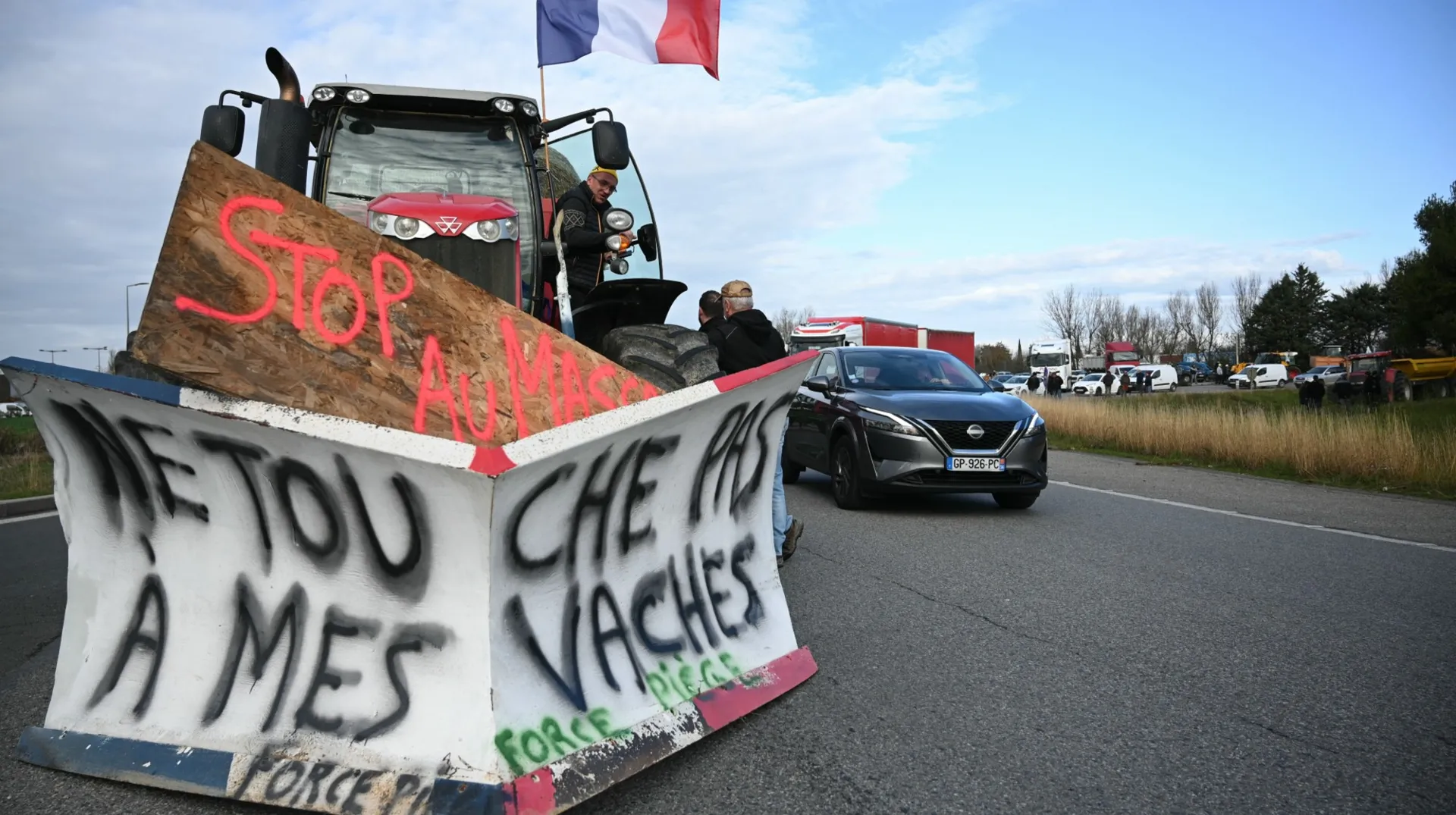
    French protests intensify as farmers fight outbreak cull

    Officials in France have called for a Christmas truce as protests over government efforts to cull entire cow herds showing signs of a skin disease continue nationwide. For more than a week, farmers have blocked roadways and dumped manure outside government buildings. Meanwhile, authorities press on with their controversial plan to stem the outbreak of nodular dermatitis, also known as lumpy skin disease, an insect-borne infection that affects cattle but poses little risk to humans.

    Authorities are claiming early success with containment. But French protesters have only sharpened their criticisms against the government as a broader movement of trade-based discontent sweeps the country.

    ‘Excessive and cruel’ culling policy
    France’s outbreak is an “absolute emergency,” said Prime Minister Sébastien Lecornu in an address to the National Assembly on Tuesday. To that end, the government has “put all its hopes in vaccination” in an “ambitious” plan requiring the full inoculation of 1,000 farms in the Ariège department by Dec. 31, said Le Monde. Such an expansive plan poses a “logistical and human challenge” amid tensions between veterinarians “tasked with both culling and vaccinating” herds and farmers who reject the “systematic culling of herds where the disease is detected.”

    Protesters contend that the policy of culling entire herds over a single infection is “excessive and cruel,” said Reuters. But the “economic consequences” of unchecked lumpy skin disease are “severe,” as it can “devastate herd productivity” and “trigger international trade restrictions,” said Bovine Veterinarian. Complicating things further is a concern among French authorities that this fight could “snowball into a wider movement” among local farmers who have fallen “under growing threat from the imposition of EU norms” and foreign competition.

    ‘Volatile cocktail of rural discontent’
    The civil unrest and disruptive protests that have blocked French motorways were “initially sparked” by frustration over the cullings and vaccinations, but they have since “expanded to cover wider discontent” over the EU’s Mercosur trade agreement with a group of South American nations, said The Connexion. Many farmers have accused the deal of leading to “massive imports of products not meeting French standards,” said Reuters. The combination of lumpy skin frustrations and broader trade anxieties has created a “volatile cocktail of rural discontent and growing protest,” said France 24.


    Good day 🏛️

    … for palace restorers. The doors of Rome’s Palazzo Silvestri-Rivaldi are opening to get $41.1 million in restorations. The villa, which overlooks the Colosseum, was commissioned by Pope Paul III in the 16th century but has fallen into disrepair in recent decades. Small groups of visitors will be allowed to watch experts revamp the halls and frescoes.


    Bad day 💾

    … for PC builders. Micron Technology is leaving the consumer random-access-memory business in the coming year, “ending 29 years of selling RAM and SSDs” to PC-building enthusiasts under the Crucial brand, said ARS Technica. High demand from AI data centers is the reason for losing one of the “most recognizable names in the do-it-yourself PC upgrade market.”


    Picture of the day

    Dancing to another year

    Members of the Karen community, Myanmar’s third-largest ethnic group, perform a traditional dance to celebrate their New Year today. The date of each Karen New Year is decided according to the lunar calendar and the end of the rice harvest.
    Sai Aung Main / AFP / Getty Images


    Puzzles

    Daily crossword

    Test your general knowledge with The Week's daily crossword, part of our puzzles section, which also includes sudoku and codewords

    Play here


    The Week recommends

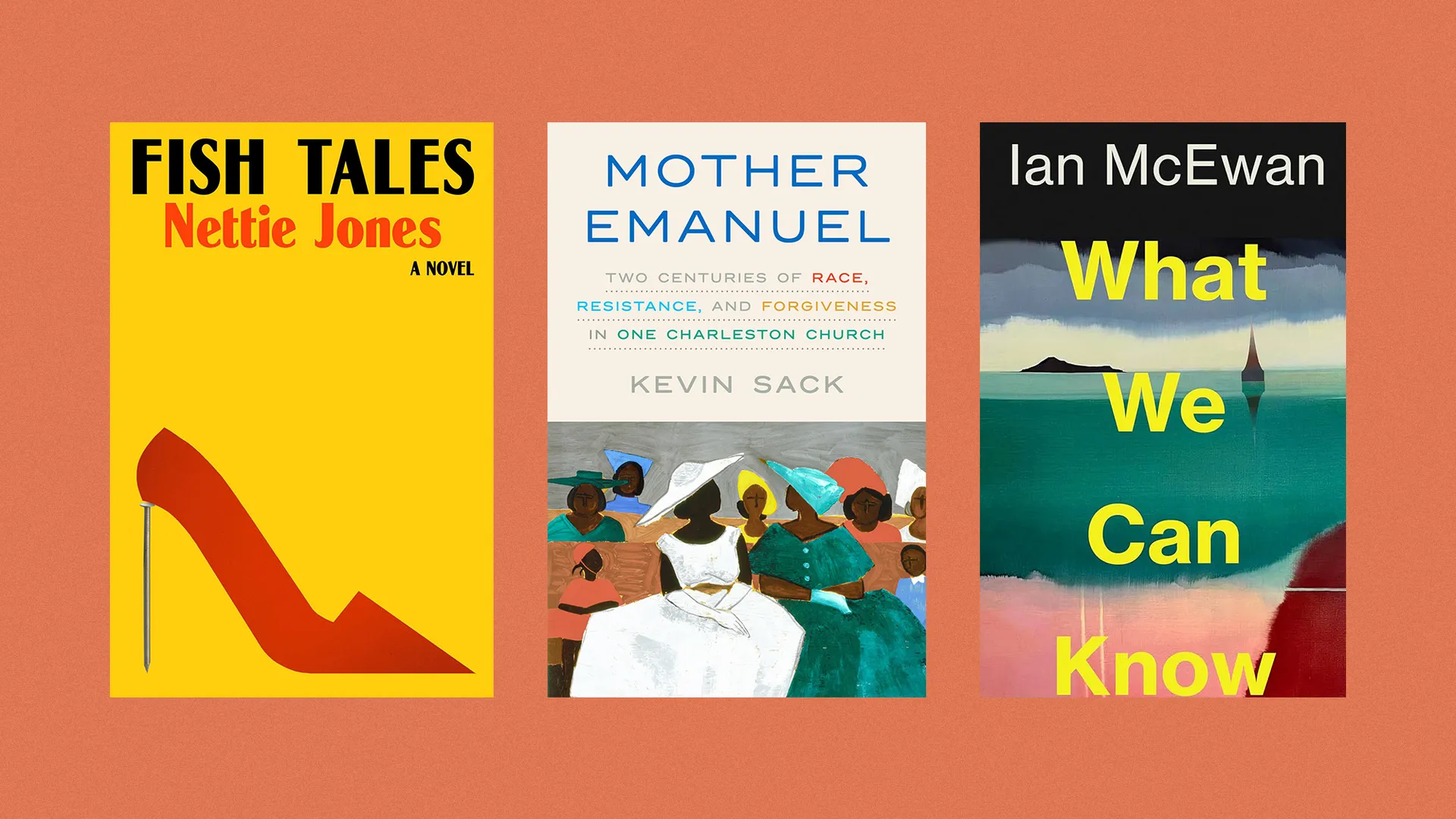
    The best books of 2025

    It was a banner year for literature, with a plethora of intriguing and memorable releases. The publishing world delivered boundary-pushing fiction alongside heavily researched and introspective nonfiction in 2025. Here are the best books of the year — ones that stood out among a host of excellent tomes.

    ‘Fish Tales’
    Toni Morrison acquired and initially published this African American novelist’s manuscript in 1984. This year, Jones’ debut was finally rereleased. "Fish Tales" is a “burst of authentic energy, a rush of life from start to finish,” said the Chicago Review of Books. ($27, Macmillan)

    ‘Mother Emanuel: Two Centuries of Race, Resistance, and Forgiveness in One Charleston Church’ 
    This “masterpiece” tells the story of Emanuel African Methodist Episcopal Church in Charleston, South Carolina, which is sadly now best known as the site of a mass shooting by a white supremacist that killed nine congregants on June 17, 2015, said The New York Times. Former Times reporter Kevin Sack delivers a “dense, rich, captivating narrative,” featuring “vivid prose, prodigious research and a palpable emotional engagement that’s disciplined by a meticulous attention to the facts.” ($35, Penguin Random House)

    ‘What We Can Know’
    In his latest novel, Ian McEwan takes readers to the year 2119, where the “humanities are still in crisis,” said The New Yorker. The literary detective story combines science fiction with elements of a thriller as the protagonist, scholar Thomas Metcalfe, investigates a mysterious poem from 2014. ($30, Penguin Random House)

    Read more


    WORD OF THE DAY

    poetcore

    One of the next big fashion trends, according to Pinterest Predicts 2026. The platform’s annual “not-yet-trending” report forecasts that Gen Z and millennials will “channel their inner wordsmith” in the coming year, following a 175% uptick in searches for the “poet aesthetic.” Think “oversize turtlenecks, vintage blazers and messenger bags.” And “don’t forget the fountain pen.”


    INSTANT OPINION

    Today's best commentary

    ‘A lesson in false limits’
    Sally Jenkins at The Atlantic
    Few professionals “suffer more from ageism than athletes,” says Sally Jenkins. Fans “want athletes to retire before they lose the luster of their prime and start looking knee sore,” an “expectation that, judging by the recent exploits of the skier Lindsey Vonn and the quarterback Philip Rivers, has cheated audiences.” Too many athletes, however, are “discouraged from competing as they age.” Vonn and Rivers “saw an opening to compete again, and something adventurous in them said, ‘Why not?’”

    ‘Without railway reform, your town could be the next East Palestine’
    Jess Conard at The Hill
    “Three years ago, a 149-car train pulled by three locomotives carrying tons of toxic chemicals derailed in East Palestine, Ohio,” and the “scars — physical, emotional and economic — remain today,” says Jess Conard. The “safety protocols that exist are ineffective,” yet the “standards that would make railroads operate safely are ignored.” These “safety technologies are reasonable and available and could have prevented the disaster in East Palestine.” If “implemented quickly, they could also prevent a disaster in your community.”

    ‘More math, not less, will lead students to success’
    Bloomberg editorial board
    Educators have “embraced trendy curricula that seek to make math more fun, incorporating coursework that feels more relevant to students than, say, dividing polynomials,” says the Bloomberg editorial board. These “approaches, though well-intentioned, tend to lower standards.” Not only are “core math concepts missing by design, but the rigorous statistics and computer science skills needed for more advanced coursework are also lacking.” Math “becomes fun when you practice, and to that end, interventions must start early.”


    Poll watch

    Nearly nine in 10 Americans (88%) consider cash an acceptable holiday gift, according to an AP-NORC survey. Of the 1,146 adults polled, 87% think a gift card is also acceptable, but only 61% feel the same way about regifting an item. 


    Evening Review was written and edited by Theara Coleman, Nadia Croes, Scott Hocker, Justin Klawans, Joel Mathis, Summer Meza and Rafi Schwartz, with illustrations by Stephen Kelly and Julia Wytrazek.

    Image credits, from top: Illustration by Julia Wytrazek / Getty Images; Christopher Juhn / Anadolu / Getty Images; Matthieu Rondel / AFP / Getty Images; Macmillan / Penguin Random House / Knopf
     

    Recent editions

    • Morning Report

      ‘Lolita’ quote scrawled on foot in new Epstein release

    • Evening Review

      Why is it so hard to book a driving test?

    • Morning Report

      Starmer tells Abramovich to release Chelsea sale funds

    VIEW ALL
    TheWeek
    • About Us
    • Contact Future's experts
    • Terms and Conditions
    • Privacy Policy
    • Cookie Policy
    • Advertise With Us
    • FAQ
    Add as a preferred source on Google

    The Week UK is part of Future plc, an international media group and leading digital publisher. Visit our corporate site.

    © Future Publishing Limited Quay House, The Ambury, Bath BA1 1UA. All rights reserved. England and Wales company registration number 2008885.