Sign up to get Today’s Best Articles in your inbox
Join 350,000+ subscribers and keep yourself informed with a selection of
The Week’s most interesting, enlightening and entertaining stories - plus daily puzzles.
You are now subscribed
Your newsletter sign-up was successful
Want to add more newsletters?
An account already exists for this email address, please log in.
Inside Minnesota’s extensive fraud schemes
The fraud allegedly goes back to the Covid-19 pandemic
The Land of 10,000 Lakes has found itself in the middle of a scandal, with Minnesota at the center of wide-ranging fraud allegations. While the state is hardly the first to become embroiled in such a transgression, prosecutors say the evidence against Minnesota goes back years and may involve the highest levels of state government.
What is the crux of the scandal?
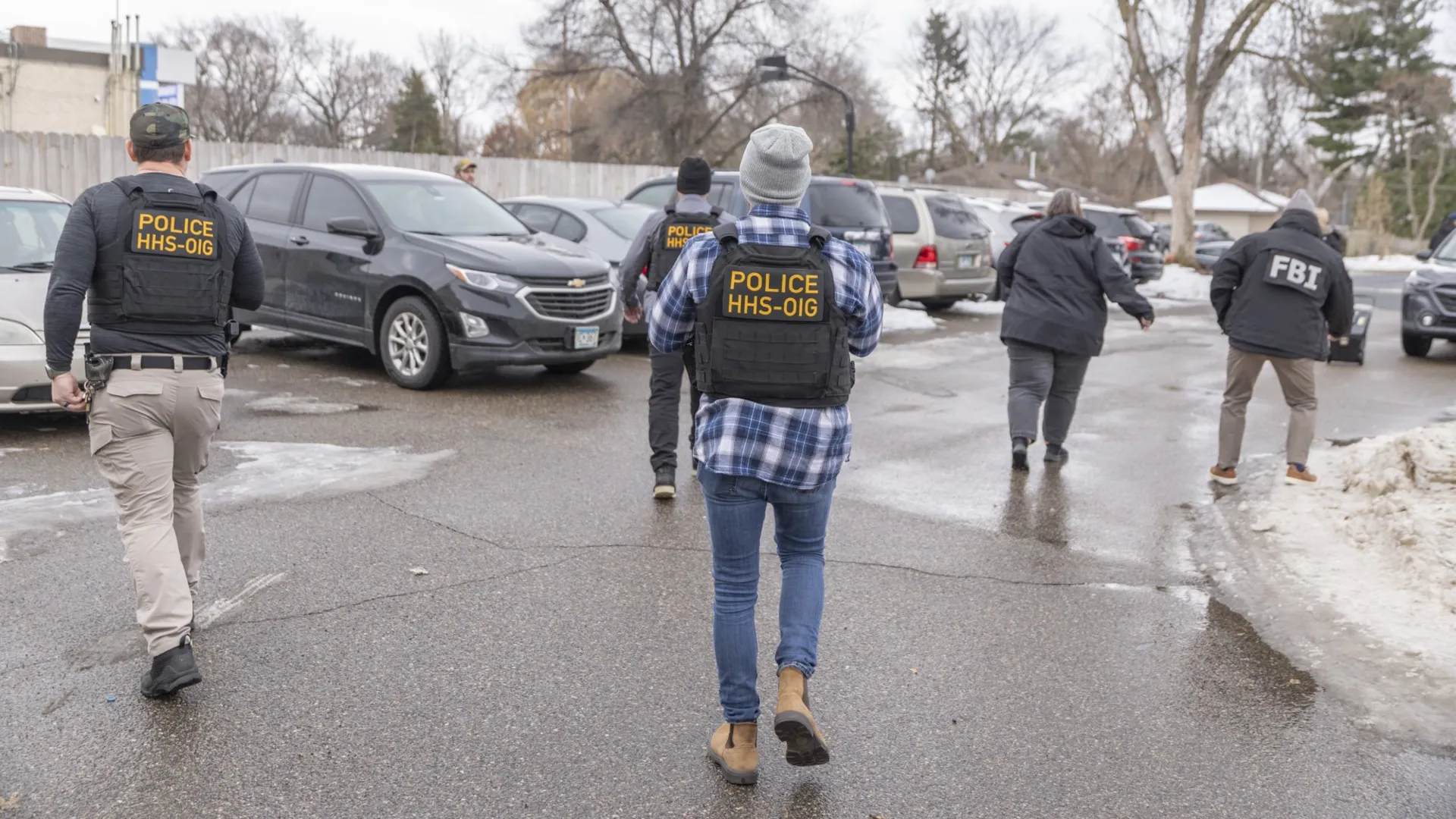
It largely goes back to alleged fraud that took place during the Covid-19 pandemic. Prosecutors have “charged dozens of people with felonies, accusing them of stealing hundreds of millions of dollars from a government program meant to keep children fed” during the pandemic, said The New York Times. Federal prosecutors claim that billions of dollars were stolen as part of the schemes, most of which involved Minnesota’s Department of Human Services (DHS). These funds were reportedly used to buy “luxury cars, houses and even real estate projects abroad.”
Though there were several major fraud networks, officials claim they all had “three common threads: The state was billed for services that were never provided, DHS has failed to provide sufficient oversight, and many of those implicated are from Minnesota’s Somali community,” said The Minnesota Star Tribune. One of the most notable cases involved the DHS children’s hunger program Feeding Our Future, and prosecutors have “filed charges against 59 entities that operated meal sites under Feeding Our Future’s sponsorship that amounted to more than $128 million.”
The Week
Escape your echo chamber. Get the facts behind the news, plus analysis from multiple perspectives.
Join more than 350,000 subscribers and keep yourself informed with a selection of The Week’s most interesting, enlightening and entertaining stories - plus daily puzzles.
Join more than 350,000 subscribers and keep yourself informed with a selection of The Week’s most interesting, enlightening and entertaining stories - plus daily puzzles.
The scandal has “widely been viewed as a by-product of the Covid-19 pandemic,” said CBS News, with former Attorney General Merrick Garland previously calling it the “largest pandemic relief fraud scheme” in the country. Critics of Minnesota Gov. Tim Walz (D), who took office in 2019, claim that the “fraud persisted partly because state officials were fearful of alienating the Somali community in Minnesota,” said the Times. Walz, who has not been accused of wrongdoing, has “defended his administration’s actions.”
What happens next?
Additional people are being charged with fraud as the cases continue and more evidence comes out. One notable update from prosecutors alleges that “half or more of the roughly $18 billion in federal funds that supported 14 Minnesota-run programs since 2018 may have been stolen,” said The Associated Press. This would go back to the year before Walz’s administration took over.
The “magnitude cannot be overstated,” First Assistant U.S. Attorney Joseph H. Thompson said during a press conference. “What we see in Minnesota is not a handful of bad actors committing crimes. It’s staggering industrial-scale fraud.” The continuing investigations may also “bolster President Donald Trump in his claims” against Minnesota and Walz, said the AP. Trump has garnered pushback after using the fraud cases to “target the Somalia diaspora in Minnesota,” calling them “garbage” and saying “their country stinks.”
Walz has harshly criticized Trump for his anti-Somali rhetoric and has also appointed a statewide director for integrity to oversee his state’s federal agencies. The charges being brought are the “type of strong action we need from prosecutors to ensure fraudsters are put behind bars,” Walz said in a statement. Minnesota “will not tolerate fraud, and we will continue to work with federal partners to ensure fraud is stopped and fraudsters are caught.”
Sign up to get Today’s Best Articles in your inbox
A free daily email with the day’s biggest news and analysis – and the best features from TheWeek.com
Justin Klawans has worked as a staff writer at The Week since 2022. He began his career covering local news before joining Newsweek as a breaking news reporter, where he wrote about politics, national and global affairs, business, crime, sports, film, television and other news. Justin has also freelanced for outlets including Collider and United Press International.



 talking pointsA leadership power vacuum may await Republicans
 QUOTE OF THE DAY‘What kind of culture looks at sexual violence and sees an opportunity for profit? This is rape culture. And it should disturb every single one of us.’
 today’s big questionHow long can US consumers continue their spending spree?